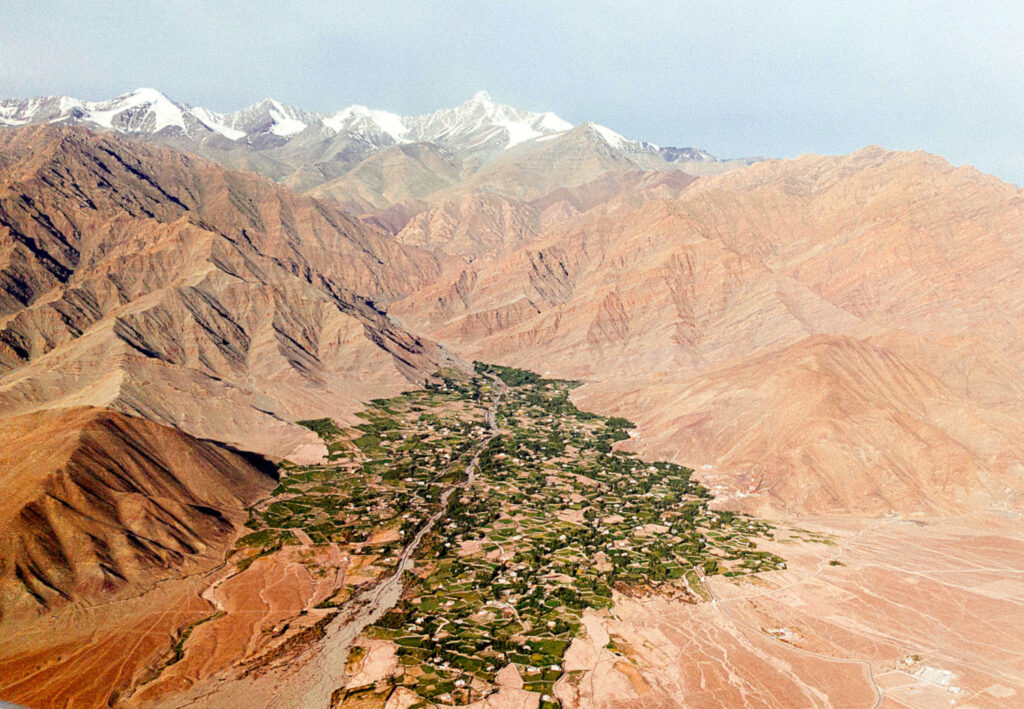
In the vast expanse of Ladakh’s high-altitude desert landscape lies Stok village, a jewel of traditional culture and natural beauty that captures the essence of this trans-Himalayan region.
Nestled in a picturesque valley near Leh, this ancient settlement presents a mesmerizing tableau where centuries-old traditions blend seamlessly with the rugged mountain terrain. The village, set against the backdrop of the towering Stok Kangri peak, offers visitors an authentic glimpse into Ladakhi life while serving as a gateway to some of the region’s most spectacular landscapes and cultural treasures.
From its historic palace and centuries-old monasteries to its organic farming practices and traditional architecture, Stok embodies the perfect harmony between human habitation and the majestic mountain environment.
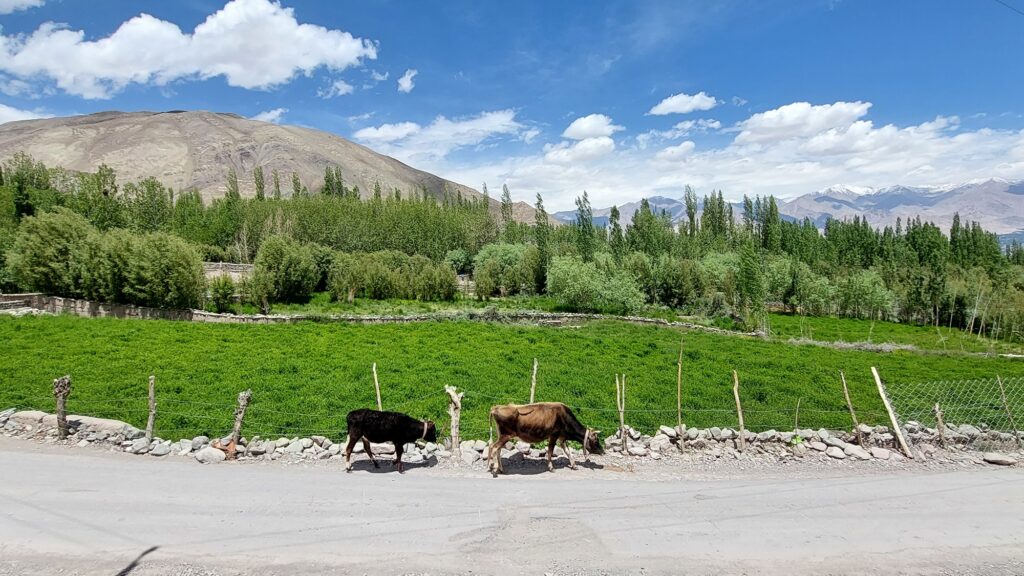
This village, where prayer flags flutter in the mountain breeze, and crystal-clear streams nurture emerald fields, stands as a testament to the enduring spirit of Ladakhi culture and its deep connection to the land.
Stok village lies about 15 kilometers south of Leh city, in a picturesque valley on the southern bank of the mighty Indus River. The village unfolds like a naturally woven tapestry against the towering Stok Kangri range backdrop, whose snow-capped peaks rise dramatically to over 20,000 feet, creating a stunning contrast against the deep blue Ladakhi sky.
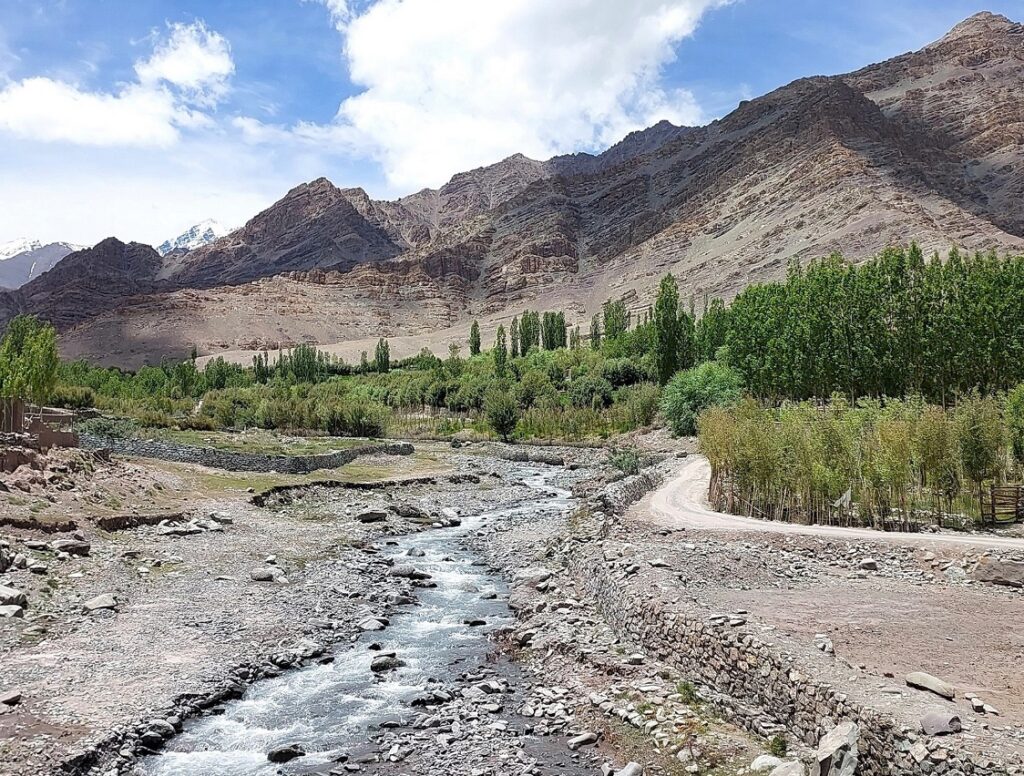
These mountains are eternal guardians, their white summits visible throughout the year while their lower slopes display varying hues with changing seasons.
Through the heart of the village flows a pristine mountain stream descending from the glaciers above. This perennial water source is the lifeline of Stok, nurturing the village’s remarkable patchwork of organic agricultural fields.
The fields follow the land’s natural contours, creating a stunning variety of emerald and jade terraces during the growing season. Traditional crops like barley, wheat, and peas are cultivated here using age-old farming techniques passed down through generations.
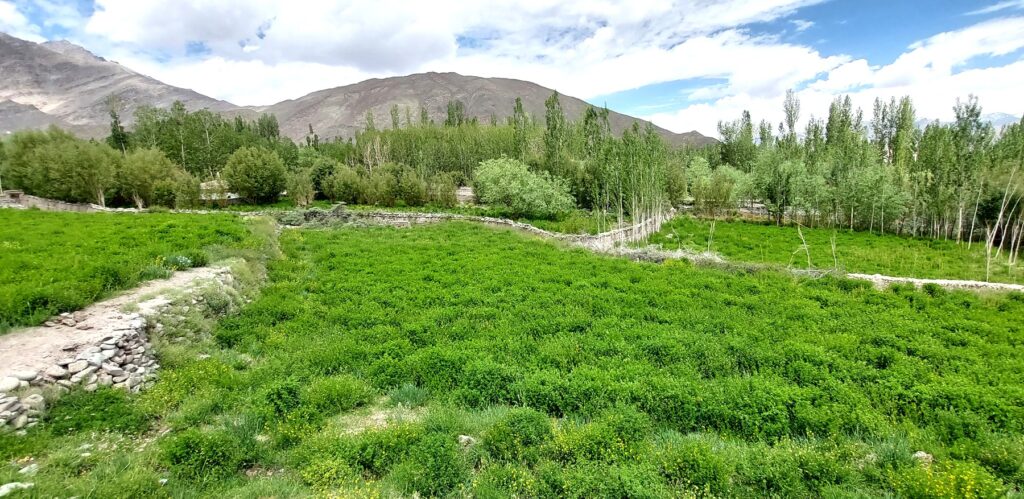
The village architecture is a testament to human adaptation to the harsh mountain environment. Traditional Ladakhi houses, built from sun-dried mud bricks and wood, are scattered across the landscape in a seemingly random yet harmonious pattern.
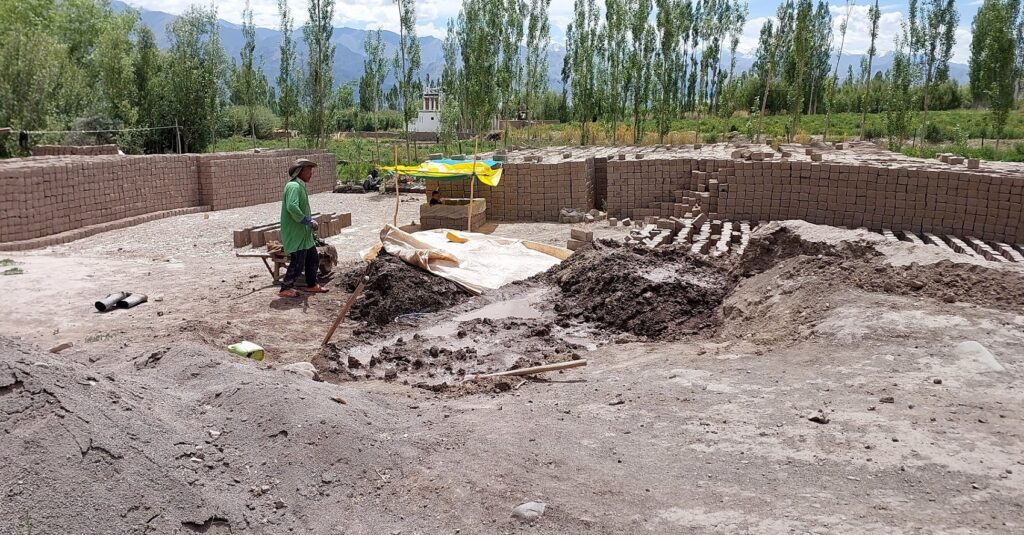
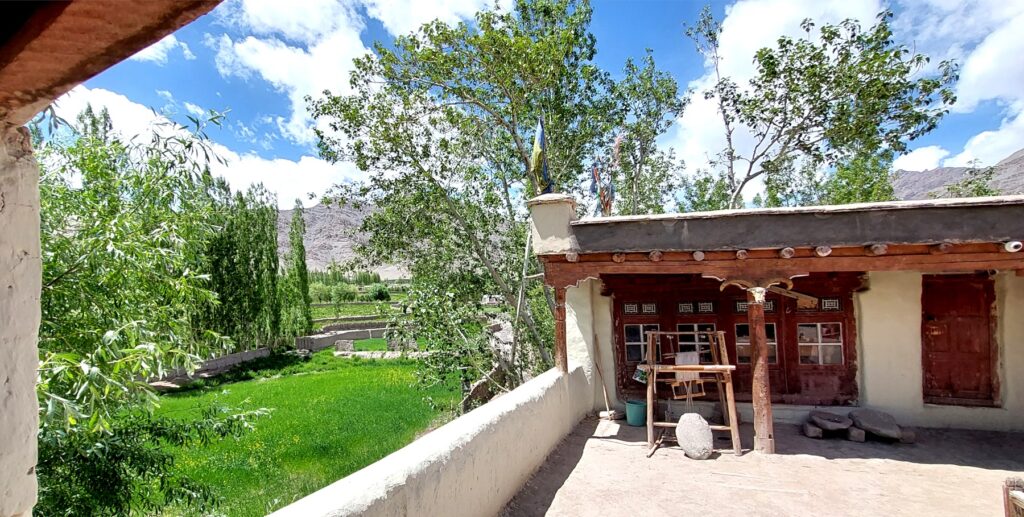
These homes feature thick walls for insulation, small windows to retain heat and flat roofs often decorated with prayer flags that flutter in the mountain breeze. The most notable is the Gyab-Thago Heritage Home, a centuries-old structure that stands as a living museum of Ladakhi domestic architecture and lifestyle.
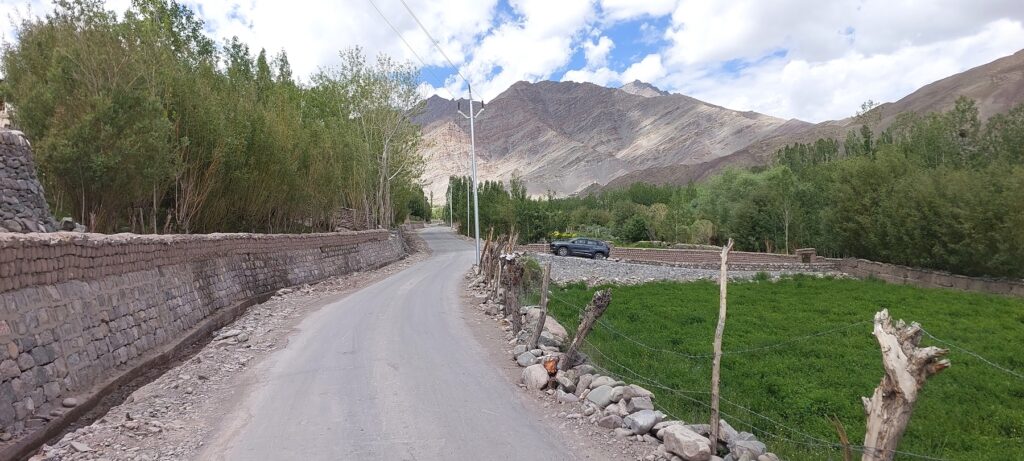
The village roads and pathways deserve special mention as they demonstrate remarkable synchronization with the terrain. Instead of fighting against the natural topography, these routes respect the land’s undulations, creating an organic network that winds through the village.
These paths, some paved and others well-trodden dirt tracks, connect various parts of the village, offering breathtaking vistas at every turn.
Dominating the village skyline is the magnificent Stok Palace, built in 1820 that grows out of the mountainside. This palace museum houses priceless artifacts, including royal crowns, copper coins, precious stones, and ancient texts, offering visitors a glimpse into Ladakh’s royal heritage.
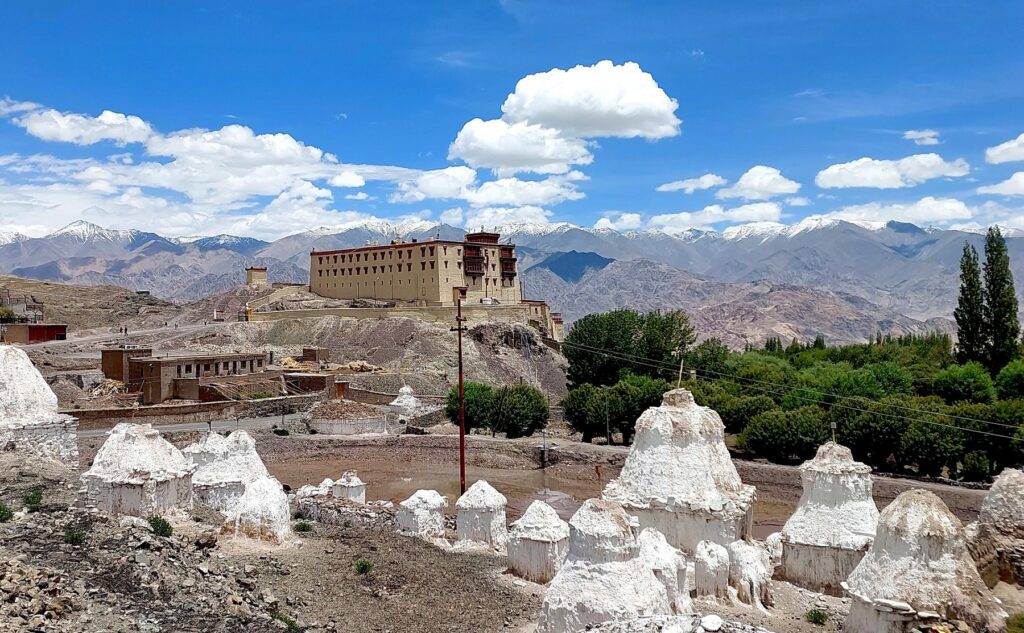
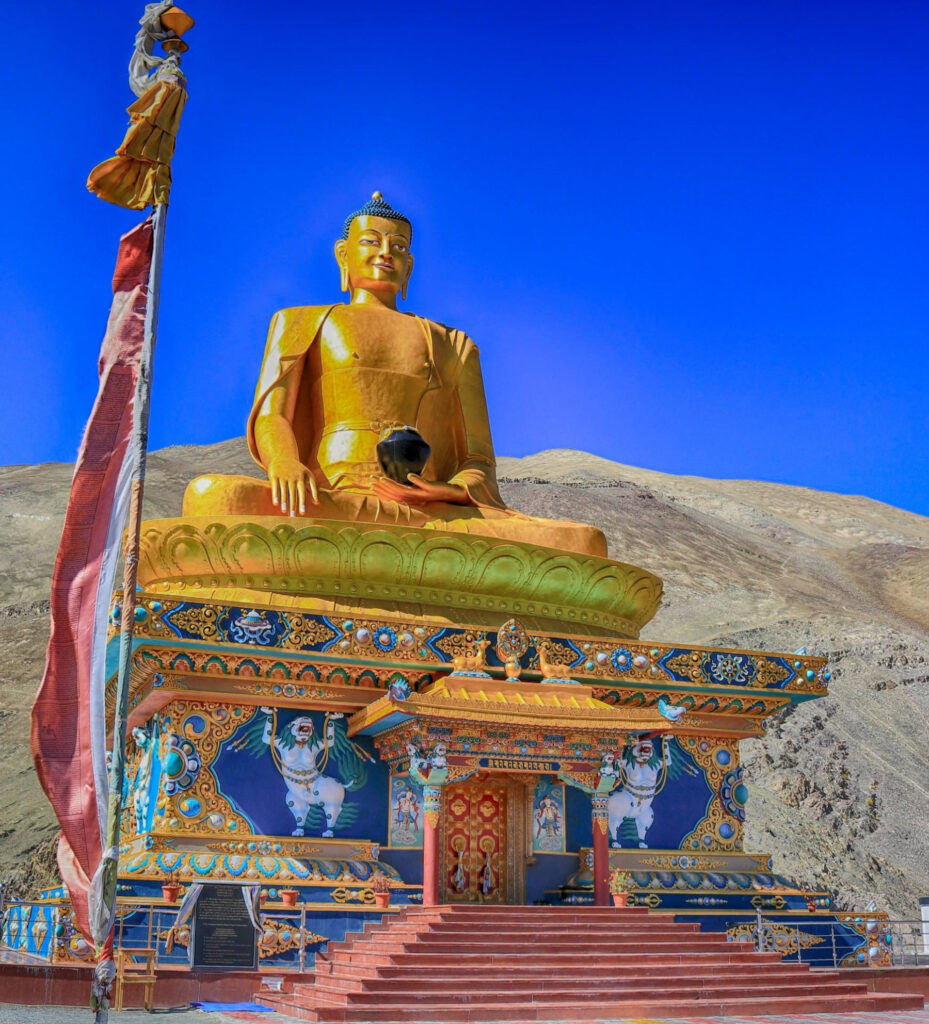
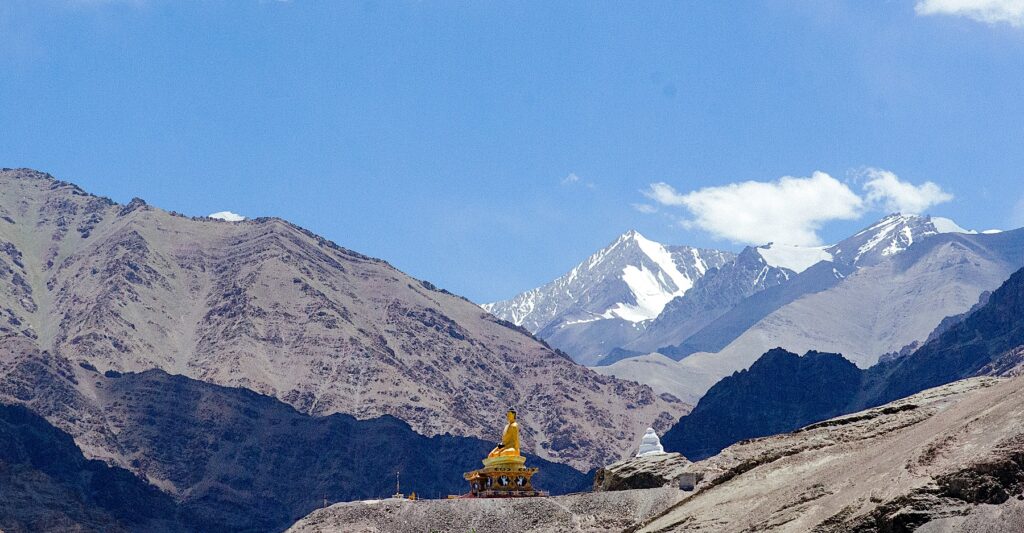
Near the palace stands an imposing Buddha statue, its golden form radiating serenity across the valley. The statue’s placement against the mountain backdrop creates a powerful spiritual atmosphere that draws both devotees and tourists.
During the brief summer months, the village comes alive with vibrant green fields, colorful wildflowers, and the constant melody of the flowing stream.
The winter transforms Stok into a different kind of beauty, with snow blanketing the fields and the surrounding mountains, creating a monochromatic landscape broken only by the warm lights from home windows and the continuing activities of village life.
Stok is particularly special because it maintains its authentic character despite being a popular tourist destination. The village continues to function as a living community where traditional agricultural practices, religious customs, and daily life routines remain unchanged by modern influences. Visitors can observe and even participate in various aspects of village life, from agricultural activities to traditional crafts and religious ceremonies.
The village represents a remarkable balance between human habitation and the natural landscape, where centuries of adaptation have created a sustainable way of life in one of the world’s most challenging environments.
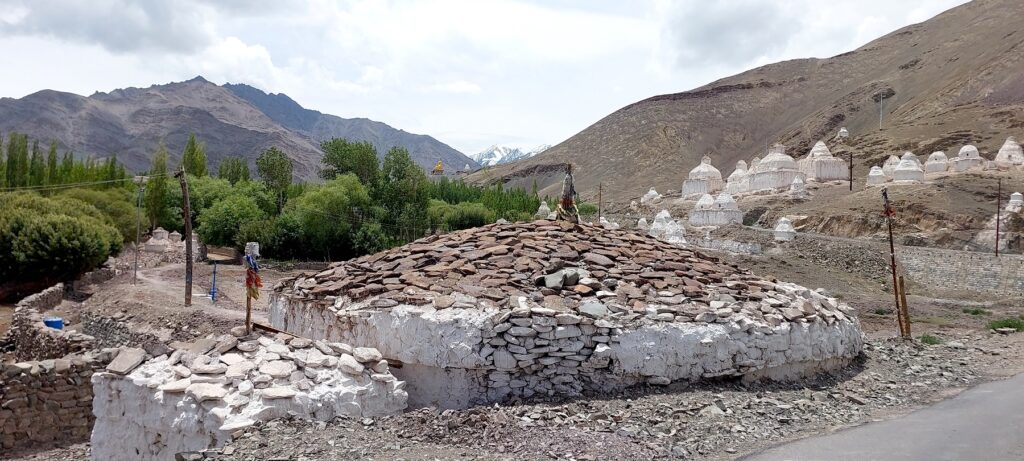
It stands as a testament to the ingenuity and resilience of Ladakhi culture, offering visitors spectacular views and profound insights into how communities can thrive in harmony with their natural surroundings.
Stok’s homestay program has become increasingly popular among domestic and international tourists due to its perfect blend of traditional hospitality and comfortable accommodations. These homestays are typically traditional Ladakhi houses, characterized by their distinctive architecture featuring mud-brick construction, wooden beams, and peaceful courtyards. Many of these homes have been carefully adapted to accommodate guests while maintaining their authentic character.
The accessibility from Leh makes Stok an ideal destination for such experiences. The village is just a 15–20-minute drive from Leh city, connected by a well-maintained road that winds through spectacular landscape. This proximity to Leh allows visitors to experience rural life without sacrificing access to urban amenities when needed.
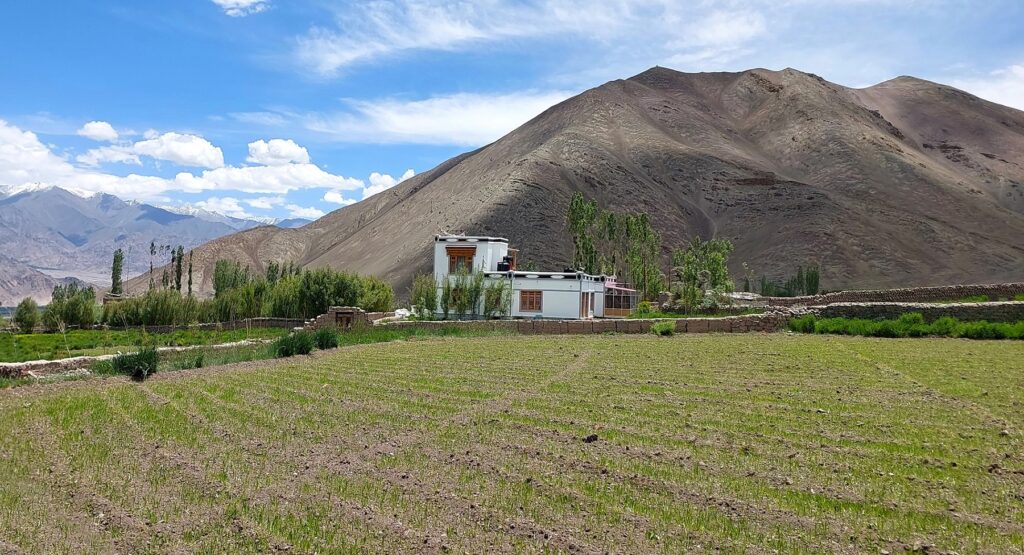
The homestay experience itself is deeply immersive. Guests typically stay in rooms combining traditional Ladakhi elements with modern comforts. The rooms often feature traditional low wooden beds, thick blankets from local wool, and windows that frame stunning mountain views.
What makes these stays particularly special is the opportunity to become part of a Ladakhi family’s daily life. Visitors can participate in farming activities, learn about traditional agricultural practices, and help prepare traditional Ladakhi meals in the family kitchen, learning about local ingredients and cooking methods. They can also learn about the traditional architecture and maintenance of these mud houses besides, interacting with village elders and learn about their oral histories and traditions.
The meals served during homestays are a highlight for many visitors. Guests typically enjoy authentic Ladakhi cuisine prepared from locally sourced ingredients, often including vegetables from the family’s fields.
The experience is particularly enriching during local festivals and agricultural seasons when visitors can witness and participate in community celebrations and activities. Whether it’s the barley harvest, religious festivals at the local monastery, or traditional wedding ceremonies, staying with a local family provides unique access to these cultural events.
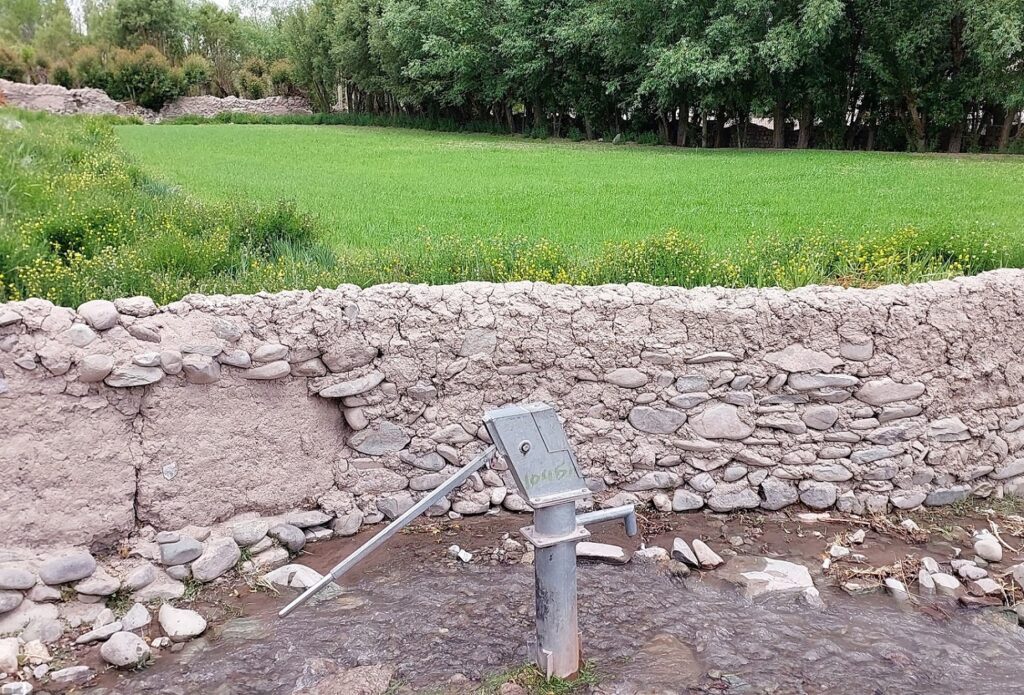
This combination of easy accessibility from Leh, authentic cultural experiences, comfortable accommodations, and the warm hospitality of Ladakhi families has made Stok’s homestay program a model for sustainable tourism in the region. It offers visitors not just a place to stay but a genuine opportunity to understand and appreciate the unique way of life in this high-altitude desert landscape.
From the tranquil setting of Stok village, the majestic Stok Kangri Mountain presents an awe-inspiring sight, its towering presence marking the beginning of both an iconic trek and the legendary Karakoram range.
Standing proudly at 20,187 feet (6,153 meters), Stok Kangri dominates the village’s southern skyline. The mountain’s northern face is visible from the village, offering a tantalizing preview of what awaits adventurers attempting its ascent. The sight of its snow-covered peak, especially dramatic during sunrise and sunset when it takes on golden and rosy hues, has become synonymous with the village’s identity.
The village is the primary gateway to the Stok Kangri trek, one of Ladakh’s most popular high-altitude treks. The trek’s base camp preparations typically begin in the village, where trekkers can find local guides, arrange for equipment, and acclimate to the altitude.
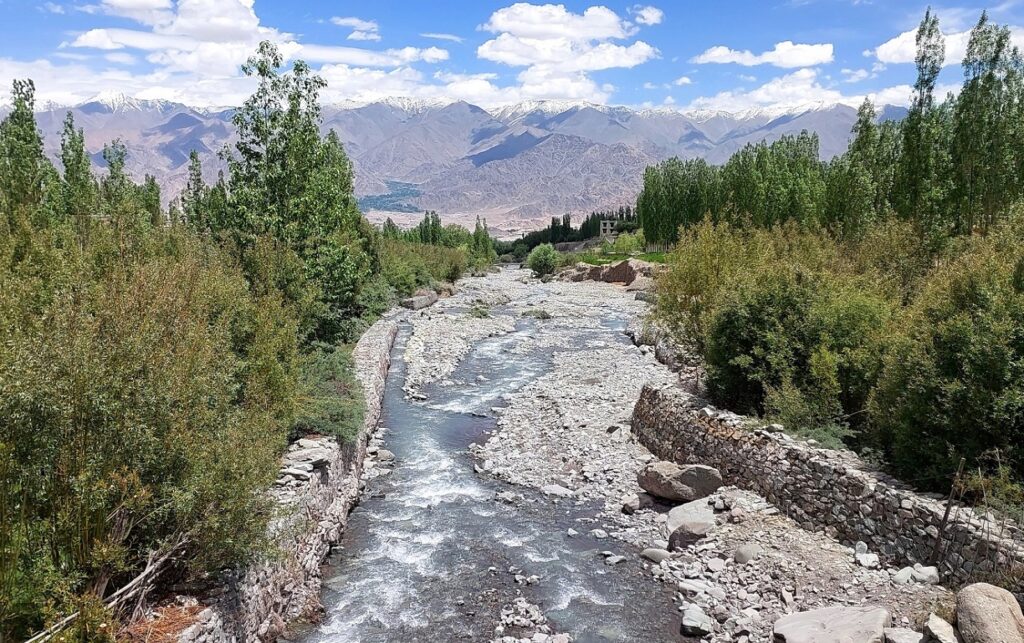
The Karakoram foothills influence the village’s climate and ecology significantly. The mountain range acts as a natural barrier, affecting local weather patterns and contributing to the area’s characteristic arid climate. Yet, the glacial melt from these mountains provides the crucial water supply that sustains the village’s agricultural activities throughout the year.
The village offers perfect vantage points for photographers and nature enthusiasts to capture the interplay of light and shadow on the mountain faces throughout the day.
Stok village is a remarkable testament to the harmonious coexistence between human settlement and the mighty mountains of Ladakh. From its traditional mud-brick homes and winding pathways to its organic agricultural fields and ancient monasteries, every aspect of the village reflects centuries of adaptation to this high-altitude desert environment.
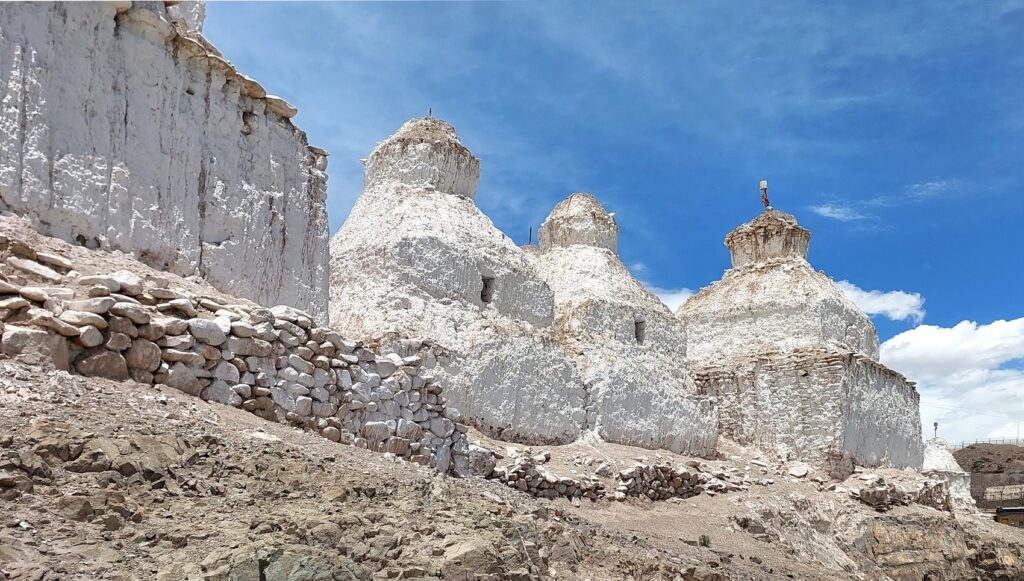
The village offers visitors a unique blend of experiences – from the cultural richness of homestays and the historical significance of Stok Palace to the adventurous allure of Stok Kangri and the beginning of the Karakoram range. Here, beneath the towering peaks and amidst the flowing streams, traditional Ladakhi life thrives, making Stok a destination and a living embodiment of mountain culture. Whether one comes for its stunning landscapes, rich cultural heritage, trekking opportunities, or to experience the tranquillity of mountain life, Stok village provides an unforgettable glimpse into the heart of Ladakh’s timeless beauty and resilience.
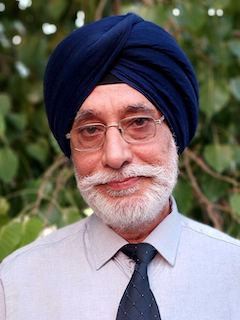
Sarbjit Bahga (b1957) is a Chandigarh-based architect, author, photo artist, and archivist. He is the Principal Architect of Bahga Design Studio LLP. Earlier, Bahga worked in the Department of Architecture, Punjab, Punjab Health Systems Corporation, and Punjab Mandi Board in various positions.
He has more than 42 years of practical experience designing various types of buildings, complexes, and large campuses. His completed works include an eclectic range of administrative, recreational, educational, medical, residential, commercial, and agricultural buildings. A monograph on his selected works titled “MODERN REGIONALISM: The Architecture of Sarbjit Bahga” has been published.
Bahga is also a keen researcher and a prolific architectural writer. He has 12 books to his credit, which include Modern Architecture in India, New Indian Homes, Le Corbusier, and Pierre Jeanneret: The Indian Architecture, Trees in Urban Habitat, Landscaping Human Habitat, New Indian Architecture -1947-2020, and Hand-Drawn Perspectives and Sketches. Bahga’s contribution to architecture has been largely recognized. He is a three-time recipient of the World Architecture Community Awards. His name has been featured in the Guinness Book of World Records for designing the “longest covered concrete corridor” in Vidya Sagar Institute of Mental Health, Amritsar.