
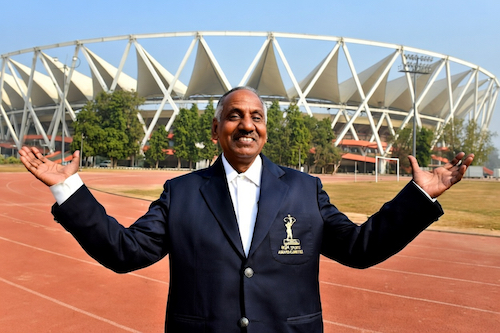
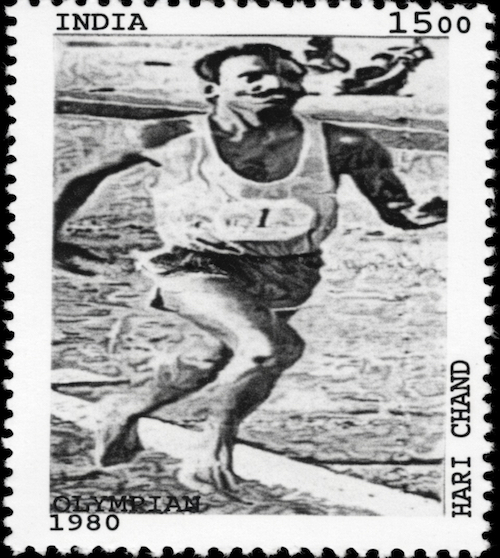
Today, we remember and pay our respects to the great Indian athlete and Olympian on his 73rd birth anniversary. Hari Chand (1 April 1953 – 13 June 2022) was a long-distance (10,000 m & 5,000 m) runner who represented India in the 1976 Montreal Olympics and 1980 Moscow Olympics. Apart from that, he was a double gold medallist in the 1978 Bangkok Asian Games and a gold and bronze medallist in the 1975 Seoul Asian Athletics Championships. He was conferred with the Arjuna Award by the Union Government. Sh. Hari Chand belongs to the village Ghorebaha in my home district, Hoshiarpur and settled there to take advantage of the clean environment of rural Punjab.
I came in contact with Sh. Hari Chand ji on 30 September 2020, and talked to him on the phone at length. During those pandemic days, we were all confined to our houses. Since he belonged to the village of Ghorebaha in my home district, Hoshiarpur, I thought I must talk to this great man. I found his mobile number and talked to him at length. Since then, we have become very good friends.
We used to talk on the phone about once a month to check in on each other’s well-being. Our friendly meeting was yet to take place, but God had some other plans. He left this world on 13 June 2022. His loving words, “Bahgian waleo, kadi aa ke mil jao”, will always haunt me. Our friendship, which lasted about 2 years, ended abruptly, but his memories and humble voice (which I listened to on the phone) will always remain with me.
In those heartfelt conversations, the man I came to know and love as a dear friend slowly revealed the extraordinary story of his life — a journey of raw talent, unbreakable grit, and quiet dignity that still fills my eyes with tears of pride and sorrow. Hari Chand ji was not just an athlete; he was living proof that greatness can rise from the humblest soil.
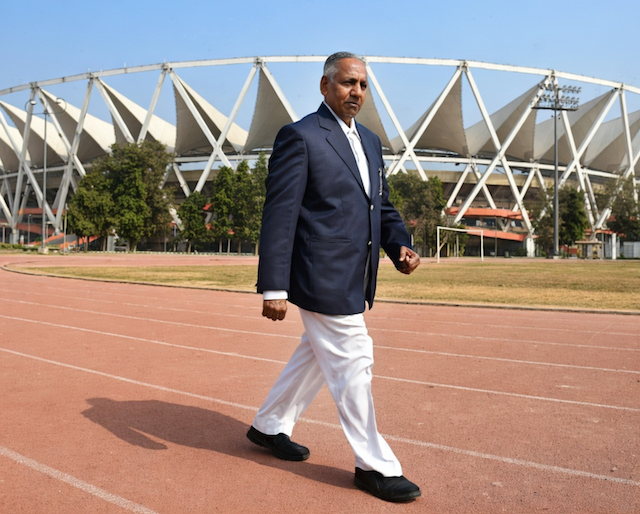
Born on 1 April 1953 in Punjab, he grew up in a nomadic Bazigar clan. As a young boy, he would accompany his father, Jaggu, as he performed acrobatics (bazis) in villages like Bahga and Bahla — the very places connected to my own life. He studied only up to matriculation at BSD High School in Kandhala Jattan before joining the Central Reserve Police Force (CRPF), where he rose to a senior position and retired early in 1997 as an Assistant Commandant. Even in uniform, he dominated the All-India Police Games for five consecutive years, winning triple gold medals in the 1,500 m, 5,000 m, and 10,000 m events — a feat that announced the arrival of a future legend.
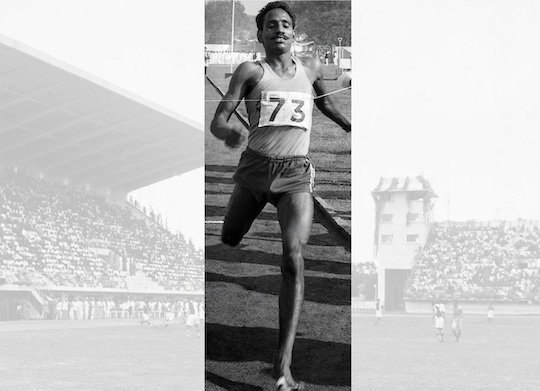
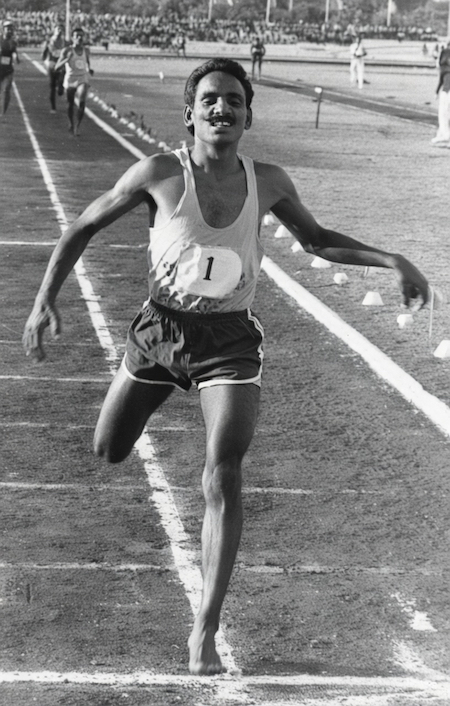
His international breakthrough came in 1974 when he won the national 5,000 m title and finished second in the 10,000 m, catching the eye of the entire country. By 1975, at the Asian Athletics Championships in Seoul, he stood on the podium twice — gold in the 10,000 m and bronze in the 5,000 m. That same year, the Government of India honoured him with the Arjuna Award, recognising a star who had already begun to rewrite India’s distance-running history.
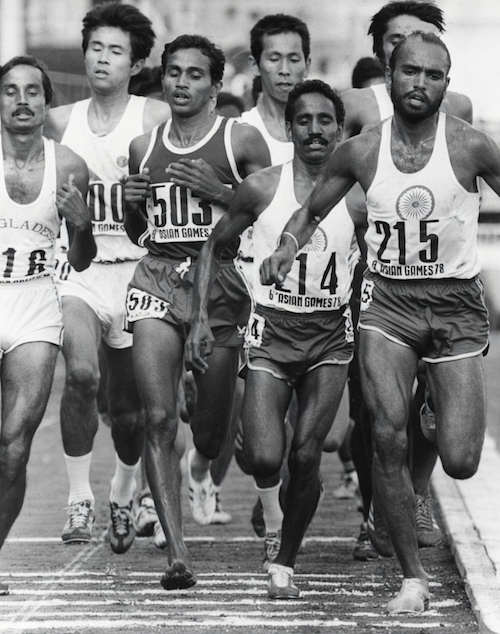
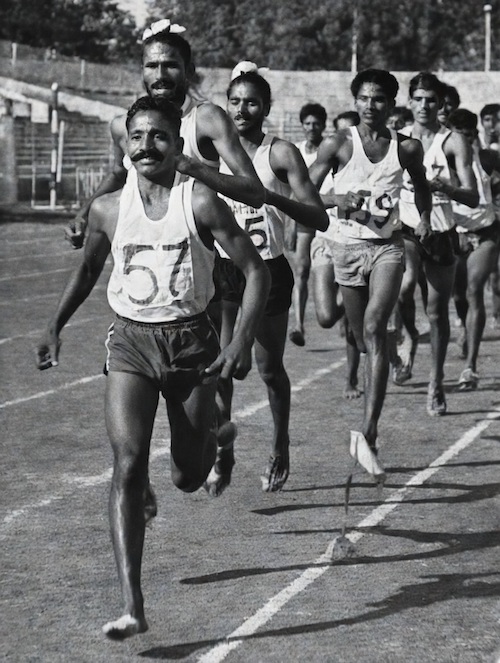
Then came the moment that still gives me goosebumps whenever I think of it. At the 1976 Montreal Olympics, with only a pair of ordinary khaki canvas PT shoes that were unfit for such a grand stage, Hari Chand ji made a courageous decision: he would run barefoot. In the 10,000 m heats, this son of rural Punjab finished 8th in the world with a time of 28:48.72 — a new Indian national record that stood unbroken for 32 long years until it was finally bettered in 2008. He did not reach the final, but the world took notice of India’s barefoot warrior. After the Games, the University of Nevada in the USA offered him a prestigious fellowship on the condition that he run for America. He politely declined — for the love of his motherland.
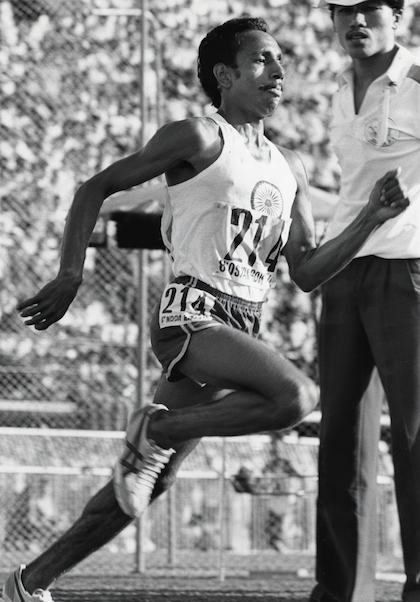
Two years later, at the 1978 Bangkok Asian Games, he reached the absolute peak of his career, winning double gold in both the 5,000 m and 10,000 m events. He was unstoppable. In 1980, he returned to the Olympics in Moscow, finishing 10th in the 10,000 m heats and 22nd in the marathon — competing with the same quiet determination that defined every step of his life.
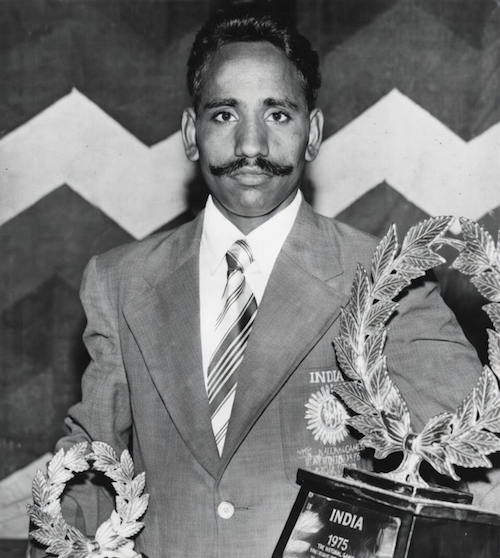
Even after hanging up his spikes, he earned a national coaching diploma in 1985 and continued mentoring young athletes, including many in the CRPF. He remained a rival and friend to legends like Shivnath Singh, beating him in several races, yet he never boasted. In our phone calls, he spoke with the same humility about performing acrobatics with his father as he did about standing on the Asian Games podium. He never sought the limelight, never lobbied for higher honours. I often felt that such a giant of Indian sports deserved at least a Padma Shri, but perhaps his modest background meant he lacked the “connections” that sometimes matter more than medals. Yet he was completely at peace — content with the love and respect of his fellow citizens.
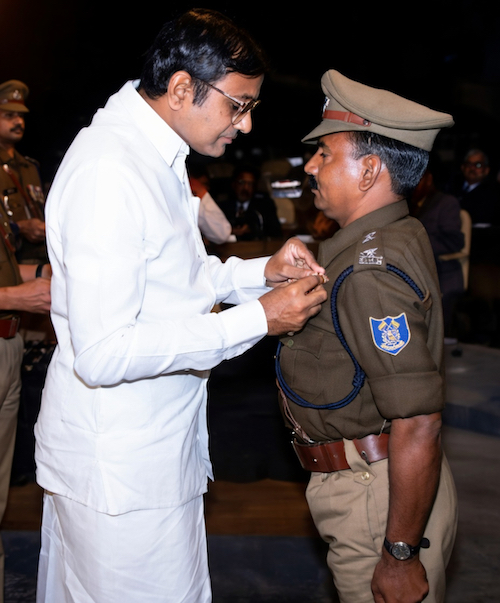
Today, on what would have been his 73rd birthday, my heart aches at the unfulfilled promise of finally meeting him in Ghorebaha. I can still hear his gentle voice inviting me: “Bahge waleyan nu mil ke khushi hovegi.” Sh. Hari Chand ji, my dear friend, you may have left us too soon, but your barefoot strides, your golden triumphs, and above all, your unmatched humility have left footprints on my soul that time can never erase. You ran for India with nothing but heart — and today, India remembers you with the same heart full of gratitude and love.
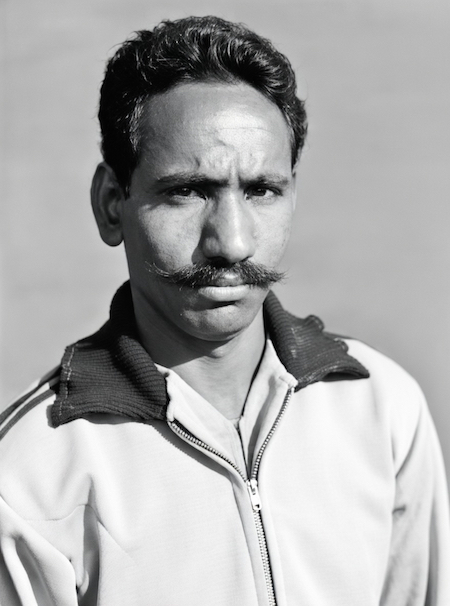
Rest in peace, my friend. Your race is over, but your legacy will keep inspiring generations to run with courage, dignity, and pure love for the tricolour.
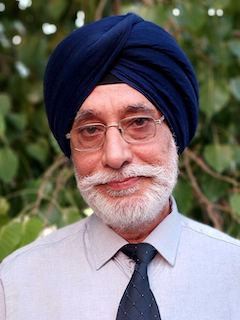
Sarbjit Bahga (b1957) is a Chandigarh-based architect, author, photo artist, and archivist. He is the Principal Architect of Bahga Design Studio LLP. Earlier, Bahga worked in the Department of Architecture, Punjab, Punjab Health Systems Corporation, and Punjab Mandi Board in various positions.
He has more than 42 years of practical experience designing various types of buildings, complexes, and large campuses. His completed works include an eclectic range of administrative, recreational, educational, medical, residential, commercial, and agricultural buildings. A monograph on his selected works titled “MODERN REGIONALISM: The Architecture of Sarbjit Bahga” has been published.
Bahga is also a keen researcher and a prolific architectural writer. He has 12 books to his credit, which include Modern Architecture in India, New Indian Homes, Le Corbusier, and Pierre Jeanneret: The Indian Architecture, Trees in Urban Habitat, Landscaping Human Habitat, New Indian Architecture -1947-2020, and Hand-Drawn Perspectives and Sketches. Bahga’s contribution to architecture has been largely recognized. He is a three-time recipient of the World Architecture Community Awards. His name has been featured in the Guinness Book of World Records for designing the “longest covered concrete corridor” in Vidya Sagar Institute of Mental Health, Amritsar.