
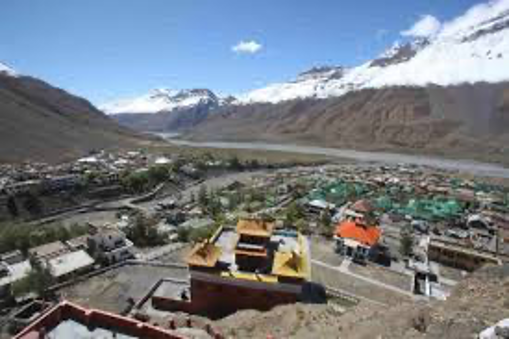
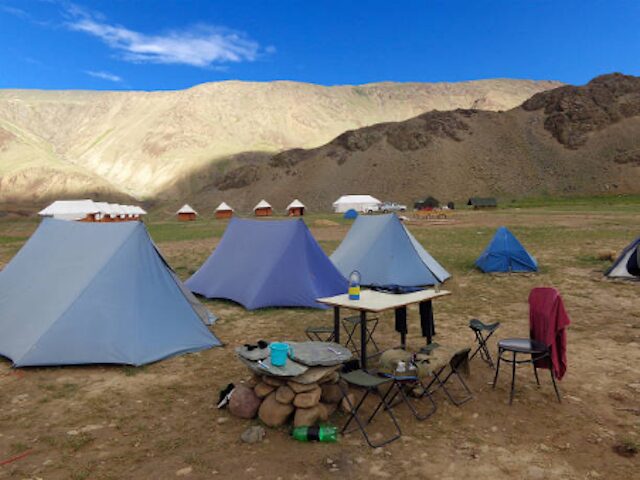
Himachal being a mountain state holds an ample opportunity to be promoted as an ecotourism destination. It covers all the important parameters of ecotourism like landscape, flora, fauna, culture, tradition and opportunities for different tourism activities. It is since 1992, Spiti has been opened to the outside world as the tourism has set foot into the valley. The rich culture of Spiti and its uniqueness in landscape makes tourism a very important livelihood option for the local community. While tourism provides basic income generating activities for the local populace, it also results in negative impact on the area’s culture and environment. At the ecosphere level, a planned and strategic approach would help in the conservation of this mountain region providing the tourists a memorable experience and generates income to the local community. ‘Surreal Spiti’ is an endeavour by Ecosphere to promote ‘Responsible Eco-travel’ in the Spiti valley in Himachal Pradesh. The objective of this programme is to develop unique, authentic and reliable tourism activities and link them to community livelihoods and ensure the conservation of culture and nature.
Dr. Ina Rani (2024) conducted a study on Eco-tourism in Himachal Pradesh. The study also accesses the awareness level of Eco- tourism among tourists. The study revealed that 59% of the tourist respondents had not experienced ecotourism. It was observed that ecotourism can provide economic opportunities for local communities by creating jobs in hospitality and conservation. The study had also shown that 33% of the respondents faced parking issues, 27% tourists faced crowd problem while experiencing ecotourism in the state and banking and communication problems has been experienced by 51% of the tourists. It is suggested that proper banking and communication services for tourists must be available at ecotourism spots and eco- tourism spots should also have clear sign boards for easy access and attention for improving the infrastructure for parking facilities.
Sahani (2021) explores the application of strength-weakness-opportunity-threat (SWOT) based analysis for ecotourism planning strategies formulation in Kullu district, Himachal Pradesh. Ecotourism is considered as a valuable manifestation of sustainable tourism and successful path for conservation and sustainability globally. SWOT analysis is a useful tool for ecotourism strategy formulation. On the basis of present situation and future prospects, the strengths, opportunities, weakness, and threats for ecotourism were identified. By using SWOT method ecotourism strategies were formulated and a hierarchy of decision strategies was identified integrating SWOT, AHP and FAHP approach. The formulated strategies would be of great help in creating environmental and cultural awareness, conserves natural resources and environment, preserves local cultural resources and also provides positive experience to the visitors and hosts, providing the economic support to the local community generating economy for conservation and reduces the ecological footprint of tourism. Thus the adaptation and implementation of these ecotourism strategies in the study area would be of great help to achieve the goal of sustainability and leads towards sustainable tourism development. The result of the study will also be helpful to the environmental planner and other related organization for sustainable eco-tourism planning.
Sharma and Prakash (2014) studied the eco–tourism and its development in Tribal Regions of Himachal Pradesh. Eco tourists are often motivated by the chance to experience tribal culture, which can have a positive and affirming effect on that culture. The schemes like Home Stay on the one hand saves the tribal areas from becoming concrete jungles and on the other hand gives a firsthand experience of tribal culture to the tourists. It is important to analyze what should or should not be done so that tourism is developed in tribal regions of Himachal Pradesh in a sustainable manner. It was found that to promote tourism in tribal areas of Himachal Pradesh schemes like homestays, Har gaon ki kahani, etc. should be promoted. Incentives should be given to private developers to develop ecotourism projects in the state. The unregulated growth of tourism should be monitored from time to time. Heli-taxi scheme in tribal areas conceptualized by the state government can also attract high-end tourists. The different tribal festivals can also form a significant portion of a tourist’s itinerary. The study also focuses that tribal festivals can be promoted through advertisements, brochures etc. But care needs to be taken so that these are not converted into mere objects thus losing their original identity. The carrying capacity of destinations should not be exceeded.
Sahani (2020) conducted study to identify potential ecotourism site using the analytical hierarchy process (AHP) and Geographic information System (GIS) in Kullu District. The study includes 13 main elements such as slope, topographic roughness, vegetation, surface water accessibility, climate, elevation, protected area, visibility, road proximity, soil, groundwater and geology. The study concluded that out of total geographical land of the district 41% area has been considered as high to very high suitable zone for eco-tourism site development. The promotion and development of Spiti as a responsible travel destination is critical as it will not only assist in the preservation of the fragile ecology of the region and unique culture but it will also contribute in providing a sustainable source of income to the local populace.

A scientist with Himalayan Forest Research Institute, Shimla, Shilpa works as the Chief Technological Officer with the Forest Ecology and Climate Change Division.