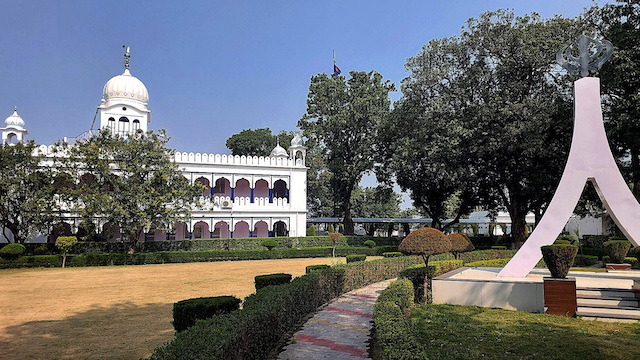
Nestled in the peaceful landscapes of Punjab’s Doaba region, Gurdwara Shaheed Baba Rattan Singh Ji stands as a touching reminder of courage, sacrifice, and faith in Sikh history. Located in Chabbewal, about 10 kilometres from Hoshiarpur city in the Hoshiarpur district of Punjab, this sacred site honours the life and martyrdom of Shaheed Baba Rattan Singh Ji. More than just a place of worship, it serves as a spiritual hub where people gather to reflect on core Sikh values like equality, justice, and selfless service. Easily accessible by local roads, the Gurdwara attracts devotees and visitors seeking solace and inspiration in its serene surroundings.
Historical Background
The Gurdwara’s story is deeply intertwined with the life of Shaheed Baba Rattan Singh Ji, a devoted Sikh warrior born in the late 17th century in the village of Bathula, near Hoshiarpur. Raised in a simple family with two brothers, he endured early hardship after losing his mother, Mata Gurdai. Seeking purpose, young Rattan Singh journeyed to Anandpur Sahib, the centre of Sikhism at the time. There, he served humbly in Guru Gobind Singh Ji’s household, performing daily tasks with devotion. This experience transformed him: he took Amrit, the Sikh initiation rite, and embraced the Khalsa way of life, committing to principles of bravery and righteousness.
Guided by Guru Gobind Singh Ji, Baba Rattan Singh Ji chose not to return home. Instead, he settled in the remote, barren area of Chabbewal. Living modestly, he dedicated himself to spreading Guru Nanak Dev Ji’s teachings on love, truth, and service. His efforts uplifted local villagers—mostly poor farmers facing oppression—by preaching Gurmat (the Sikh path) and fostering community and moral strength.
Baba Rattan Singh Ji’s contributions extended beyond teaching; he became a protector of the vulnerable. During an era when pilgrims travelling to Anandpur Sahib were frequently robbed by bandits like Ranghars and Gujjars, he teamed up with Sahibzada Ajit Singh Ji, Guru Gobind Singh Ji’s eldest son, to ensure their safety. It created a secure pathway for devotees, bolstering the Sikh community.
The Ultimate Sacrifice
Baba Rattan Singh Ji’s martyrdom occurred on March 7, 1703, during a heroic rescue mission. Guru Gobind Singh Ji dispatched Sahibzada Ajit Singh and 200 Sikh warriors to free a newlywed bride abducted by the tyrant Pathan Jabar Khan from Bajwara. Baba Rattan Singh Ji was instrumental in planning the attack and fought valiantly. Although the Sikhs captured Jabar Khan, the battle was fierce, leaving many warriors, including Baba Rattan Singh Ji, severely wounded. He returned to Chabbewal but succumbed to his injuries, achieving martyrdom in the pursuit of justice. His cremation site became the foundation for the Gurdwara, forever preserving his legacy as a defender of the oppressed and a true Sikh ideal.
Daily Life and Community Activities
Today, the Gurdwara upholds these values through its routines and initiatives. Daily programs include morning Nitnem (4:15 AM to 5:15 AM) followed by Kirtan until 6:30 AM, and evening Rehraas Sahib (6:00 PM to 6:30 PM) with additional Kirtan. These sessions provide spaces for prayer, reflection, and unity. The site also hosts welfare events, such as eye camps in collaboration with organisations like Rotary Clubs, extending aid to those in need and embodying Baba Rattan Singh Ji’s spirit of service.
Campus and Architecture
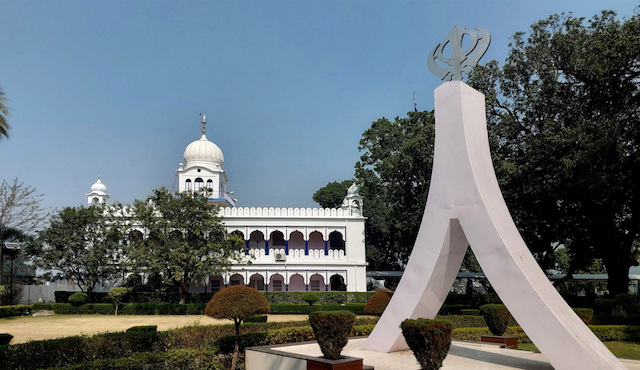
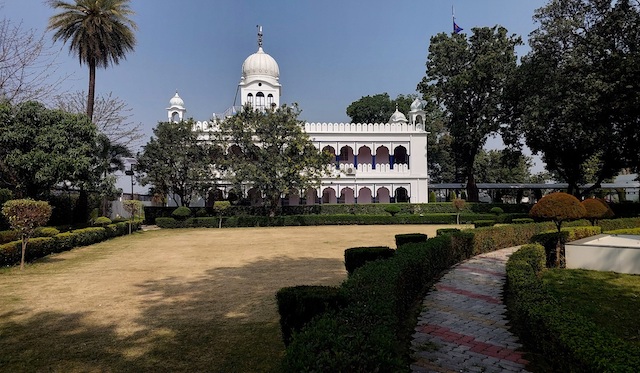
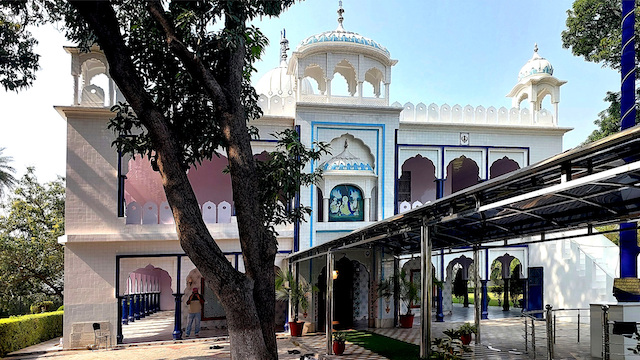
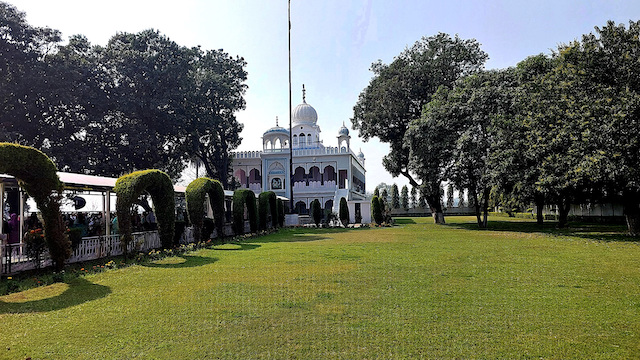
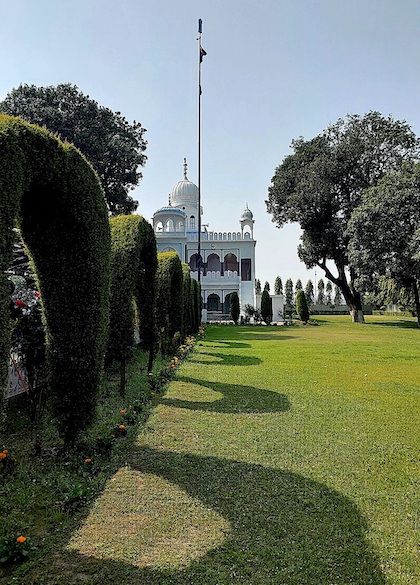
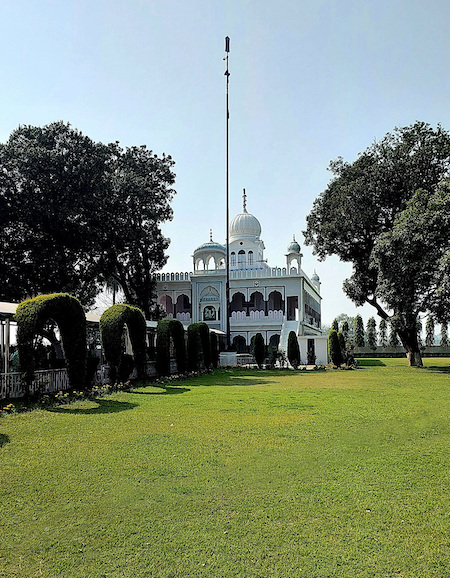
The Gurdwara’s welcoming campus blends beauty with functionality, making it an ideal spot for religious tourism. Key features include a spacious main hall for gatherings and ceremonies, a langar hall serving free meals to promote equality, lush green parks for meditation, and ample parking. The architecture combines traditional Sikh elements—like domes, arches, and the Khanda symbol—with modern amenities for comfort.
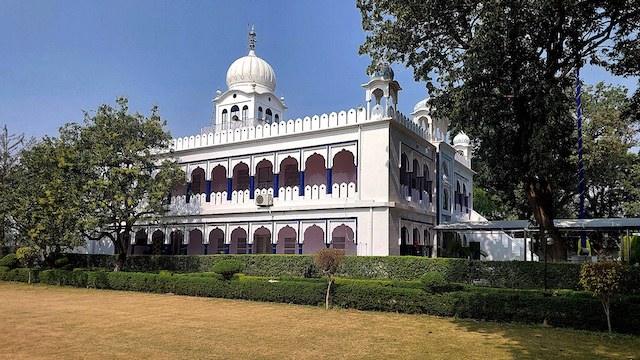
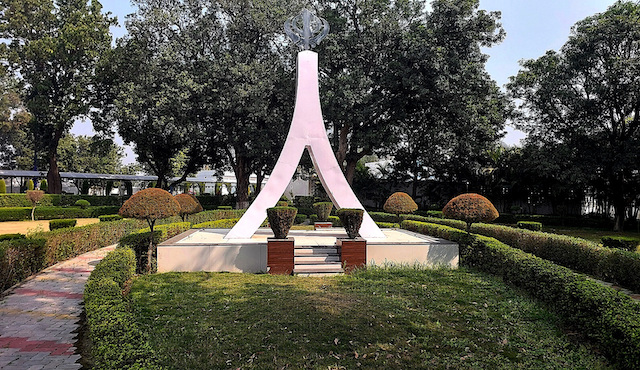
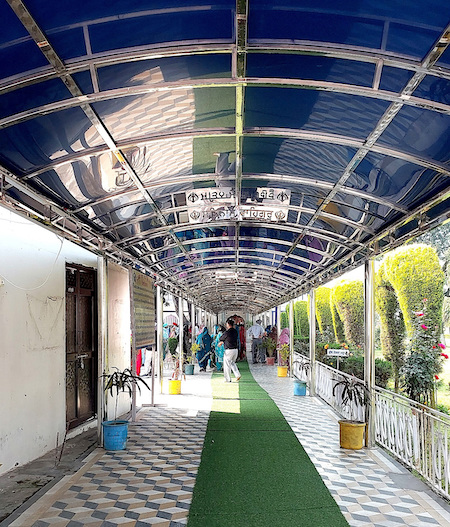
At the centre stands the white Gurdwara building, symbolising purity, accented with blue highlights for a calming effect. Surrounding it are expansive lawns, a tall flagpole flying the Sikh flag, and colourful paved pathways in red, yellow, and grey. Covered walkways with blue arched roofs and green carpet runners lead to the entrance, facilitating easy movement. Landscaping includes trimmed hedges, shade trees, potted flowers, and a V-shaped monument on a raised platform for reflection. The design is symmetrical and inviting, encouraging peaceful strolls and contemplation, though grass may vary in lushness by season.
A Hub for Heritage and Tourism
As part of Punjab’s Sikh heritage, the Gurdwara attracts tourists exploring sites such as Takht Sri Keshgarh Sahib and Gurdwara Garna Sahib. It’s a peaceful stop on the way to Anandpur Sahib, offering more intimate experiences than busier shrines. Visitors can join Akhand Path or Sukhmani Sahib recitations, participate in seva (volunteer work) in the langar or gardens, or attend annual events like the Salaana Jor Mela and Nagar Kirtan—featuring processions, hymns, and communal meals.
For history enthusiasts and families, it’s a chance to learn about Sikh resilience through real stories of sacrifice. The serene setting encourages educational outings, where one can pay their respects at the martyrdom site and gain insights into how figures like Baba Rattan Singh Ji stood up to injustice. With facilities for booking services like Anand Karaj weddings and an online presence for planning visits, the Gurdwara makes religious tourism accessible and meaningful. In Hoshiarpur district, surrounded by attractions like citrus gardens and ancient temples, it adds to a diverse travel experience, promoting sustainable tourism that honours local culture.
In essence, Gurdwara Shaheed Baba Rattan Singh Ji is a living tribute to a hero’s faith and bravery. Whether seeking spiritual peace or discovering Punjab’s essence, it offers a heartfelt mix of history, serenity, and community—inviting everyone to embrace lessons of service and sacrifice.
- All photos are by the author, who visited this historic place on February 26, 2026, to attend his niece’s wedding.
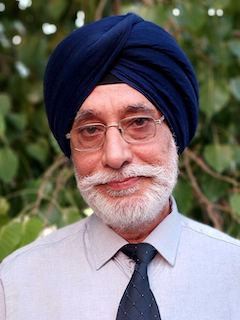
Sarbjit Bahga (b1957) is a Chandigarh-based architect, author, photo artist, and archivist. He is the Principal Architect of Bahga Design Studio LLP. Earlier, Bahga worked in the Department of Architecture, Punjab, Punjab Health Systems Corporation, and Punjab Mandi Board in various positions.
He has more than 42 years of practical experience designing various types of buildings, complexes, and large campuses. His completed works include an eclectic range of administrative, recreational, educational, medical, residential, commercial, and agricultural buildings. A monograph on his selected works titled “MODERN REGIONALISM: The Architecture of Sarbjit Bahga” has been published.
Bahga is also a keen researcher and a prolific architectural writer. He has 12 books to his credit, which include Modern Architecture in India, New Indian Homes, Le Corbusier, and Pierre Jeanneret: The Indian Architecture, Trees in Urban Habitat, Landscaping Human Habitat, New Indian Architecture -1947-2020, and Hand-Drawn Perspectives and Sketches. Bahga’s contribution to architecture has been largely recognized. He is a three-time recipient of the World Architecture Community Awards. His name has been featured in the Guinness Book of World Records for designing the “longest covered concrete corridor” in Vidya Sagar Institute of Mental Health, Amritsar.