
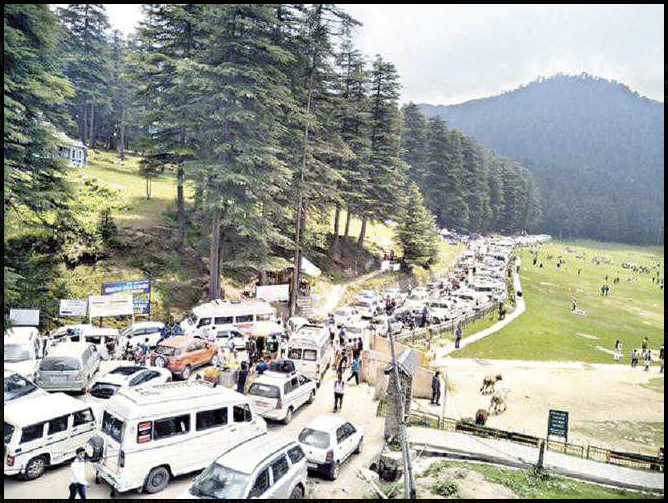
Himachal Pradesh, often referred to as the “Land of Gods”, is also a land of breathtaking beauty. Tourists from across the world flock to its picturesque valleys and snow-capped peaks seeking peace and tranquility. However, beneath this peace and charm lurks a growing crisis: the suffocating crowds in its popular hill stations.
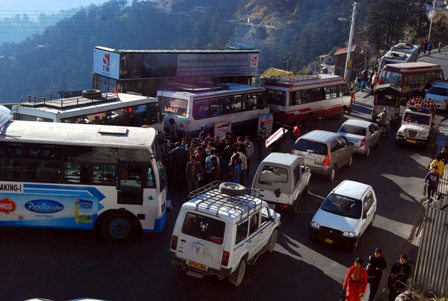
Despite being a small hill state, Himachal’s economy depends heavily on tourism. Yet, the influx of tourists is concentrated in less than half a dozen destinations – primarily Shimla, Manali and Dharamshala. These towns, built long before the era of the automobile, are crisscrossed by narrow, winding roads that are not equipped to handle the volume of today’s vehicles. These roads, which are barely wide enough for a scooter, now regularly find themselves clogged with parked motorcycles, cars and horn-honking traffic, creating daily chaos.
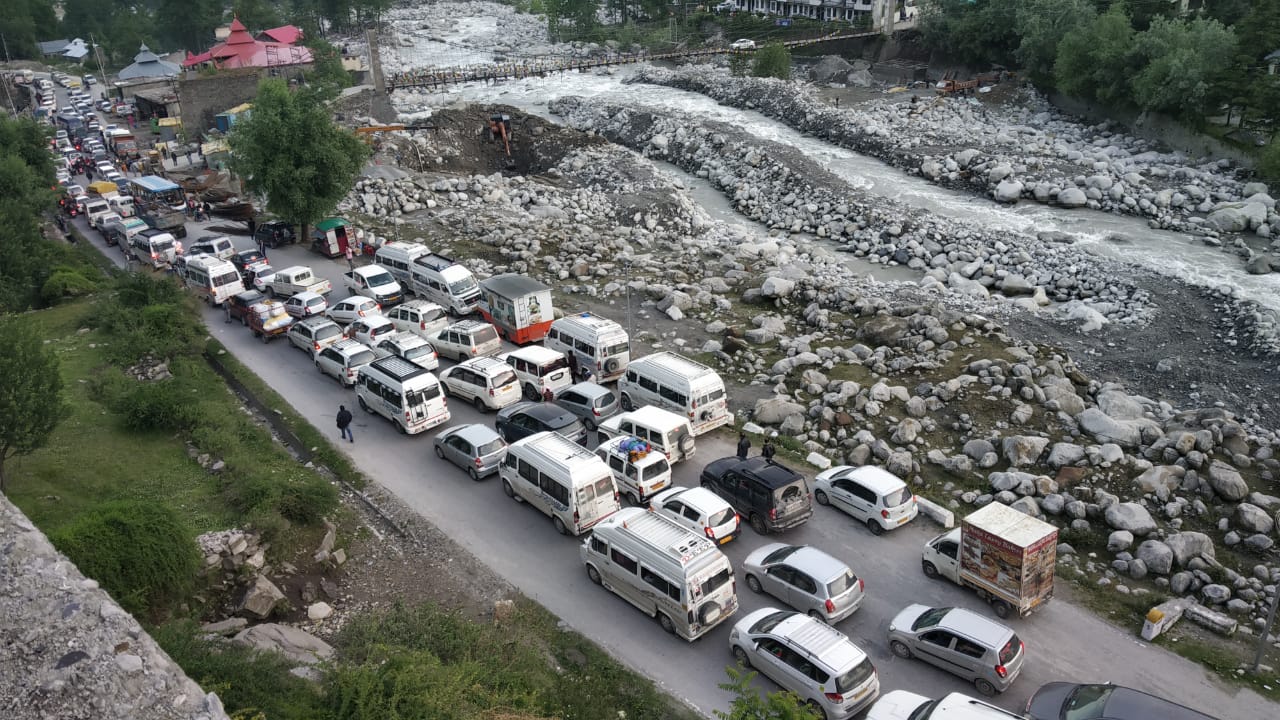
Himachal’s towns lack alternative transport systems. The absence of auto-rickshaws, app-based taxis like Ola and Uber or basic public transport in the areas where both locals and tourists depend on private vehicles. As a result, these vehicles are parked haphazardly in already congested lanes. The most affected are the elderly and children, who have to wade through traffic with extreme caution. For them, stepping out of the house is like risking their lives.
The situation is made even worse by the lack of space to expand this infrastructure. Most of these towns are surrounded by hills and forests, making road widening or large construction almost impossible. Parking remains a perennial nightmare, and the need for vehicle access is often overlooked in new construction.
What can be done?
While the government may not be able to widen roads or create multi-level parking in every city, there are some sensible, urgently needed measures that can ease this daily pressure.
1. De-centralize government offices
One of the main reasons for weekday congestion is the heavy rush in government offices in these hill cities. Shifting these offices to the outskirts or open suburban areas will not only decongest city centres but also help in better planning of office complexes with dedicated parking and public access roads.
2. Relocate non-compliant institutions
Coaching centres, private institutes and call centres that operate without parking facilities should be mandated to shift out of city centres. These institutes attract hundreds of students and staff daily, increasing the number of vehicles on roads/lanes and leading to jam-like situations even during non-tourist seasons.
3. Reconsider exam centre allocation
A less discussed but important source of weekend congestion is the use of centrally located government schools as exam centres. Every Sunday, thousands of candidates come in private vehicles to appear for government recruitment exams. These schools, often located in the heart of city neighbourhoods, become the epicentre of the vehicular congestion problem. Allocating examination centres to schools located on the periphery of the city or accessible from major roads can dramatically reduce this burden.
4. Get walking space back for citizens
Ironically, in cities known for their natural beauty, even strolling in neighbourhoods has become unsafe. Creating sidewalks, stairs and pedestrian zones should be a priority, especially for the elderly and children who are now virtually confined indoors due to road safety concerns. Himachal’s tourism future and liveability depends not just on attracting visitors, but also on ensuring that the state’s beloved hill towns remain functional, walkable and safe for their residents. The beauty of these mountains must not be buried under a pile of honking vehicles and crumbling civic infrastructure. With tourists arriving in large numbers, the state stands at a critical juncture. It’s time for bold policy decisions, thoughtful urban planning, and a vision that respects both the mountains and the people who call them home.
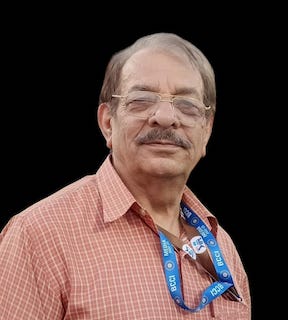
Arvind Sharma is an award winning bi-lingual journalist with more than 20 years of experience.
He has worked with Divya Himachal, Dainik Jagran, Dainik Bhasker, Vir Partap, Ajit and PTI.
In 2010, he was conferred the Himachal Kesri journalism award. He reports on the Tibetan Government in Exile, politics, sports, tourism and other topics. He lives in Dharamshala.