
External Affairs Minister S. Jaishankar’s stark warning to Western nations in Brussels this month was not just diplomatic talk—it was a prediction. “We have been doing this dirty work for the United States for about three decades, and the West, including Britain,” Pakistan’s Defense Minister Khawaja Asif admitted in April 2025. His words proved exactly what Jaishankar had been saying: those who play with terrorism will eventually find it coming back to hurt them.
The question is no longer whether the West’s dangerous game of flirting with terrorism will have consequences—it’s when and how badly they will hit.
The Dirty Work Admission
Asif’s honest admission came after the April 22, 2025 terror attack that killed 26 tourists in Pahalgam, Jammu & Kashmir. When questioned about Pakistan’s spy agency backing terrorist groups, he pulled back the curtain on a relationship that has shaped global terrorism for decades.
When US General Michael E. Kurilla calls Pakistan a “great partner” in fighting terrorism, he keeps alive the most dangerous lie in modern politics: the belief that countries can both fight terrorism and support it at the same time, depending on what serves their interests.
“That was a mistake, and we suffered for that,” Asif said, but the damage was already done. The West didn’t just ignore Pakistan’s support for terrorist groups—it actively helped and benefited from it when it served their fight against the Soviet Union in Afghanistan and later in the “War on Terror.”
How the Proxy War Never Ended
This partnership goes back to the 1980s, when the United States used Pakistan’s spy agency (ISI) to fund and arm fighters against Soviet forces in Afghanistan.¹ What started as a Cold War strategy became a permanent deal where Pakistan became the West’s contractor for dirty geopolitical work.
As Asif said, jihad “was invented by the West—it was not a jihad, it was a power struggle between two superpowers.” This shows the cold calculation behind Western anti-terrorism policy: terrorism is okay when it serves as a tool of foreign policy, but bad only when it targets Western interests.
India’s Painful Lessons
Jaishankar’s recent statement that “the fight between India and Pakistan was not just a conflict between two neighbors, but it was about fighting terrorism, which will eventually come back to haunt the West” carries the weight of bitter experience.
India learned this truth through terrible loss. Prime Minister Indira Gandhi’s murder in 1984 by her Sikh bodyguards was the result of violence that came from the complex web of militant activities that Pakistan was encouraging with Western backing.² The Khalistan movement that inspired her killers was itself influenced by the same proxy war tactics the West was pushing throughout South Asia.
However, the picture is more complex. There are conspiracy theories suggesting that terrorism in Punjab was also being encouraged by the Congress party itself. Many authors who were senior government officials at that time have written about these theories in their books, pointing to internal political games that may have made the crisis worse.³ Regardless of the internal political dynamics, the broader pattern remains: flirting with terrorism—whether by outside powers or local political actors—creates uncontrollable forces that eventually turn against their creators.
The lesson was reinforced tragically when Prime Minister Rajiv Gandhi was killed in 1991 by a suicide bomber from the Tamil Tigers (LTTE).? India’s initial support for Tamil groups in Sri Lanka, thinking it could manage and direct their activities for strategic purposes, ultimately created the very forces that would kill its Prime Minister. The LTTE turned the weapon it had perfected—suicide bombing—against the Indian leadership that had helped create its capabilities.
These murders were not random acts but inevitable results of a basic truth: terrorism, once unleashed, cannot be controlled or contained. The terrorist infrastructure, training methods, and ideas developed for proxy wars spread into global networks that threaten the very nations that once benefited from them.
The Global Pattern of Blowback
Pakistan’s recent experience shows this inevitable backlash. The country suffered about 1,000 terrorist attacks in 2024, killing 700 security personnel and 2,500 civilians.? But the consequences go far beyond Pakistan’s borders, and the pattern repeats globally.
Iran provides a textbook case of terrorism coming home to roost. In 2021, Iran continued providing weapons systems and other support to Hamas and other U.S.-designated Palestinian terrorist groups, including Palestine Islamic Jihad, while simultaneously facing terrorist attacks on its own soil.? Iranian regime supported Shiite elements in Iraq by forming political parties and militias loyal to Iran. These activities resulted in the deaths of some 4,400 U.S. service members, yet Iran itself now faces blowback from the very networks it helped create.?
Saudi Arabia’s experience mirrors this pattern. The movement received support from Saudi Arabia, Qatar, the US and Turkey with the aim of overthrowing the Assad government. These uprisings also facilitated the influence of right-wing religious groups and parties over the movement, eventually bringing about ISIS.? The kingdom that helped fund extremist groups in Syria soon found itself targeted by ISIS attacks on its own territory.
Even more striking is Iran’s contradictory relationship with the Taliban. Iran is arming the Taliban in Afghanistan even as it opposes the group for political reasons, showing how states continue flirting with terrorism despite experiencing its consequences firsthand.?
The rise of ISIS, the continued existence of Al-Qaeda, and the spread of terrorist groups across Africa, Asia, and the Middle East can all be traced back to the training camps, money networks, and methods that various nations developed while playing this dangerous game. Examples of blowback include the CIA’s financing and support for Afghan insurgents to fight an anti-Communist proxy guerilla war against the USSR in Afghanistan; some of the beneficiaries of this CIA support may have joined al-Qaeda’s terrorist campaign against the United States.¹?
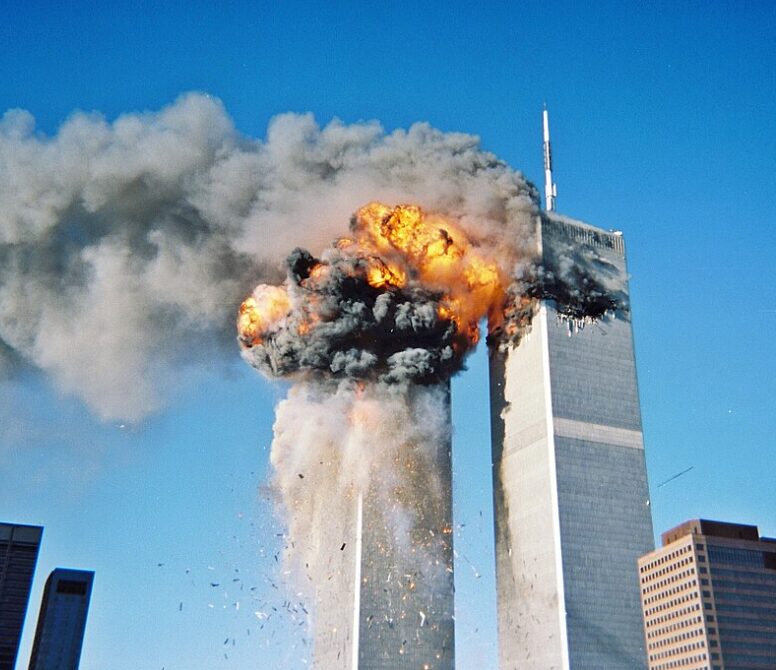
How can the United States forget September 11, 2001? The Taliban, which provided safe haven to Al-Qaeda and allowed the planning of the attacks that killed nearly 3,000 Americans, were themselves a product of the proxy war infrastructure that the U.S. had helped create in Afghanistan.¹¹ The very groups that America had supported and armed against the Soviet Union in the 1980s evolved into the forces that would later turn their weapons and tactics against their former patron. The Taliban’s rise to power was facilitated by the weapons, training, and networks established during the Soviet-Afghan war—a conflict where the U.S. provided billions in support to Afghan mujahideen fighters.¹²
Nations created monsters and then acted surprised when they turned on their creators.
The Double Standard Continues
Western nations’ quiet response to Asif’s admission shows the moral problem Jaishankar warned about. Instead of facing uncomfortable truths about their role in creating global terrorism, they continue to treat Pakistan as a necessary, if imperfect, partner in fighting terrorism.
This selective anger—loudly condemning terrorism when it affects Western interests while staying diplomatically quiet when it serves strategic partnerships—has created a system where terrorism becomes an acceptable tool of foreign policy. This acceptance represents perhaps the greatest threat to global security in the 21st century.
The Strategic Mistake
The basic error lies in believing terrorism can be precisely controlled and kept in specific areas. Modern terrorism is not a precision tool—it is a virus that changes, spreads, and ultimately threatens even those who first tried to use it as a weapon.
The terrorist networks, money systems, and ideas that served Western interests in Afghanistan have evolved into global threats. The training given to fighters in the 1980s became the foundation for Al-Qaeda’s abilities.¹³ Pakistan’s spy agency’s expertise in managing proxy groups became the template for state-sponsored terrorism worldwide.
The Chickens Come Home to Roost
Jaishankar’s warning that terrorism would “come back to haunt” the West is already proving true. The West’s decades-long relationship with Pakistan has created a global terrorism infrastructure that now operates beyond anyone’s control.
The solution requires more than diplomatic rebalancing—it demands a complete rejection of the idea that terrorism can ever serve legitimate strategic purposes. This means ending the West’s relationship with Pakistan as an anti-terrorism partner while it continues to shelter terrorist elements.
It means accepting there is no such thing as “good” terrorism or “controlled” terrorist infrastructure. It means accepting that short-term strategic benefits of working with state sponsors of terrorism will always be outweighed by long-term existential risks.
Breaking the Cycle of Terror
Most importantly, it means listening to Jaishankar’s warning before it’s too late. The West’s dangerous game of flirting with terrorism has already unleashed forces that threaten global stability. Asif’s admission confirms what India has long argued—that Pakistan’s role in supporting terrorist groups was “a mistake tied to US-led foreign policy decisions.”
The choice is clear: continue the dangerous game of flirting with terrorism and face inevitable punishment, or break the cycle now and begin dismantling the infrastructure of terror that decades of Western policy have created.
For the West, that reckoning has already begun. The question is whether Western leaders will have the courage to face the monster they’ve created before it destroys the very civilization they sought to protect.
References
Primary Sources:
- MEMRI. “Following Attack In Jammu & Kashmir, Pakistani Defense Minister Khwaja Asif Comments On Pakistani Support For Jihadi Terror Groups.” April 29, 2025. https://www.memri.org/reports/following-attack-jammu-kashmir-pakistani-defense-minister-khwaja-asif-comments-pakistani
- CNN. “Pahalgam, India: At least 26 people killed as gunmen open fire on tourists in Jammu and Kashmir.” April 23, 2025. https://www.cnn.com/2025/04/22/asia/gunmen-open-fire-jammu-kashmir-intl/index.html
- Reuters. “At least 20 feared killed in militant attack on tourists in Indian Kashmir.” April 22, 2025. https://www.reuters.com/world/india/one-killed-seven-injured-militant-attack-indias-kashmir-india-today-tv-says-2025-04-22/
- India TV News. “Khawaja Asif, Pakistan Defence Minister, admits Islamabad support for terror groups.” April 25, 2025. https://www.indiatvnews.com/news/world/khawaja-asif-pakistan-defence-minister-admits-islamabad-support-for-terror-groups-did-dirty-work-for-us-pahalgam-terror-attacks-2025-04-25-987260
- Amu TV. “Pakistan’s defense minister admits to decades of support to terrorists.” April 25, 2025. https://amu.tv/170628/
- Wikipedia. “2025 Pahalgam attack.” https://en.wikipedia.org/wiki/2025_Pahalgam_attack
Additional References:
- Coll, Steve. Ghost Wars: The Secret History of the CIA, Afghanistan, and Bin Laden, from the Soviet Invasion to September 10, 2001. Penguin Press, 2004.
- Tully, Mark, and Satish Jacob. Amritsar: Mrs. Gandhi’s Last Battle. Jonathan Cape, 1985.
- Gill, K.P.S. The Knights of Falsehood. HarperCollins India, 1997; Ribeiro, Julio. Bullet for Bullet: My Life as a Police Officer. Penguin Books India, 2017.
- Gunaratna, Rohan. Indian Intervention in Sri Lanka: The Role of India’s Intelligence Agencies. South Asian Network on Conflict Research, 1993.
- Pakistan Institute for Peace Studies. Pakistan Security Report 2024. Islamabad: PIPS, 2025.
- U.S. Department of State. Country Reports on Terrorism 2021. Bureau of Counterterrorism, 2022.
- Brennan, Rick. Ending the U.S. War in Iraq: The Final Transition, Operational Maneuver, and Disestablishment of United States Forces-Iraq. RAND Corporation, 2013.
- Lister, Charles. The Syrian Jihad: Al-Qaeda, the Islamic State and the Evolution of an Insurgency. Oxford University Press, 2015.
- Borhan, Ahmad Shuja. “Iran’s Taliban Gambit.” Foreign Affairs, March 15, 2023.
- Johnson, Chalmers. Blowback: The Costs and Consequences of American Empire. Metropolitan Books, 2000.
- The 9/11 Commission. The 9/11 Commission Report: Final Report of the National Commission on Terrorist Attacks Upon the United States. W. W. Norton & Company, 2004.
- Cooley, John K. Unholy Wars: Afghanistan, America and International Terrorism. Pluto Press, 2002.
- Bergen, Peter L. Holy War, Inc.: Inside the Secret World of Osama bin Laden. Free Press, 2001.

Gurpartap Singh Mann, a former Member of Punjab Public Service Commission (2018–2024) and an ex-Chief General Manager of Punjab Infrastructure Development Board wherein he played a key role in infrastructure development through Private Public Partnerships.