
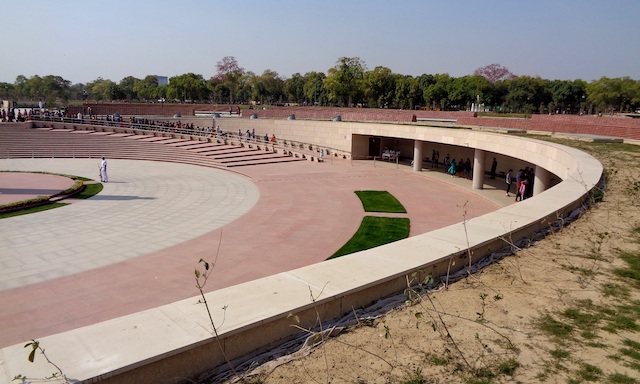
The National War Memorial in New Delhi, unveiled on February 25, 2019, stands as a heartfelt tribute to over 25,942 brave soldiers from the Indian Army, Air Force, and Navy who sacrificed their lives in wars fought after India’s independence in 1947. This striking monument, nestled near India Gate, fulfils a long-standing dream of the armed forces and veterans, offering a poignant space to honour the courage and sacrifice of India’s heroes.
A Chennai-based architectural practice, ‘WeBe Design Lab’, headed by architect Yogesh Chandrahasan, has designed this memorial. The firm was commissioned to design this prestigious project through a global design competition held in 2016-17. The Military Engineering Services have constructed it in a very short period of about 20 months.
The National War Memorial is near India Gate in the heart of the Lutyens’ Zone of the New Delhi Capitol Complex. It is spread over 42 acres and falls at the culminating point of the prestigious Raj Path on the east. The Raj Path is the central axis of the Capitol Complex that connects the India Gate with the Rashtrapati Bhavan and ends in the circular Mughal Gardens in the presidential complex. Like the Mughal Gardens at the west end of the Raj Path, the Lutyens’ plan envisaged a similar garden on its east end near India Gate. The National War Memorial has befittingly utilisedthis site.

Considering the historical importance of this site and the guidelines of the Central Vista Committee, the memorial has been planned as a subterranean facility with a built form not exceeding 1.5m above the ground level. The memorial’s design is thus in sync with the character of the existing open space and the aesthetical sanctity of Lutyens’ planning.
The design concept of the National War Memorial is based on ‘Chakravyuha’ – an ancient circular battle formation for laying an efficient trap for the enemy. Based on this concept, the architects created an experience of walking amidst soldiers in a war field in different layers. The circular plan of the memorial incorporates five concentric rings of varied elements. These rings serve different functions and convey different emotions.
The outermost layer is conceived as the ‘Circle of Protection’ or ‘Rakshak Chakra’, which personifies the territorial control of the armed forces. On the ground, the ‘Rakshak Chakra’ has been translated into a thick jungle by planting more than 600 trees in a circular arrangement. When these trees are fully grown, this space will feel like walking through a fleet of disciplined soldiers deployed to protect their country.
The second concentric layer is called the ‘Circle of War’ or ‘Yudh Path’. It is a wide paved footpath on the inner side of the ‘urban jungle’ in the outer circle. It gives ceremonial access to the memorial from all four directions. This ‘Yudh Path’ also holds two underground galleries and convenience stores at the north and south end. The galleries aim to provide information on the history of some important battles fought by the Indian soldiers.
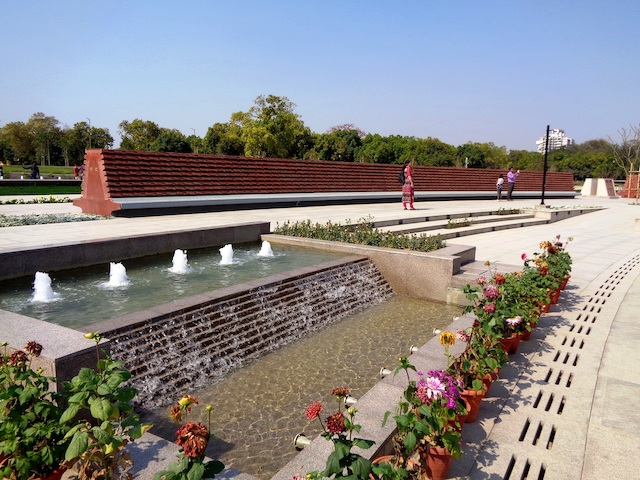
The third ring is the ‘Circle of Sacrifice’ or ‘Tyag Chakra’. It represents the soldiers standing in many rows in the formation of concentric circles. Two rows of memorial walls form the ‘Circle of Sacrifice’. These walls have been designed as a modular self-balancing structural stacking system with a height of 1.5m. Granite stone slabs on which names and ranks of martyrs have been engraved are arranged in a linear strip formation. These continuous horizontal bands of stones hold and protect themselves and their occupants within, symbolising discipline, order, and commitment of brave hearts towards the nation. The names of 25,942 martyrs have been inscribed on the walls of sacrifice.
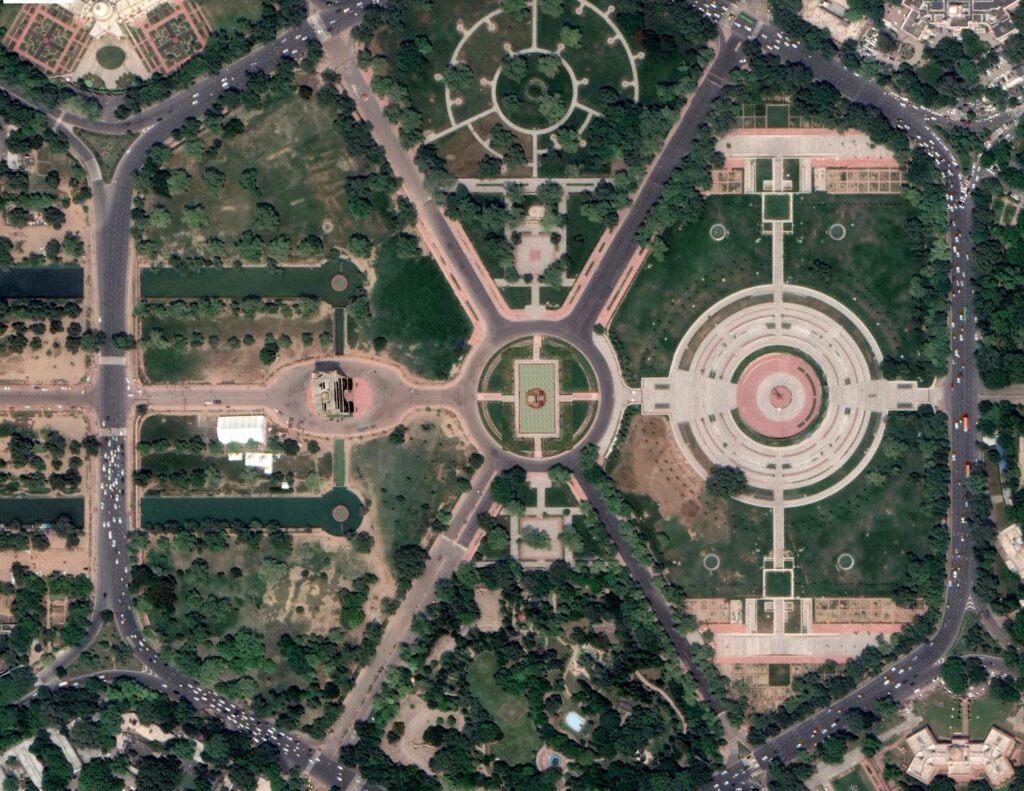
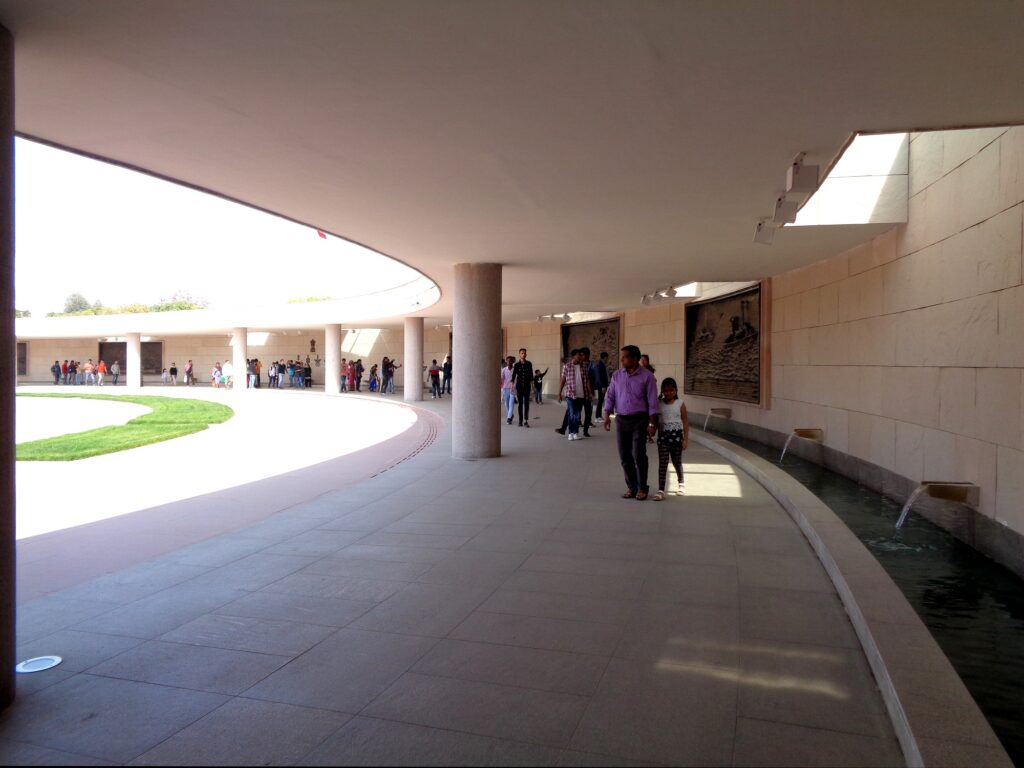
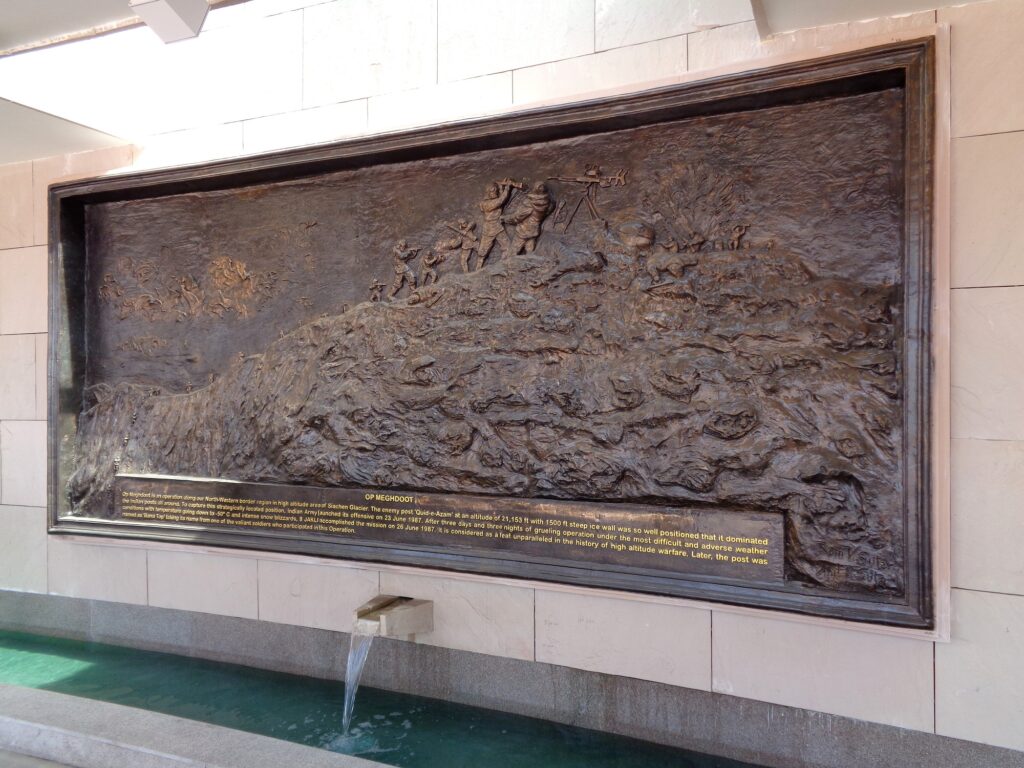
The fourth concentric layer is the ‘Circle of Bravery’ or ‘Veerta Chakra’. It is designed as an underground collonaded semi-open gallery with six bronze murals in bas-relief. These murals depict six critical battles fought by the Indian soldiers, which were the turning point in the history of nation-building. Ram Sutar, a 100-year-old and most celebrated sculptor in India, has designed and sculpted these murals.
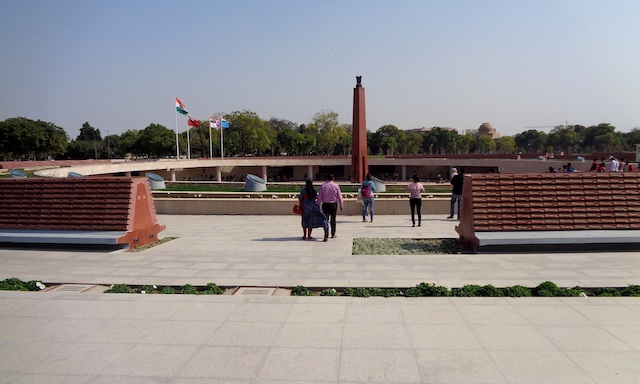
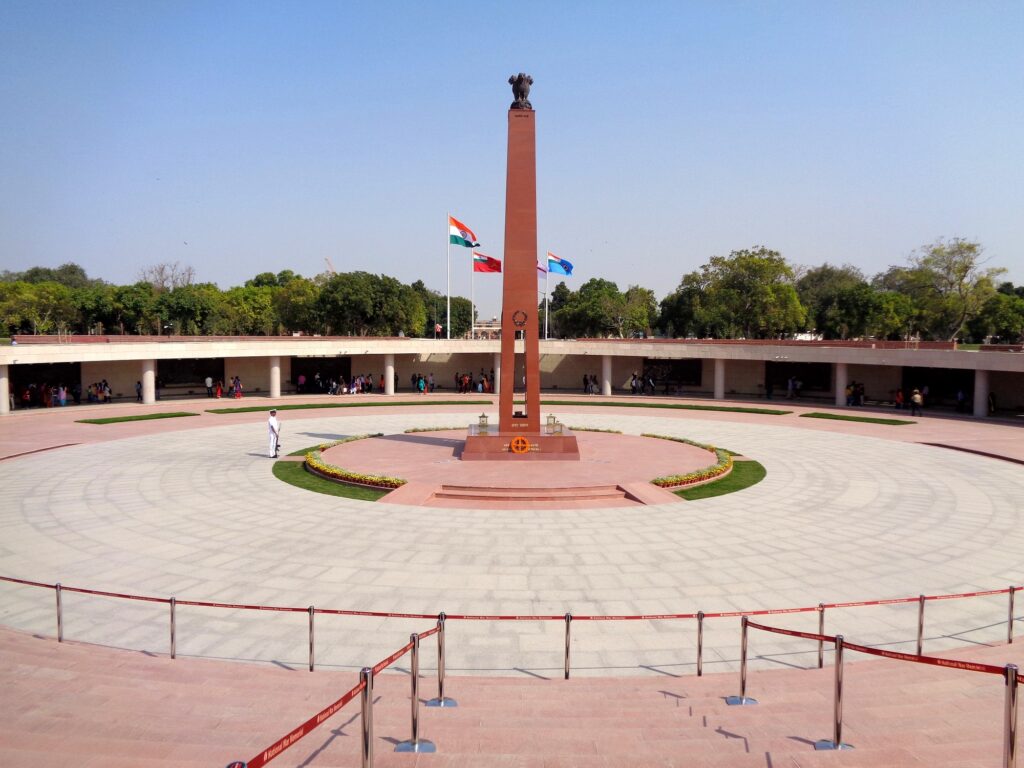
The fifth and innermost layer of the memorial is the ‘Circle of Immortality’ or ‘Amar Chakra’. The memorial’s focal point symbolises the immortality of the soldiers who laid down their lives. Amar Chakra’s epicentre is marked by a 15-metre-high obelisk, which holds the ‘Amar Jawan Jyoti’ at the base and the State Emblem of India at the top.
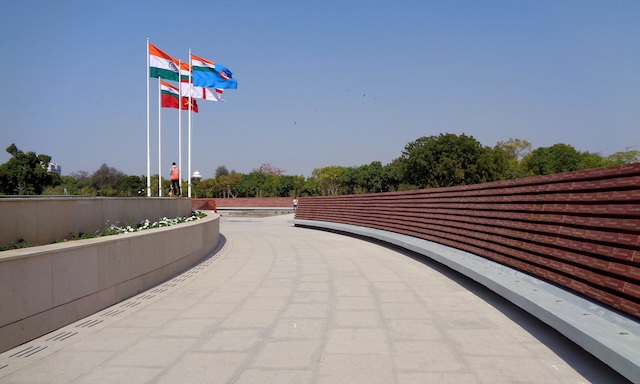
All the open spaces in and around the memorial are meticulously landscaped with earth forms, water features, and flora and fauna. The landscape design is based on the concept of Mughal Gardens, which emphasises the belief that ‘gardens are a door to heaven’.
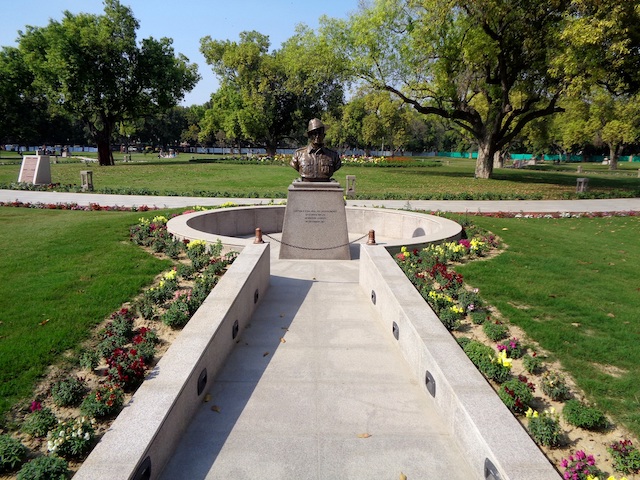
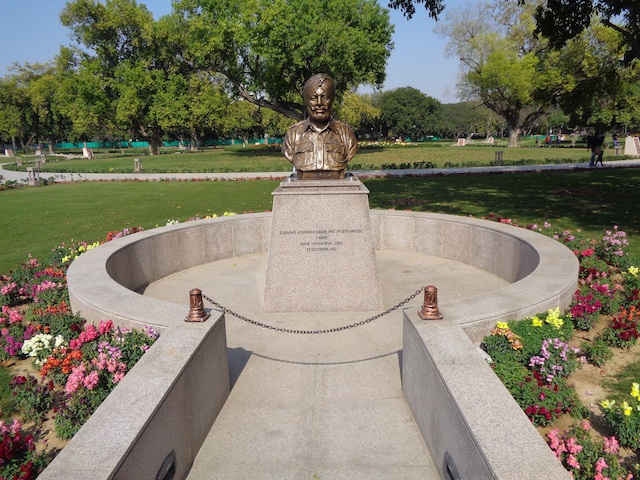
Yet another feature of the campus is the ‘Param Yodha Sthal’, a separate garden developed on a large expanse of land adjacent to the National War Memorial towards its northwest. This garden is exclusively dedicated to the 21 ‘Param Vir Chakra’ awardees. The ‘Param Vir Chakra’ is India’s highest military decoration awarded for displaying distinguishing acts of valour during wartime.
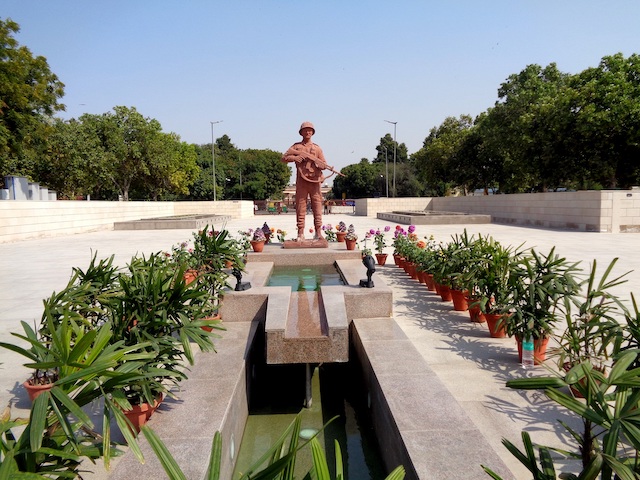
The ‘Param Yodha Sthal’ incorporates bronze statues of the ‘Param Vir Chakra’ awardees. The park is designed with existing large trees in position and well laid out pathways, flower beds, and grassy lawns.
The National War Memorial has become a cherished landmark, drawing thousands of visitors daily to pay their respects and reflect on the sacrifices of India’s fallen heroes. Its thoughtful design, blending solemnity with the serene beauty of its landscaped gardens and the inspiring Param Yodha Sthal, ensures it stands as a powerful symbol of valour and remembrance, resonating deeply with all who visit.
- All photos © Sarbjit Singh Bahga except where mentioned.
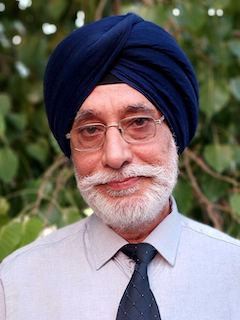
Sarbjit Bahga (b1957) is a Chandigarh-based architect, author, photo artist, and archivist. He is the Principal Architect of Bahga Design Studio LLP. Earlier, Bahga worked in the Department of Architecture, Punjab, Punjab Health Systems Corporation, and Punjab Mandi Board in various positions.
He has more than 42 years of practical experience designing various types of buildings, complexes, and large campuses. His completed works include an eclectic range of administrative, recreational, educational, medical, residential, commercial, and agricultural buildings. A monograph on his selected works titled “MODERN REGIONALISM: The Architecture of Sarbjit Bahga” has been published.
Bahga is also a keen researcher and a prolific architectural writer. He has 12 books to his credit, which include Modern Architecture in India, New Indian Homes, Le Corbusier, and Pierre Jeanneret: The Indian Architecture, Trees in Urban Habitat, Landscaping Human Habitat, New Indian Architecture -1947-2020, and Hand-Drawn Perspectives and Sketches. Bahga’s contribution to architecture has been largely recognized. He is a three-time recipient of the World Architecture Community Awards. His name has been featured in the Guinness Book of World Records for designing the “longest covered concrete corridor” in Vidya Sagar Institute of Mental Health, Amritsar.