
Gendered politics is the exploration of the relationship between gender and political systems. It examines how cultural stereotypes relating to gender influence political participation, representation, and activism. Furthermore, it explores how political institutions and decision-making processes are shaped by our notions around gender. Indian history reflects that, instances of gendered politics are generously sprinkled throughout timelines. Within our homeland’s history, Indira Gandhi, the first and only female Prime Minister of India, displayed a charismatic career marked by bold moves and controversial decisions. Indira Gandhi’s iconoclastic tenure as Prime Minister is an example of gender complexities, how women must often balance their powerful positions with toughness and assertiveness, not conforming to male-dominating societal standards.
Indira Gandhi is an ineffably trailblazing example of how gender shapes the perception of leadership. Her governance reflected how women in positions of power often face heightened scrutiny. Dubbed “goongi gudiya” and the “only man in the cabinet”, her decisions were characterised in terms of her personal traits, such as being emotional or irrational, rather than based on strategic calculation. For instance, Indira Gandhi’s decision to impose the Emergency in 1975 was portrayed in a way by the media that reflected her personal insecurity and irrationality, rather than as a calculated decision for the country’s best interests. She faced gendered criticism, stating that she suspended civil liberties, press censorship, and mass arrests due to a fear of losing power, and deemed her actions as “over-reactive”. While some critics considered her a “domineering mother”, combining matriarchal authority with emotional ruthlessness, others stamped her with the label of an “overbearing woman” as a misogynistic individual with unchecked power.
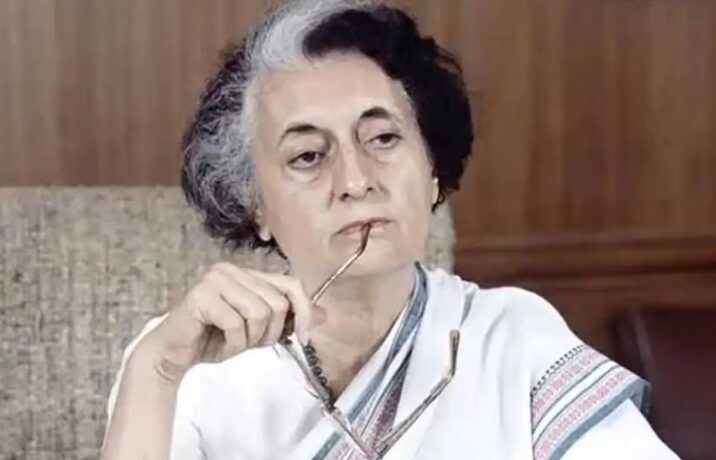
During Operation Blue Star in 1984, Indira Gandhi was subjected not only to political condemnation but to a torrent of gendered vilification, particularly from segments of the media. Her decision to authorise military action at the Golden Temple was refracted through a deeply sexist lens, with critics assailing her not for strategy, but for allegedly transgressing the boundaries of womanhood. She was derided as an “iron lady” with a sneer, the phrase weaponised to suggest a cold, unfeminine severity unbecoming of a woman. Commentators cast her as a ruthless, quasi-masculine figure who had forsaken the nurturing ideals of femininity. Such narratives did not merely critique her policy, they sought to unmake her legitimacy by entwining perceived political failure with her gender, reducing a grave national crisis to a moral indictment of a woman in power.
The legacy of gendered politics remains deeply woven into the fabric of contemporary society, subtly influencing who rises, who speaks, and who is taken seriously in public life. According to Sushila Ramaswamy, political science professor at Delhi University’s Jesus and Mary College, gender parity and pluralism are “still nascent and uneven in India”. Till today, women in Indian politics face heightened scrutiny, whether it’s Mayavati being called “worse than a prostitute”, Priyanka Gandhi Vadra taunted by saying there are “much more beautiful star campaigners in politics”, Rabri Devi being advised to stay behind her “ghoonghat”, Urmila Matondkar being called a “bholi bhali ladki who is zero in politics” or Smiri Irani getting slammed by comments like “her bindi gets bigger as she changes husbands”. Such instances depict common misogynistic opinions in the contemporary political narrative.
The landmark Women’s Reservation Bill, passed in 2023 by the BJP-led government, seeks to increase women’s political representation by reserving 33% of seats for them in legislative bodies. It will assist women with enhanced female representation, empowerment, policy prioritisation, and most importantly, challenging stereotypes in Indian politics. History demonstrates that changes, or progress, such as these bills, could take years and decades to achieve; after all, societal attitudes don’t change overnight. The important point is to, firstly, continue to raise awareness, secondly, institute progressive policies to effect change, and thirdly, unreservedly call out unsavoury behaviours or remarks.
Today, according to the Ministry of Parliamentary Affairs, women make up 14% of the Lok Sabha, which clearly outlines their underrepresentation compared to their share in the total population. Although Indira Gandhi’s tenure set a groundbreaking precedent for female political authority in a deeply patriarchal society, her leadership demonstrated that women can hold the highest seats of power; nonetheless, enduring discriminatory gender biases in the media and public opinion continue to present significant challenges. Hence, if leadership has no gender, then why do we still measure women in power, like Indira Gandhi or Smriti Irani, not just by their politics, but by their femininity?

Tisha Tiwari is a grade-12 student at The British School, New Delhi. She is passionate about the study of Modern Indian History and its relevance today. Her areas of research include the Saffronisation of Indian Education, the Indian Independence struggle, women in Indian history and the conservation of Indian heritage sites.