
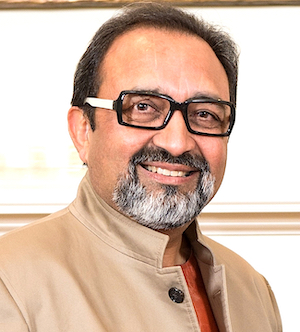
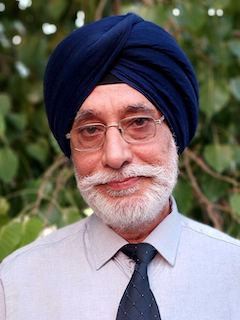
 It is with profound sorrow and a heavy heart that we say goodbye to Sanjiv Bhandari, a dear friend, brilliant architect, and kind soul who left us too soon. Sanjiv passed away suddenly on February 15, 2026, in California, due to a massive cardiac arrest. As his classmate from the Chandigarh College of Architecture (1974-1979) and a close friend for over 52 years, I feel a profound loss. He was more than a professional success story—he was a warm, thoughtful person who touched many lives with his quiet strength and genuine care for others. His journey from a young student in India to a global leader in architecture inspires us all, and his memory will live on in the buildings he shaped and the people he mentored.
Born in 1959 in India, Sanjiv grew up in Chandigarh, a city designed by the great architect Le Corbusier. This early exposure sparked his passion for architecture. He graduated with a Bachelor of Architecture from Chandigarh College of Architecture in 1979. Eager to learn more, he earned a Post Graduate Diploma in Urban Planning from IHS Erasmus University in Rotterdam, Netherlands, and later a Master of Architecture from the San Francisco Institute of Architecture in the USA. These steps built the foundation for his remarkable career.

Sanjiv settled in California, where he became a licensed architect in 1992. He founded BKBC Architects Inc. in Walnut Creek in 1999, serving as its President and CEO. The firm grew into an award-winning company known for creative, practical designs in retail, mixed-use, and residential projects. With over 45 years of experience, Sanjiv worked across 27 states in the USA and 12 countries worldwide. He was an expert in master planning and urban design for retail-centred mixed-use developments. His motto was simple: create spaces that work well for people, focusing on functionality first, like a “Swiss watch.” He always started by understanding the users—who they were, how they moved, and what made their experience better. This approach led to successful projects, including high-grossing shopping malls in the 1980s and 1990s.
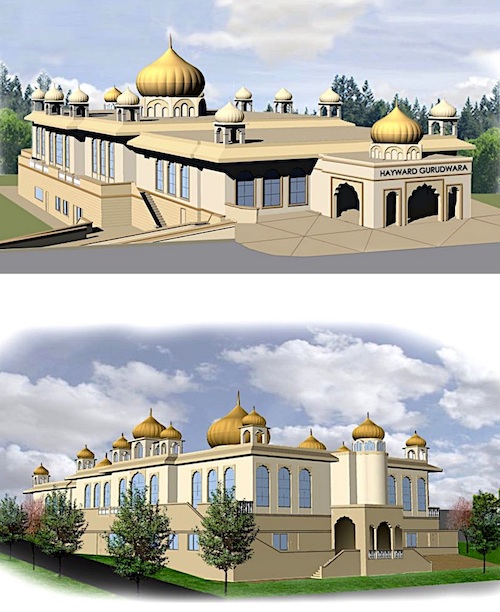
Sanjiv’s work took him around the world. He collaborated with renowned architects such as Daniel Libeskind, Benoy, Robert Stern, Rem Koolhaas, and others on significant projects in South Korea, India, Thailand, Bahrain, Oman, China, and more. He adapted designs to local cultures, climates, and needs—such as adding prayer rooms in the Middle East or handling high winds in Florida. In 2013, he joined California Governor Jerry Brown on a trade mission to China. In 2014, he was part of a select group of U.S. architects visiting Saudi Arabia and Qatar, organised by the American Institute of Architects and U.S. Embassies. His projects appeared in magazines and journals in the USA and India, where he shared his ideas on the evolution of shopping centres and food court trends.
Sanjiv earned many honours for his work. These include the Design Award for Excellence in Architectural and Engineering Design for MacArthur Centre in Norfolk, Virginia, from the Precast/Prestressed Concrete Institute (2000); Small Business Award from the Contra Costa Council for leadership and community contributions (2007); Most Innovative Business Leadership Award from UK-based AI Global Media Limited (2015); and Best Residential Architectural Firm Award from Global Business Insight (2019). He founded the Association of Indo-American Architects (AIAA) in 1993 to support Indian-origin architects in the USA and promote modern Indian architecture.

Beyond his designs, Sanjiv gave back to his community. He served on many boards and commissions, including the Alamo Municipal Advisory Council, the Urban Land Institute San Francisco District Council, the Walnut Creek Chamber of Commerce (as Chairman in 2008), the Architectural Review Board for the City of San Ramon (Chairman in 2003 and 2005), and more. He was a member of groups such as the American Institute of Architects (since 1986), the International Council of Shopping Centres, and the Urban Land Institute. Sanjiv believed architects should lead in addressing significant issues such as climate change and sustainable cities. He pushed for innovative ideas, like turning mall parking lots into walkable “mini cities” with housing, green spaces, and amenities—all within a 10-minute walk.
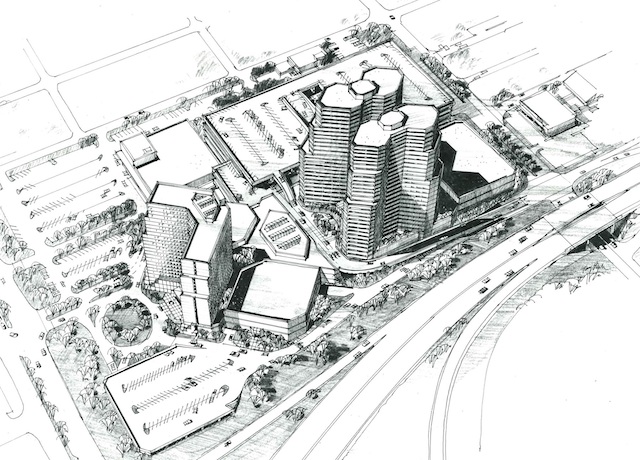
In interviews, Sanjiv shared his “success mantra”: hard work, luck, timing, and a focus on people over flashy buildings. He observed shopper habits, traffic flows, and cultural differences to make spaces that excited the senses and met real needs. He embraced collaboration without ego, working with bigger firms to create “world-class destinations.” Even as technology, such as AI, changed the field, he stressed the importance of human creativity.
Sanjiv’s life was a blend of dedication, innovation, and humility. He travelled to over 140 countries, visiting more than 500 shopping centres to learn and grow. Though busy, he dreamed of teaching one day. His legacy is in the functional, beautiful spaces he left behind and the way he inspired young architects, especially those moving abroad: be open, observe, and adapt.

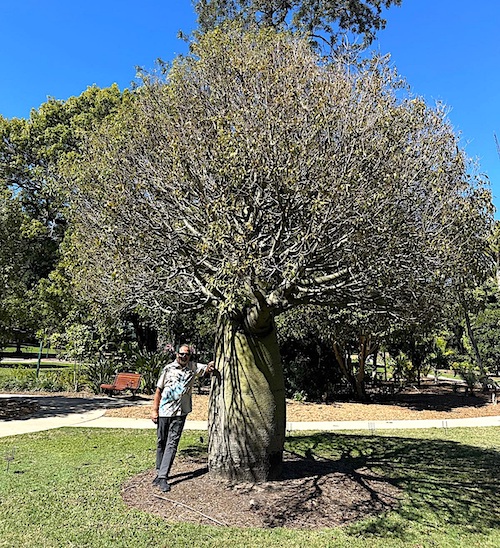
Beyond our shared passion for architecture, Sanjiv and I had a special bond rooted in my farming background before I pursued this profession. He knew of my deep love for trees, nurtured from my early days on the farm, and he made a point of sharing that world with me in his own thoughtful way. Whenever Sanjiv travelled to a new country—whether for work or exploration—he would send me beautiful pictures of the native trees he encountered, from the majestic baobabs of Africa to the vibrant cherry blossoms of Japan and the ancient olives of the Mediterranean. These simple gestures, often accompanied by a quick note about their significance or how they reminded him of our conversations, brought joy and a sense of connection across miles and years. It was his quiet way of honouring our friendship, blending his global adventures with my rooted interest in nature, and it made his loss feel even more personal.

Few people knew that, beyond his acclaimed career in architecture, Sanjiv Bhandari was also a talented poet whose words captured life’s deeper meanings with simplicity and motivation. His poems appeared in reputable publications worldwide, including a company magazine in India during 1981-82, “Where Dreams Begin” in 1993, and the “Arcadia Poetry Anthology” also in 1993. A standout among his works was “The Process,” featured in “Outstanding Poets of 1994” by The National Library of Poetry, where he earned the Editor’s Choice Award for Outstanding Achievement in Poetry. In this poem, Sanjiv wrote: “Continue the search from within and all around you to find and define who you are and what you want its not the finding but the course which is life before you know the time will be up so enjoy ‘the process.'” His poetry reflected his belief in being a “complete artist,” blending creativity across forms like writing, and aimed to inspire humanity at every level, much like his designs did for spaces and communities.

Finally, I must share a deeply personal anecdote from my chat with Sanjiv on February 2, 2026—just 13 days before his sudden passing. I had sent him my article about our beloved Art and Craft professor at CCA, titled “Sunirmal Chatterjee: Artist, Mentor, and Cultural Visionary.” In response, he wrote warmly: “Wonderful work by you, well written, so impressive! I have very fond memories of Prof Chatterjee during our 5 years at CCA! Kudos to you.” Then, in the following line, he added with his characteristic humour: “I also realised that you will only write about me when I die … I need to supply you with my stuff before I close my eyes.” I laughed and replied, “Hahaha, only God knows the dates.” Little did I realise that my dear friend’s time to meet the Almighty was only 13 days away. What a heartbreaking coincidence! As he light-heartedly requested, I am now writing this tribute, but it pains me immensely to craft an obituary for a friend who was younger than me and so full of life. I have kept my end of the promise, Sanjiv, but you left without fulfilling yours—sharing your “stuff” before closing your eyes.
We will miss Sanjiv’s wisdom, his smile, and his friendship. He leaves behind a world made better by his vision. May his soul rest in peace, and may his story motivate us to build with heart. My thoughts are with his family, friends, colleagues, and all who knew him.
Sarbjit Bahga (b1957) is a Chandigarh-based architect, author, photo artist, and archivist. He is the Principal Architect of Bahga Design Studio LLP. Earlier, Bahga worked in the Department of Architecture, Punjab, Punjab Health Systems Corporation, and Punjab Mandi Board in various positions.
He has more than 42 years of practical experience designing various types of buildings, complexes, and large campuses. His completed works include an eclectic range of administrative, recreational, educational, medical, residential, commercial, and agricultural buildings. A monograph on his selected works titled “MODERN REGIONALISM: The Architecture of Sarbjit Bahga” has been published.
Bahga is also a keen researcher and a prolific architectural writer. He has 12 books to his credit, which include Modern Architecture in India, New Indian Homes, Le Corbusier, and Pierre Jeanneret: The Indian Architecture, Trees in Urban Habitat, Landscaping Human Habitat, New Indian Architecture -1947-2020, and Hand-Drawn Perspectives and Sketches. Bahga’s contribution to architecture has been largely recognized. He is a three-time recipient of the World Architecture Community Awards. His name has been featured in the Guinness Book of World Records for designing the “longest covered concrete corridor” in Vidya Sagar Institute of Mental Health, Amritsar.

I am amazed by Sanjiv’s story. Thanks Mr. Bahga for sharing this. I wish I would have met Sanjiv, the legend. May his soul rest is peace. 🙏🙏