
Manali: Honey sold by roadside vendors is not guaranteed to be pure and is frequently adulterated with cheap sugar syrups or artificial coloring. While some vendors may sell genuine raw honey, many stretch their supply with sugar solutions or sell entirely fake, syrup-based substitutes to maximize profits.
The Risks of Unregulated Vendors
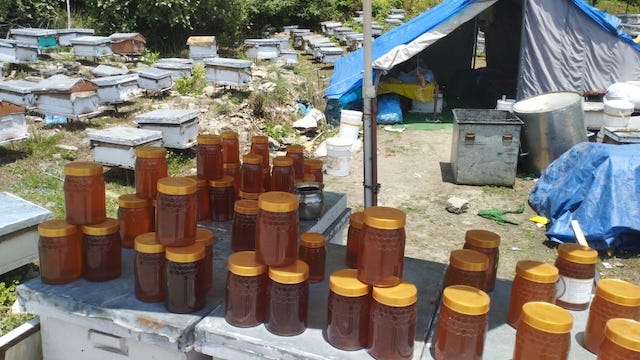
Roadside vendors operate in an unregulated market, meaning their products do not undergo the strict safety and purity parameters mandated by the Food Safety and Standards Authority of India (FSSAI).
Common Adulterants: Cheap rice, corn, or cane sugar syrups are frequently mixed into the jars. This molecular adulteration is often sophisticated enough to bypass basic testing.
Deceptive Tactics: Vendors often place a piece of genuine honeycomb inside the jar to trick buyers into believing the honey came straight from the hive. However, the liquid surrounding the comb is still highly likely to be adulterated syrup.
How to Test Honey Purity at Home
According to Sham Singh, a local honey seller, advanced laboratory testing—such as Nuclear Magnetic Resonance (NMR) spectroscopy—is the only definitive way to detect molecular adulteration. However, he noted that consumers can perform a few simple checks at home to spot heavily diluted or fake honey:
1. The Water Dissolution Test
Drop a spoonful of honey into a glass of room-temperature water.
Pure Honey: Will sink directly to the bottom and hold its shape or dissolve very slowly.
Adulterated Honey: Will begin to dissolve, break apart, and disperse into the water almost immediately.
2. The Paper Towel Test
Place a drop of honey onto a sheet of paper towel.
Pure Honey: Will sit on top of the paper because it is too thick to soak through easily.
Adulterated Honey: Will leave a wet ring or get absorbed quickly, indicating added water or thin syrups.
3. The Crystallization Check
Pure Honey: Genuine raw honey will naturally crystallize, turning solid or grainy over time, especially in colder temperatures.
Adulterated Honey: If the liquid stays perfectly clear and runny for months without ever solidifying, it is typically highly processed or packed with added sugars.
Consumer Advice
If you are consuming honey for its health benefits, it is always safest to purchase certified raw, unprocessed honey from traceable, FSSAI-compliant beekeepers or established organic brands rather than risking your health with unverified roadside sellers.

Sanjay Dutta, an engineer by qualification but is a journalist by choice.
He has worked for the premier new agency Press Trust of India and leading English daily Indian Express.
With more than a decade of experience, he has been highlighting issues related to environment, tourism and other aspects affecting mountain ecology.
Sanjay Dutta lives in a village close to Manali in Kullu valley of Himachal.