
A Tribute to the Legend on His Death Anniversary, December 4
A Nepal-born American architect once approached me with an intriguing request: to capture some untold anecdotes and stories about Pierre Jeanneret—his personality, his bonds with his staff, and his bold dealings with government heavyweights. The topic sparked my curiosity, though I wondered if I could truly do it justice. After all, I was just ten years old when Jeanneret passed away on December 4, 1967. I never had the privilege of meeting him personally, but over the years, I’ve been deeply connected to many of his Indian colleagues who worked side by side with the master.
In 1980, I joined the Department of Architecture in Punjab—the very department Jeanneret once led—and spent more than three decades there. By a stroke of luck, I had the opportunity to collaborate closely with his former associates, including UE Chowdhury, Jeet Malhotra, HS Chopra, and others. From the start of my career, their vivid tales of Jeanneret, who served as Chief Architect from 1952 to 1965, have stayed with me. When my young friend extended this assignment, I dove into my memories, piecing together these stories to honour the man.
From my seniors, I’ve gathered that Jeanneret was refreshingly straightforward, profoundly humble, unfailingly polite, refreshingly down-to-earth, warmly amicable, and genuinely caring. Beyond these personal charms, he was an extraordinary architect, brimming with creativity, insatiable curiosity, a knack for adapting to unfamiliar surroundings, mastery over diverse building materials, and an intuitive grasp of users’ needs.
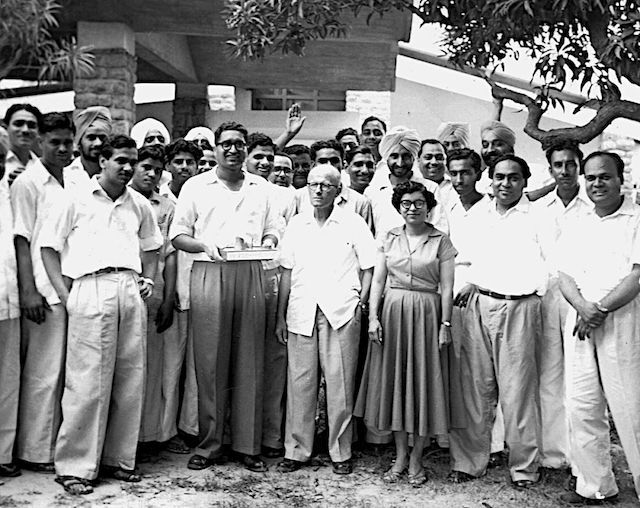
Over his remarkable 13-year tenure at the helm of the Department of Architecture, Jeanneret earned the adoration and respect of his junior colleagues through his tender, nurturing demeanour. One particularly heartwarming—and tense—tale stands out. Salaries ground to a halt for one or two agonising months, thanks to bureaucratic snarls: a delayed state budget and endless procedural red tape. The entire team, under crushing financial strain, struggled to make ends meet.
Whispers of frustration rippled through the office, but no one dared voice them directly to Jeanneret. A French speaker with only halting English—and even less grasp of Hindi or Punjabi—he seemed worlds apart from the mostly local, Punjabi- and Hindi-speaking staff, few of whom were fluent in English. Yet, after a few days, Jeanneret sensed the unrest like a seasoned captain detecting a storm on the horizon. He summoned UE Chowdhury, the department’s sole female architect and a linguistic wizard fluent in French, English, Hindi, and more. “Is there trouble brewing among the staff?” he asked her quietly.
Chowdhury laid it bare: the unpaid wages had everyone on edge, their focus shattered. Without hesitation, Jeanneret instructed her to consult the team and compile a list of their most pressing, bare-bones financial needs. Then, from his own bank account, he quietly covered those essentials. What a generous soul he was—a quiet force of compassion in a time of crisis!
For all his gentle humility, Jeanneret could be unyieldingly resolute when it came to planning and design. He poured his heart into Chandigarh’s growth with unwavering sincerity, fierce dedication, and pure selflessness. Spot a violation of the city’s foundational principles? He’d address it with quiet steel. Consider this lively clash of wills.
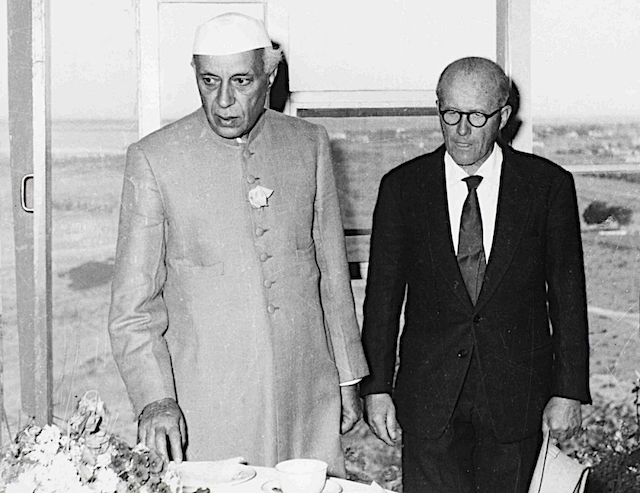
Chandigarh’s blueprint decreed it a cattle-free haven—no livestock on private property. Yet, Sardar Partap Singh Kairon, Punjab’s formidable Chief Minister, flouted the rule by keeping a cow at his residence for fresh milk, complete with a modest manger. When word reached Jeanneret, he marched straight to Kairon’s home. “Demolish that manger and remove the cow at once,” he urged, his tone polite but ironclad.
Kairon—a scholarly giant of a politician—pushed back, arguing that as head of state, he deserved this small indulgence. Jeanneret, ever courteous, stood firm and refused any carve-out. As Kairon leaned in with authoritative bluster, demanding an exception, Jeanneret reached into his pocket, unfolded a crisp letter, and extended it to him. “Then here is my resignation,” he said.
Stunned by this mild-mannered man’s resolve, Kairon barked to his aides in Punjabi: “Boys, tear down that manger and get rid of the cow right now—before he runs to Jawaharlal Nehru!” (Kaka, khurli jaldi dhah deo, te gaan hata deo; nahi tan isne Jawaharlal nu das dena hai.) That’s the quiet conviction of a faithful guardian of vision.
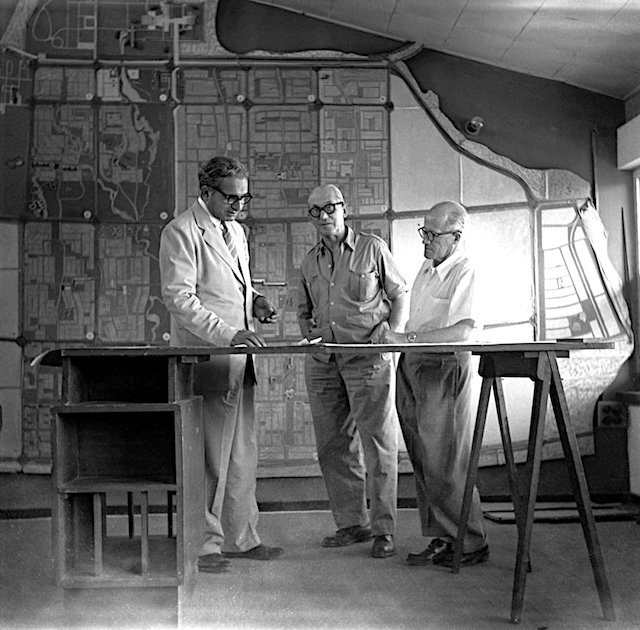
Jeanneret’s devotion to Chandigarh ran deep. Though entitled to an official car as Chief Architect, he’d pedal through the evenings on his bicycle, eyes sharp for construction progress and any slip-ups. These rides let him connect with locals and issue on-the-spot fixes, weaving the city’s beauty from threads of hands-on care.
As department head, Jeanneret was a mentor par excellence, urging his young Indian protégés to dream boldly and innovate in harmony with Chandigarh’s architectural ethos. This guidance gave birth to landmarks bearing their names. Take Jeet Malhotra, tasked with school designs: he dreamed up elegant triangular corbelled arches in brick. When he presented them to Jeanneret, the chief demurred—they felt too ornate for the city’s spare lines. “Hold off until Le Corbusier visits,” he advised. When the master arrived, he embraced the idea at once: “This honours the soul of brick itself.” Schools rose on that vision, and even after six decades, they gleam with timeless vitality. Similarly, Jeanneret championed HS Chopra’s bold blueprint for the Nehru Hospital on the PGI campus. Countless such stories underscore his talent for nurturing.
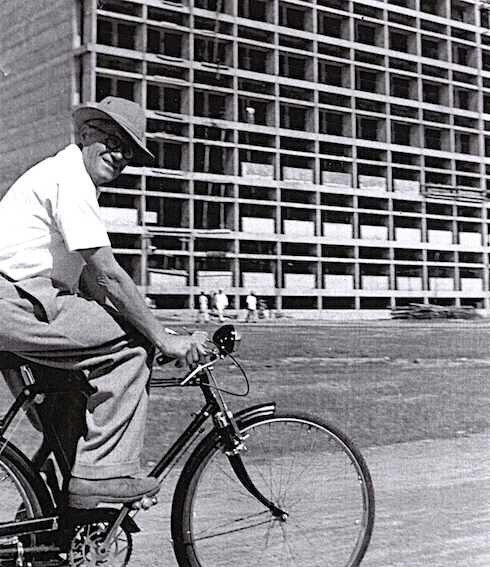
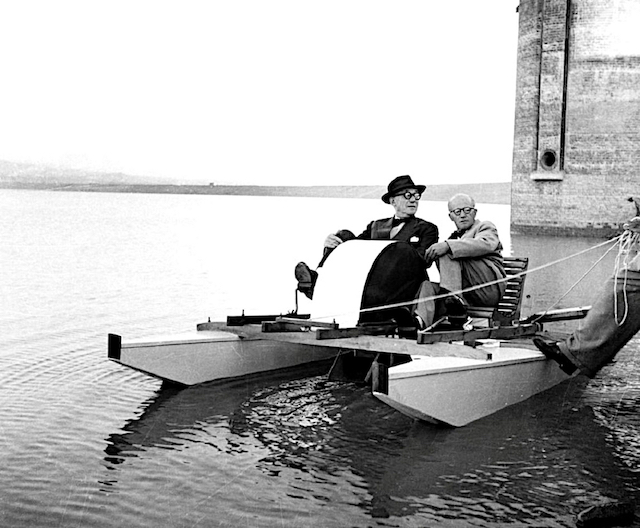
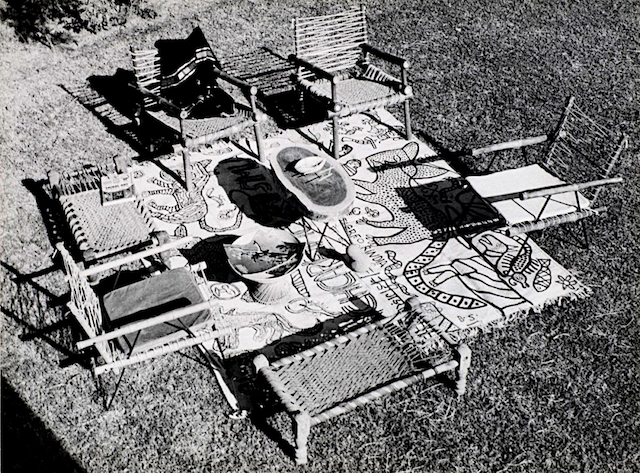
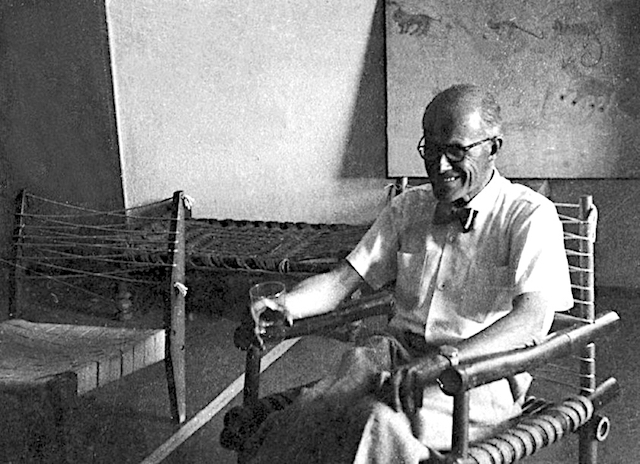
A whirlwind of creativity himself, Jeanneret abhorred idleness. In stolen moments from his duties, he’d tinker with castoffs—log scraps, tree trunk slices, bamboo, woven niwar, munjh reeds, even steel rods—crafting exquisite wooden furniture: chairs, stools, centre tables, side tables, lamp shades. For his own delight, these treasures later found a home at the Chandigarh Museum after his departure in 1965. He adored fashioning sailboats for Sukhna Lake, too—weekends spent with colleagues building paddleboats, afternoons gliding across the water in joyful escape. Or he’d sketch carpet patterns on the floor with his attendant Bansi, turning doodles into intricate duree designs. Through it all, he modelled a profound truth: architects mustn’t just sketch at desks; they should shape their visions with calloused hands.
Jeanneret taught like a poet, weaving wisdom into actions rather than lectures. Jeet Malhotra recalls how the chief battled the cold like no one else—two heaters flanking his chair on wintry days. One biting evening, Malhotra burst in to review drawings, door flung wide, unleashing a frigid gust. Wordlessly, Jeanneret rose, lit a cigarette, and eased the shutter shut with graceful calm. Back at his desk, he resumed, serene as ever. That silent gesture? A lifelong lesson in mindfulness, one Malhotra never forgot—he never left a door ajar again.
Another gem from Malhotra: a Sunday evening movie lured him away mid-task, leaving work half-done. Dreading the fallout on Monday, he crept into the office—only to find the “strange man” had finished it himself, no scolding in sight. Jeanneret’s mercy spoke volumes.
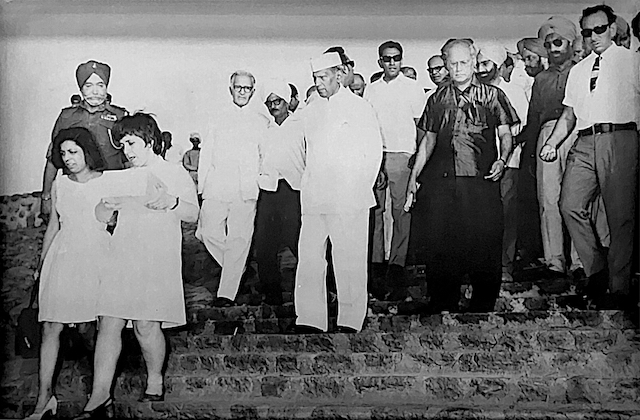
When Jeanneret finally left India, he scattered his worldly goods among his deserving colleagues, with Bansi—his loyal peon turned attendant—reaping the most incredible bounty: a house, a car, and funds for his children’s future. This enigmatic figure inspired legions with his luminous simplicity and a love for India fiercer than many natives’. As he departed for Geneva on August 31, 1965, he murmured: “I now leave my home and go to a foreign country.” Illness shadowed his final years back home, culminating in his passing on December 4, 1967. True to his wish, his ashes were to mingle with Sukhna Lake, binding him eternally to his masterpiece.
In April 1970, his niece Jacqueline made a poignant pilgrimage to Chandigarh for the immersion rite. Long may the spirit of Pierre Jeanneret—the Saint Architect—endure.
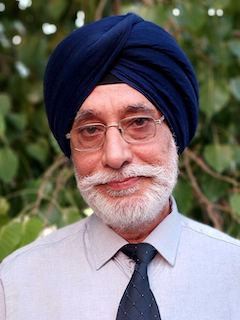
Sarbjit Bahga (b1957) is a Chandigarh-based architect, author, photo artist, and archivist. He is the Principal Architect of Bahga Design Studio LLP. Earlier, Bahga worked in the Department of Architecture, Punjab, Punjab Health Systems Corporation, and Punjab Mandi Board in various positions.
He has more than 42 years of practical experience designing various types of buildings, complexes, and large campuses. His completed works include an eclectic range of administrative, recreational, educational, medical, residential, commercial, and agricultural buildings. A monograph on his selected works titled “MODERN REGIONALISM: The Architecture of Sarbjit Bahga” has been published.
Bahga is also a keen researcher and a prolific architectural writer. He has 12 books to his credit, which include Modern Architecture in India, New Indian Homes, Le Corbusier, and Pierre Jeanneret: The Indian Architecture, Trees in Urban Habitat, Landscaping Human Habitat, New Indian Architecture -1947-2020, and Hand-Drawn Perspectives and Sketches. Bahga’s contribution to architecture has been largely recognized. He is a three-time recipient of the World Architecture Community Awards. His name has been featured in the Guinness Book of World Records for designing the “longest covered concrete corridor” in Vidya Sagar Institute of Mental Health, Amritsar.