
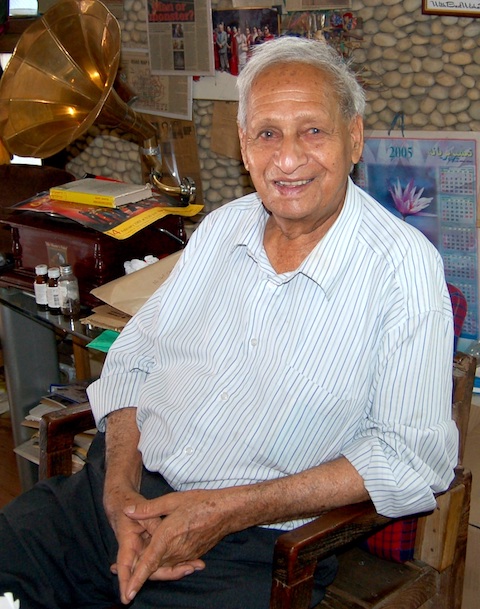
On December 15, 2025, the world paused to honour the 101st birthday of Nek Chand Saini, the self-taught visionary whose boundless imagination turned urban waste into a timeless wonderland. Born in 1924 in the village of Barian Kalan, Shakargarh tehsil, now in Pakistan, Nek Chand gifted humanity the Rock Garden of Chandigarh. This sprawling 40-acre masterpiece embodies creativity, resilience, and the alchemy of the overlooked. Although he passed away in 2015 at the age of 90, his spirit endures in every mosaic and sculpture, reminding us that true art arises not from privilege but from passion and perseverance. Today, we offer our deepest remembrances and heartfelt tribute to a man who transformed rubble into poetry, proving that beauty can flourish from the most unlikely soil.
Nek Chand’s odyssey began modestly in the 1950s, as a road inspector for the Chandigarh Capital Project. Amid the city’s sleek, modernist blueprint, envisioned by the architectural titan Le Corbusier, he discovered profound inspiration in the detritus of progress: shattered bangles, rusted bicycle bells, ancient fossils, pottery fragments, broken china, fused bulbs, and electrical insulators. These discarded relics, dumped in a forgotten jungle valley on government land, became his canvas. In 1958, defying bureaucratic boundaries, he began his clandestine labour, toiling alone for eight years to sculpt his first whimsical figures—dancers, animals, and mythical beings that whispered of lost kingdoms and forgotten dreams.
What unfolded was nothing short of revolutionary. In a dream, Nek Chand envisioned a fallen king and queen, their glory reduced to ruins and resolved to resurrect their realm from the very debris of modernity. Drawing from Punjab’s vibrant folk traditions and his agrarian roots, he eschewed formal training to craft an organic paradise in sync with the site’s undulating topography and seasonal rivulet. Unlike Le Corbusier’s precise, paper-drawn geometries of concrete and order, Nek Chand’s vision was intuitive and alive—conceived in the mind and directly manifested on the earth, harmonising with nature’s wild rhythms.
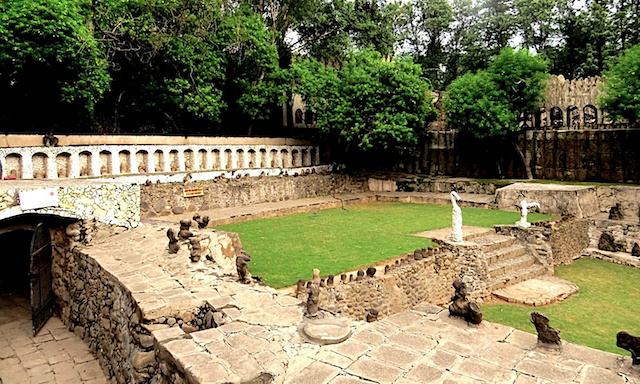
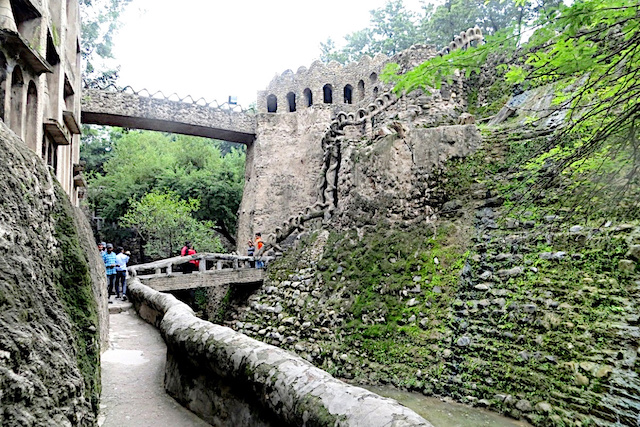
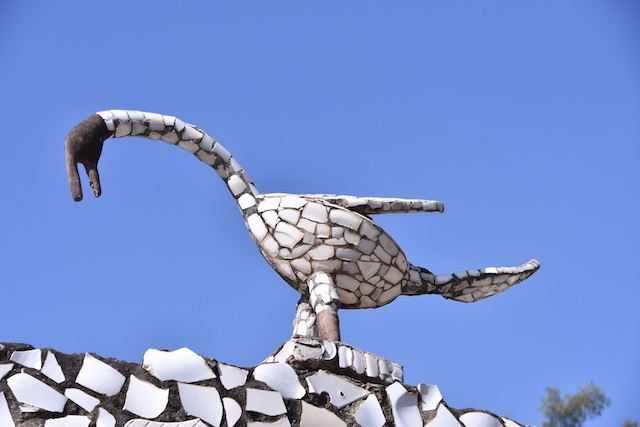
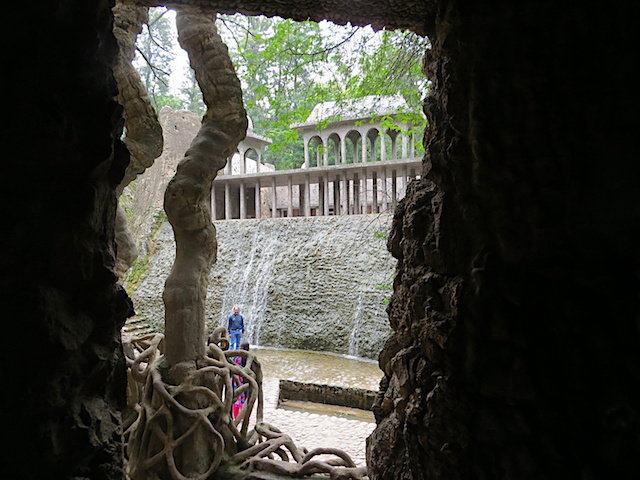
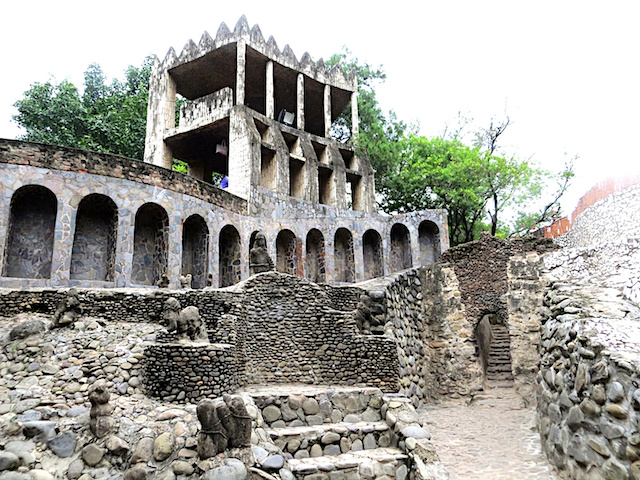
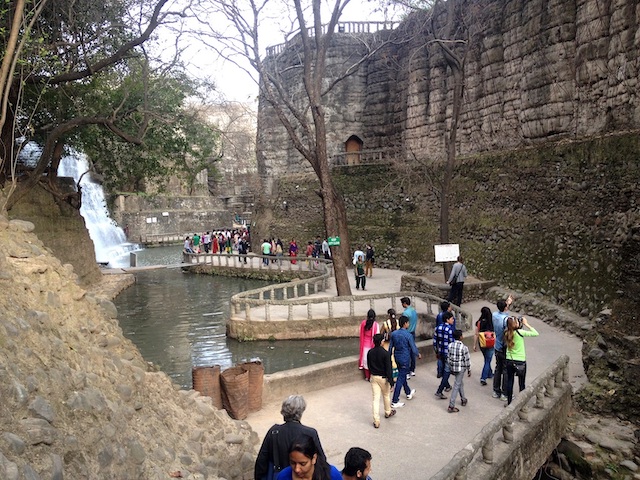
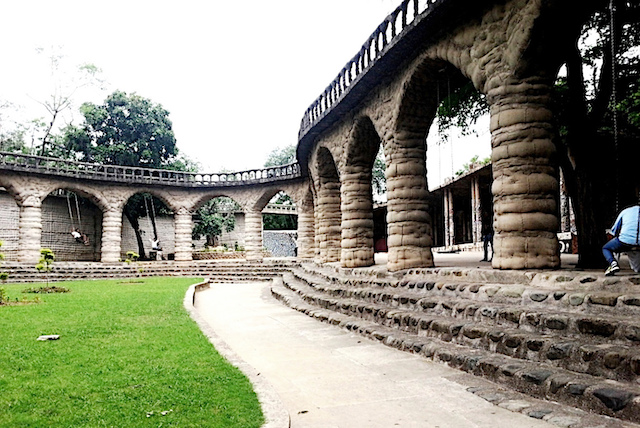
Opened to the public in 1976 after narrowly escaping demolition, the Rock Garden quickly captivated hearts. Today, at nearly 50 years old, it remains Chandigarh’s most cherished destination, welcoming over 5,000 visitors daily through its interlocking paths, cascading waterfalls, and open-air amphitheatres. Spanning 12 interconnected galleries, it houses more than 4,000 sculptures forged from urban castoffs, evolving into Phase II with global acclaim and support. Here, a fence of earthen pots guards serene pools; railings mimic logs borne by villagers or tar drums repurposed as balustrades; an uprooted tree blooms anew as abstract art. Venture deeper into the symbolic village—complete with shrines, snow-capped hillocks of white cement, and chambers alive with bullocks, peacocks, soldiers, dancers, and everyday folk—and you’ll find a shrine to vernacular genius. Beyond lies the king’s durbar, with throne-like kiosks crowning grassy terraces, and the queen’s bath, a tranquil pool framed by porcelain mosaics. Every element interweaves, preserving the site’s original landscape while evoking an ancient Indian idyll reborn.
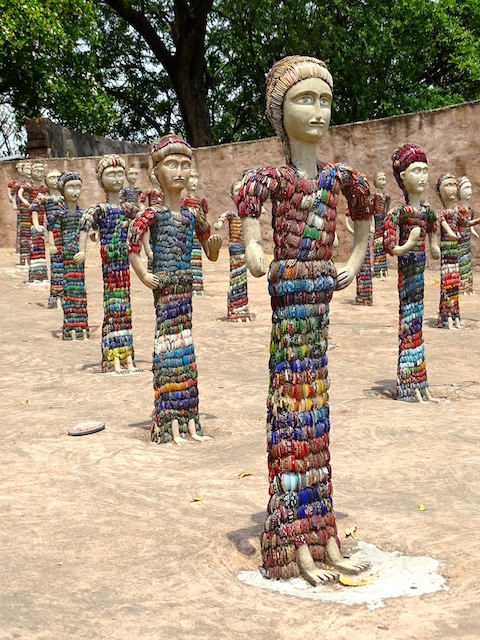
Chandigarh, that beacon of planned urbanity, owes its global allure to two untrained luminaries: Le Corbusier, the blueprint architect of its Capitol Complex, and Nek Chand, whose Rock Garden nestles nearby like a rebellious dream. Both defied conventions to redefine space—Le Corbusier with Euclidean precision, Nek Chand with fluid, prayerful improvisation. As he once reflected, “I see God in everything; I found stones, rocks, pottery, clay, metal, and I want to make all that into something that will make others aware of Him. Thus, all my work is prayer.” In an age of disposability, his creed—”I don’t throw away things; I give them a new life”—resonates as a clarion call for upcycling and mindfulness, challenging the elite art world’s gatekeepers while echoing India’s timeless tradition of folk sculpture.
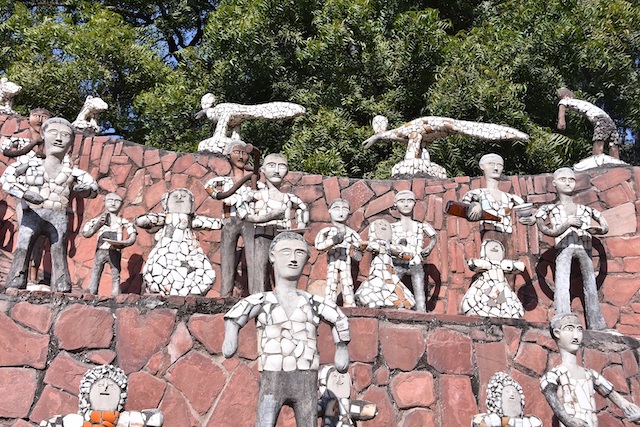
Nek Chand’s legacy cascades far beyond Chandigarh’s borders. His mosaics adorn public spaces worldwide, which immortalise his ethos. Honoured as India’s most acclaimed artist, he received the Padma Shri in 1984, yet he remained humbly rooted, ever the steward of the overlooked.
As we mark this 101st milestone, let us wander the garden’s paths anew—not merely as tourists, but as pilgrims rediscovering wonder in the waste. Nek Chand’s Rock Garden stands as a living monument, inviting generations to reclaim the poetry in our debris. Happy birthday, Nek Chand—your alchemy recycles not just materials, but souls. May your light continue to illuminate the shadows.
All images courtesy of commons.wikimedia.org.
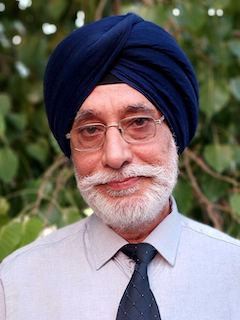
Sarbjit Bahga (b1957) is a Chandigarh-based architect, author, photo artist, and archivist. He is the Principal Architect of Bahga Design Studio LLP. Earlier, Bahga worked in the Department of Architecture, Punjab, Punjab Health Systems Corporation, and Punjab Mandi Board in various positions.
He has more than 42 years of practical experience designing various types of buildings, complexes, and large campuses. His completed works include an eclectic range of administrative, recreational, educational, medical, residential, commercial, and agricultural buildings. A monograph on his selected works titled “MODERN REGIONALISM: The Architecture of Sarbjit Bahga” has been published.
Bahga is also a keen researcher and a prolific architectural writer. He has 12 books to his credit, which include Modern Architecture in India, New Indian Homes, Le Corbusier, and Pierre Jeanneret: The Indian Architecture, Trees in Urban Habitat, Landscaping Human Habitat, New Indian Architecture -1947-2020, and Hand-Drawn Perspectives and Sketches. Bahga’s contribution to architecture has been largely recognized. He is a three-time recipient of the World Architecture Community Awards. His name has been featured in the Guinness Book of World Records for designing the “longest covered concrete corridor” in Vidya Sagar Institute of Mental Health, Amritsar.