
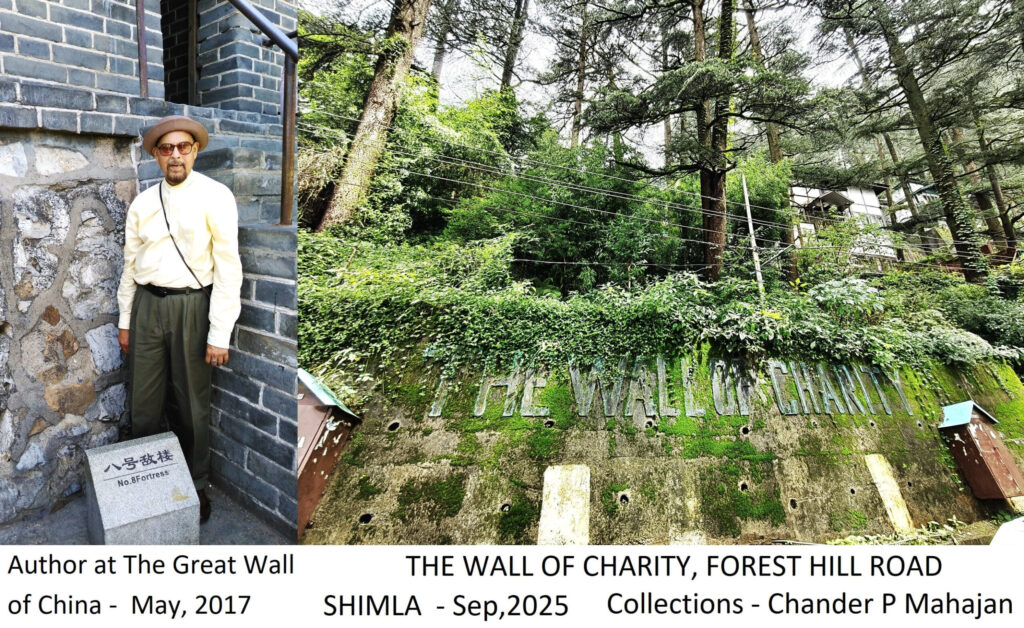
Shattered chunks of fallen concrete, near my residence on the Forest Hill Road, Shimla, made me look into the bits of ‘ifs and buts’.
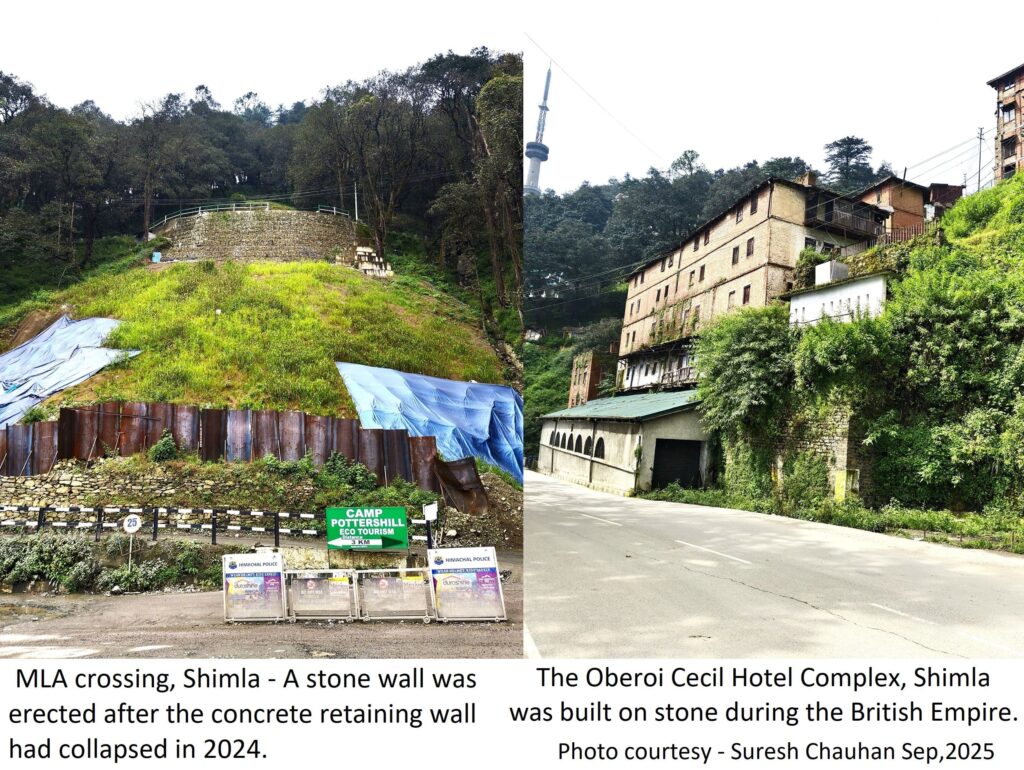
Last year, it happened at MLA Crossing, where concrete is now made up with stone.
Stone has been used for millennia to create structures that last for centuries, with many ancient monuments like the Egyptian pyramids still standing today. The practice of building stone walls dates back to the Stone Age. The Great Wall of China, around 3000 years old, is an engineering marvel.
Reinforced concrete surfaced in the 19th century, with its subsequent innovation throughout the 20th century. Natural stones are eco-friendly and renewable resources, offering a sustainable alternative to synthetic materials.
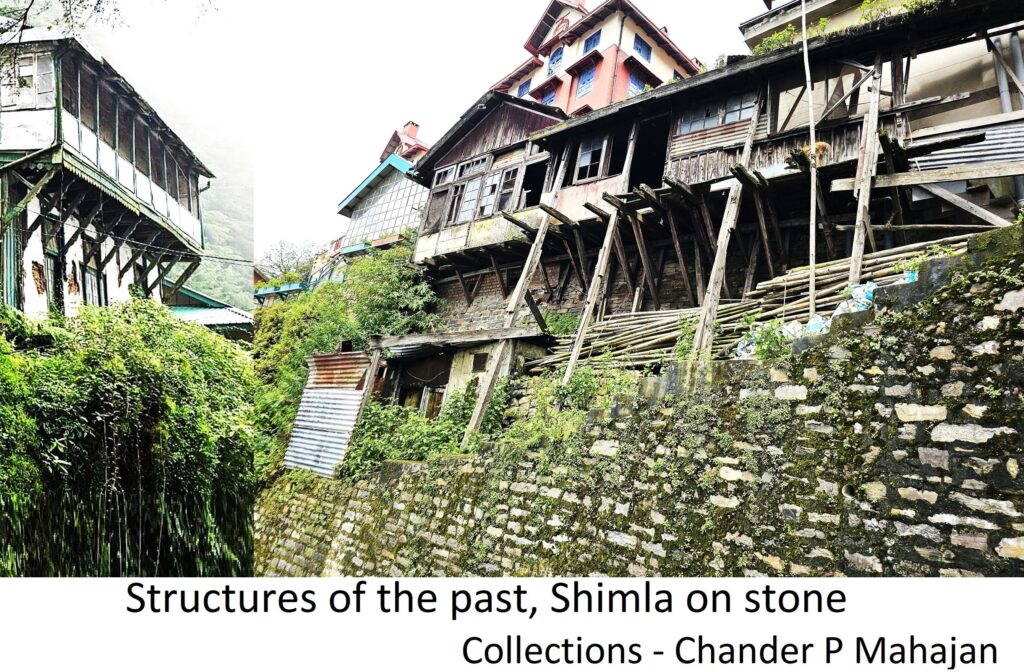
Stone walls rarely need structural adjustments, as they maintain their configuration exceptionally well.
- Rising from deep valleys up the hills are the walls of times immemorial. (The term originated in English law.)
Hill stations in Himachal Pradesh were built with many buildings and infrastructure supported by stone retaining walls. The intent was to hold back the soil and prevent landslides, an alarming phenomenon of unstable mountain slopes and structures.

Stone has an edge:-
- Natural stone has endured centuries of geological forces; often sourced from the local hills, it is a key building material.
- Each piece of stone, unique in its grain and tint, adds depth and visual appeal to the wall. The stone’s versatility also allows it to blend with various architectural styles.
- Over time, moss and lichen growth add character to the structure, enhancing biodiversity, merging it further into the landscape.
- Stone naturally resists decay and pest damage. It is fireproof and provides acoustic insulation.
- Resisting cracking, warping, and degradation, stone withstands weather, time, and wear.
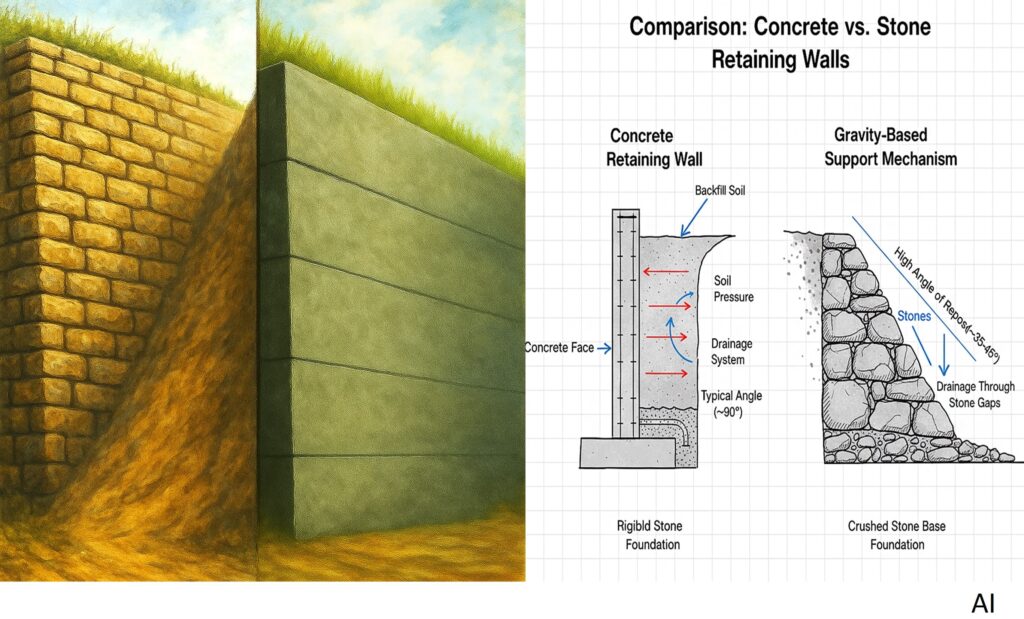
- The porosity of natural stone allows water to travel through and drain into the ground. Properly installed drainage systems, such as gravel backfills or weep holes, work in tandem with the stone, ensuring the exit of excess water.
- Stone walls keep soil from shifting, especially in areas prone to landslides or heavy rainfall.
- Stone and concrete retaining walls drift apart in their aesthetics, construction, and performance.
- With its modern, strong, and engineered look, concrete is prone to cracking and degradation against salt and rapid temperature changes.
- When large land areas are covered with concrete, water cannot permeate the surface.
- Against moisture and salt, stone seems a better material than concrete.
Beyond looks, stone walls provide essential structural support, adding stability on sloped or uneven terrain.
Unlike solid concrete walls, stone walls allow for natural drainage through their gaps; the risk of flooding and soil displacement is reduced.
Stone is a readily available and natural building material in the Himalayan region.
Building with stone provides a permanent and sturdy construction. Stone walls can be constructed in various shapes and heights, accommodating different levels of soil retention or design needs. With the flexibility to incorporate curves, terraces, or straight lines, stone allows for creative and functional designs. Compared to concrete walls, Stone’s timeless appeal adapts to any aesthetic vision. The enduring durability, beauty, and sustainability are synonymous with stone constructions.
Due to the harsh environment and age of some structures, the retaining walls require continuous upkeep to maintain their structural integrity.

Prof. (Er.) Chander P Mahajan is an art critic & a free lance journalist. The Environmentalist stays in Shimla and Dalhousie, Himachal Pradesh, India.

Nice perspective