
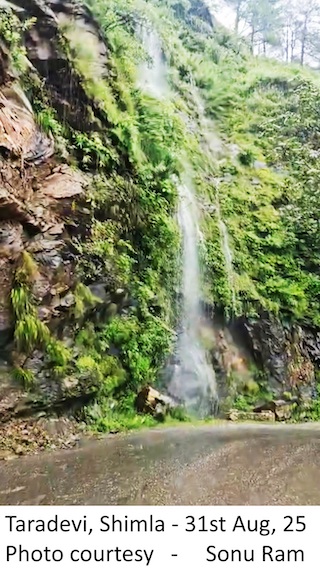
 It is a powerful natural phenomenon and an overwhelming force.
Orographic lift puts clouds in a dominant position, and clouds move over hills with the destructive power of a cloudburst. Low-hanging clouds make them seem smaller, ‘cutting hills to size’.
Nature sides with the hidden flaw. “Anything that can go wrong, will go wrong”- states Murphy’s Law.
“Aspirations of today could be a curse tomorrow-who knows? Fond of fishing and boating, someone builds a ‘dream house’ on the bank of a river; the edifice gets lost amid the fury of floods-How unfortunate!” Says Brig. Harjit Singh of Jodha Niws, Shimla.
I have nostalgia for the Board’s monumental Rest House of Manali that had fallen prey to the river Beas of the Kullu valley.
Devastation for the sake of cloudbursts aroused my curiosity to know what it was. Out of anxiety, I tried to put the bits together.
- A cloud burst is a sudden, aggressive rainstorm falling for a short period of time over a small geographical area. Often accompanied by hail and thunder, there is a flash flood.
Meteorologically, rain from a cloudburst usually with a rate of around 100 mm per hour.
Abundant moisture in the atmosphere causes clouds. Large quantities of water are split into small droplets.
In unstable atmospheric conditions, strong updrafts carry warm, moist air high into the atmosphere above cooler, denser air. The droplets and ice particles condense and grow larger.
Mountainous terrain forces moist air to rise, accelerating cloud formation and precipitation. Orographic lift can cause the accumulated water droplets to combine into heavy raindrops.

The massive clouds do not fall because the rising air keeps them floating. The air is denser nearer the land surface. When the updraft weakens, air currents can no longer hold it.
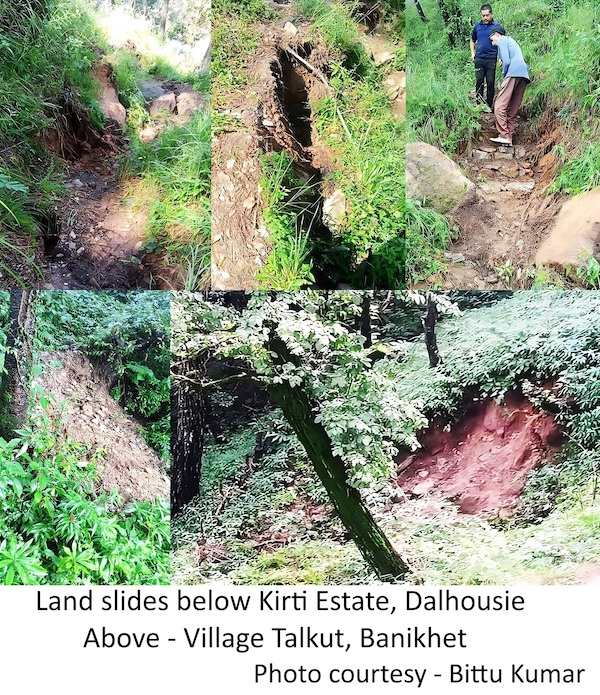
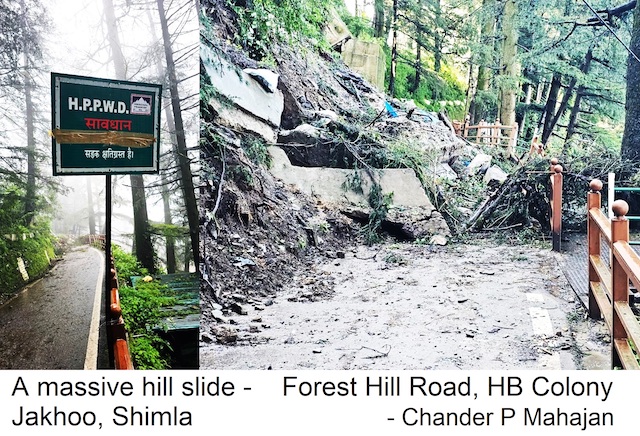
If droplets are too heavy to stay suspended in the cloud, the entire water volume is abruptly released at once in a very short period, triggering a cloudburst. The rapid influx of water triggers destructive flash floods and devastating landslides.
- ‘Climate Change’ gives rise to higher global temperatures, resulting in more evaporation and increased atmospheric moisture. That all contributes to more frequent and intense cloudbursts.

Sustained land use practices could reduce vulnerability to cloudbursts. Avoiding construction in flood-prone areas, shunning deforestation, and adopting soil conservation measures could save humankind from natural calamities.
- Cloudbursts cannot be specifically predicted. Due to their highly localised and short-duration nature, cloudbursts are difficult to forecast accurately using traditional weather prediction models. However, meteorologists may foresee the possibility of heavy rainfall that could lead to a cloudburst.
Predicting the exact amount of rain over such a small area requires an intense network of instruments, which is not currently viable. It is hard to pinpoint with current technology.
North India has so far recorded its wettest monsoon since 2013, when the Kedarnath floods occurred.
During the monsoon season, strong winds can carry large amounts of moisture inland, which, when lifted over terrain, can lead to cloudbursts. Thunderstorms have the strongest updrafts and thus the heaviest rain. The collected water suddenly falls, playing havoc. Localised intense rain can be a natural disaster.
In Himachal Pradesh, to have a solid place to build a house, a geologist’s report is now mandatory. Mapping will be done to construct buildings in safe zones.
Hills down rivers overflowing – Man Proposes, God Disposes. The Gospel of Jesus Christ says that when things do go wrong, God is in the midst of the trouble, working to encourage us.
https://hillpost.in/2025/08/jumbling-buildings-on-hills/167239/
https://hillpost.in/2020/11/malana-of-lambs-of-justice/114896/

Prof. (Er.) Chander P Mahajan is an art critic & a free lance journalist. The Environmentalist stays in Shimla and Dalhousie, Himachal Pradesh, India.