
In my boyhood, one day, in the fifties, my brother bought me a pair of ‘John Barrett’ shoes at Raghunath bazaar, Jammu; for Rupees eighteen. I got into the shine and the makeup, and am carrying the impressions. Polish and shine is essential to owning a pair that requires patience and regularity.
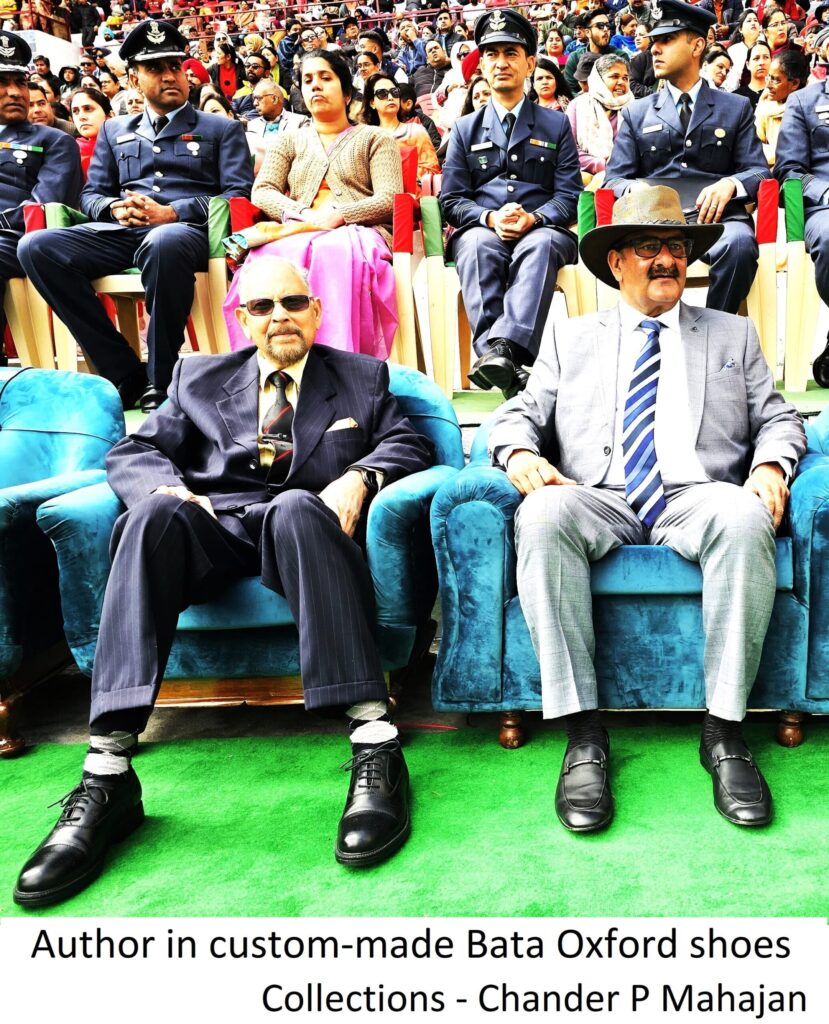
Through the ‘Flex’ brand, & now the Batas and the Woodlands; I am a collector. I wonder if I am so-called a ‘Sneakerhead’. Higher-quality products make the brands popular.
A modern artist at Gari Studios has just sculptured a deity in long boots. Primitive people saw little need for footwear; even the gods were depicted barefoot.
With the advent of civilization, shoes found their way into culture, folklore, and art. Shoe styles evolved to reflect wealth and status; with multiple pairs for different occasions.
- Dress shoes suitable for formal occasions have smooth leather uppers, leather soles, and sleek designs; the heel improves the balance of the shoe.
Styles include oxfords, brogues and slip-ons; each with its distinction in terms of lacing, decoration, and formality.
I like the specific looks of the brogues, with decorative perforations and saw-toothed edges; the ‘wingtip’ decorative pattern fascinates me. An ‘Allen Cooper’ pair of Argentine leather, from three decades; stays intact as of now.
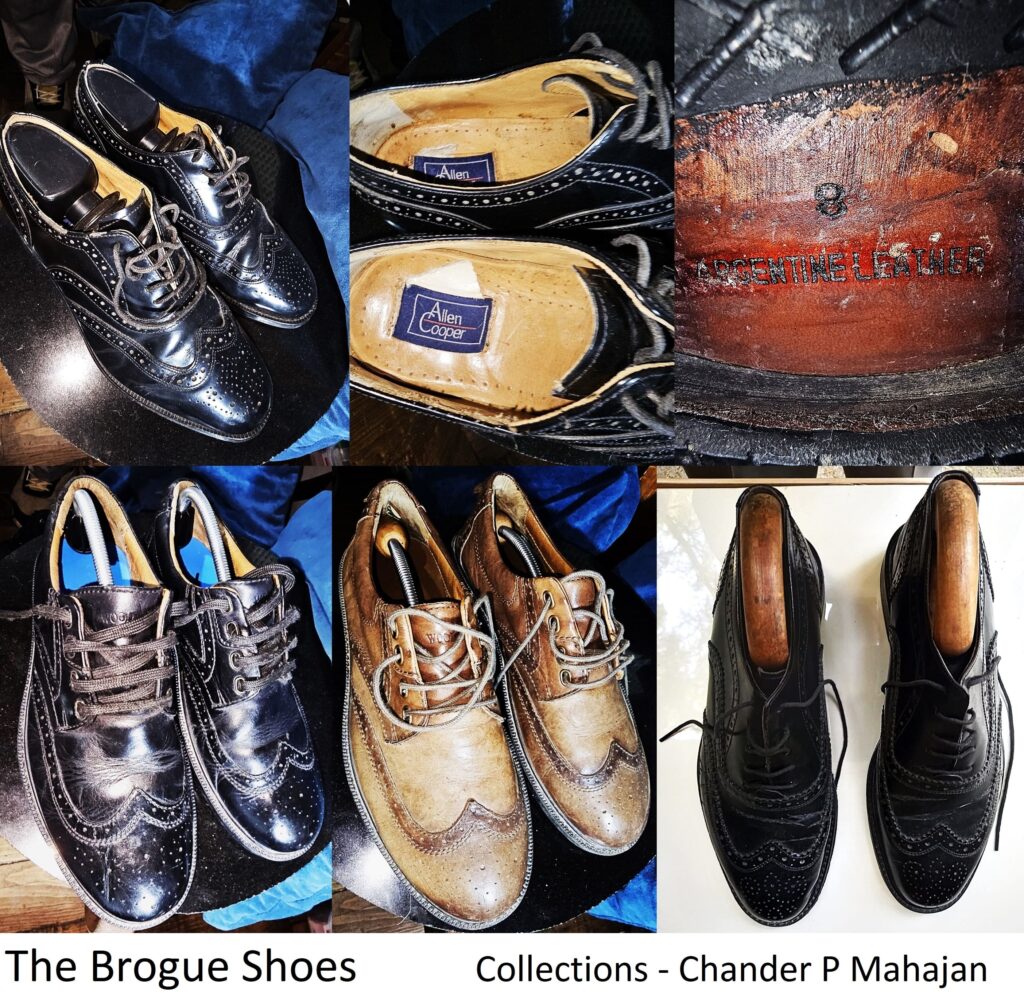
A line of stitching over the toe; a ‘cap toe’ with eyelets stitched beneath the tongue to pass the laces, makes Oxford the least decorative. It is, perhaps, the most formal dress shoe.
I have nostalgia of the putting of my feet, one and the other, on the ‘slab of the shoemaker’ asking them to craft custom shoes for me. I wonder if ‘made to order’ from TA-TUNG & CO of Shimla was not the best. Tiny ankle shoes for my son handcrafted at Gurdwara Road, Dharamshala was another masterpiece.
Comfort is vital for daily wear and can impact one’s overall well-being. Good shoes are synonymous with comfort, durability, fit, and functionality. They also provide adequate support to the arches, heels, and toes.
A well-fitting shoe with a vent for air circulation keeps feet cool and dry. A quality shoe should not feel too heavy. It should be flexible in the appropriate areas but not prone to twist or bend.
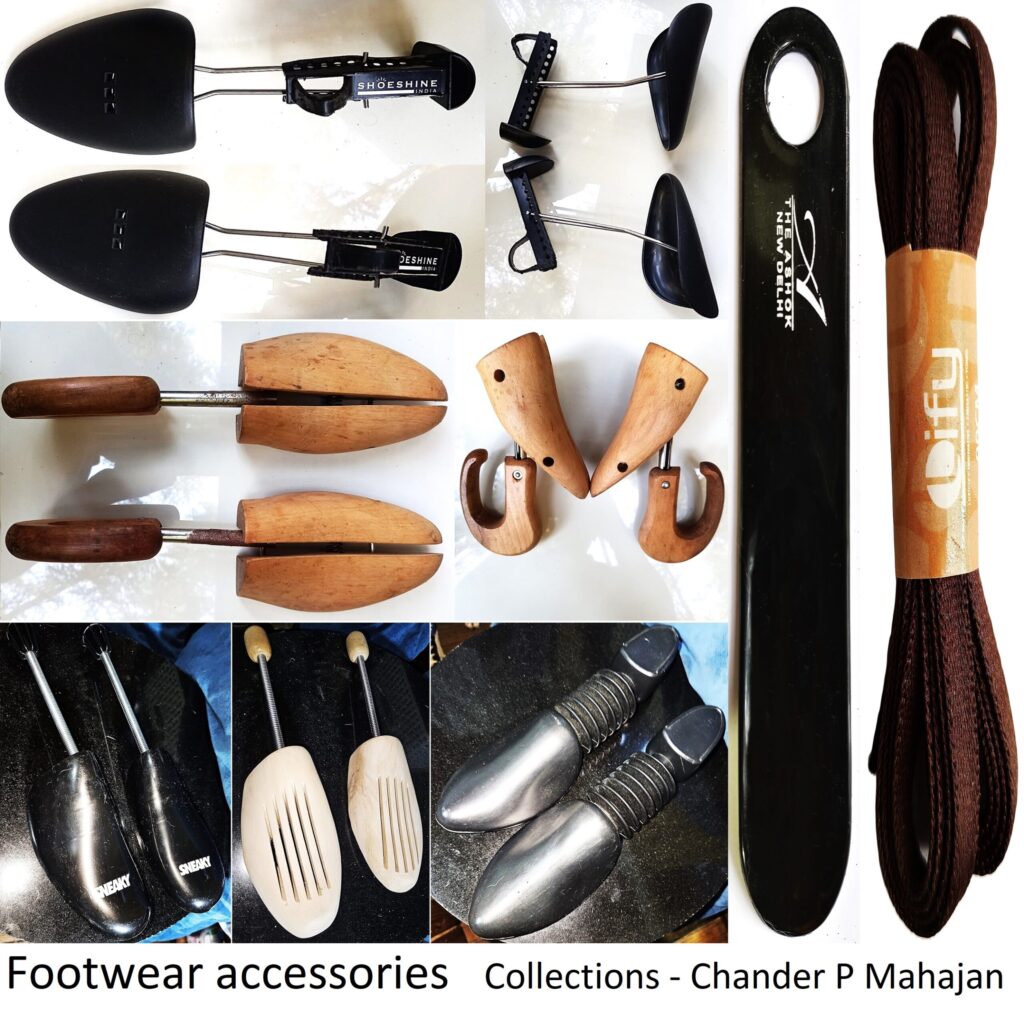
Shoe trees (stretchers) become handy in keeping the shoes in shape. A shoehorn helps slide one’s foot into the shoe without crushing the heel or damaging the back of the shoe.
- Over time, athletic shoe design evolved with companies like Reebok, Adidas and Nike, contributing to the development of modern shoes.
- Soles that were once laboriously hand-stitched are now more often machine-stitched or simply glued on.
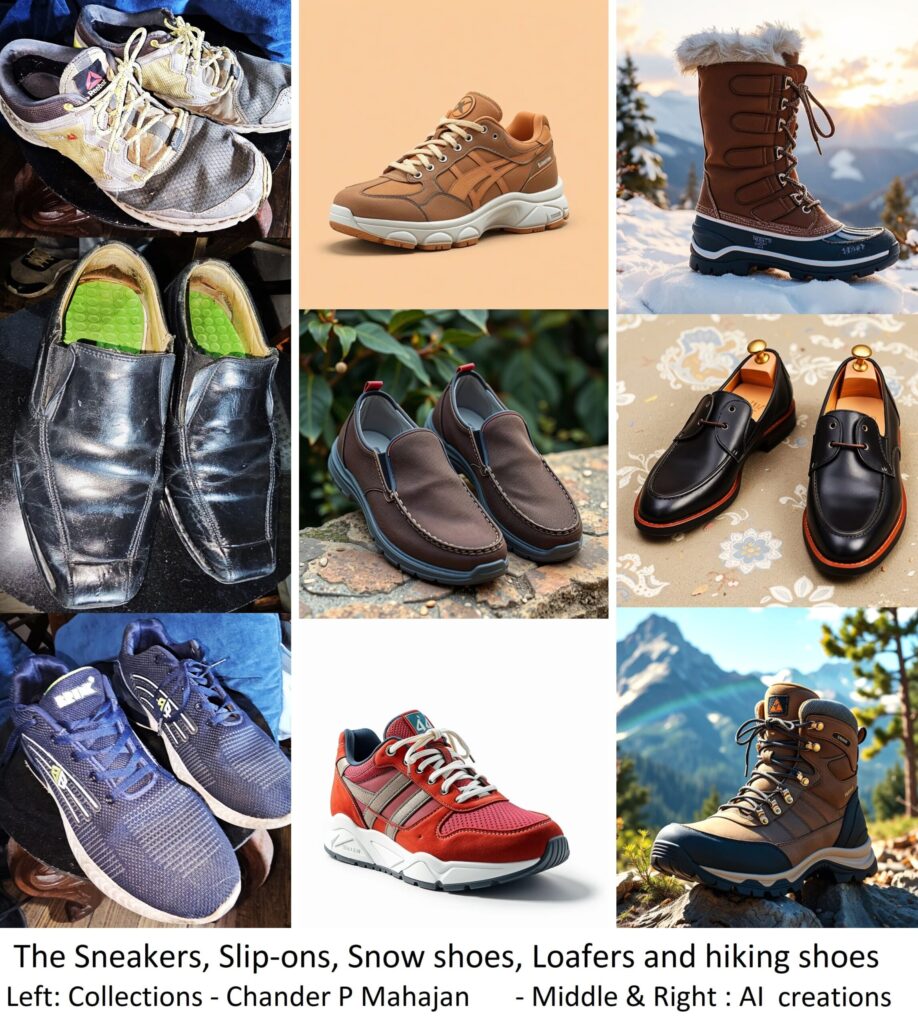
- Of late, sneakers have gained popularity. While maintaining flexibility and natural walking, they provide some protection as well. The quiet rubber soles allow wearers to ‘sneak up’ on others. Flip-flops though considered casual, are yet to find their entry into formal wear.
Graciously gifted by Late Wg Cdr Dasmana, lying on my shelves is a pair of hiking shoes. It gives me comfort and support during long walks in rough terrains. Another pair of snow boots is ideal for snowy weather like in Shimla and Dalhousie, providing warmth and protection.
- While in Japan, I used to exchange my outdoor shoes for indoor slippers, like others did. In many places in the world, shoes are removed when moving from exteriors to interiors, more so in homes and religious places. It prevents dirt and filth from being passed on.
- In most parts of Himachal, it is customary to take off one’s footwear at the threshold. It may mean regardfulness- a mark of politeness and courtesy, besides mannerism. Imposing it, on the other hand, may smack of supremacy and arrogance in exceptional situations.
It is considered unmannerly to cross the legs and display the soles of one’s shoes during conversation. Elsewhere, the shoe may also symbolize something worthless. Shoe-throwing or ‘shoeing’, may mean protest for some.
The chunk of the ‘newer shoes’ end up in landfills; the materials not being conducive to recycling. Soles made from synthetics like polyurethane or polyvinyl have made them less biodegradable. According to one assessment, most mass-produced shoes may require 1000 years to degrade in a landfill.

Prof. (Er.) Chander P Mahajan is an art critic & a free lance journalist. The Environmentalist stays in Shimla and Dalhousie, Himachal Pradesh, India.