
Nestled on the northeastern fringe of Chandigarh, the Chandigarh War Memorial stands as a hallowed testament to the indomitable courage, selfless sacrifice, and eternal valour of India’s brave hearts.
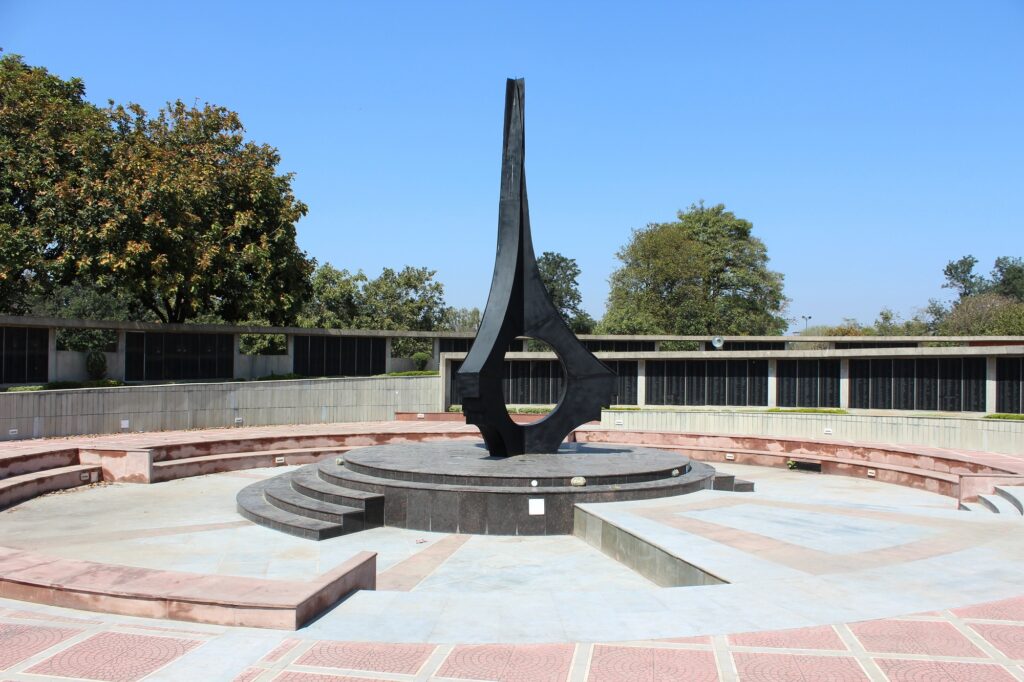
Inaugurated on August 17, 2006, by the revered former President Dr APJ Abdul Kalam, this solemn monument enshrines the memory of approximately 10,500 martyrs from Punjab, Haryana, Himachal Pradesh, and the Union Territory of Chandigarh, who laid down their lives in service to the nation. With its evocative design and profound backstory, the memorial is more than a structure—it is a sacred space of remembrance where the hearts of a grateful nation converge to honour the heroes whose sacrifices safeguard our freedom. This poignant landmark, born of community spirit and innovative architecture, ensures that the legacy of these gallant souls endures, inspiring reverence and unity for generations to come.
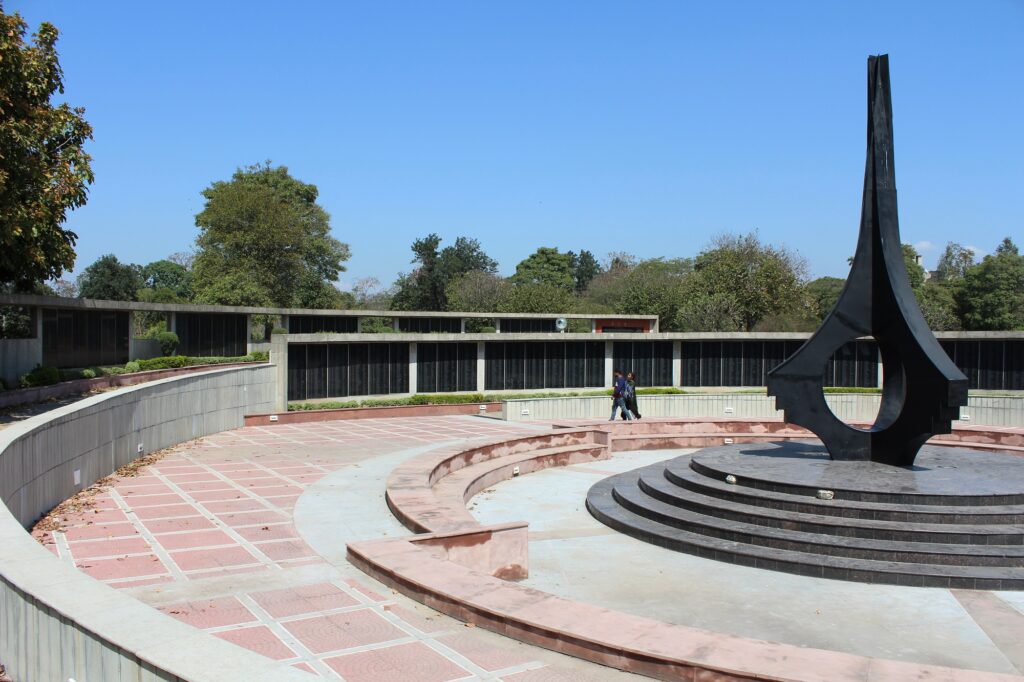
The Chandigarh War Memorial is one of the few memorials built in India after Independence, and at the time of its completion, it was likely the largest of its kind in the country. It is a lasting tribute to the brave soldiers who gave their lives in wars and battles fought since 1947. The memorial is a powerful expression of the nation’s gratitude for their ultimate sacrifice, ensuring their memory endures for generations.
The idea for the memorial came from Lt. Gen. JFR Jacob (Retd), a hero of the 1971 Indo-Pak War and former Governor of Punjab and Administrator of Chandigarh. During the foundation stone ceremony on April 28, 2004, he called it a “Shandar Yadgar” (Magnificent Memorial). His vision was to create a space honouring the fallen and inspiring pride and unity among citizens.
This memorial is special because it was built entirely through public contributions, led by the Indian Express Group of Newspapers and supported by its readers. No government funds were used, making it a remarkable example of a citizens’ initiative. This collective effort underscores the community’s deep respect and gratitude for its heroes.
Unlike many grand monuments designed by established architects, the Chandigarh War Memorial was conceived by two young students, Shivani Guglani and Nanaki Singh, from the Chandigarh College of Architecture. In their final year of study in 2002-2003, they won a design competition organised by Lt. Gen. Jacob, who believed young talent should shape this meaningful project. Their innovative design was later refined by the Department of Urban Planning, Chandigarh Administration, under the guidance of Chief Architect Renu Saigal, with young architect Shams Shaikh overseeing the detailed drawings and construction.
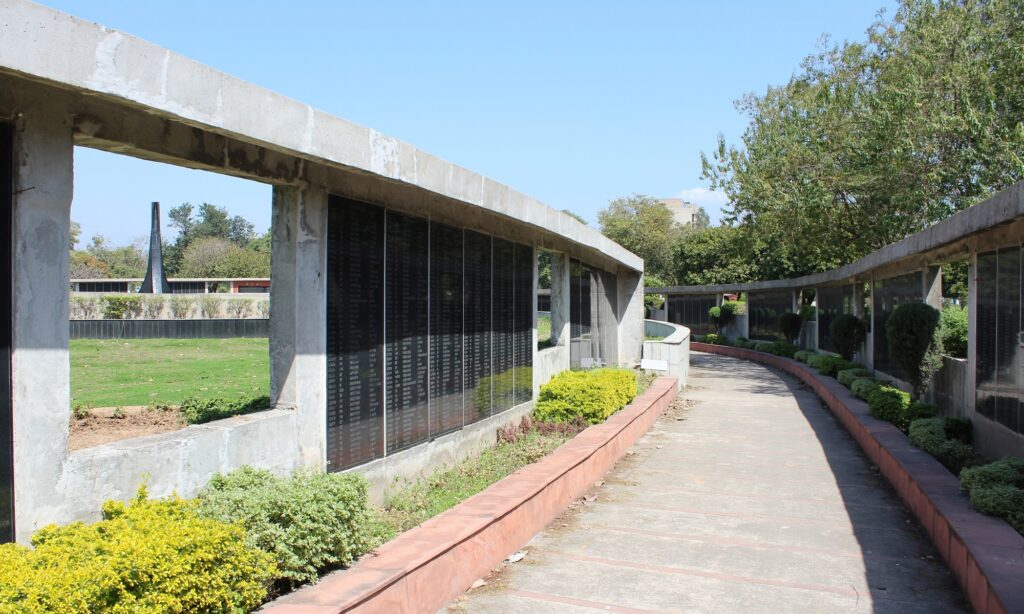
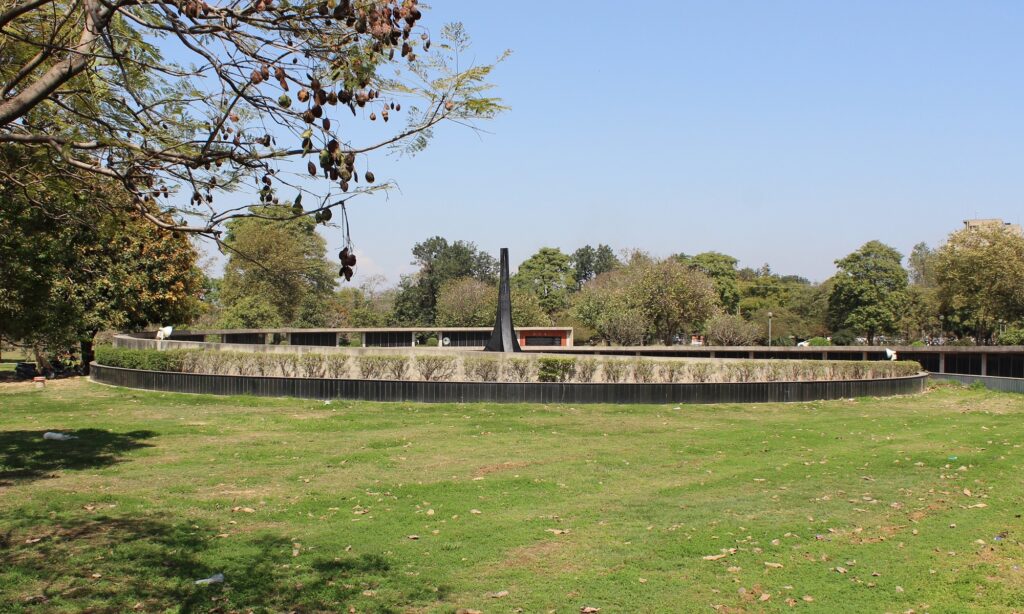
Located in the Leisure Valley’s Bougainvillea Garden in Sector-2, near Le Corbusier’s iconic Capitol Complex, the memorial’s site posed a challenge. Le Corbusier’s urban planning rules prohibited large structures in this area to preserve the visual harmony of the valley and the nearby Shivalik Hills. To respect these guidelines, the memorial was designed as a subterranean structure, with its main oval-shaped arena set six feet below ground level. This sunken design blends seamlessly with the surrounding landscape without obstructing views of the Capitol Complex or the hills.
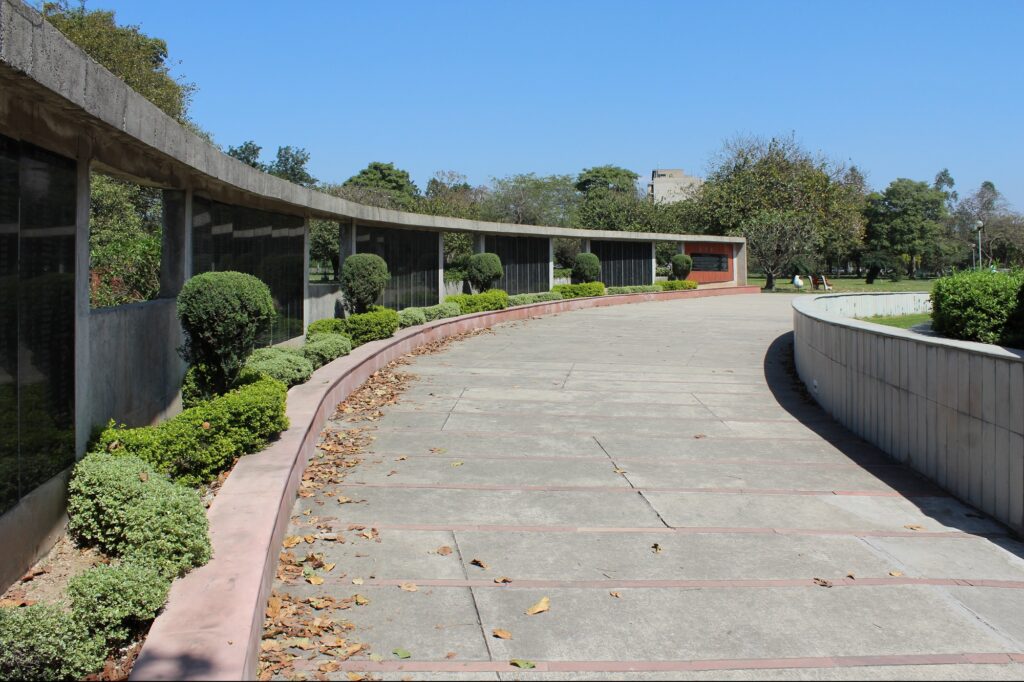
The memorial’s layout resembles a spiral galaxy, with two arms extending from the central arena. One arm serves as the entrance promenade, facing the Capitol Complex, while the other leads to the exit. These paths blend naturally with the Bougainvillea Garden’s organic layout, creating a harmonious flow. At the heart of the arena stands a 22-foot-tall sculpture designed by Shams Shaikh, made of powder-coated steel with a tubular frame. The sculpture features three converging posts, symbolising the unity of India’s Army, Navy, and Air Force.
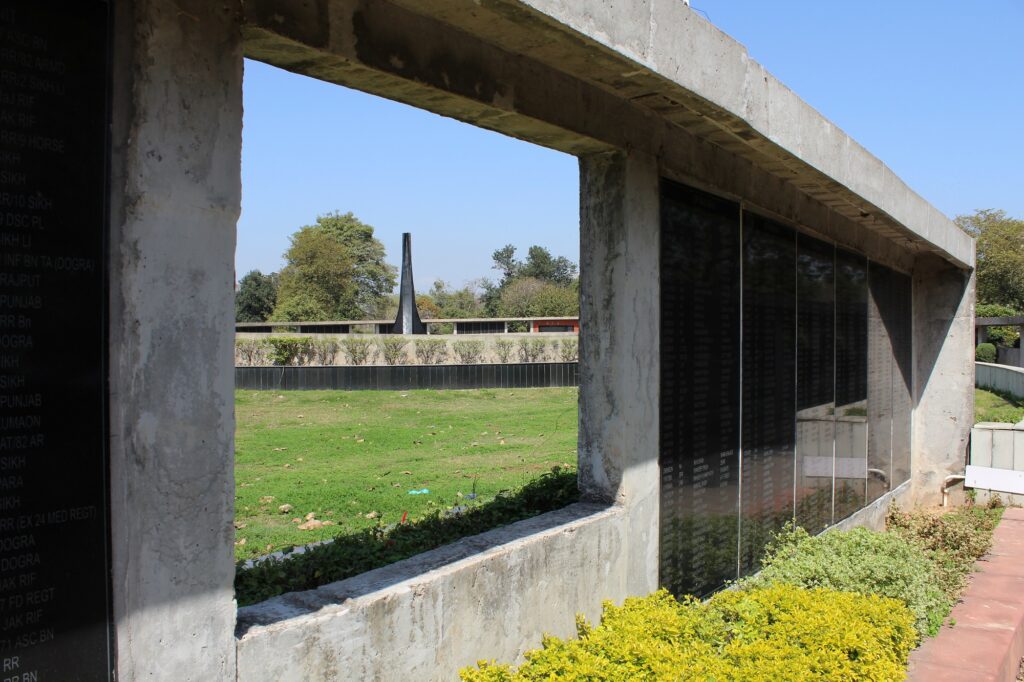
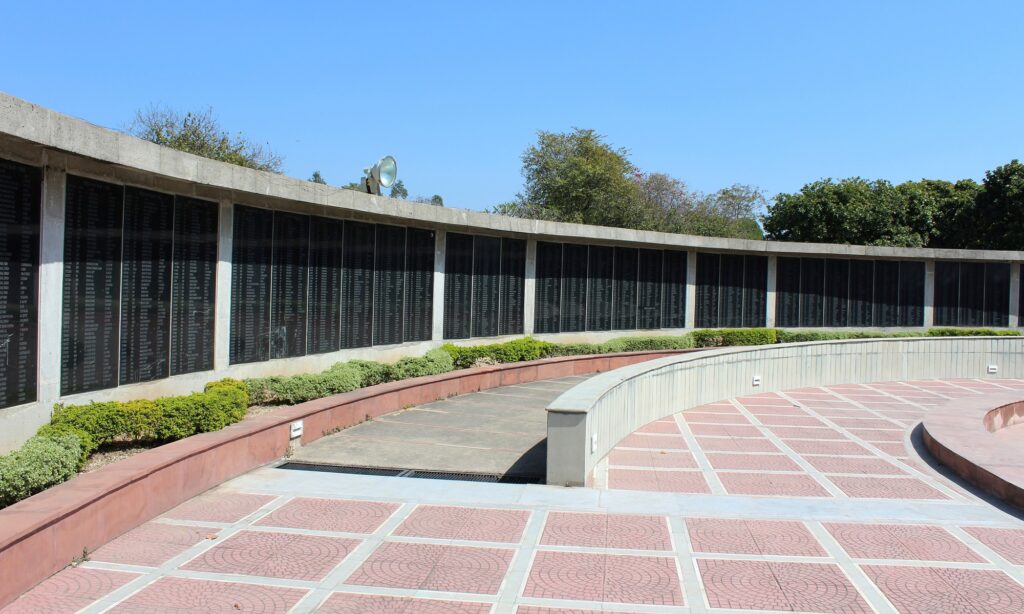
The sunken arena is surrounded by 8-foot-high concrete walls clad in black granite, engraved with the names of approximately 10,500 martyrs. These panels are illuminated at night by hidden lights, creating a solemn and respectful atmosphere. Planters at the base of the walls keep visitors at a respectful distance, while ramps provide easy access to the arena. Openings in the walls ensure the structure feels open and connected to the garden, maintaining the area’s visual continuity.
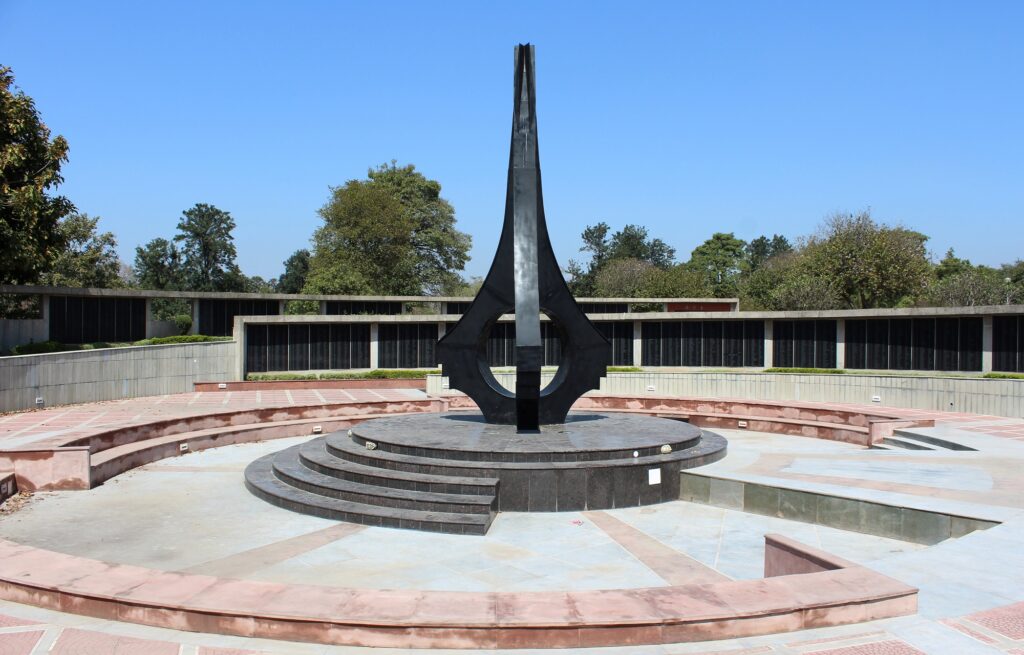
The Chandigarh War Memorial is far more than a monument carved in stone; it is a living testament to the unbreakable spirit of India’s bravehearts, whose ultimate sacrifices have woven the fabric of our nation’s freedom. Crafted through the collective will of a grateful community, designed by the visionary hands of young students, and seamlessly woven into Chandigarh’s unique urban tapestry, this sacred site radiates unity, courage, and remembrance. To the youth and children of today, this memorial extends a heartfelt call: come, walk its serene paths, stand before the names etched in black granite, and feel the weight of the sacrifices made for your tomorrow.
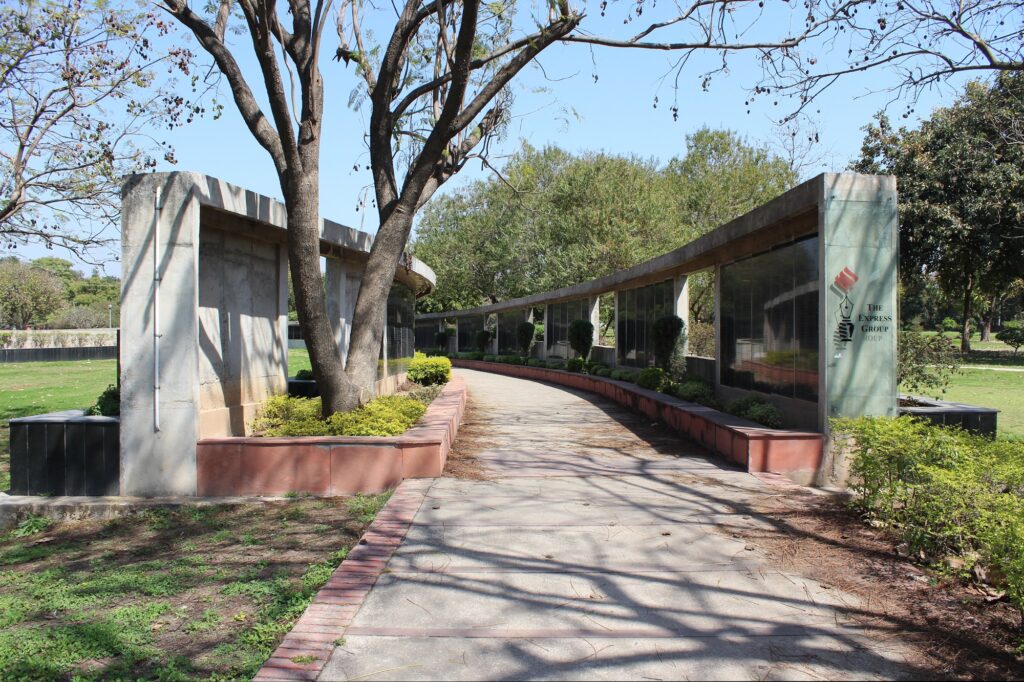
Let the towering sculpture, symbolising the unity of our Army, Navy, and Air Force, ignites a spark of pride and purpose within you. Visit this hallowed ground, draw inspiration from the heroes who gave everything for our nation, and carry forward their legacy of valour, honour, and love for the country in your hearts, shaping a future worthy of their sacrifice.
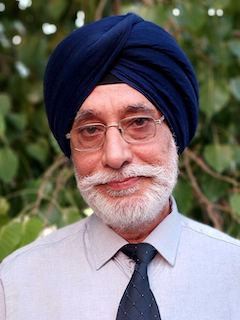
Sarbjit Bahga (b1957) is a Chandigarh-based architect, author, photo artist, and archivist. He is the Principal Architect of Bahga Design Studio LLP. Earlier, Bahga worked in the Department of Architecture, Punjab, Punjab Health Systems Corporation, and Punjab Mandi Board in various positions.
He has more than 42 years of practical experience designing various types of buildings, complexes, and large campuses. His completed works include an eclectic range of administrative, recreational, educational, medical, residential, commercial, and agricultural buildings. A monograph on his selected works titled “MODERN REGIONALISM: The Architecture of Sarbjit Bahga” has been published.
Bahga is also a keen researcher and a prolific architectural writer. He has 12 books to his credit, which include Modern Architecture in India, New Indian Homes, Le Corbusier, and Pierre Jeanneret: The Indian Architecture, Trees in Urban Habitat, Landscaping Human Habitat, New Indian Architecture -1947-2020, and Hand-Drawn Perspectives and Sketches. Bahga’s contribution to architecture has been largely recognized. He is a three-time recipient of the World Architecture Community Awards. His name has been featured in the Guinness Book of World Records for designing the “longest covered concrete corridor” in Vidya Sagar Institute of Mental Health, Amritsar.