
I relish ‘Moti Seviyan’ from the legendary halwai of Jhakoo, Shimla. Kirti enjoys ‘Sund Panjeeri’ from Pahlwan the Hatti, Jammu. My sons Aseem and Manu, and my grandson Madhav, like me, have no sweet tooth. The taste buds may differ, but could leave lasting impressions on the palate. 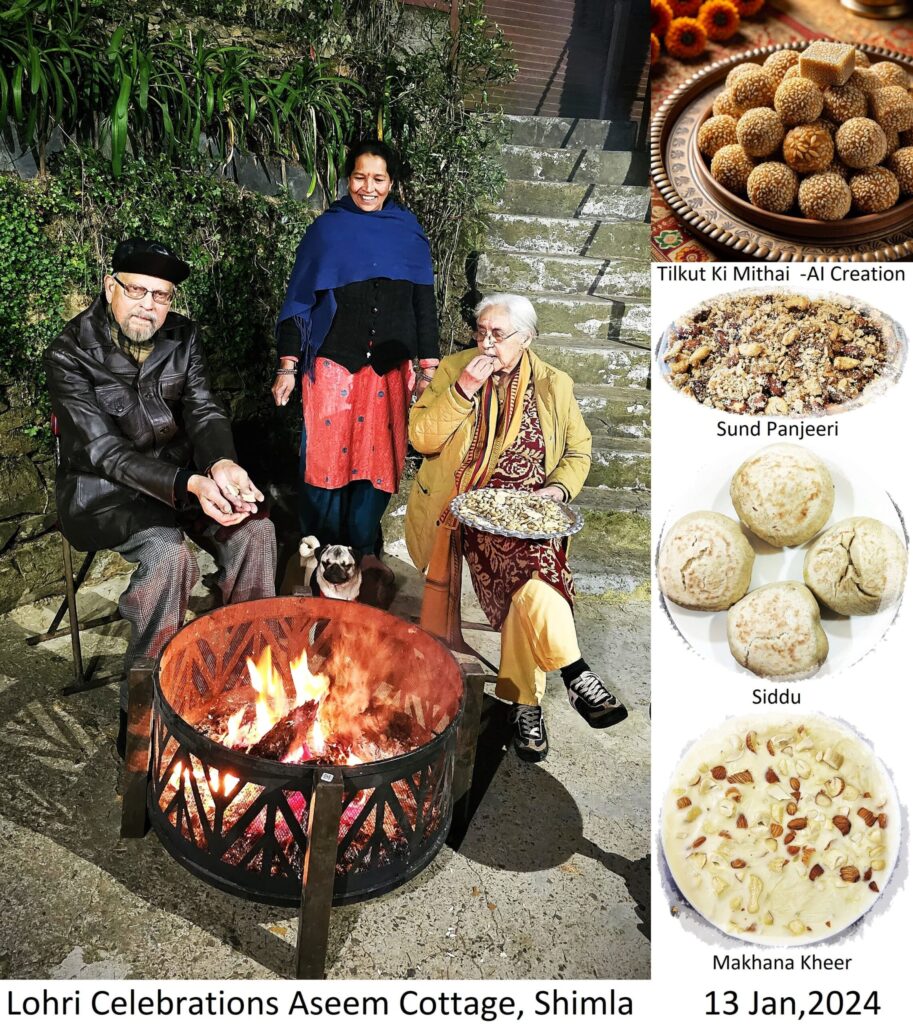
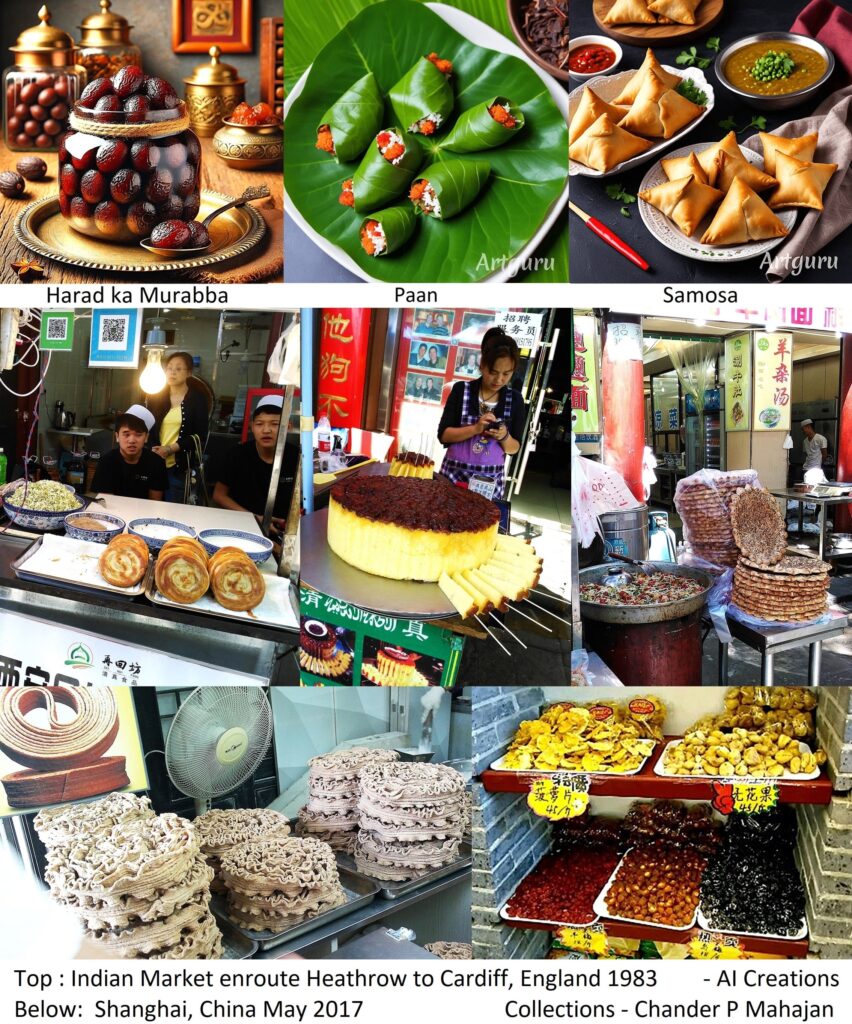
Lord Vijay, my cousin, on our drive from Heathrow Airport to Cardiff, stopped by a township to fetch ‘Samosas’ for his restaurant. I overheard someone asking for ‘Harad Ka Murabba’ at the adjoining shop. “Here you can buy Indian stuff”, Vijay explained. We enjoyed ‘Paan’ from the other shop.
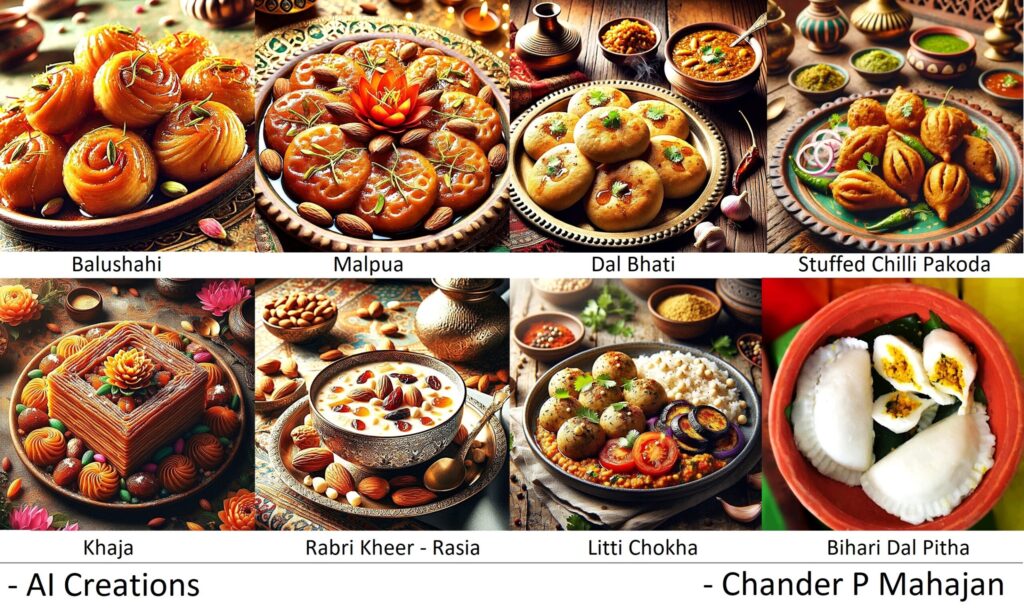
I miss that ‘Dal Bhatti’ and the stuffed mirchi pakoras of Rajasthan. The taste of ‘Litti Chokha’ of Bihar is yet ‘asking more’. ‘Baati’ is a plain dough ball served with ‘dal’, whereas “Litti” is filled with ‘sattu’ served with ‘baingan bharta’; both are usually baked over charcoal and give a smoky flavour.
Pancakes of the eighties on the pavements of Paris, and ever in the eateries of Mecleodganj, Dharamsala; amidst Himachali and Tibetan cuisine, look and taste the same.
Partaking in ‘Till Patti’ (Tilkut) at the Lohri festival is a ritual with our family, it symbolises prosperity and good fortune. The nutty flavour of the mix of sesame seeds and jaggery makes it a delightful indulgence. Artfully shaped balls and cut pieces- is a fancy to eat.
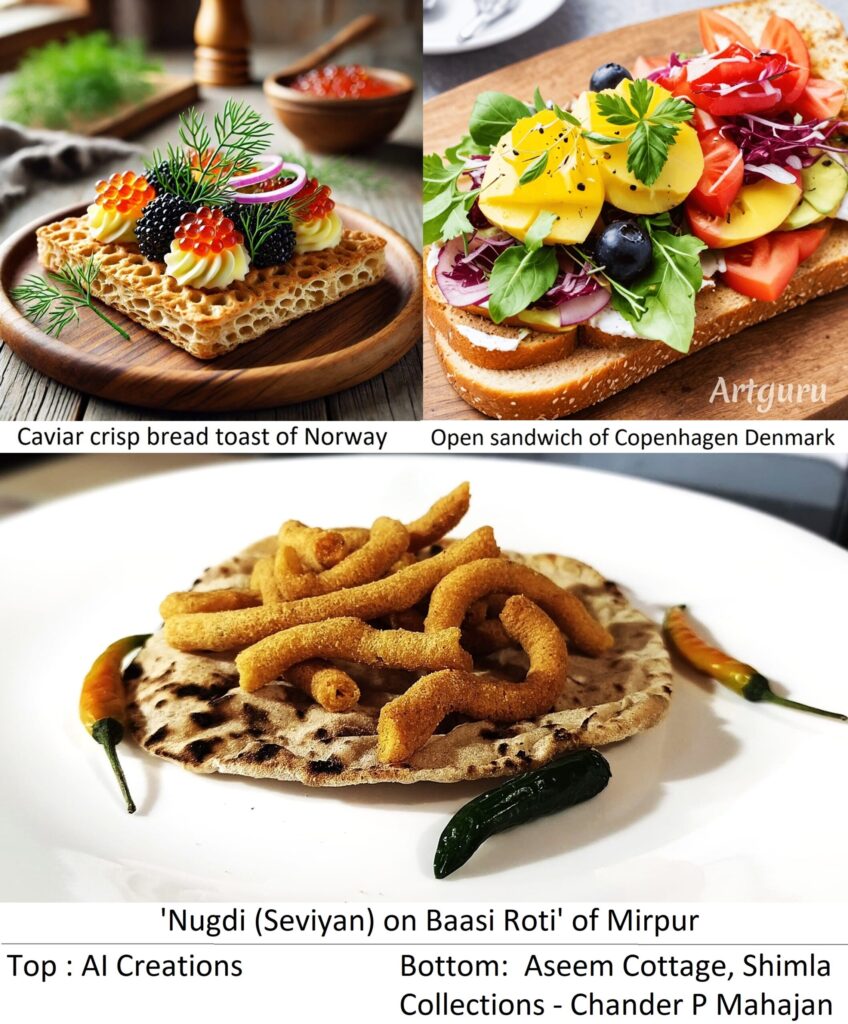
I was at the Tivoli Garden & Flower Festival of Copenhagen, way back in August 1983. I wonder if I was conspicuously gazing at the exotic patterns on the designer pastries at a stall when someone whispered “This is a cake-eat it”. I shyly accepted the friendly offer.
Sweets are a tribute to the Region’s traditional background. The food is tailor-made for lifestyles. May it be Brazil, China, Europe or Japan; the basic inputs are out of the staple food. However, permutations and combinations of the proportions and the styles of presentations are umpteen.
- Back home, I prefer ‘Nugdi (Seviyan) on Baasi roti’ of Mirpur to the ‘Open Sandwich’ of Denmark; and to the ‘Caviar on Crisp Bread’- that I never tried.
In India, sweets are more than just desserts; they are symbols of celebration, ritual, and hospitality.
Balushahi is a flaky and crispy sweet piece prepared from flour, ghee, yoghurt, and sugar syrup. Malpua is a sweet pancake made from flour, milk, sugar, and cardamom. The batter is fried until golden brown. Each piece is soaked in sugar solution, giving it a sweet and syrupy flavour.
Motichoor Laddu is made from fine chickpea flour (besan) and sugar syrup. The tiny, golden balls are fried in ghee and then soaked in sugar syrup,
- I have been to Bihar, many a time.
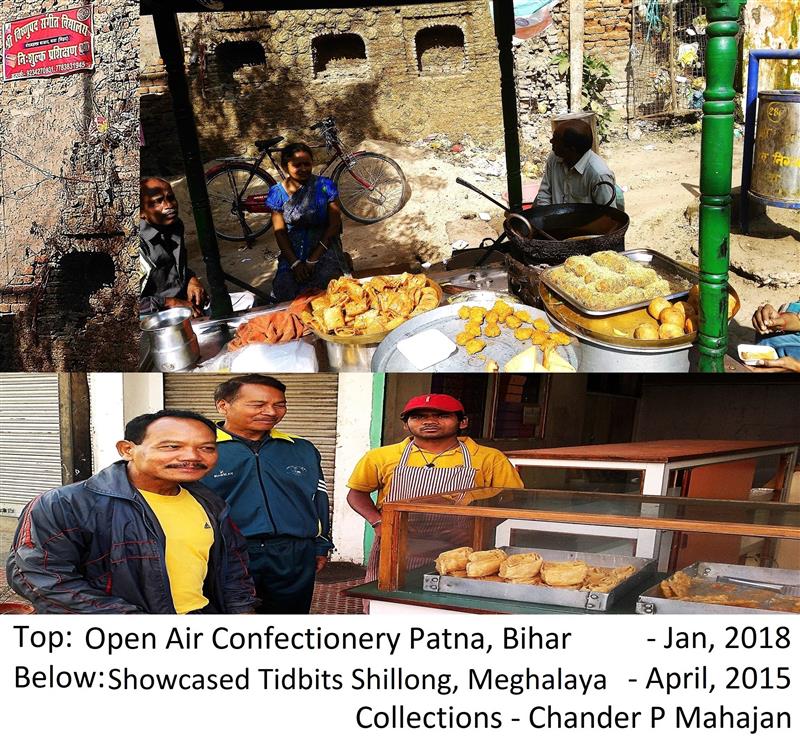
Khaja is believed to be a 2000-year-old preparation. The layers are intricately woven, creating a crunchy texture. Made of flour and sugar, and then coated with sugar syrup.
‘Posta-Dana Ka Paratha’ has the feel of ‘Siddu’ of Himachal – a filling of a paste made of poppy seeds into a handful of dough of fine wheat flour.
Makhana Kheer is a creamy dessert made from fox nuts (Makhana), milk, sugar, and cardamom.
Parwal ki Mithai is a unique sweet made from parwal (pointed gourd). The parwal is hollowed out and filled with a mixture of khoya (reduced milk solids), sugar, and spices.
During the festival of Chhath, Thekua, Rabri Kheer (Rasia) and Anarsa are the delicacies. Thekua is a deep-fried sweet made from whole wheat flour, ghee, and jaggery. It’s often flavoured with cardamom, fennel seeds, and coconut. Traditional Anarsa is made from a mixture of powdered rice, sugar, khoya and sesame or poppy seeds. Anarsa is crispy on the outside and soft on the inside.
- Sweets not only reflect heritage but also symbolize the warmth and hospitality of the people.
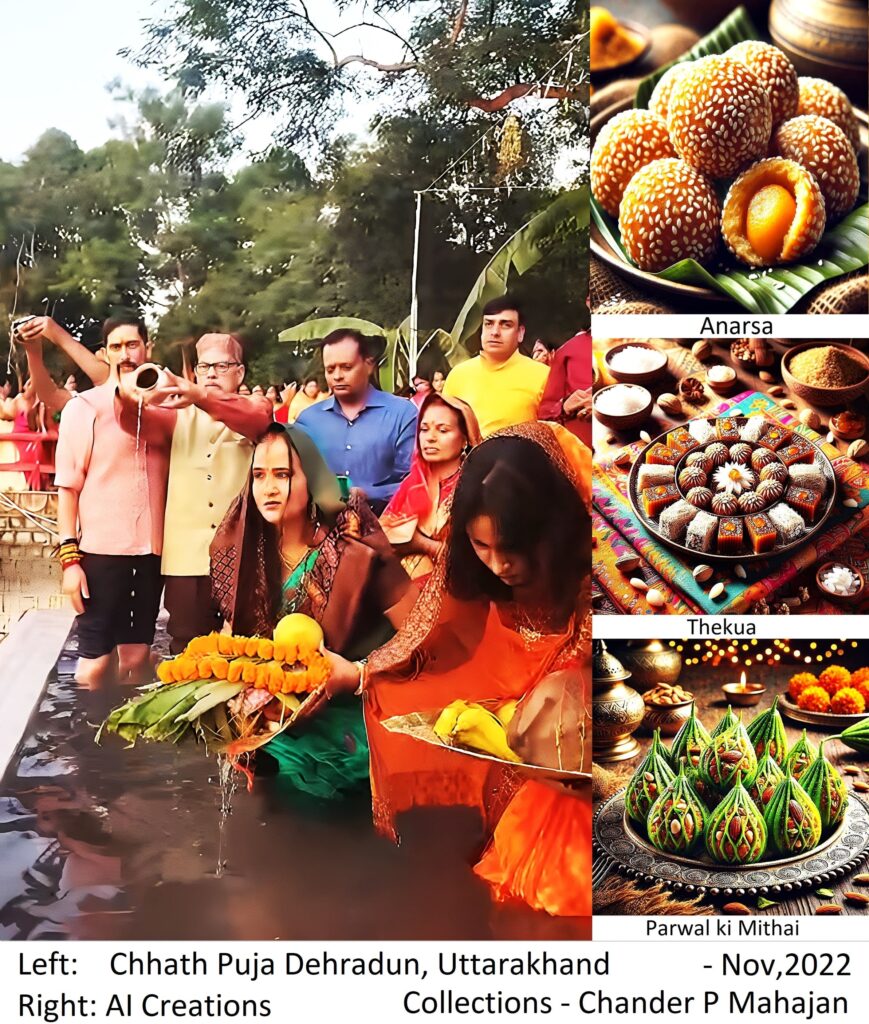
The preparations reflect the diverse cookery of the region. Flavours meld together in a rich and aromatic taste. The creativity and expertise are owed to the confectioners. Many a sweet is often garnished with chopped nuts and edible silver foil, making it not only delicious but also visually appealing.
From ‘Sain Halwai’s jalebi’ of Jammu to the showcased tidbits of Shillong- each sweet tells a story of tradition and taste buds. Some carry stories of centuries-old recipes passed down through generations. Popular sweets are specimens of the perfect cookery and unique flavours. ‘Pakwans’ tell tales of the rich heritage of the geographic domains; each a masterpiece of taste and tradition.
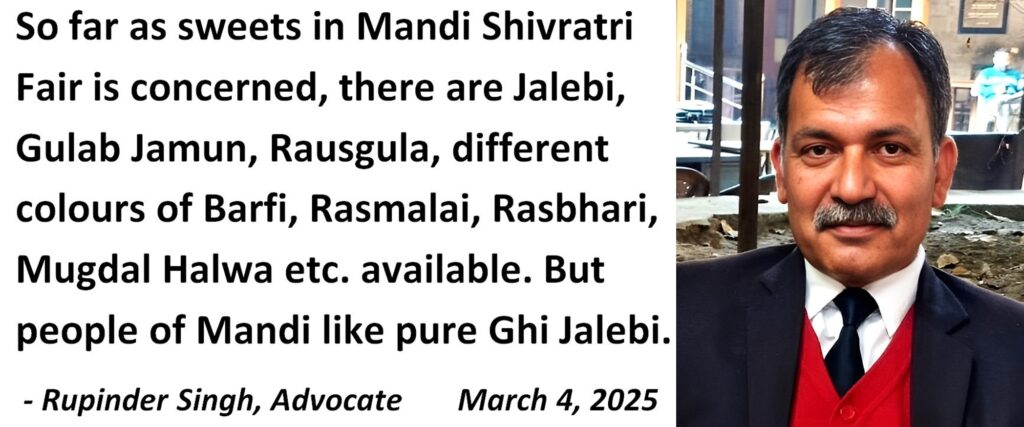
People take pride in celebrating various festivals and religious rites with symbolic sweets that resemble the delicacies offered to deities. The International Mandi Shivratri Fair of Himachal is celebrated with pomp and fervour. I like Kachori the most.

Prof. (Er.) Chander P Mahajan is an art critic & a free lance journalist. The Environmentalist stays in Shimla and Dalhousie, Himachal Pradesh, India.