
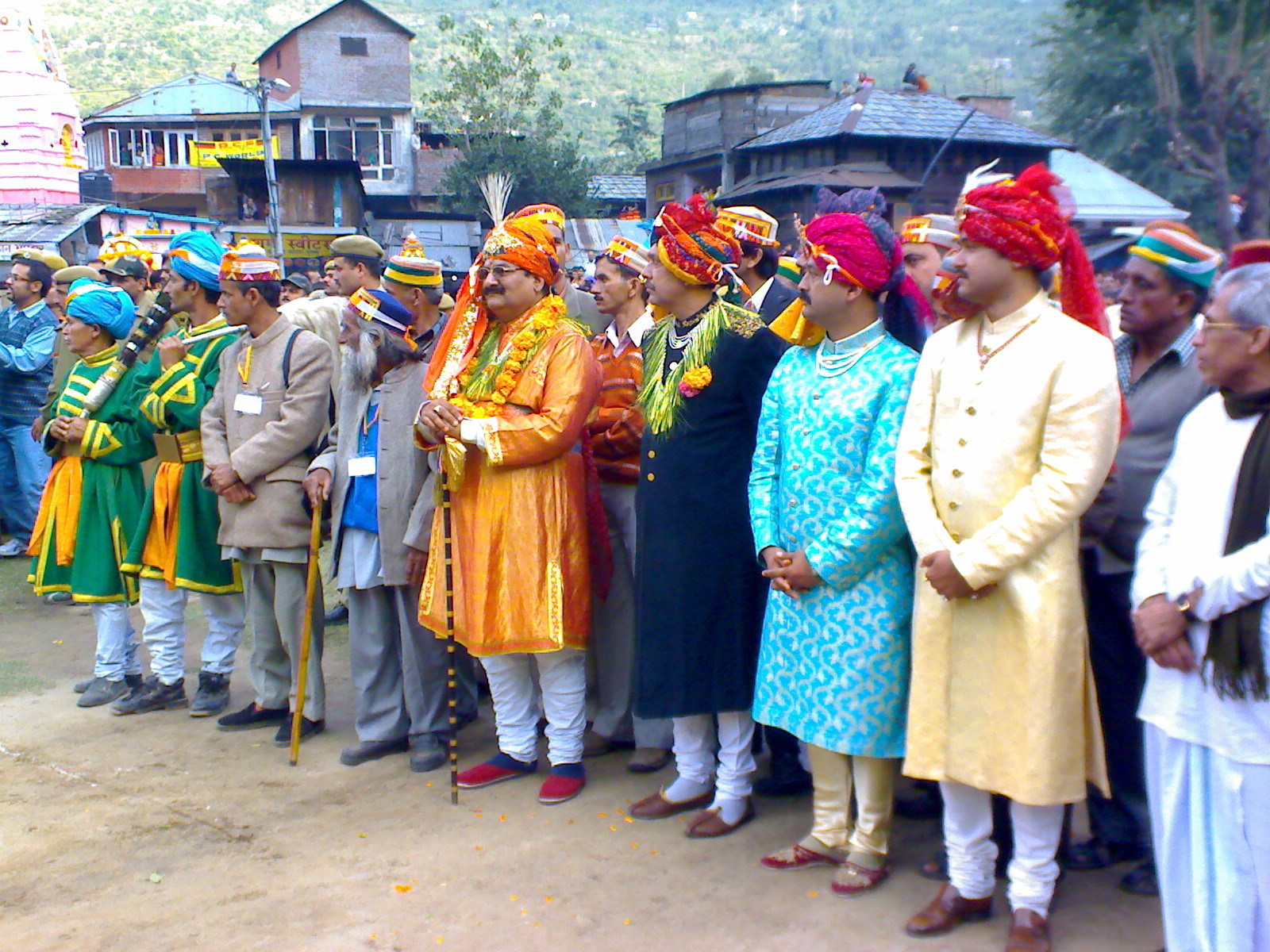
 Kullu is also called the valley of Gods. Each village has its own Devta which is personified and is a part of the daily lifestyle of the Kullu villagers. The Gods of the Kullu valleys are the richest persons of the villages. The villagers save and donate a lot of their hard earned money for the God who usually is made up of solid gold. The Gods are important because they are the courts , hospitals and entertainment channels for these people. The God is usually looked after by a Pujari (who takes care of the rituals of the God like bathing, doing hourly Pooja’s or prayers).
The Pujari is hereditary which means the poojari’s family continue to look after the God generation by generation. They also own the God’s lands and can cultivate in them. The other person is called the ” Goor” or the voice of the God in trance. This may be anybody from the village and usually goes in a trance at special occasions where it becomes the voice of the God. Through him the God can settle divorce cases, adultery, fights, family problems, diseases and what problem have you….
The Gods of the Kullu valleys are very social and humanized . They have friends and enemies. They like to travel from village to village and also go on pilgrimages. They are beautifully kept in temples which are usually the highest buildings in the village.
About Dusshera :
Dusshera is a unique fair held every year in October. It is a beautiful amalgam of history, rich culture and customs. Unlike other regions of India here effigies of Ravana, Meghnath and Kumbhakarana are not burnt. This is how victory of good over evil is depicted. Kullu Dusshera starts usually on the day it ends in the rest of the country. It all started back in 1637 A. D. when Raja Jagat Singh was the ruler of the Valley. One day he came to know that a peasant Durga Dutt of village Tipri owned beautiful pearls, which the Raja wanted to obtain. Durga Dutt tried to convince the Raja by all means that the information was wrong and that he owned no pearls, but all his pleas were in vain.
The Raja gave him a last chance. Durga Dutt got so scared that he burnt down his own family and house and cursed the Raja for his cruelty. His curse resulted in Raja’s leprosy and as he realized the fact he felt guilty.
Kishan Das known as Fuhari Baba advised him to install the famous idol of Lord Raghunathji to get rid of the curse of the peasant. He sent Damodar Dass to steal the idol from Tret Nath Temple of Ayodhya who finally brought it from there in July 1651 A. D. After installing the idol he drank Charnamrit of the idol for several days and was in due course cured. He devoted his kingdom and life for the lord and from then onwards Dusshera started being celebrated with great splendor. Thus on the first fortnight of Ashwin month (mid September to mid October), the Raja invites all the 365 Gods and Goddesses of the Valley to Dhalpur to perform a Yagna in Raghunathji’s honor.
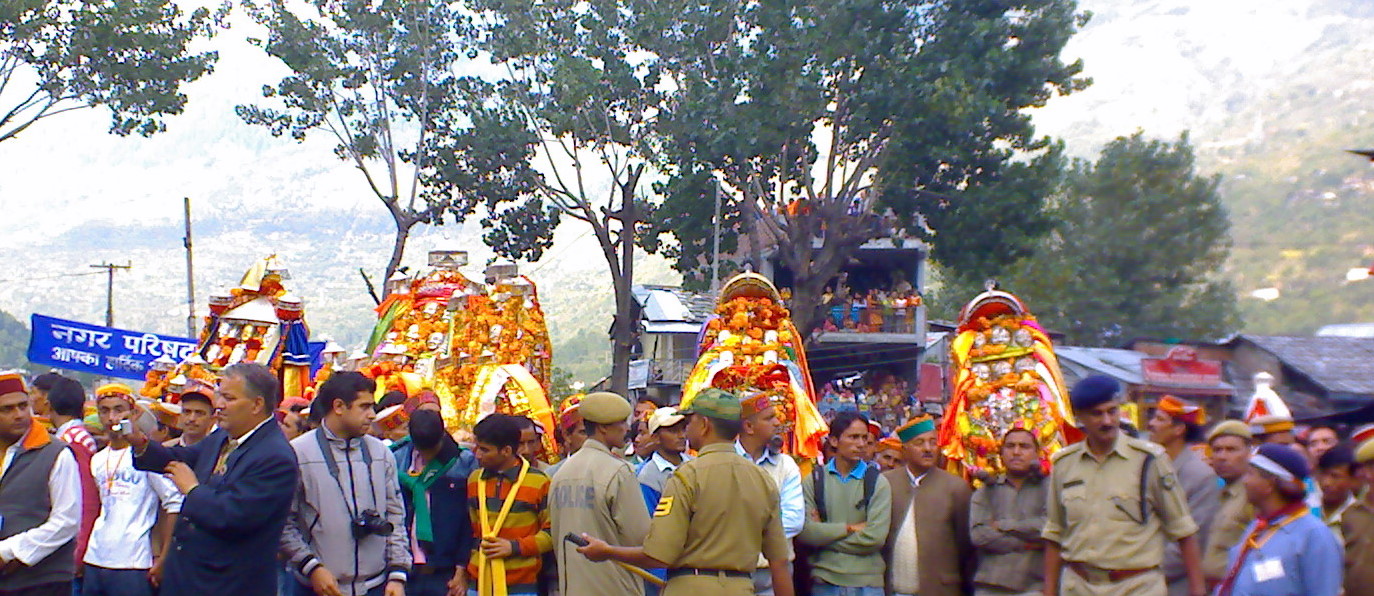 On the first day of Dusshera Goddess Hadimba of Manali comes down to Kullu. She is the Goddess of the royal family of Kullu. At the entrance of Kullu the Royal Stick welcomes her and escorts her to the Palace where the royal family awaits her at the entrance of the Palace. Thereafter they enter the Palace only when goddess Hadimba calls them inside. After blessing the royal family she comes to Dhalpur.
The idol of Raghunathji is saddled around Hadimba and placed in a Ratha (chariot) adorned beautifully. Then they wait for the signal from Mata Bhekhli, which is given from top of the hill. Next the Ratha is pulled with the help of ropes from its original place to another spot where it stays for the next six days. The male members of the royal family leave the palace and stay in the Dusshera ground.
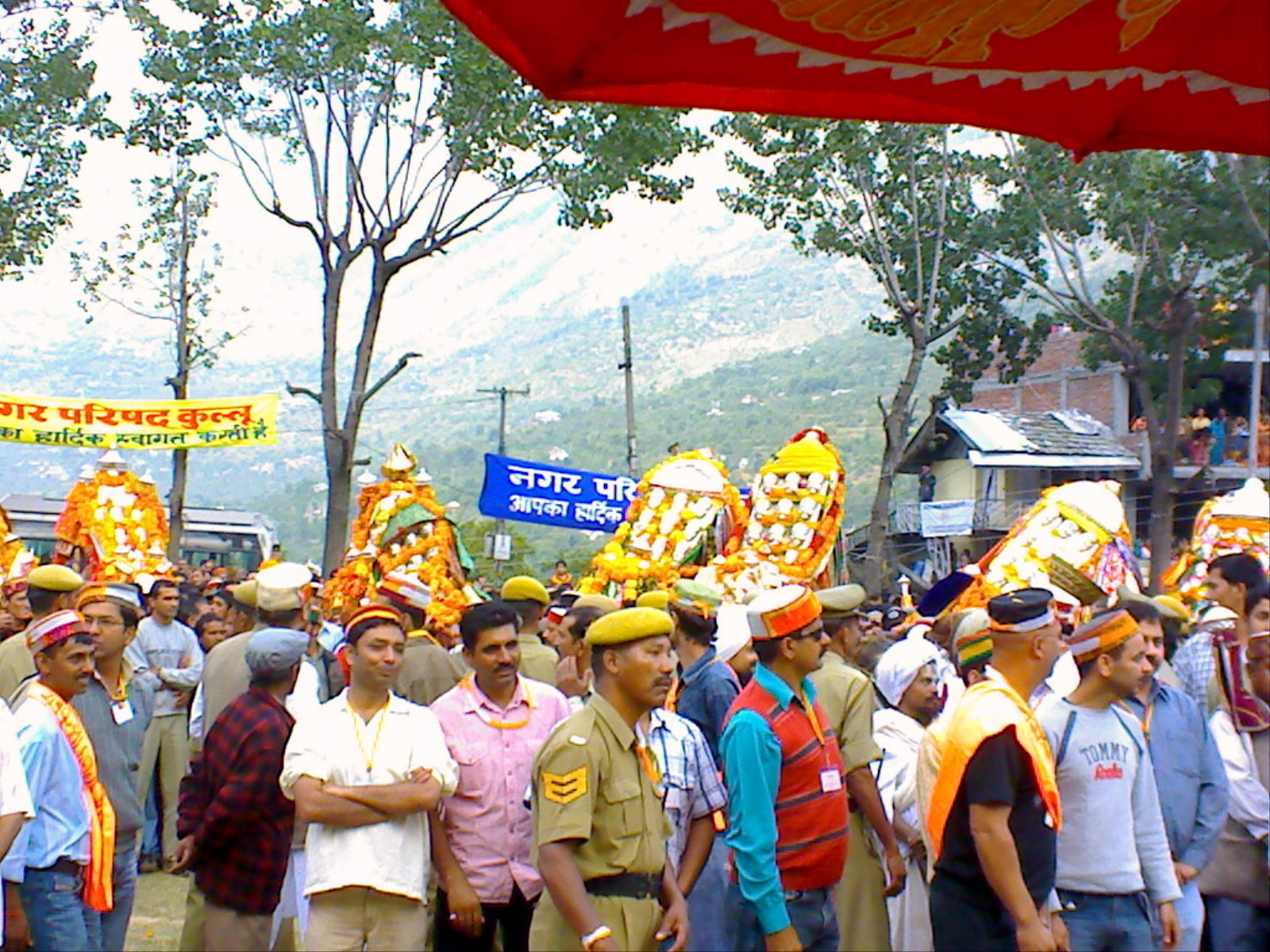 More than one hundred gods and goddesses mounted on colorful palanquins participate in this procession. The ceremony feels as if the doors of heaven have been opened and the gods have come down to the earth to rejoice.

Ankit Sood is Associate Professor at Govt. PG Degree College Kullu. He also runs Sunshine Himalayan Adventures. Strategic planning helps when you need a loan. Identify the precise amount of money required to avoid over-borrowing. Use https://loans-cash.net to see how to borrow safely and get a loan that rewards your commitment to fixing your overall financial health.

Pretty informative one Ankit.
There have been traditions since long but little is known the ‘why’ and ‘what’ of them…
Ha y ,
Nice writeup. The momentum and energy around the Devta’s is wonderful. The fair is a very fair example of the great culture and colours that Himachal has. Thats why they call it Devbhumi and Kulu the valley of Gods.
Rajnish
Good writeup Ankit. I am blessed to be a part of that full of traditions and holly land of Gods. Its a place where hospitality is exemplary and the people look for no reason to celebrate. Always in their high spirits, people there have definite respect for Gods. What to say about Dusshehra, its not only famous in India but round the globe for good reasons. One can feel the presence of hundreds of gods and goddesses around them for a couple of days. It is like a cleansing season for the people in the valley. I think the fear of God and respect of the locals to their deities is one reason why people in the valley are so special. They do not call this place land of God’s or “Devbhoomi” for no reason. The God’s make their presence felt here and you can truly feel it. I feel so privileged to be a part of such a rich and historically preserved culture. Once again, nice writeup.
Jai Devbhoomi