
Urdu is still the language of heart of all, especially non-Muslims!
More Hindus at Shankar-Shad Mushaira
Urdu is where words become art and heart, soft as silk and deep as soul! For calling a spade a spade, when the internationally celebrated Urdu poet, Wasim Barelvi stated,
“Usoolon pe aanch aaye to takrana zaroori hei/
Jo zinda ho to zinda nazar aana zaruri hei!
(Protest is a must after the principles are trampled/ If you are living, show that you aren’t compromised!),
the entire packed to capacity Modern School auditorium raised to its feet. True that Urdu is sweetness, politeness and grace woven into words as said by Josh Malihabadi. Urdu speaks, when hearts feel!!
You indeed need a shayar (poet) like Ali Sardar Jafri, Kaifi Azami or Wasim Barelvi to tell you how beautiful this world is to live in or how bad it is! All those connoisseurs of Urdu, who were thinking that the language is on oxygen or in coma, were proved wrong after witnessing a fully packed Modern School hall and an equally strong throng relishing the mushaira (Urdu poetic congregation) outside the huge designer and state of the art auditorium at the school basketball courts!
The festive occasion was the immensely popular and historic 57th Shankar-Shad Mushaira by the DCM and Shriram Industries (Daurala) under the aegis of the Shankar Lall Murli Dhar Memorial Society. The eminent poets included Wasim Barelvi, Javed Akhtar, Rajesh Reddy, Shabeena Adeeb, Sheen Kaaf Nizam, Charan Singh Bashar, Iqbal Ashhar, Saif Azmi, Azhar Iqbal, Hilal Fareed, Hina Haider Rizvi, Sunil Kumar Tang besides others. Justice Sudhanshu Dhulia of the Supreme Court, also an admirer of Urdu stated that Urdu is not just a language, it is a beloved culture and a way of life!” All these came up with superb couples with sounds of “mukarrar” (please repeat”, “Subhan Allah “,”Lajawab ” (wonderful), “Behtreen” (superb) besides ceaseless clapping and standing on their feet by the audiences! Sardar Charan Singh Bashar, came up with a superb couplet on the burning times,
“Yeh dunia nafraton ki aakhri stage par hei/
Iska ilaj muhabbat ke siwa kuchh bhi nahon!”
(The world is writ large with hatred/ Love is its ultimate cure!)
Free of communalist lines, the popularity of Urdu can only be seen to be believed at such Urdu gatherings, whether these are Shankar-Shad, Jashn-e-Bahar or Rekhta. Across the borders, Urdu, a language of composite culture and interfaith bonding, has suffered on account of the pretentious hatred breeding out of political and religious repulsion among the communities. Urdu also bled a lot as it was associated with Pakistan and terrorism. Madhav Shriram, told, “The love of Urdu, a legacy inherited from my forefathers, reverberates in my mind, pulsates in my veins and throbs in my heart!” The historic mushaira, his forefathers started during the undivided India at Lyalpur (now Faisalabad), as Shankar-Shad Indo-Pak Mushaira, had a conglomeration of many poets from India, Pakistan and other countries with names like, Faiz Ahmed Faiz, Ahmed Faraz, Firaq Gorakhpuri, Josh Malihabadi, Rajinder Singh Bedi, Fehmida Riyaz, John Elia, So Yamane (Japan), Jan Marek (Czech Republic) etc.” He mentioned how we live in a world that has totally forgotten the value of a pause. Adds Madhav, “Here, we provide a space where words carry the weight of existence and silence is sacred.
Madhav reminisced, “Urdu is a language of love, where even pain sounds poetic. It doesn’t just communicate, it captivates. By gathering a pan-India brotherhood of poets, we unite the different threads of our national heritage.”
Remembering what his father, Lala Bansidhar and grandfather, Lala Muralidhar Shad, told him about Lala Shriram, who started the mushaira, Madhav added that it usually used to be a mela at his 22 Curzon Road house (now the Antariksh Bhawan) where crowds of people were invited and many people stayed with him for days on. The house was like a dharamshala (rest house). He was unable to eat food unless every seat at the table was occupied. This indiscriminate hospitality, at times caused great strain to the members of his family. But his principle was, “the more, the merrier!” It continues in the family.
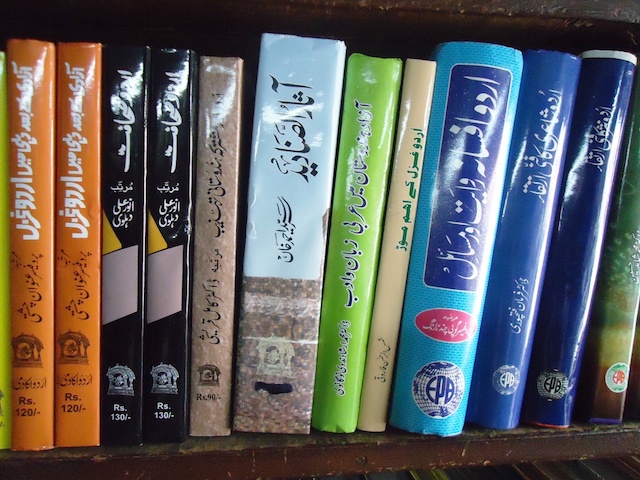
Quite often at the lawn of his house, Lala Shriram conducted the nashists (sittings) in shayari (Urdu poetry) as he patronized hundreds of Urdu and Persian poets. It is in keeping with his desire that the mushaira has been conducted regularly since 1944 with some breaks owing to the Indo-Pak wars and other unavoidable circumstances. It is basically for the love of Urdu that he himself has been supervising the each nitty-gritty of the historic mushaira. Besides, he spends each penny himself without any sponsors and business instincts.
Even in Pakistan, Dubai, Canada, the US or the UK, Western or Punjabi Pop songs are equally popular as the mushairas. But the mushairas score over their English or Punjabi counterparts in terms of the crowd response. The reason is that for all NRIs, a mushaira symbolizes Indian culture and pure form.
After 1947, Urdu was hit by a communalist mindset with the language baiters thinking it belonged to Muslims and responsible for Partition. This is entirely wrong — languages have no religion, region or community fixation. Opines Dr Shams Equbal, celebrated Urdu scholar and director of the largest global government Urdu platform, NCPUL (National Council for Promotion of Urdu Language and editor, Urdu Duniya Urdu monthly, “Urdu is not merely sher-o-shayari, ghazal, qawwali, masnawi and marsiah. It’s the epitome of our Ganga Jamuni tehzeeb (composite culture). Urdu is a language born out of our humane values of syncretic ethos accruing out of the commonality of cultures.”
Historically, Urdu newspapers made a solid contribution to the national cause during the freedom struggle. Having realized Urdu’s importance, national leaders responded well to slogans like Inquilab zindabad by Subhash Chandra Bose, songs like Sarfaroshi ki tamanna by Ram Prasad Bismil and Sarey jahan se achha by Iqbal. Urdu was basically India’s lingua franca, a language of our amalgamated cultural heritage belonging to all Indians, irrespective of caste, creed or religion.
The good news for Urdu is that it is becoming popular amongst Gen Z as it was said by the famous poet, Jon Elia that if you want to learn Urdu, you should love or if you want to love, learn Urdu! Urdu’s most highly circulated daily Inquilab daily editor, Wadood Sajid is glad that the language has become worldly wise as it has embraced modernity by being digitized. Urdu newspapers are on a fast track as these are available on the tap at a mobile screen.
Another shot in the Urdu arm is that Urdu Chairs have been set in the IIT, Ahmedabad, universities of Cambridge and Oxford in the UK besides in Germany, China, Egypt, Jordan and Malaysia. Urdu is the second language read and understood most in India, third in the USA while fourth in Britain.
Today, we find a growing urge amongst non-Urdu speaking groups to learn Urdu. They know, for instance, the Mumbai film industry depends on Urdu. Apart from that, the popularity of ghazals, poetry and Urdu dramas is evergreen even in the two Houses of Parliament, the maximum number of couplets quoted are from poets like Ghalib, Iqbal, Firaq, Faiz, and Mir.
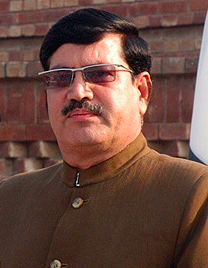
Firoz Bakht Ahmed is a former chancellor of Maulana Azad National Urdu University (MANUU), commentator on educational and social issues, community worker and the grandnephew of Bharat Ratna Maulana Abul Kalam Azad. He lives in Delhi