
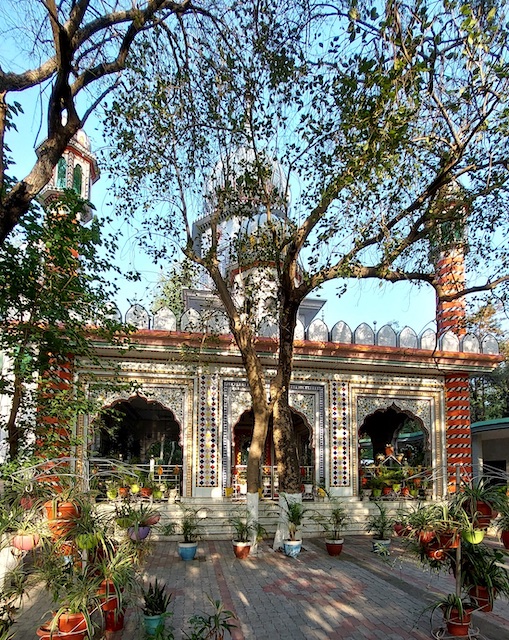
Nestled in the heart of Punjab, Darbar Cholipur is a serene spiritual haven dedicated to Baba Harsheh Singh Ji, located along the Jhambowal-Dhuriyan Road, approximately 30 km from Hoshiarpur. Enveloped by a dense forest and lush greenery, this Dargah offers a tranquil retreat far from the clamour of city life. The nearby Sakrala Seasonal Choe, a winding seasonal stream, and neatly arranged agricultural fields enhance the picturesque rural setting, creating an ideal environment for spiritual reflection and connection with nature. The Dargah’s peaceful ambience, vibrant annual fair, and commitment to community welfare draw devotees and visitors alike, making Darbar Cholipur a cherished sanctuary that harmonizes faith, culture, and the natural world.
A Place of Spiritual Reverence
At the heart of Darbar Cholipur is its dedication to Baba Harsheh Ji, a revered spiritual figure whose legacy resonates deeply with devotees. The Dargah is a sanctuary for prayer, reflection, and seeking blessings. It is part of Punjab’s rich tradition of spiritual centres that welcome people from all walks of life. Visitors often describe feeling a profound sense of peace, making it an ideal spot for meditation and devotion.
The followers of Darbar Cholipur hold Baba Harsheh Ji in high esteem, seeing the Dargah as a sacred space for comfort and guidance. Whether seeking blessings for health, happiness, or the fulfilment of personal vows, devotees find solace in the Dargah’s serene environment. This devotion is especially evident during the annual fair when thousands gather to honour Baba Harsheh Ji, his disciples Baba Amir Shah Ji and Baba Mehar Shah Ji, and celebrate their shared beliefs.
Every year on June 20–21, Darbar Cholipur comes alive with its annual fair, a two-day celebration that is both a spiritual and cultural highlight. Drawing crowds from Punjab, the fair is a joyful tribute to Baba Harsheh Ji’s legacy. It brings together locals, devotees, and visitors, creating a warm sense of togetherness. Devotees enjoy soulful Sufi music, traditional performances, and activities that showcase Punjab’s vibrant heritage. Prayers, rituals, and offerings at the Dargah deepen the spiritual experience.
The Dargah’s management, under the tutelage of its present head – Baba Sodhi Shah Ji, is committed to serving the community, especially during the annual fair. Medical camps are set up to provide free or affordable healthcare to attendees, ensuring everyone’s well-being. These camps, run by volunteers and medical professionals, are a testament to the Dargah’s focus on social good and highlight Darbar Cholipur’s role as more than just a spiritual site—it is a beacon of care and compassion.
One of Darbar Cholipur’s most beautiful qualities is its inclusivity. The Dargah opens its doors to everyone, regardless of faith—Hindus, Muslims, Sikhs, and others come together here. The annual fair is a shining example of this unity, where people from diverse backgrounds join in cultural and spiritual activities, bonded by shared values of peace and love. This secular spirit mirrors Punjab’s tradition of spiritual centres championing harmony, making Darbar Cholipur a powerful symbol of interfaith connection.
Darbar Cholipur is a breathtaking pilgrimage site tucked away in a vast jungle. The natural surroundings—towering trees, fresh air, and quiet beauty—create a serene escape from the bustle of daily life. This setting, combined with the Dargah’s spiritual energy, makes it a haven for those seeking devotion and tranquillity. For pilgrims, Darbar Cholipur offers a chance to reflect, pray, and reconnect with the divine in a truly peaceful environment.
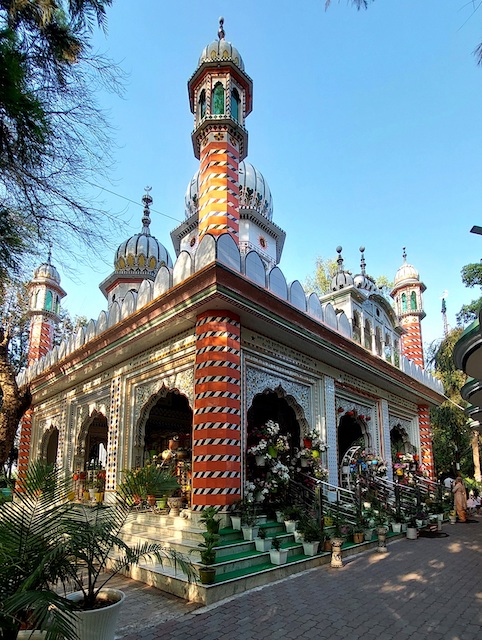
Architectural Grandeur
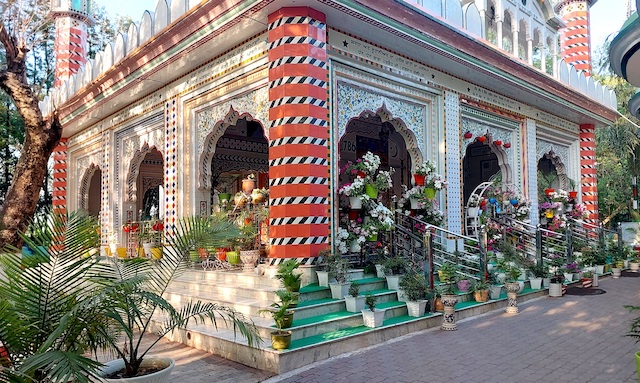
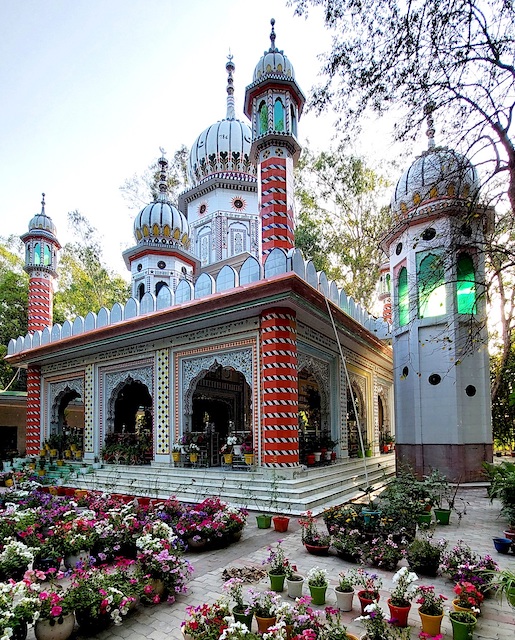
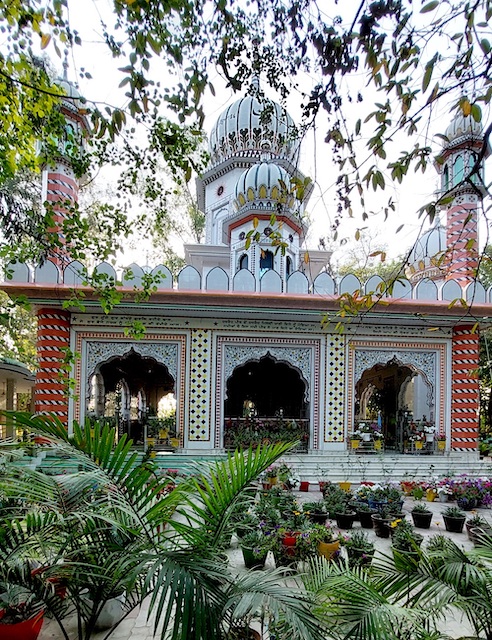
Darbar Cholipur features a remarkable blend of architectural grandeur, intricate craftsmanship, and vibrant aesthetics reflecting spiritual significance and cultural heritage. The architecture features a traditional South Asian design with prominent domes and minarets, characteristic of religious structures in the region. The central dome, adorned with intricate patterns and topped with a spire, serves as a focal point, symbolizing spiritual elevation. Small domes and tall minarets are flanking it, each decorated with alternating red and white stripes that add a striking vertical emphasis. The structure includes arched entrances and windows framed with elaborate tile work, typical of Mughal and regional architectural influences. The building’s proportions are well-balanced, with the minarets’ height complementing the main hall’s width, creating a harmonious silhouette against the sky.
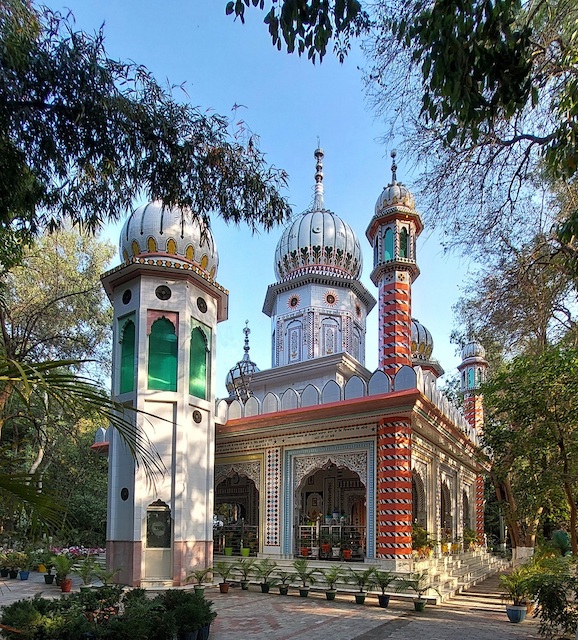
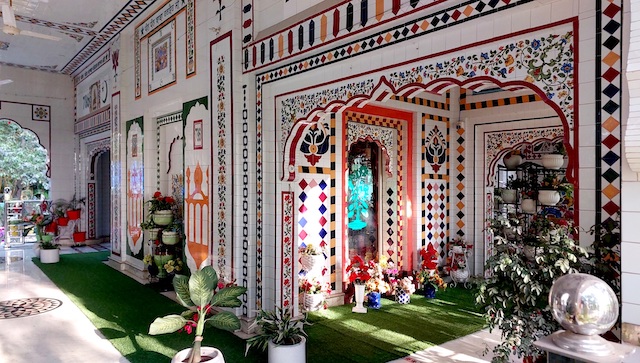
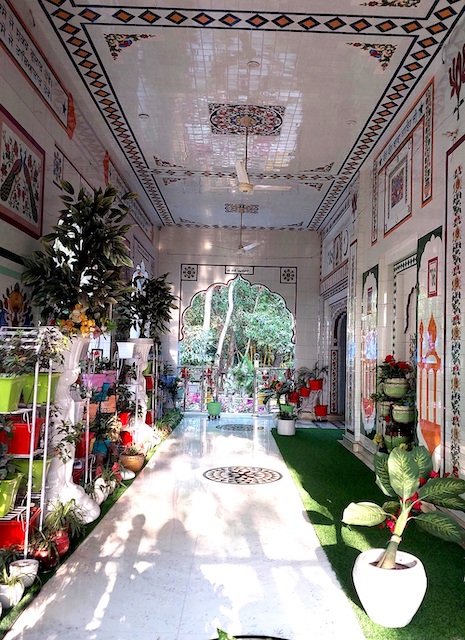
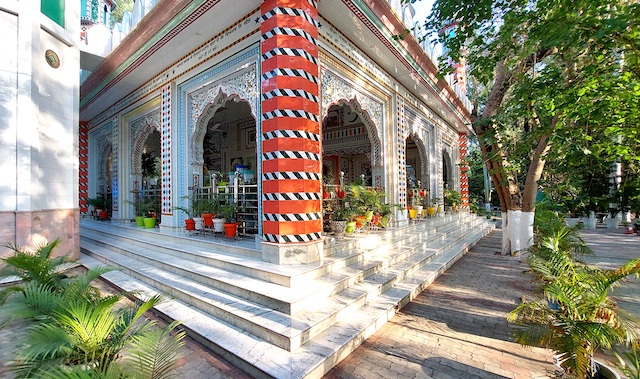
The decor is a standout feature, showcasing meticulous attention to detail. The exterior walls are covered with colourful ceramic tiles arranged in geometric and floral patterns, a testament to the skilled artistry involved. The interior, visible through the arches, continues this theme with additional embellishments, including mirrors and painted motifs, enhancing the ornate aesthetic.
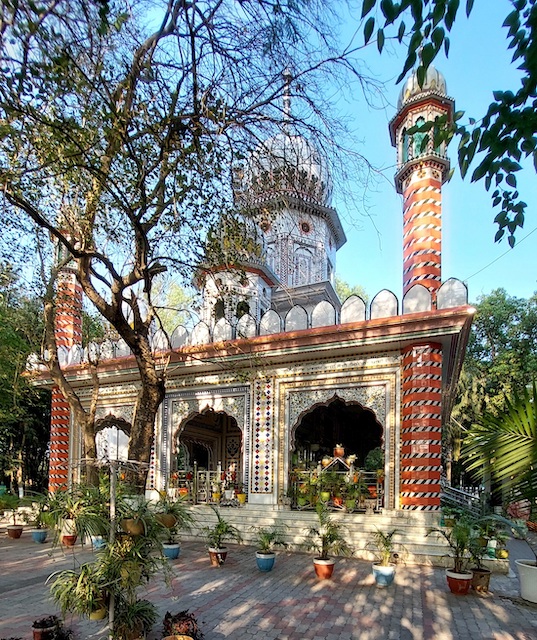
The construction quality reflects a high level of craftsmanship, evident in the precision of the tile work and the structural integrity of the domes and minarets. Using durable materials, such as brick and plaster, combined with the decorative tiles suggests a labour-intensive process by skilled artisans. The inscriptions in Punjabi along the frieze above the arches indicate historical or religious significance, further emphasizing the thoughtful design and execution.
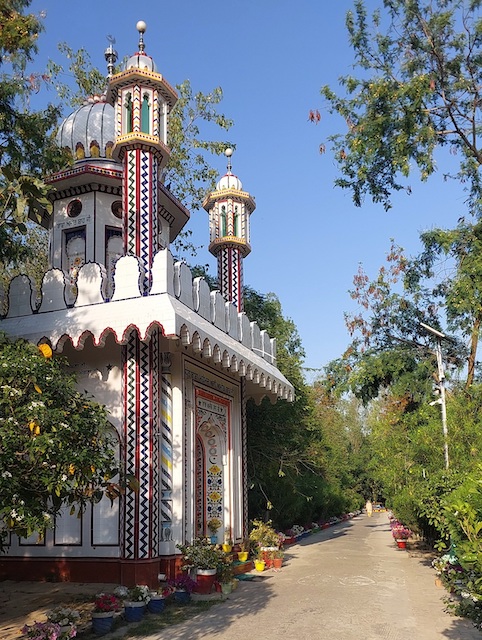
The colour scheme is vibrant and eye-catching, designed to attract and engage visitors. The predominant white base of the walls is accented with bold red and orange stripes on the minarets and pillars, creating a rhythmic visual flow. The multi-coloured tiles add a festive touch, with their bright hues of yellow, blue, green, and red contrasting beautifully against the white background. The greenery and flowers in colourful pots enhance this appeal, creating a welcoming and lively atmosphere that resonates with the spiritual and communal purpose of the site.
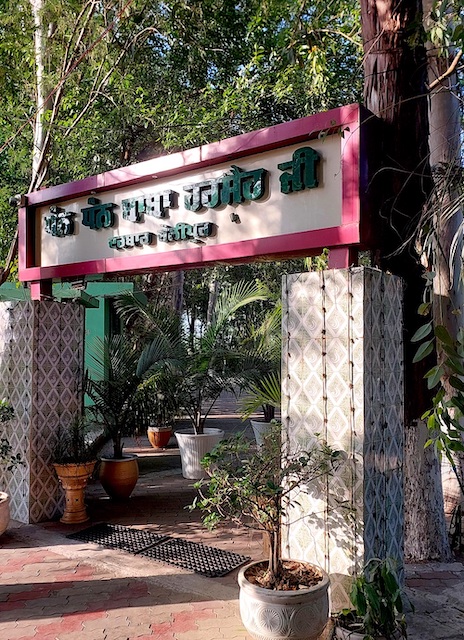
The main complex of the Dargah of Baba Harsheh Ji is accessed through a welcoming gateway that reflects a blend of simplicity and cultural charm. The gateway features a sturdy structure with two pillars, each adorned with intricate tile work in a diamond pattern, showcasing a mix of green and beige tones. A horizontal signboard spans the top, painted red with green Punjabi inscriptions denoting the site’s name and significance.
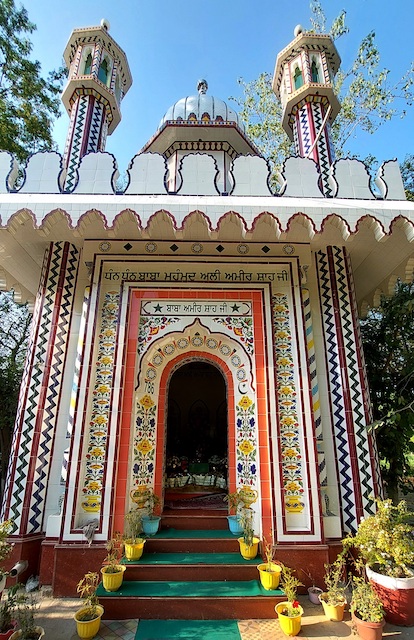
Dargah of Baba Amir Shah Ji
Near the main entrance, the Dargah of Baba Amir Shah Ji, a disciple of Baba Harsheh Ji, showcases a vibrant and intricate architectural style typical of South Asian Sufi shrines. The structure features a small, ornate building with a prominent central dome and flanking minaret-like towers, each adorned with colourful tile work in red, blue, yellow, and green patterns. The exterior walls are decorated with detailed floral and geometric mosaic designs, adding to the visual richness. The arched entrance is framed with elaborate tile work and Punjabi inscriptions, highlighting the site’s spiritual significance.
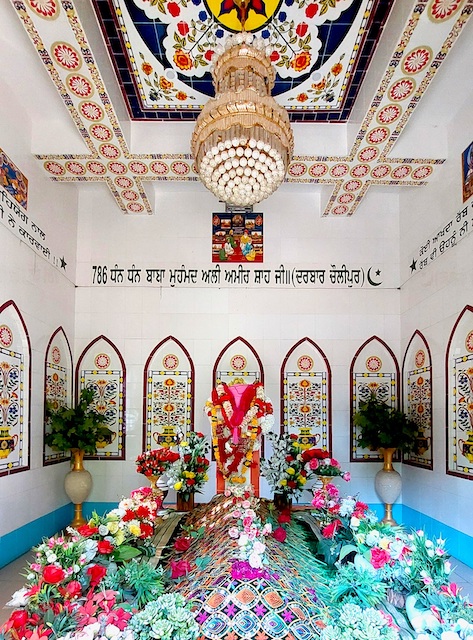
Inside, the shrine is equally striking, with a tomb covered in colourful, embroidered cloth and surrounded by an abundance of artificial flowers in shades of red, pink, and white, creating a reverent and spiritual atmosphere. The interior walls are lined with arched niches featuring more floral tile designs, complemented by potted plants that enhance the serene ambience.
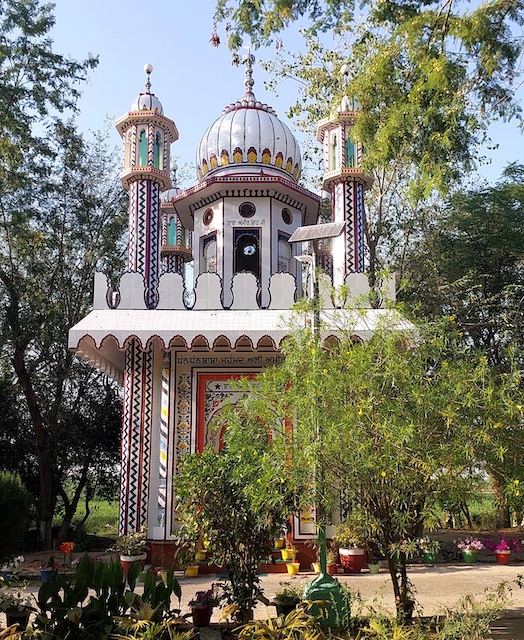
Darbar Cholipur stands as a radiant testament to spiritual harmony, architectural beauty, and community spirit in the heart of Punjab. Its serene jungle setting, vibrant annual fair, and inclusive ethos draw devotees and visitors from all walks of life, fostering a profound sense of peace and unity. The Dargah’s intricate craftsmanship and dedication to Baba Harsheh Ji and his disciples Baba Amir Shah Ji and Baba Mehar Shah Ji create a sacred space where faith, culture, and nature intertwine. Whether seeking solace, celebrating tradition, or simply marvelling at its grandeur, Darbar Cholipur remains a cherished pilgrimage site, embodying Punjab’s timeless legacy of devotion and togetherness.
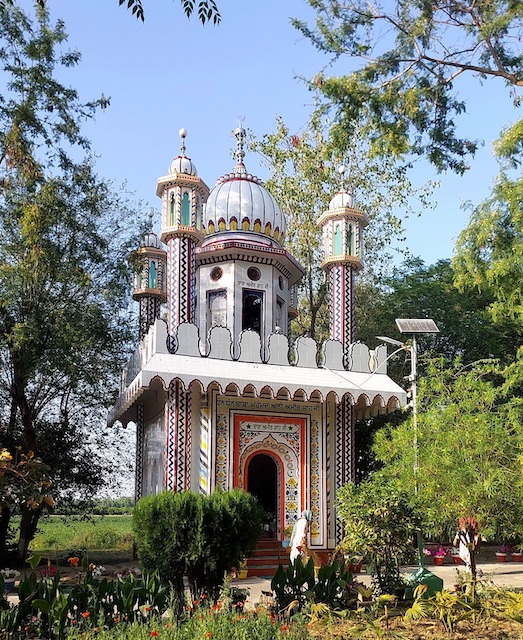
- All Photographs by Sarbjit Singh Bahga
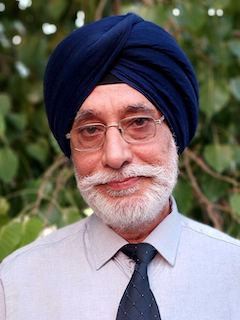
Sarbjit Bahga (b1957) is a Chandigarh-based architect, author, photo artist, and archivist. He is the Principal Architect of Bahga Design Studio LLP. Earlier, Bahga worked in the Department of Architecture, Punjab, Punjab Health Systems Corporation, and Punjab Mandi Board in various positions.
He has more than 42 years of practical experience designing various types of buildings, complexes, and large campuses. His completed works include an eclectic range of administrative, recreational, educational, medical, residential, commercial, and agricultural buildings. A monograph on his selected works titled “MODERN REGIONALISM: The Architecture of Sarbjit Bahga” has been published.
Bahga is also a keen researcher and a prolific architectural writer. He has 12 books to his credit, which include Modern Architecture in India, New Indian Homes, Le Corbusier, and Pierre Jeanneret: The Indian Architecture, Trees in Urban Habitat, Landscaping Human Habitat, New Indian Architecture -1947-2020, and Hand-Drawn Perspectives and Sketches. Bahga’s contribution to architecture has been largely recognized. He is a three-time recipient of the World Architecture Community Awards. His name has been featured in the Guinness Book of World Records for designing the “longest covered concrete corridor” in Vidya Sagar Institute of Mental Health, Amritsar.