
Manali: Traditional nomadic shepherds, primarily from the Gaddi and Gujjar communities, have begun their annual summer migration uphill toward high-altitude alpine meadows in Himachal Pradesh. As temperatures rise in the lower valleys, they trek along ancient routes to regions such as the Dhauladhar hills, Lahaul-Spiti, Kinnaur, and Chamba districts in search of green fodder and milder weather.
This seasonal journey is essential for the survival and nourishment of their livestock. However, climate change and unseasonal snowfall are making the migrations increasingly unpredictable and hazardous, often delaying progress through high mountain passes. Sheep, which play a vital role in India’s pastoral economy, navigate vast grazing lands amid diverse environmental stressors—including temperature extremes, forage variability, and predation risks. GPS tracking and behavioral observations show that these animals employ adaptive strategies such as social cohesion, herd dynamics, and individual learning to optimize resource use. They exhibit flexible foraging behaviors and selective grazing to cope with fluctuating conditions, while stress markers like elevated cortisol levels reveal the toll these challenges take on their well-being.
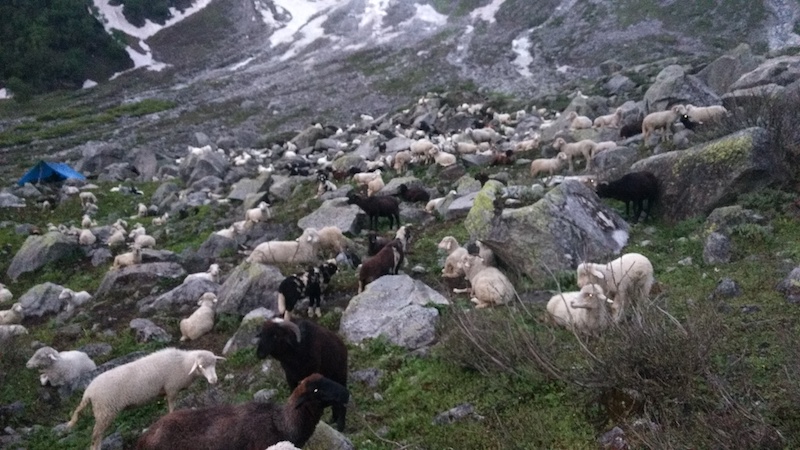
This study integrates ecological and ethological perspectives to examine how environmental stressors shape migration patterns and behavioral adaptations in Indian sheep populations. The findings underscore the need for sustainable pastoral management and conservation efforts. By revealing the mechanisms of stress resilience and adaptation, the research provides valuable insights into the functioning of grazing ecosystems and informs strategies to safeguard sheep welfare and pastoral livelihoods amid ongoing environmental change.
To support these traditional ways of life, the Himachal Pradesh government has launched the Rs 300-crore PEHEL (Pastoralists Empowerment in Himalayan Ecosystems for Livelihood) scheme. A cornerstone of the initiative is the issuance of digital ID cards for nomadic pastoralists, which will streamline access to government benefits and maintain records of their livestock.
Government teams and emergency responders continue to monitor migration routes to assist herders affected by sudden weather events. Despite these efforts, challenges persist. “Shepherds are the main victims of road rage in Himachal,” said Man Singh, a shepherd from the Pandoh area, as he and his companions moved toward the high hills. “I have not seen such empty roads for a long time. The movement of flocks used to cause long traffic jams. Both the public and police used to scold us.

Sanjay Dutta, an engineer by qualification but is a journalist by choice.
He has worked for the premier new agency Press Trust of India and leading English daily Indian Express.
With more than a decade of experience, he has been highlighting issues related to environment, tourism and other aspects affecting mountain ecology.
Sanjay Dutta lives in a village close to Manali in Kullu valley of Himachal.