
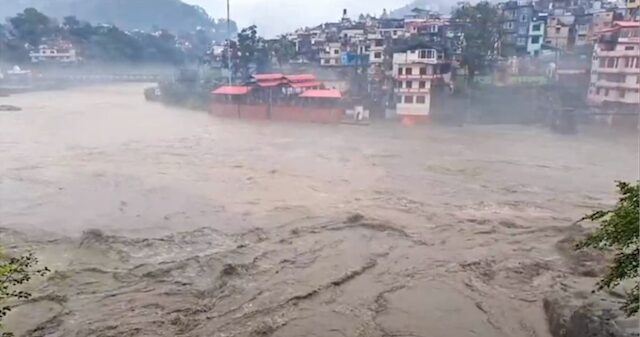
Himachal Pradesh is highly vulnerable to natural disasters. Its up-gradation and placement in the seismically dangerous risk zone VI have added a new dimension to its earthquake and disaster vulnerability. New recategorisation of state in highest risk zone VI combined with natures annoyance in 2023 and 2025 fueled by environment disrespect should have stirred Union and State Governments, to revisit development schemes like hydroelectric projects, national highway projects, tourism priorities considering infrastructural capacity of tourist destinations, ropeway projects and building construction norms considering geography and loose mountain texture of state. Unscientific haphazard development and building construction is causing irreparable harm to geographic landscape fuelling natural disasters. Unfortunately, there seems little concern for environment protection except non-government organizations (NGOs) crying hoarse, doing their bit to save environment to reduce disaster impact, protect state from fury of natural disasters. Lets analyze factors causing environmental distress causing natural calamities.
Justice J B Pardiwala and Justice R Mahadevan of Supreme Court in Aug 25 while hearing Pristine Hotels and Resorts Pvt Ltd vs State of Himachal Pradesh commented that “If things proceed the way they are on date, then the day is not far when entire state of HP may vanish in thin air from the map of country”. Despite warnings, there seems little movement to improve situation on ground. Unscientific cutting of hills for national highway projects, deforestation for development, migration to urban centers leading to haphazard construction, poor civic sense of institutions and citizens for garbage and waste disposal, irresponsible tourist behavior, no construction waste disposal mechanism, illegal mining, and leaking water pipe lines has put state in quandary. Construction landscape in urban Himachal is frightening and disturbing. After the natural disasters of 2023 and 2025, Chief Minister Sukhvinder Singh Sukhu announced ban on construction within 150 meters of river and water bodies for government buildings. However, there is eerie silence on such construction by individuals and private parties. Such construction continues unhindered certainly not without approval of municipal authorities blocking rivers/khuds/nullahs/kuhls which may play havoc with life and property in case of violent furious monsoons In Palampur alone commercial complexes are mushrooming right under the nose of administration and local authorities which to any normal thinking individual seem illogical at first look. Allowing seven storey towers in ecologically fragile seismically dangerous zone is horrendous. As structure goes higher is more prone to seismic pressure. How and why such structures are approved forgetting Kangra earthquake of 1905 is beyond comprehension.
Recently there was major subsidence of portion of road at Bhuttakufar in Shimla. As per GSI report, leakage in water pipe lines is the primary cause of subsidence. Report sites vibrations due to blasting from nearby tunnel construction by NHAI as secondary contributor. Unscientific cutting and blasting of hills, dumping of waste into hills side nullah, and khuds blocking their natural flow cause irreparable damage to mountain strata weakening hills and foundation of nearby habitation, which give away during monsoons causing massive devastation. Government needs to reprioritise public safety as top most priority.
In rural areas, the construction and waste disposal scenario is equally frightening. Traditional Himachali houses which were environment friendly have gone extinct and have almost been replaced by pucca houses. Bowdis (small water bodies) and nullahs with running water have shrunken and almost disappeared. With modernization and change in life style, nullahs have become garbage /waste bins in the absence of no organized arrangement for garbage disposal.
I keep on moving on foot in whole urban and jungle landscape of Palampur. Despite a decent garbage collection system in vogue in municipal limits, the lateral roads are littered with garbage. The jungle areas all around are littered with garbage consisting of junk food wraps, liquor and soft drink bottles, bags and plastic cups which with rains, flow in rivers/khuds choking natural flow.
Clean water bodies and rivers and nullahs were hallmark of Himachal Pradesh. However rapid population pressure on limited urban centres have turned surroundings eyesore littered with garbage. Special attention needs to be paid by administration, pollution control board and NGOs as to how vehicle service centres/workshops, vehicle washing points, dispose of their washing, fuel oil and lubricant, (FOL), plastic, packaging and electrical waste. Similar yardstick needs to be applied to universities, colleges, nursing and pharmacy colleges, hostels, hotels and restaurants, marriage halls and religious places. Continued physical monitoring will help to maintain piousness and purity of nature’s gift to state, mountains, rivers, khuds, nullahs and jungles. There is also need to identify and earmark construction waste dumping sites otherwise citizens are forced to dispose it of clandestinely in the absence of options.
What needs to be done to protect environment and prevent disasters in the State? State needs to launch stakeholder-based awareness campaign among citizens through print, electronic and social media highlighting ill effects of throwing garbage on roadsides, into hills, jungles, water bodies, nullahs, khuds and Kuhls. Schools, colleges and universities need to be associated in the campaign. It has to be a campaign on the lines of Chitta eradication campaign of state government. State government need to pass a law, wherein half day per week in every office public and private is marked cleanliness day wherein all employees clean their offices and surroundings. Same yardstick needs to be applied for schools, colleges and universities, markets and business establishments. Make littering garbage a penal offence.
Put total stop to new national highway projects in the state. Instead go for controlled road widening. No new hydroelectric project be sanctioned without thorough environmental and earthquake impact assessment. Do not allow housing societies and buildings beyond four stories and strengthen monitoring mechanism. Put total ban on blasting of hills for road and building projects. Earmark and preserve green zones in all urban centers and do not delist them as per political convenience. Make treatment plants mandatory for medical institutions and ensure that liquid waste from vehicle workshops is disposed off in ground tanks or treated and disposed to prevent pollution of ground water and water bodies. Introduce fine and challan for anyone littering / throwing garbage in open, drinking in open especially in jungles and river/ khud sides. For the purpose appoint environment saviors / warriors to sensitize people and discipline them through challans.
Natural calamities and disasters in the state of Himachal Pradesh are man-made and human induced caused by deforestation for development, illegal mining, decimating hills for development, blocking path of rivers, nullahs, khuds. It is high time for government and citizens to decide which way they want to go. Failure to respect nature and fiddle with it negatively will only invite nature induced distress and destruction. 2023 AND 2025 DISASTERS WERE NATURES WAKE-UP CALL FOR HIMACHAL, TIME IS RUNNING OUT?
Rattan Chand Sharma retired from the Border Security Force as a Commandant. A regular contributor to publications like Outlook, Deccan Herald, India Sentinels, Force Magazine, Chanakya Forum, Saveratimes, Seema Sanghosh, he writes mainly about defence and security personnel issues.