
Every Independence Day, as the tricolour flutters proudly under the open sky, our nation pauses to honour the indomitable spirit of its freedom fighters. Their courage, sacrifices, and unwavering resolve form the bedrock of our freedom. Yet, history often celebrates only a few luminaries, leaving countless unsung heroes—ordinary men and women of extraordinary valour—in the shadows. These silent warriors, from the humblest villages to the bustling cities, wove the fabric of India’s independence with their sacrifices.
The story of India’s freedom is not confined to grand political chronicles; it lives in the narrow lanes of rural hamlets, in the calloused hands of farmers, and in the defiant hearts of those who dared to dream of a free India. Volunteers who surrendered their youth, comforts, and often their lives from every corner of this sacred land rose for the cause of liberty. Our sacred duty is to immortalise their sacrifices, to ensure their stories echo through time, inspiring generations to cherish and protect the freedom they won.
With this fervent resolve, we turn to the forgotten pages of history to celebrate twelve remarkable individuals from the small yet proud village of Bahga in District Hoshiarpur, Punjab. Unknown to the world, these giants of spirit embody the collective heartbeat of a nation that rose as one to break the chains of colonial oppression.
The village of Bahga stands as a beacon of patriotism, its name etched in the annals of India’s independence struggle through the fearless contributions of its residents. Ten of its sons joined the Jaito Morcha, a pivotal chapter in the Gurdwara Reform Movement (1923–1925), while two others fought valiantly in the Indian National Army (INA) under the legendary Netaji Subhas Chandra Bose.
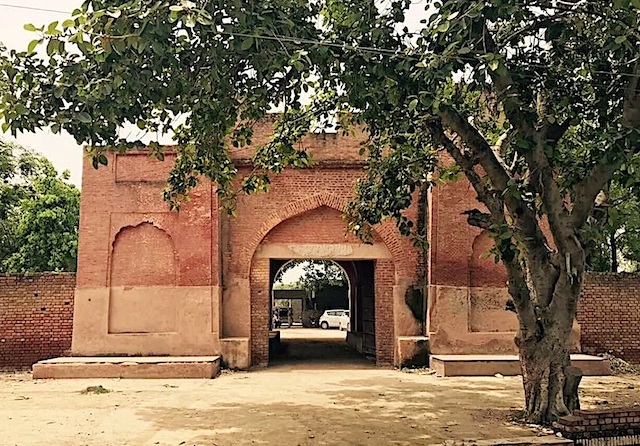
The Jaito Morcha: A Stand for Dignity and Faith
The Jaito Morcha was a powerful testament to the Sikh community’s resolve to protect their religious and political autonomy. Sparked by the British colonial authorities’ forced abdication of Maharaja Ripudaman Singh of Nabha on July 9, 1923—a reformist ruler and staunch supporter of the Akali Movement—the Morcha became a rallying cry against colonial overreach. The British further provoked the Sikh community by propping up corrupt mahants (caretakers) to control Sikh gurdwaras, undermining the community’s sacred institutions.
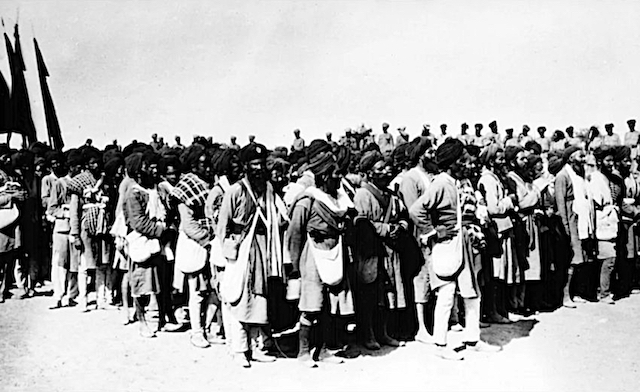
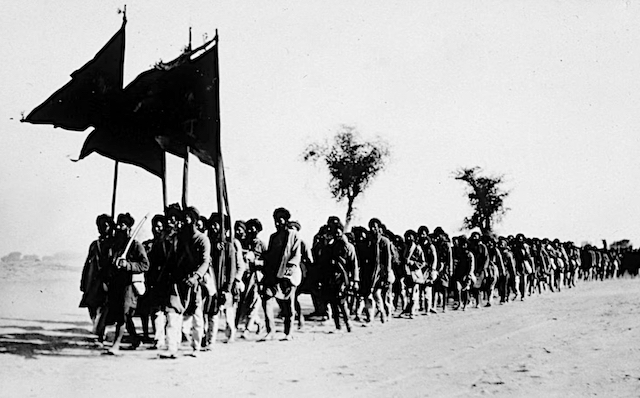
In response, the Shiromani Gurdwara Parbandhak Committee (SGPC) mobilised jathas—groups of volunteers—who marched to Jaito to restore interrupted religious ceremonies and reclaim their right to manage their gurdwaras. These peaceful protesters faced brutal repression, including mass arrests, assaults, and the tragic massacre of unarmed demonstrators on February 21, 1924. Yet, their unyielding spirit triumphed, compelling the British to pass the Sikh Gurdwaras Act in July 1925, granting Sikhs the right to govern their religious institutions—a monumental victory for self-governance and dignity.
Pandit Nehru’s Solidarity
The Jaito Morcha transcended regional boundaries, uniting India’s freedom fighters in a shared struggle. In September 1923, Pandit Jawaharlal Nehru, accompanied by nationalists K. Santhanam and A.T. Gidwani, journeyed to Jaito to stand in solidarity with the Akali protesters. Defying the British ban on entry to Nabha, they were arrested on September 21, 1923, enduring harsh conditions in Jaito’s police cells and later Nabha jail. Nehru’s arrest shone a national spotlight on the Morcha, forging a powerful link between the Sikh struggle and the broader fight for India’s independence. His admiration for the Akalis’ courage and sacrifice became a beacon of unity, inspiring countless others to join the cause.

Bahga’s Heroes: The Heart of the Morcha
From the modest village of Bahga emerged ten freedom fighters—Jathedar Thola Singh, Sardar Banta Singh Bahga, Sardar Beant Singh, Sardar Chinta Singh, Subedar Maan Singh, Sardar Diwan Singh, Sardar Shiv Singh, Sardar Raja Singh, Sardar Kartar Singh, and Sardar Maan Singh—who answered the call of duty. These brave souls joined the Jaito Morcha, facing imprisonment in Jaito Jail for over a year in 1923. Tragically, Sardar Kartar Singh laid down his life, martyred by the British, his sacrifice a testament to the cost of freedom.
The Indian National Army: Bahga’s Bravehearts
Beyond the Morcha, two other sons of Bahga—S. Pritam Singh and Gyani Sohan Singh carried the torch of freedom in the Indian National Army. Pritam Singh Bahga (1919–1987), educated at Khalsa School, Garhdiwala, joined the British Indian Army but rebelled during his posting in Egypt to join Netaji’s INA. Captured, he endured over six years in the notorious Cellular Jail (“Kala Pani”) in the Andaman and Nicobar Islands, confined to a 4×4-foot cell. Released in 1946, he earned the revered title of Freedom Fighter, his sacrifice a shining chapter in India’s struggle.
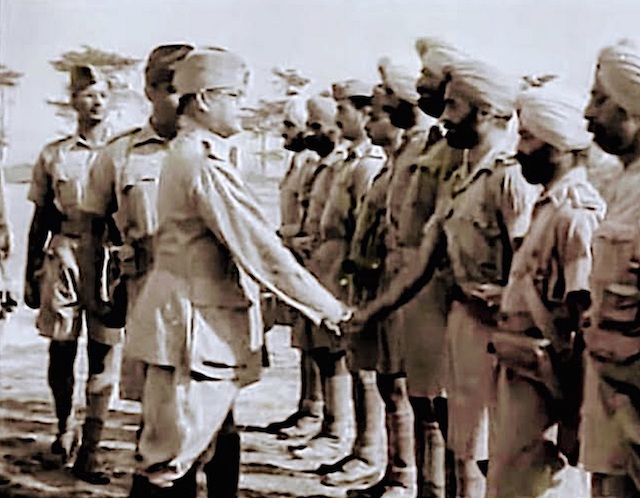
Gyani Sohan Singh (1914–2009), similarly educated at Khalsa School, also abandoned the British Indian Army to join the INA. Imprisoned in a German jail during his journey, he persevered, ultimately serving under Netaji’s banner. His resilience and dedication embody the unbreakable spirit of Bahga’s warriors.
Honoured by a Grateful Nation
In 1972, on India’s 25th Independence Day, the Government of India bestowed the prestigious Tamra Patra upon Bahga’s twelve freedom fighters. Presented by Prime Minister Indira Gandhi, these plaques immortalised their contributions, acknowledging their role in securing India’s liberty. The Tamra Patra, inscribed with their names, granted them pensions and privileges, a small token of gratitude for their monumental sacrifices.
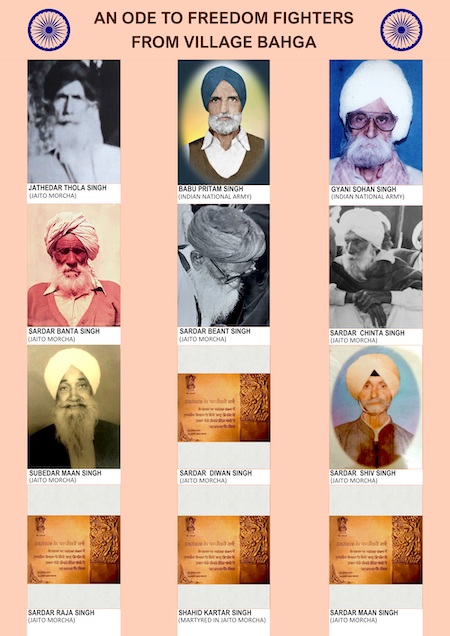
The legacy of Bahga’s twelve freedom fighters is a clarion call to every Indian. Their courage in the Jaito Morcha and the INA, endurance through imprisonment and martyrdom, and unwavering commitment to justice and freedom inspire us to stand tall as a nation. From a small village in Punjab, these heroes remind us that the strength of India lies in the collective resolve of its people—ordinary individuals who rose to extraordinary heights in the pursuit of liberty.
As we celebrate our freedom, let us pledge to preserve the stories of these unsung heroes. As a nation, let us become torchbearers of their legacy, ensuring their sacrifices are never forgotten. The spirit of Bahga’s freedom fighters lives on, urging us to protect the hard-won freedom they gifted us and to build a stronger, united India for generations to come.
- The author is the grandson of Freedom Fighter Sardar Banta Singh Bahga.
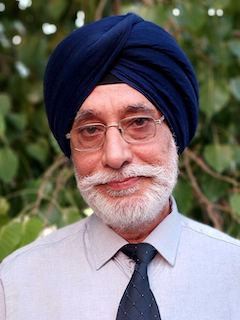
Sarbjit Bahga (b1957) is a Chandigarh-based architect, author, photo artist, and archivist. He is the Principal Architect of Bahga Design Studio LLP. Earlier, Bahga worked in the Department of Architecture, Punjab, Punjab Health Systems Corporation, and Punjab Mandi Board in various positions.
He has more than 42 years of practical experience designing various types of buildings, complexes, and large campuses. His completed works include an eclectic range of administrative, recreational, educational, medical, residential, commercial, and agricultural buildings. A monograph on his selected works titled “MODERN REGIONALISM: The Architecture of Sarbjit Bahga” has been published.
Bahga is also a keen researcher and a prolific architectural writer. He has 12 books to his credit, which include Modern Architecture in India, New Indian Homes, Le Corbusier, and Pierre Jeanneret: The Indian Architecture, Trees in Urban Habitat, Landscaping Human Habitat, New Indian Architecture -1947-2020, and Hand-Drawn Perspectives and Sketches. Bahga’s contribution to architecture has been largely recognized. He is a three-time recipient of the World Architecture Community Awards. His name has been featured in the Guinness Book of World Records for designing the “longest covered concrete corridor” in Vidya Sagar Institute of Mental Health, Amritsar.