
“The world has enough for everyone’s need, but not enough for everyone’s greed”— Mahatma Gandhi
“Wherever law ends, tyranny begins”— John Locke
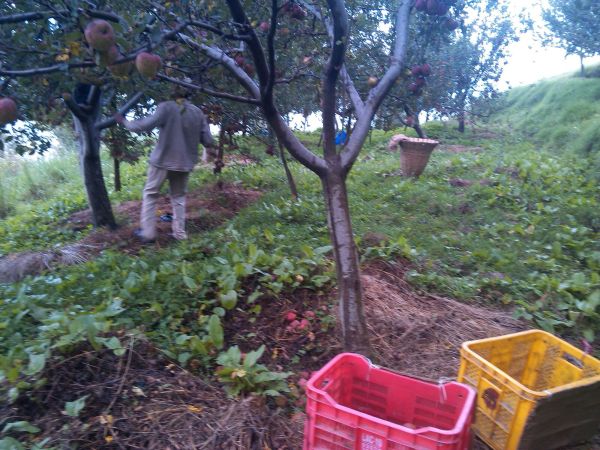
Recent orders from the Himachal Pradesh High Court to evict encroachments on forest land, followed by the felling of fruit-bearing apple trees, have drawn widespread attention. Many have expressed concern over the harshness of the action and its far-reaching impact on the environment, social fabric, and rural economy. There are also growing calls to protect small and marginal farmers from blanket enforcement.
The Apple Boom
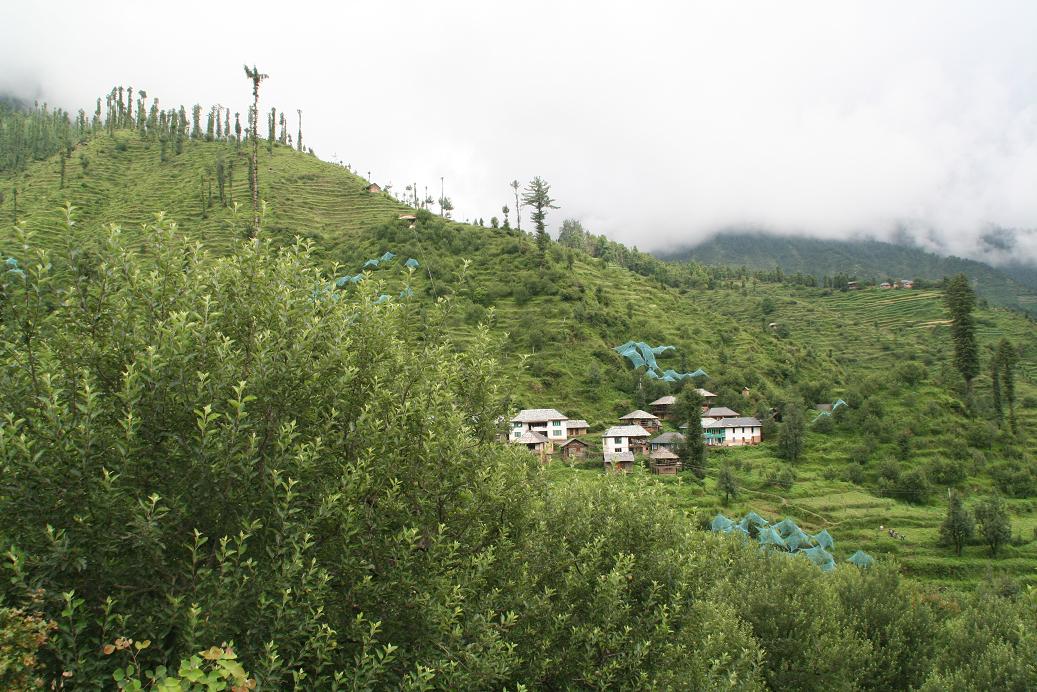
Himachal Pradesh’s diverse topography shapes its unique ecology and cropping patterns. While industrialization has remained limited due to difficult terrain, agriculture and allied sectors have long sustained the rural economy. Yet, given the scarcity of cultivable land, traditional farming has remained economically unviable for many. In response, agricultural experts began promoting high-value cash crops—particularly fruits and off-season vegetables—during the latter half of the 20th century. Among these, apple farming emerged as a most popular and game-changer.
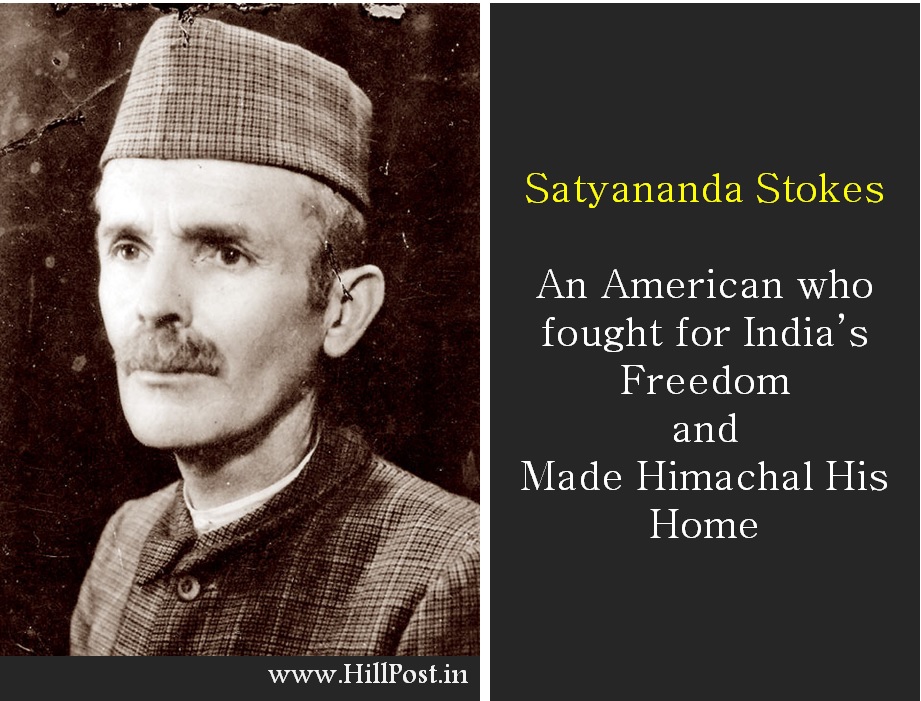
The credit for introducing organized apple cultivation in Himachal goes to American missionary Samuel Evans Stokes (later Satyanand Stokes), who set up apple orchards in Thanedhar (Kotgarh), Shimla, in the 1920s. Though initially met with skepticism, the practice slowly gained popularity due to its impressive returns. By 1950, only 400 hectares were under apple cultivation. By 2023, this figure had surged to over 1,15,000 hectares.
Today, nearly two lakh hectares of the state’s 6.15 lakh hectares of cultivated land are dedicated to fruit orchards—more than half of that under apples. Apple farming now dominates the rural economy in various districts, earning Himachal the title of “fruit bowl of India.” Today apple economy of Himachal Pradesh is valued at approximately Rs 4,000 crore.
A Sweet Success with a Sour Side
However, this transformation has come at a steep ecological cost. To expand their orchards, many farmers began clearing forest land—often illegally. In 2014, the Himachal Pradesh High Court took suo motu cognizance of a complaint regarding widespread deforestation linked to apple cultivation.
As of 2025, Himachal Pradesh has a forest cover of around 37,033 sq km. According to an affidavit submitted by the State Forest Department to the National Green Tribunal (NGT) in February 2025, there were 18,374 cases of encroachment, covering 5,689 hectares of forest land. And has also claimed that of these, 9,903 encroachments had been cleared, reclaiming 3,097 hectare land.
And finally H.P High Court ordered the removal of illegal encroachment of forest land. Ironically, this has led to the destruction of thousands of apple trees—in the name of environmental protection. What was once hailed as an economic miracle is now at the center of an ecological and legal crisis.
Who Is to Blame?
How did it come to this? The crisis is the result of a dual failure—both by the State and by society.
Farmers, initially driven by the need for sustainable livelihoods, eventually succumbed to unregulated expansion and short-term profits, often at the cost of forests. Meanwhile, government institutions tasked with regulating land use and protecting forests remained indifferent. Warnings were ignored, encroachments allowed, and enforcement delayed—until the damage was irreversible.
This is a classic case of what happens when both citizens and institutions abandon their responsibilities. As Locke observed, “Wherever law ends, tyranny begins.”
A Better Way Forward
Environmental violations must be addressed, but the State’s current heavy-handed approach—uprooting decades-old orchards without distinction—risks deepening resentment and social unrest. More balanced solutions are urgently needed.
One such alternative could involve the State taking possession of encroached orchards and leasing them back under strict regulatory conditions. This would allow continued livelihood support while also initiating reforestation and ecological restoration. Furthermore, the State must distinguish between willful violators and marginal farmers, and offer a more humane, context-sensitive policy for the latter.
Above all, this episode forces us to ask difficult but necessary questions: Can society balance economic growth with environmental sustainability without proactive governance? And when the State delays justice, can its later actions truly undo the harm already done?
The story of Himachal’s apple economy is more than a tale of horticultural success. It is a warning—a lesson on the consequences of unchecked growth, fragile institutions, and human folly in the face of nature’s limits. Only through thoughtful policy, community responsibility, and timely governance can we ensure that prosperity does not come at the cost of the nature.

With a keen interest in Himalayan society, culture and customs Visheshvar Lucktoo teaches political science at a government college in Himachal Pradesh, India.
At the same time he is also pursuing a doctorate with Punjab University, Chandigarh with a focus on issues being faced by Nepali immigrants in Himachal Pradesh.

As the founding Director of Research at the then HPAU with combined campuses at Palampur and Solan my Late father Dr. R S. Kanwar divided Himachal into agroclimatic zones after extensive touring. He planned diversification of agriculture and horticulture in the state. But unfortunately political interference from the Centre curbed his plans as a U.P. Wallah was selected as Vice Chancellor instead of my late Dad. Since then, the sector has seen no development as the future incumbents were also opportunists & opened their own personal universities instead of concentrating on the welfare of Himachal agriculture and its people.