
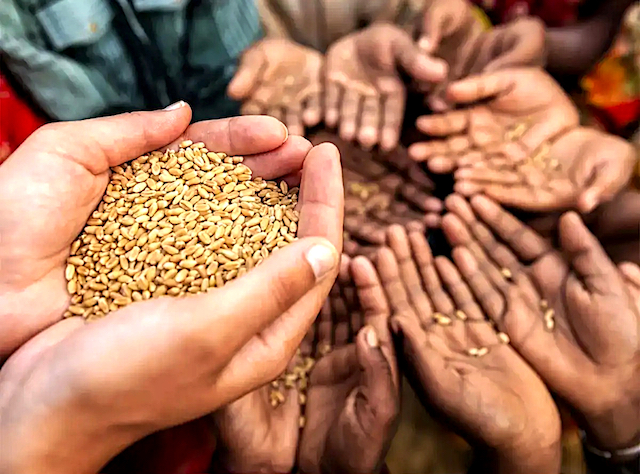
Food, second only to air and water in its necessity—and mentioned over a hundred times in the world’s major religious texts—remains elusive for hundreds of millions. Despite decades of economic growth, hunger still stalks society’s fringes, disproportionately afflicting the poor and socially marginalised. To plug this gap, governments across the world have devised various schemes: India’s Targeted Public Distribution System (TPDS), Egypt’s ration?card and Baladi?Bread programmes, Sri Lanka’s Samurdhi food stamps, Mexico’s Programa de Apoyo Alimentario, the United States’ SNAP and Indonesia’s Raskin (now Rastra). Together, these in?kind initiatives, vouchers and cash transfers serve roughly 1.5 billion beneficiaries worldwide—India alone accounting for almost half that figure through its vast safety net.
The United Nations has enshrined food security in its first two Sustainable Development Goals: SDG 1 (No Poverty) and SDG 2 (Zero Hunger). India codified this commitment in the 2013 National Food Security Act, extending subsidised grains to 75 per cent of rural households and 50 per cent of urban ones. At the heart of this policy lies the Food Corporation of India (FCI), established in 1964. More than a grain?warehouse operator, FCI procures, stores and distributes staples; maintains strategic buffer stocks; and underwrites India’s capacity to weather famines, floods or global price shocks. Its mandate even stretches to humanitarian aid abroad, a role rarely celebrated but keenly felt.
The COVID-19 pandemic put FCI’s machine to the test. In 2020–21, it mustered “wartime urgency”: the Pradhan Mantri Garib Kalyan Anna Yojana doubled annual allocations from 600 to 1,100 lakh metric tonnes (LMT) and set up a central war?room for real-time coordination. Instead of the usual 400 LMT, FCI shifted some 600 LMT per year and delivered 1,118 LMT of grains to over 800 million citizens—plus 6.4 LMT for migrant workers stranded by lockdowns.
FCI supplies foodgrains from designated depots to State Governments for delivery to Fair Price Shops (FPS) under NFSA provisions. Beyond NFSA and PMGKAY, FCI plays a crucial role in supporting a variety of other government schemes. Additional allocations are made based on the needs of schemes administered by various ministries.
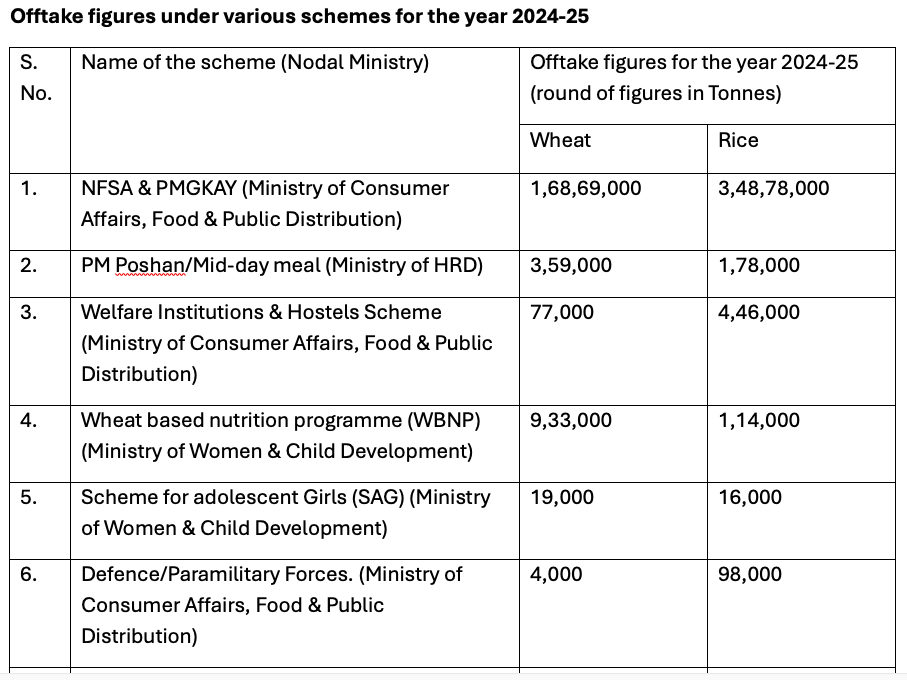
The other key foodgrain-related programs of GOI are:
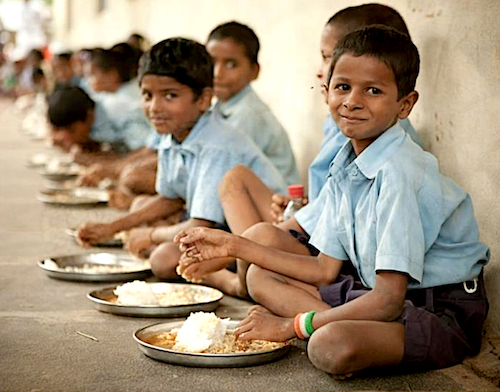
- PM POSHAN/Mid-Day Meal Scheme: Provides nutritious meals to children from Bal Vatika (pre-Class I) to Class VIII in Government and Government-aided schools.
- Annapurna Scheme: Offers food security to eligible senior citizens not covered under the National Old Age Pension Scheme (NOAPS).
- Welfare Institutions & Hostels Scheme: Supports charitable institutions such as beggar homes and nari niketans not covered under other welfare programs.
- Wheat-Based Nutrition Programme (WBNP): Allocates subsidised foodgrains to States/UTs for preparing supplementary food under Anganwadi Services.
- Scheme for Adolescent Girls (SAG): Provides foodgrains to girls aged 14–18 in Aspirational Districts and the Northeastern States.
- Defence/Paramilitary Allocations: Supplies foodgrains to forces’ battalions nationwide.
- Emergency Allocations: Provides additional stocks during festivals, natural calamities, and emergencies as directed by the Ministry of Consumer Affairs, Food & Public Distribution.
Yet FCI’s remit goes beyond calories. Its rollout of fortified rice under mid-day meals and child?development schemes tackles micronutrient shortfalls. At the same time, targeted interventions in India’s Aspirational Districts strive to lift remote communities in step with urban centres. On the price front, the Open Market Sale Scheme auctions off 39.42 LMT of wheat and 42.74 LMT of rice (2024–25), tempering volatility and checking inflation in staples like atta.
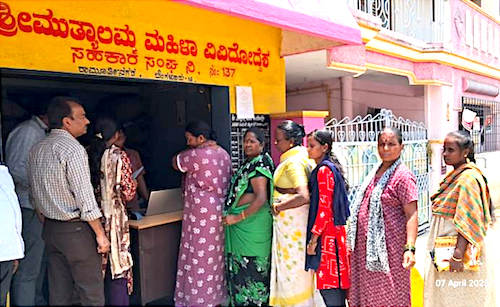
Scale, however, brings complexity. Supplying over 810 million subsidised consumers—more than the entire population of Europe—demands the highest order logistical precision. Grain must flow seamlessly from procurement centres and intermediate storage to hundreds of thousands of fair price shops (FPS), overseen by a web of ministries, state agencies and private contractors.
At the heart of this intricate network lies the Food Corporation of India (FCI), the undisputed backbone of the country’s food security architecture. Founded to stabilise market prices and guarantee Minimum Support Prices for farmers, FCI has since evolved into a vast enterprise that integrates procurement, storage and distribution under a single umbrella. Its warehouses stretch from the deserts of Rajasthan to the foothills of Arunachal Pradesh, its transport fleets traverse thousands of kilometres of sometimes challenging terrain, and its distribution depots across the nation support the PDS. FCI coordinates many stakeholders —from farmers and millers to Railways and local PDS operating agencies.
Nevertheless, FCI’s comprehensive approach ensures India can meet both national needs and global obligations. Maintaining uninterrupted supplies underpins the Government’s commitments under the National Food Security Act and advances the United Nations’ SDGs on poverty and hunger. The corporation’s steadfast performance offers a bulwark against the crisis in an age of mounting inequality and climate uncertainty.
*Authors are Deputy General Managers, Food Corporation of India. Views expressed are personal.
The article is co-authored by Shireesh. M Khare, a public sector professional with over a decade of experience in public administration, policy implementation, and digital transformation.
A graduate of SOAS, University of London (MSc in Public Policy and Management), Shireesh brings a global perspective to local governance challenges. With academic and training experiences spanning institutions like the University of Cambridge, IIMs, NLU Delhi, and NLSIU Bengaluru, he is passionate about sustainable development, food diplomacy, and inclusive public systems and regularly engages with thought leadership through lectures and publications.

Ms. Navneet Sandhu works in a managerial position with Food Corporation of India – the country’s largest public sector food supply chain management organisation. With experience in administration, storage, warehousing and distribution of food grains, she has also done a three year stint at Warehousing Development and Regulatory Authority (WDRA). Navneet is particularly interested in policy interventions, enhancing food safety and long-term sustainability in India’s public distribution ecosystem.