“How about if I sleep a little bit longer, and forget all this nonsense.”
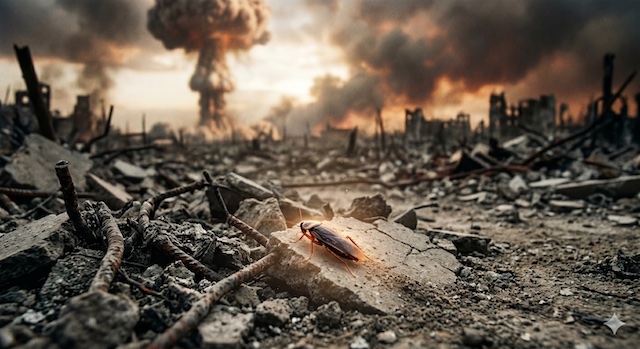
In his book, ‘The Metamorphosis’, Franz Kafka very succinctly presents the idea of dehumanisation of an individual under a capitalistic regime and the concept of conditional love. The experience seems to be so profound that it changes his very perception of himself from a human being to an insect- a cockroach. This transformation leads to a loss of respect for him within his own family, as he serves no utility anymore and his incapacitated state is seen as a burden by the very family he once served.
Perhaps in a country where 65 per cent of the population is below 35 years of age, them being viewed as cockroaches by the office bearer of the highest judicial office in the country is understandable. Unemployed youth in India are incorrigible; similar to a cockroach, they are adamant and persistent. Moreover, they are present everywhere and infect all places, most of all social media, through their activism and over-sensitisation of ‘insignificant’ issues such as rising costs of living and unemployment.
And now, their provocative opinions have gotten impetus with the start of a movement that will not end anytime soon. What started as satire has stirred a much-awaited movement to ensure systemic accountability towards issues that have become repetitive. The authorities cannot sleep any longer, for the ‘nonsensical’ opinions of the youth have leaked from the confines of private conversations and social media. Instead, they are spreading through the most powerful assets of a democracy – its streets.
For a generation that has seen the curbing of dissent, systemic ingenuity and lack of accountability, social media has always acted as the only medium to connect with like-minded individuals and enables them to hide their identity in a society that actively forces them to define it and a political atmosphere that continues to silence it. To think that questioning the current dispensation makes one a pest is to abrogate the idea of a democracy that rests on the ideas of free speech and freedom of opinion. This is the probable reason as to why India serves as one of the largest social media markets in the world, with nearly 749 million users.
In such a society, an individual is defined not by their preferences and interests, but by their occupation and income. It is this view that forces them to pursue careers in conventionally acceptable areas of law, medicine and engineering. Those wanting anything else or wish to pursue a career in an unconventional field are seen as radical, while those that succumb to the pressures of a metropolitan life in the search for employment are seen as a burden. Thus, for an entire section of the population which is unemployed due to lack of opportunities and not initiative, their activism becomes a load on a system that tries to suppress it, ignoring the reforms that could prevent the existence of such supposedly ‘parasitic elements’.
The most recent movement, against alleged paper leaks in the NEET-UG exam for the second time since 2024, which led to its subsequent cancellation, exposed inefficiencies in the functioning of an agency that was initiated in 2017 with the purpose of easing the examination process for students across the country. The most rapid response to this was the rescheduling of the exam for 21st June, a step that failed to take into account the efforts of nearly 23 lakh students. To add to the plight of countless students, the CUET exam for central universities in the country also saw its cancellation across multiple centres.
What is most shocking is the systemic insensitivity (which seems to have become endemic) and the convenient disregard for the countless hours students put in to prepare for such exams, which is to dehumanise their existence and discount their efforts in a world that should instead applaud them.
The Cockroach Janata Party, the principal organisation leading the protests against these examinations, was started simply as satire; as a witty form of expressing people’s frustration, especially against the lack of accountability and sensitivity shown by the national agencies and parliamentarians. The public’s deep resonance was reflected by how quickly it amassed followers.
Naturally, there was an attempt to curb this movement as well, while simultaneously attempting to do damage control and curating the image of a repentant and responsible government. However, taking accountability does not mean giving selective interviews to curate an image of a responsible government; it means publicly acknowledging its shortcomings and not feeling threatened by the existence of Instagram and X accounts, which are expressing the opinions that the government chooses to ignore. Moreover, it raises a fundamental question: if satire and youth, the two most accurate representations of societal opinion and desires, are seen as a threat to the sovereignty of the country and not as the simple critiques that they serve to be, then what gives us the right to boast of being the largest and most diverse democracy in the world? And then we wonder why human capital continues to flow out of the country.
Those who don’t learn from history are doomed to repeat it. Bangladesh and Nepal, countries that have historically taken inspiration from India to instil the spirit of democracy in them, have seen those governments go out of power who have wielded it for centuries simply because they underestimated the capabilities that today’s youth hold, which goes beyond the ballot. It is the power of persuasion, something that is actively shaping the course of world history as well.
It is not the building of IITs and AIIMS that will lead to development; rather, ensuring the youth can learn and grow in a State that acknowledges their efforts, accepts their opinions and is open to
criticism is what ensures public activism and democratic health and will help us achieve the goal of a ‘Viksit Bharat’ by 2047.
criticism is what ensures public activism and democratic health and will help us achieve the goal of a ‘Viksit Bharat’ by 2047.
Anjali, with a masters in English, is a teacher on a sabbatical. She loves travelling and spending time in natures lap, observing its bounties and being thankful to the hills.