
Dharamshala: A series of earthquakes, including a significant tremor measuring 4.9 on the Richter scale, shook the Dharamshala region on the night of June 5, causing panic among residents and prompting many to rush out of their homes.
According to the National Centre for Seismology (NCS), the strongest earthquake occurred at 10:04 PM on June 5. Its epicenter was located approximately 41 kilometers from Dharamshala, between Dhar Ghadoi and R.F. Kugti in the Dhauladhar ranges along the Kangra–Chamba border. The quake originated at a depth of 22.5 kilometres beneath the Earth’s surface.
Although the tremor was brief, it was widely felt across Dharamshala and surrounding areas. Residents reported strong shaking, but no loss of life or major property damage has been reported so far.
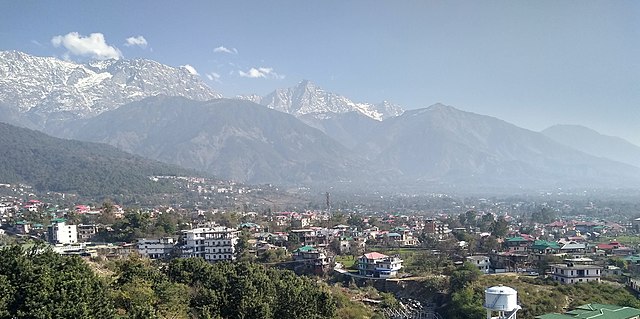
The seismic activity began earlier in the day. At 8:52 AM, a mild earthquake measuring 2.3 magnitude was recorded near Minkiani Pass in the Dhauladhar ranges, about 16 kilometres from Dharamshala. While the tremor was too weak to be felt by most people, it marked the beginning of a day of heightened seismic activity.
Following the 4.9-magnitude quake, two additional tremors were recorded later in the night. A 2.8-magnitude earthquake struck at 11:03 PM near Dhar Gharoh, about 18 kilometres from Dharamshala, followed by another tremor of 3.0 magnitude at 11:52 PM near R.F. Hilang, approximately 23 kilometres from the town.
Kangra district, with Dharamshala as its headquarters, falls under Seismic Zone V, the highest earthquake-risk category in India. Earthquakes of magnitude 3 to 4 are generally considered minor and rarely cause structural damage, although they are often felt by residents.
Seismologists note that frequent small earthquakes in the young Himalayan mountain system may act as “natural stress relievers” along geological fault lines, helping release accumulated tectonic pressure. However, experts caution that such activity does not eliminate the possibility of a major earthquake in the future.
The recent tremors have revived memories of the devastating Kangra Earthquake of April 4, 1905, one of the deadliest earthquakes in Indian history. Measuring approximately 7.8 magnitude, the disaster claimed more than 20,000 lives and destroyed over 100,000 buildings across the region.
Several historic landmarks, including Kangra Fort, Brajeshwari Temple, and St. John in the Wilderness Church, suffered extensive damage. The earthquake was felt across a vast area stretching from Amritsar and Lahore to Dehradun.

Arvind Sharma is an award winning bi-lingual journalist with more than 20 years of experience.
He has worked with Divya Himachal, Dainik Jagran, Dainik Bhasker, Vir Partap, Ajit and PTI.
In 2010, he was conferred the Himachal Kesri journalism award. He reports on the Tibetan Government in Exile, politics, sports, tourism and other topics. He lives in Dharamshala.