
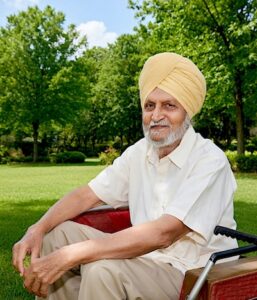
Hardial Singh Johl (1933–2021) stands as one of India’s most distinguished and visionary landscapists. His profound professionalism and meticulous expertise transformed Chandigarh into one of the country’s greenest and most liveable cities. With a rare combination of scientific precision, artistic sensibility, and deep-rooted passion for functional greenery, Johl approached landscape architecture as both a technical discipline and a form of environmental artistry.
Over his distinguished career, particularly during his two-decade tenure as head of the Landscape Wing in Chandigarh, he demonstrated exceptional professionalism through a systematic, research-backed approach to urban forestry. He treated trees not merely as decorative elements but as essential “living building materials” that shaped the city’s microclimate, aesthetics, and functionality.
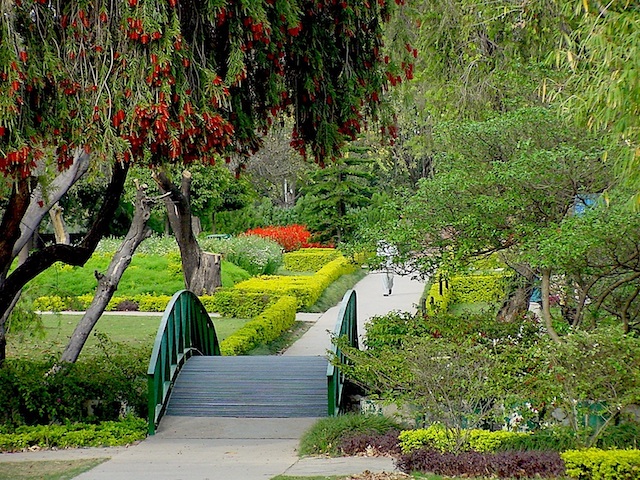
Johl’s contributions went far beyond routine planting. He masterminded the creation of cohesive, single-species avenues using carefully selected, robust trees that provided shade, reduced pollution, controlled noise and dust, and enhanced the overall urban environment. Working in close collaboration with Dr. M.S. Randhawa, he played a pivotal role in developing iconic green spaces such as the world-renowned Rose Garden, Leisure Valley, Shanti Kunj, and Bougainvillea Garden. His work exemplified a holistic philosophy—integrating trees harmoniously with Le Corbusier’s modernist architecture while respecting infrastructure, ensuring long-term sustainability, and creating an entire city that functions as a living park. Johl’s unwavering commitment to excellence, attention to detail, and willingness to learn from experience established him as a role model of professional integrity in the field of landscape architecture.
Born in 1933, Hardial Singh Johl earned his master’s degree from Punjab College of Agriculture, Ludhiana (now Punjab Agricultural University) in 1955. His academic foundation in agriculture and horticulture equipped him with deep expertise in plant science, which he later applied masterfully in large-scale urban landscaping projects. He began his career as a landscape designer at the historic Mughal Gardens in Pinjore, where he honed his skills in creating grand, enduring green spaces.
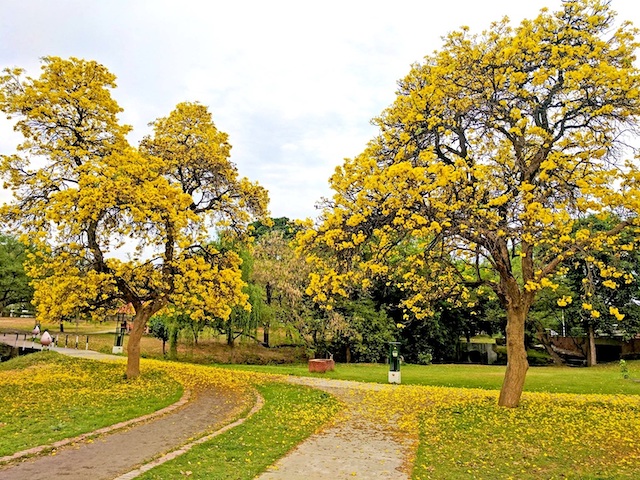
Contributions to Chandigarh’s Landscaping
Johl’s most significant impact came during his two-decade tenure as head of the Landscape Wing in Chandigarh. Working closely with Dr. M.S. Randhawa, the first Chief Commissioner (Administrator) of Chandigarh and a passionate plant lover, Johl translated visionary dreams into reality. Le Corbusier’s modernist city plan provided the architectural framework, but it was the duo of Randhawa and Johl who infused it with lush, liveable greenery.
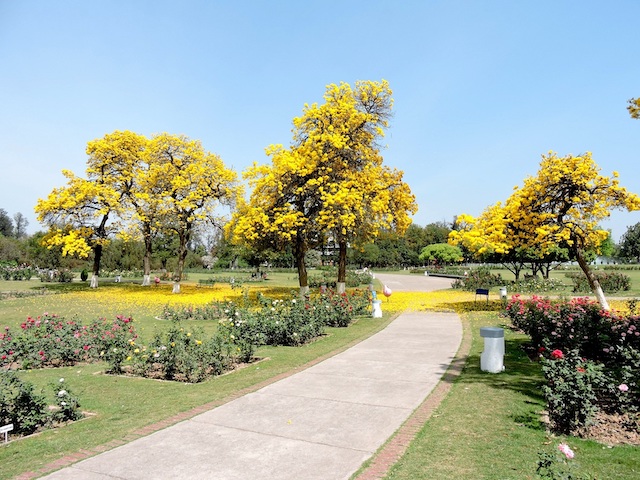
Under their leadership, Chandigarh evolved into the “City Beautiful,” renowned for its tree-lined avenues, thematic gardens, and harmonious integration of built forms with nature. Johl played a pivotal role in:
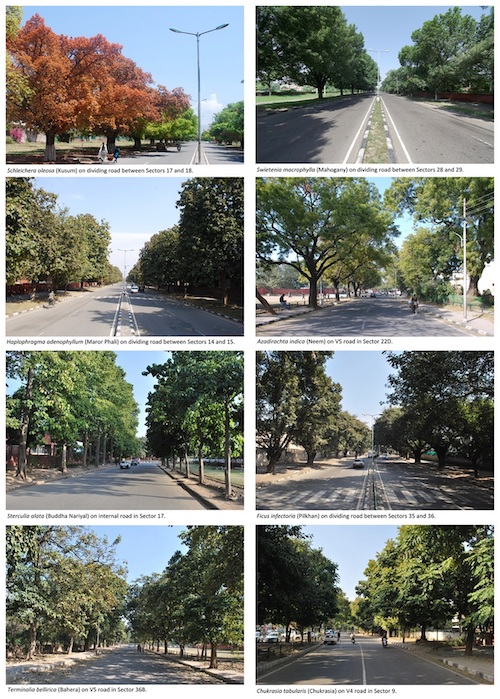
- Major Roads and Avenues: He orchestrated the planting of single-species avenues using structurally robust, pollution-resistant trees such as Chukrasia tabularis (Chukrasia), Swietenia macrophylla (Mahogany), Azadirachta indica (Neem), Schleichera oleosa (Kusum), Bischofia javanica (Bishop Wood), Kigelia pinnata (Sausage Tree), Terminalia bellirica (Bahera), Alstonia scholaris (Scholar Tree), Pterospermum acerifolium (Kanak Champa), Haplophragma adenophyllum (Maror Phali), Mitragyna parvifolia (Kaim), Ficus infectoria (Pilkhan), Terminalia arjuna (Arjun Tree), Sterculia alata (Buddha Nariyal), and others. These created cohesive green tunnels, providing shade, reducing noise and dust, and enhancing the urban microclimate.
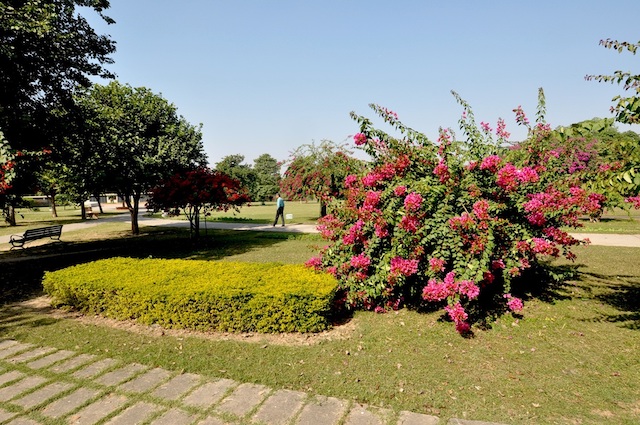
- Iconic Gardens: He was instrumental in developing the world-famous Rose Garden, Leisure Valley, Shanti Kunj, Bougainvillea Garden, and other public spaces. The Rose Garden stands as a testament to his expertise in floral landscaping.
- Broader Urban Greening: His work extended to ensuring trees served functional roles—as “living building materials” forming green walls, ceilings, and outdoor rooms—while respecting infrastructure like roads, pedestrian paths, and power lines.
Johl’s approach emphasised planned, scientific plantation over random planting. He advocated for proper spacing, suitable species selection based on climate and soil, and integrating trees into the overall urban design. This philosophy helped Chandigarh earn recognition as one of India’s greenest cities, offering a model for other urban centres facing pollution and heat.
Later, as head of the Landscape Circle for the Punjab government and advisor to the Punjab Urban Development Authority (PUDA), he extended his expertise to projects across the state, including modern urban estates in Mohali, Ludhiana, Jalandhar, Patiala, and Bathinda; the Punjabi University campus in Patiala; the Rail Coach Factory in Kapurthala; and Anandpur Sahib. He also contributed to the Chandigarh Golf Club’s landscapes.
Learning from the Past and Suggestions for the Future
One admirable aspect of Hardial Singh Johl’s personality was that he remained a lifelong student of landscaping throughout his seven-decade career. He was always eager to learn from his past mistakes and sought better solutions for the future.
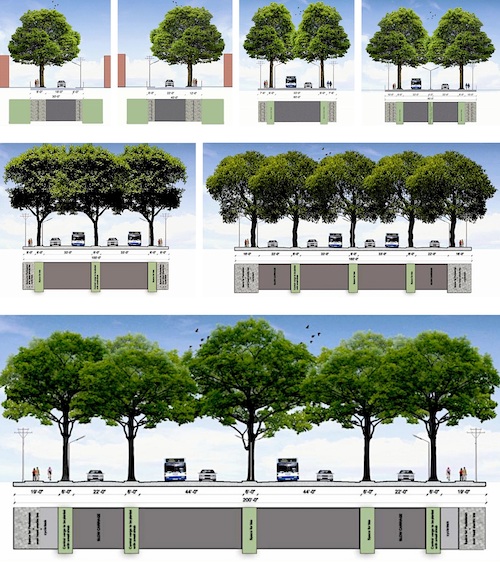
On his favourite subject of tree plantation along city roads, he developed the concept that the spacing of large shady trees along driveways should not be the commonly accepted 25 feet, as seen in Lutyens’ New Delhi and Le Corbusier’s Chandigarh. He observed that such wide spacing caused trees to take decades to form thick, beautiful avenues. Later, Johl experimented with closer spacing of around 12 feet between trees, and the results were remarkable—dense foliage was achieved within just five to ten years.
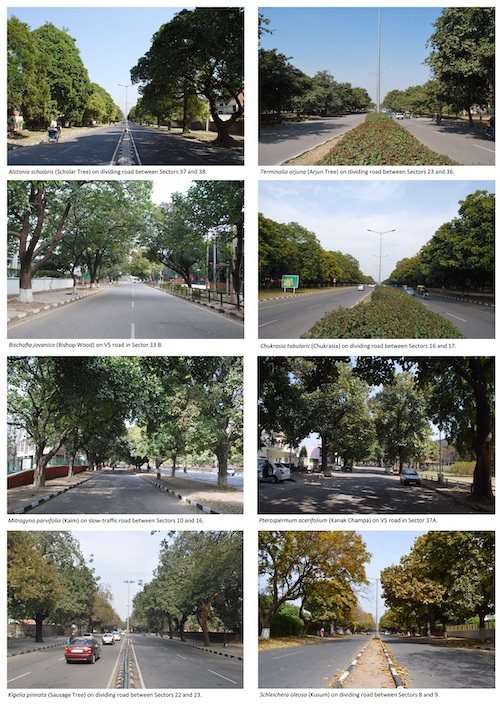
He also consistently emphasised that only a single species of tree should be planted along city roads, rather than mixing different species. The use of a single species dramatically enhanced the visual impact and beauty of the avenues compared to mixed planting.
Drawing on his decades of experience, Johl developed several standard road sections of varying widths, clearly indicating the appropriate placement of tree rows in relation to service lines, footpaths, and cycle tracks. These locations were carefully planned to create protective canopies over the driveways, shielding the roads from the scorching sun while forming visually soothing avenues.
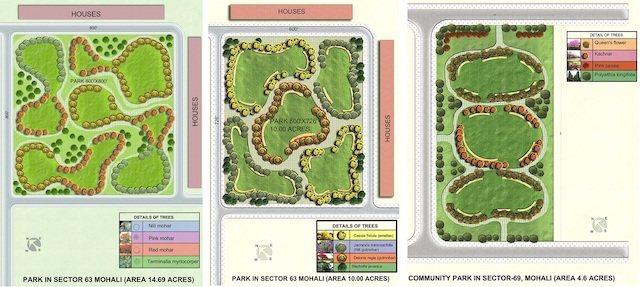
He also prepared schematic layout plans for parks of different sizes in urban areas. From his lifelong experience in landscaping, he concluded that flowering trees such as Amaltas, Gulmohar, Jacaranda, and Kachnar should be planted only in parks and not along roads. These trees do not survive long on roadsides due to vehicle pollution. This observation has been validated in Chandigarh, where many flowering tree avenues had to be replaced with evergreen species within a relatively short period.
Landmark Books: A Legacy
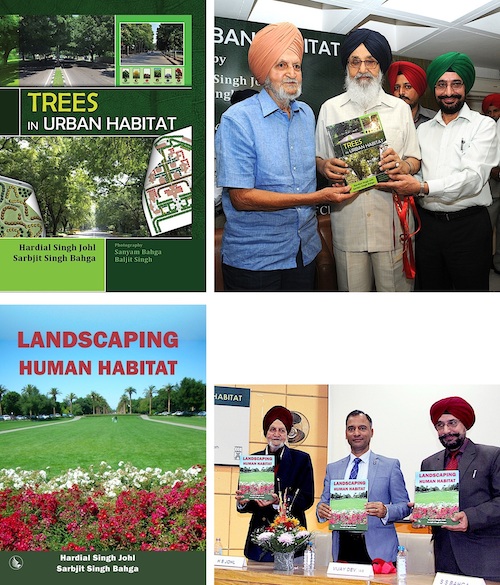
Johl’s knowledge was immortalised in two authoritative books co-authored with Sarbjit Singh Bahga:
- Trees in Urban Habitat: This groundbreaking work studies tree plantations in Lutyens’ New Delhi and Le Corbusier’s Chandigarh. It advocates treating trees as essential urban design elements—not mere decoration—and provides practical guidance on road cross-sections, spacing, species selection, and creating an “entire city as a park.” It highlights fundamental requirements for successful urban forestry and is applicable to tropical and subtropical regions worldwide.
- Landscaping Human Habitat: A holistic guide covering trees, shrubs, creepers, indoor plants, roses, bougainvilleas, lawns, bonsai, cacti, and more. It emphasises choosing the right species for climate, function, and aesthetics to create beautiful, liveable environments.
These books stemmed from decades of hands-on experience and a four-year collaborative effort after Johl’s initial reluctance. They serve as essential resources for architects, planners, horticulturists, and gardeners, promoting mistake avoidance and sustainable practices.
There is an interesting story behind the inception of these books. One day in 2011, Johl Sahib came to my office, and we discussed many landscape issues over a cup of tea. During this discussion, he said to me, “Sarbjit, we have made a lot of mistakes while doing the landscaping of Chandigarh.” I was astonished to listen to his candid confession, which was in the true spirit of a humble yet thorough professional like H.S. Johl—a ‘Saint’, I may call. My immediate reaction was, “But, Sir, we don’t see any mistakes.” Then he elaborated a little more.
After listening to his discourse, I requested him to write a book on these shortcomings and the scope for improvements so that future generations of landscapists might be saved from repeating such mistakes. Johl Sahib liked the idea, but he took one year to agree to it and that too, on the condition that I should assist him as a co-author. Then we worked for four years and produced these two books. Now, when Johl Sahib is no longer amongst us, I feel that all his confessions and ideas for the improvement of our human habitat, which have been recorded in these books, will always be a guiding source for future generations.
Enduring Impact
Hardial Singh Johl’s legacy endures in Chandigarh’s verdant avenues, blooming gardens, and the collective memory of a city that breathes easier because of his efforts. As India urbanises rapidly, his principles—scientific planning, functional beauty, and environmental stewardship—remain highly relevant. He reminded us that great cities are not just built with concrete and steel but nurtured with trees and vision.
Long live the memories of S. Hardial Singh Johl. His “green” contributions continue to enrich the lives of countless residents and will inspire future landscapists for generations.
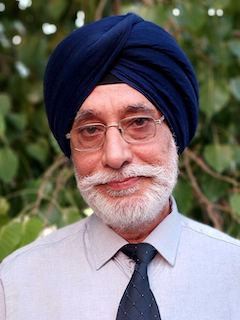
Sarbjit Bahga (b1957) is a Chandigarh-based architect, author, photo artist, and archivist. He is the Principal Architect of Bahga Design Studio LLP. Earlier, Bahga worked in the Department of Architecture, Punjab, Punjab Health Systems Corporation, and Punjab Mandi Board in various positions.
He has more than 42 years of practical experience designing various types of buildings, complexes, and large campuses. His completed works include an eclectic range of administrative, recreational, educational, medical, residential, commercial, and agricultural buildings. A monograph on his selected works titled “MODERN REGIONALISM: The Architecture of Sarbjit Bahga” has been published.
Bahga is also a keen researcher and a prolific architectural writer. He has 12 books to his credit, which include Modern Architecture in India, New Indian Homes, Le Corbusier, and Pierre Jeanneret: The Indian Architecture, Trees in Urban Habitat, Landscaping Human Habitat, New Indian Architecture -1947-2020, and Hand-Drawn Perspectives and Sketches. Bahga’s contribution to architecture has been largely recognized. He is a three-time recipient of the World Architecture Community Awards. His name has been featured in the Guinness Book of World Records for designing the “longest covered concrete corridor” in Vidya Sagar Institute of Mental Health, Amritsar.