
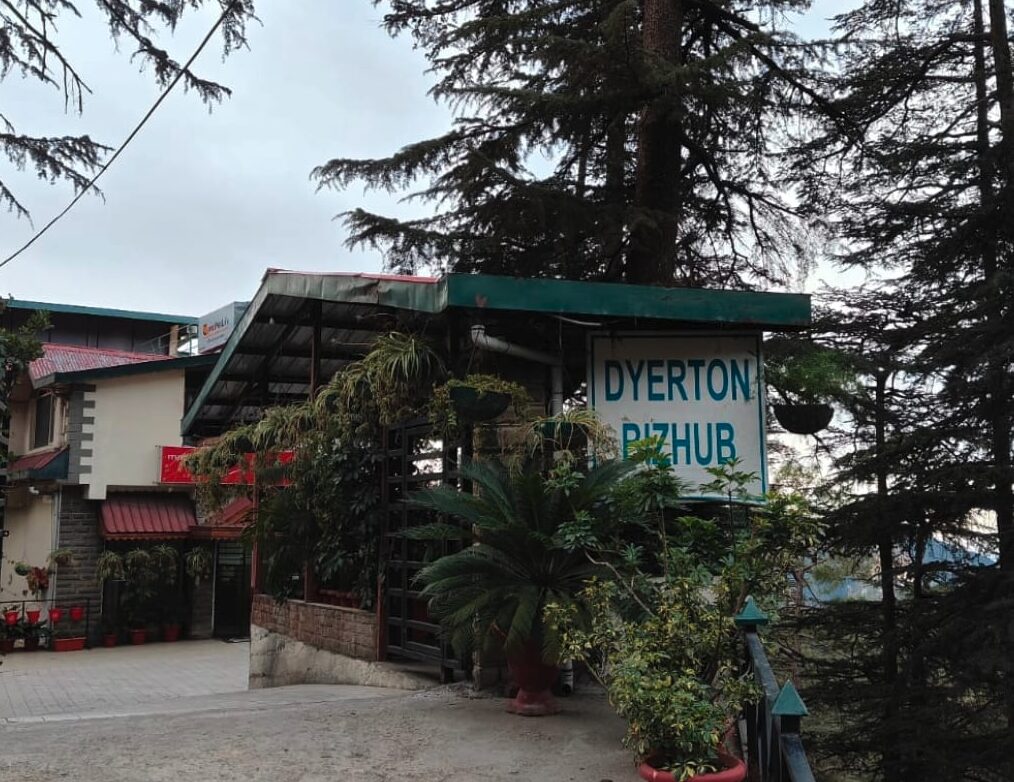
‘Dyerton’ – Hell! Wasn’t it ‘Diverton’? I hit brakes. There were tyres screeching behind me. The car following me almost bumped into me. The local taxi behind me overtook me with the ruff looking cabbie abusing me menacingly. Thankfully his windows were all rolled up and I couldn’t hear his filthy abuses that I could very well lip-read. I heaved a sigh and put the Black Safari (Tata’s call it ‘Dark Edition) in reverse and went back. Of course it was ‘Dyerton’. Afterall it was the eliusive link to one of the most horrific massacres of modern India.
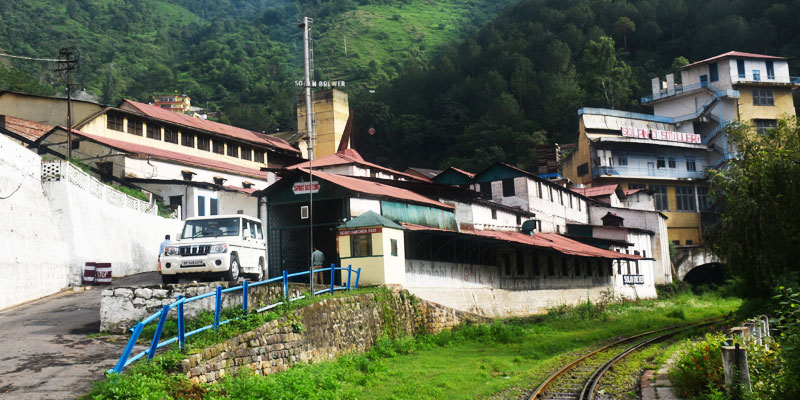
I knew the family lived in that area once. And the place was called ‘Beerkhana’ for the excellent beer they brewed here. Expert distillers that they had turned out to be, It had after all negated the need for the British to import vast quantities of beer from England and showed that equally good beer could be made in ‘The Queen of the Hills- Simla’. Later they established the Solan Brewery for mass production which was called ‘Dyer and Maekin Limited’ till the time Brigadier Mohan bought the stake from family and it became ‘Mohan Maekin Limited’. Not immediately but when then PM Nehru refused to visit the premises as it was associated with the name ‘Dyer’!
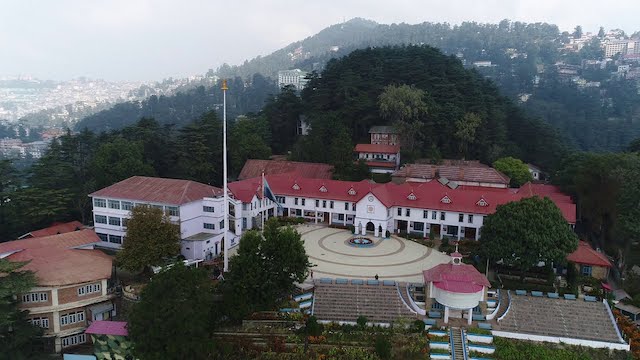
‘Diverton Bizhub’ the modern building housing few corporate offices just past Khalini on the highway towards Tuti Kandi in Shimla was where I had had this ‘Eureka’ moment. Was the property still with the family I wondered. I was sure no one in the building would be able to answer that – I know how Himachalis do not have any interest in useless trivia. I remembered the newly wed convent educated bride of a nephew. She taught in ‘Auckland House School’ one of the elitest of the town. She had no idea why it was called so. Infact she had not even heard about Lord Auckland, the Governor General of British India. It was originally the viceregal dwelling which later – once the palace or the Viceregal Lodge was built on ‘Prospect Hill’ came in possession of missionaries and finally became place for education. Auckland had spent some quality family time in the house with his companion – spinster sister Emily Eden who has etched a permanent place in History of the British Raj with her detailed accounts of those times by recording them in her journal and letters home which are now compiled. They not only make a compelling reading but are invaluable source of authentic knowledge about Nineteenth Century India and her people. Lord Aukland – ‘George’ for family however, led Britain into a most ignominious military defeat in Afghanistan.
Well, coming back to Dyers. Actually, the family owes its posterity in Indian history to Brigadier Reginald Edward Harry Dyer (1864 – 1927), son of Edward Dyer, Brewer in Murree. He studied in Bishop Cotton School that I see from my Bedroom window everyday as I rise in morning. He was an average student who was an introvert and kept aloof. The boy joined British Army, got a Mention in Despatch in World War 1, and some more distictions. He has been called ‘Butcher of Amritsar’ and ‘The man who saved India’ by his detractors and supporters. His claim to fame or notoriety is ‘Jalianwala Bagh Massacre’ of Innocent unarmed Indians.
I associated ‘Jalianwala’ with ‘jalna’ or burning for most of my life. Till I visited the site and realised it meant instead ‘A Garden with surrounding walls made of Brick Mesh’ – Jalian!
It was on 13 April 1919 that Brigadier Dyer with his soldiers reached the Bagh where the protestors had gathered in defiance of his orders. A week prior, during the Nationwide Hartal called by Gandhiji, there was arson following which soldiers had shot dead 8 locals. There was rioting and 3 British bank employees were beaten to death by Indians. A Mrs Sherwood, supervisor of Mission Girls school was also beaten. This had infuriarated Dyer. For most British, Honour of white women was supreme. For them, all natives were after the white women given a chance to defile her. British in India thought of them as superior beings who were here to Rule and show Indians the way. It was ‘White Man’s Burden’ famously called so by Kipling another Shimla guy!
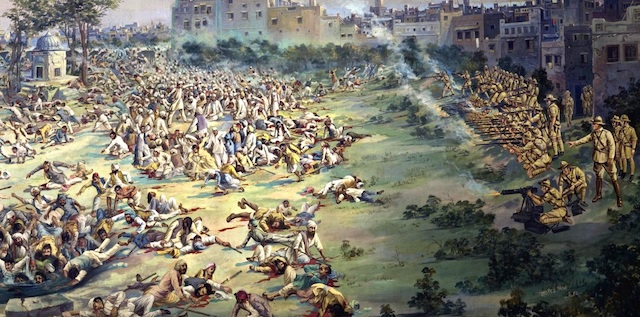
Apparently, Dyer was upset as people had not heeded the curfew on this Baisakhi day. There were 5 narrow gates into the Bagh. Dyer with his 50 soldiers came through one and without warning, ordered the troops to open fire on the harmless crowd, pandemonium broke out as the soldiers kept firing at people milling around 4 gates to escape. The .303 Lee – Enfield rifles of 50 soldiers didn’t dtop till all 1650 rounds were exhausted. Around 1100 people died wheres 1200 were wounded, many trampled. For next week, Dyer showed no remorse. The 200 yards of Gali Kurichhan where Mrs Sherwood was assaulted could be crossed by Indians only by crawling on their belly. Later during testimony, Dyer said – “Indians prostate and move towards their Deity in that manner in many temples. A British Lady for them is like Godess. That’s why I enforced it’.
The British felt they were in India to show us the Light. As per Kipling, another Simla guy it was ‘The White Man’s Burden’ to rule us!! Depending on which side one was, Dyer was considered ‘ Butcher of Amritsar’ and The Man Who Saved India’! The Morning Post – Later called “The Daily Telegraph’ raised Pound 26000 sterling (equivalent to Pound 13,19,142 today) for Dyer from British civil servants, Armymen and businesses! Contrast it with Rs 500 or Pound 37 (1877 Pounds today) that the victims received from government. Michael O’ Dwyer (Note the similarity) was the Lietenant Governor of Punjab then. Many felt he was the main culprit. He was pursued for years and finally killed by the great Udham Singh to avenge the massacre.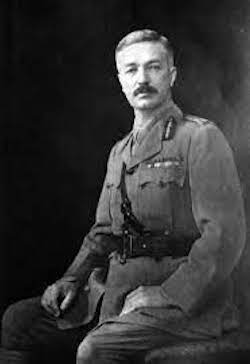
Irony is that out of 50 soldiers who killed thousands of innocent Indians, 25 were Gorkhas and 25 Pathans! It is also surprising that while Churchill, then an MP in British Parliament severely condemned Dyer for his monstrosity whereas Gandhiji after initially criticising forgave him saying he did what he thought was his duty!!! The Morning Post justified his action as necessary ‘to protect the honour of British women)!
Dyer died in England in estate he bought finally bedridden due to two strokes and paralysed. On his death bed he was doubtful if he was right or wrong and intended to clarify it from God in heaven.
Dr Vikas Thakur is a Veterinary Pathologist who has worked extensively all over India, especially in the Himalayan region. A keen observer and thinker, he is much interested in local history, societal issues , nature and anything that arouses curiosity. After spending 4 years in Kashmir, he came out with his experiences and understandings of this most interesting region in the form of a critically acclaimed book -‘Pax Kashmir’ this year. A native of Shimla, he is currently based in Chandigarh. Besides reading and writing, he likes to spend his time Riding and Golfing.
He is currently – Executive Committee Member, Equine Welfare and Medication Control, Equestrian Federation of India.

Excellent historical narrative about Mohan Meakin Brewery Solan, Queen of Hill Simla and the unforgettable Jaliawala Bag massacre. Author’s pen has done full justice with logics supposed with facts. My compliments to the learned author.
Wonderfully written informative article. The author’s writing style brings vividity and life to brushing up our knowledge of history. I always appreciate and get astounded how he manages to find priceless nuggets of history, which though in front of our eyes is missed out because of our ignorance. Loved it.
Excellent write up about history sir
Beerkhana building still exists in talland below shimla bypass road is an old wooden structure has beautiful lawn in front . I had stayed there in 1998 with family it has big rooms 15*15 *15 ft owner is sharma family from Rohru dr ramlal and his brother
Deeply connected with historical awareness and raw emotions. A thoughtfully crafted view but no mercy, let Dyer’s soul writhe in the fires of hell, the butcher of innocents….