
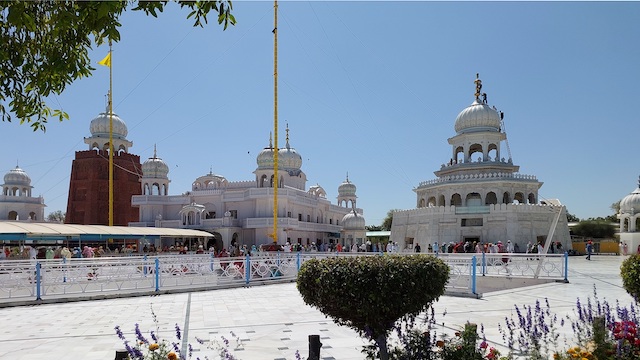
In the serene town of Talwandi Sabo, District Bathinda, Punjab, Takhat Sri Damdama Sahib shines as a beacon of Sikh spirituality and history. Revered as one of the five Takhats (thrones of authority) in Sikhism, this sacred site holds profound significance for millions of devotees worldwide. Its tranquil ambience, rich heritage, and pivotal role in shaping Sikh scripture make it a cherished place of pilgrimage, reflection, and unity.
Takhat Sri Damdama Sahib owes its prominence to Guru Gobind Singh Ji, the tenth Sikh Guru, who arrived in Talwandi Sabo in 1706 after enduring immense trials, including the Battle of Muktsar. Seeking respite, Guru Ji established this site as a spiritual and intellectual hub. During his nearly year-long stay, he marked a transformative chapter in Sikh history.
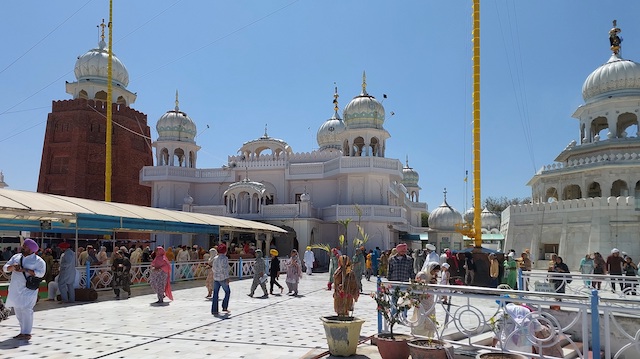
Here, Guru Gobind Singh Ji recompiled the Sri Guru Granth Sahib, the eternal Sikh scripture, with the assistance of devoted scholars Bhai Mani Singh and Baba Deep Singh. Dictating the entire text from memory, the Guru Ji incorporated the hymns of his father, Guru Tegh Bahadur Ji, into the sacred volume. This monumental task earned Talwandi Sabo the title of Guru Ki Kashi, likening it to Varanasi, a revered centre of learning in Hinduism. The Takhat thus became a symbol of knowledge, devotion, and resilience.
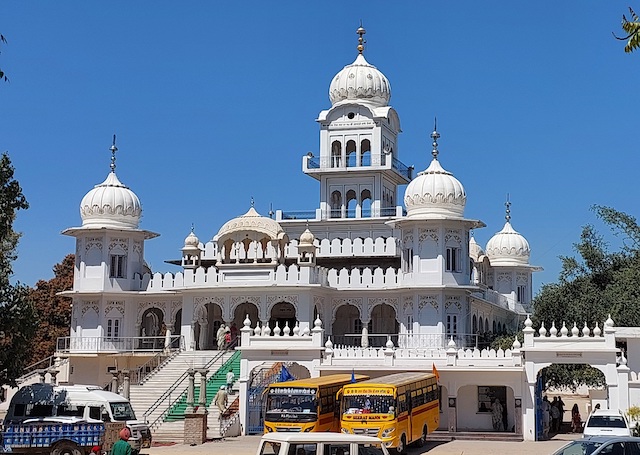
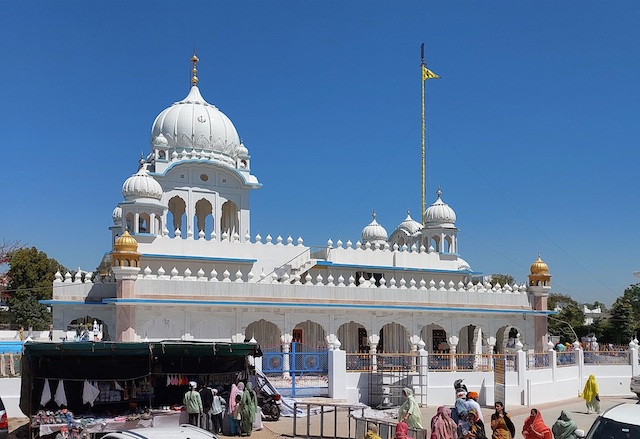
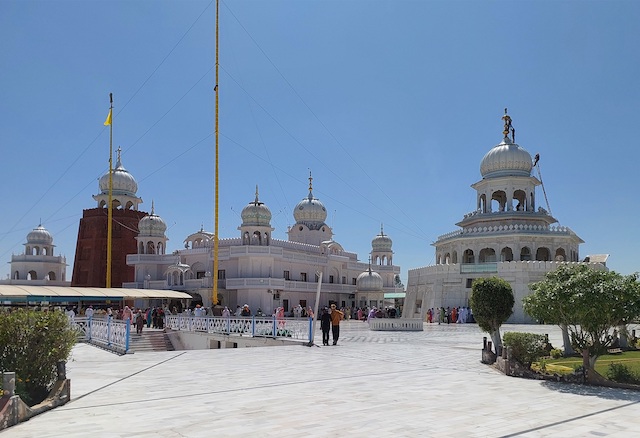
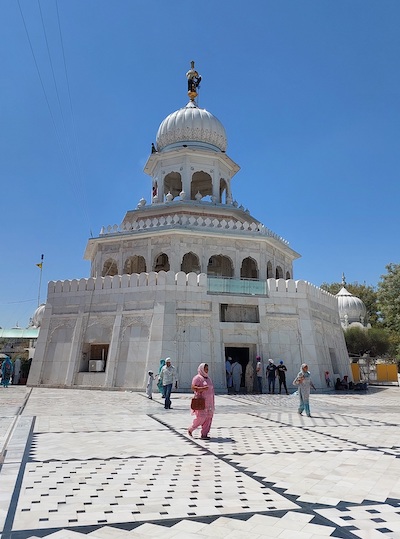
Pilgrims are greeted by the Takhat’s majestic architecture, featuring white marble domes and intricate designs that exude serenity. The sanctum, where the Sri Guru Granth Sahib is enshrined, radiates a divine connection, drawing devotees into deep contemplation. The surrounding complex, including historical shrines like Gurdwara Ber Sahib Degsar and Gurdwara Likhansar Sahib, adds reverence, each commemorating significant events from the Guru’s time.
The Takhat plays a vital role in preserving Sikh heritage. Its library and archives house rare manuscripts and artefacts, offering scholars and devotees a glimpse into the faith’s storied past. The site’s commitment to education and community welfare reflects the Sikh ethos of Sarbat da Bhala—praying for the well-being of all.
For Sikhs and non-Sikhs alike, Takhat Sri Damdama Sahib is more than a historical monument; it is a living testament to Guru Gobind Singh Ji’s enduring legacy. Its tranquil courtyards and sacred halls invite visitors to pause, reflect, and connect with the divine. The Takhat’s message of resilience, compassion, and unity resonates deeply in a world often divided by differences.
Whether seeking spiritual solace, historical insight, or a glimpse into Sikh culture, Takhat Sri Damdama Sahib offers a humbling and uplifting experience. As the sun sets over Talwandi Sabo, casting a golden glow on Takhat’s domes, it is a timeless reminder of faith’s power to inspire and unite.
Architectural Grandeur
The architecture and planning of Takhat Sri Damdama Sahib reflect a harmonious blend of Sikh design principles, spiritual symbolism, and universal accessibility, creating a space that is both grand and inviting to people of all backgrounds, irrespective of religion, caste, or creed.
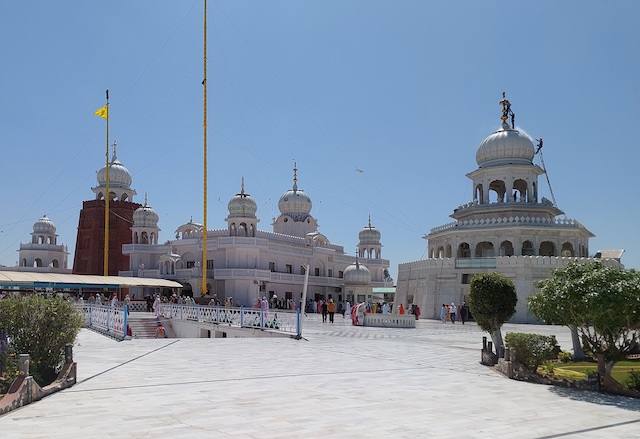
The campus is characterized by striking white marble structures that dominate the landscape with purity and elegance. The central gurdwara features a multi-tiered design with a prominent dome, a hallmark of Sikh architecture, symbolizing the connection between the earthly and the divine.
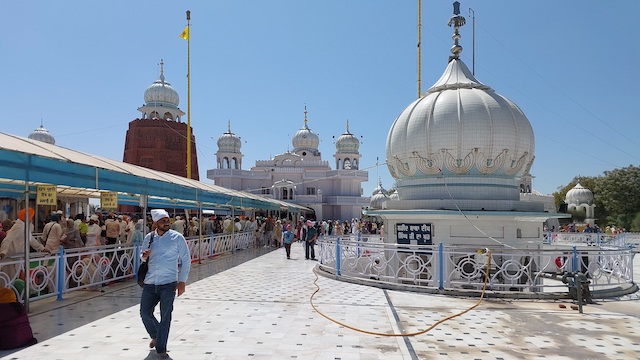
Smaller domed structures and minarets surround the main building, creating a rhythmic skyline that is balanced and visually captivating. Historical shrines like Gurdwara Ber Sahib Degsar and Gurdwara Likhansar Sahib add depth and variety to the design, with distinct elements like arched gateways and latticed windows. A red-brick tower, a remnant of older construction, contrasts with the white marble, grounding the campus in its historical roots while highlighting its evolution.
The campus is meticulously planned to foster community and reverence. A vast, open courtyard paved with patterned marble tiles serves as the heart of the complex, offering ample space for large gatherings during festivals. Its expansive nature accommodates thousands of visitors, reflecting Sikhism’s emphasis on inclusivity and collective worship.
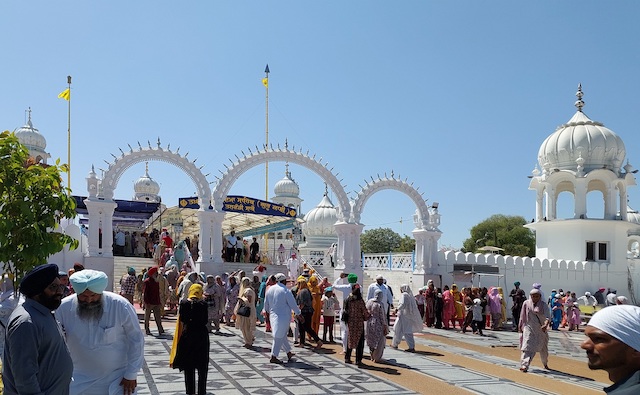
Grand arches, often adorned with intricate designs, mark the entrance, serving as a welcoming gateway for devotees. These arches are functional and symbolic, guiding visitors into the sacred space while signifying the transition from the mundane to the spiritual. Wide pathways with shaded areas and greenery lead to the main gurdwara, creating a serene and approachable environment. Trees and small gardens soften the starkness of the marble, adding natural beauty and warmth.
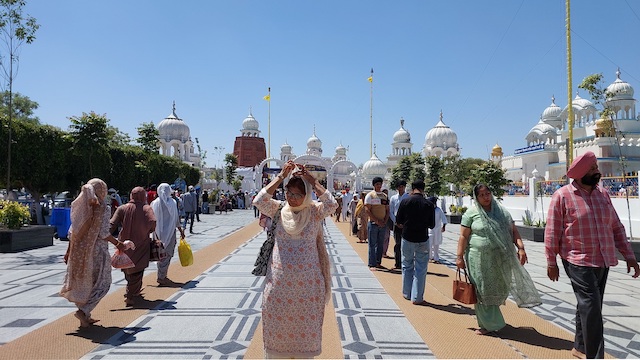
Tall flagpoles bearing bright yellow Nishan Sahib flags, sacred symbols in Sikhism, punctuate the campus, adding verticality and spiritual authority. These flags serve as landmarks, guiding visitors toward the central sanctum and unifying the sprawling complex.
The design is inherently inclusive, reflecting Sikhism’s core tenet of equality. The open layout, free of physical barriers, ensures that people of all faiths, castes, and creeds can participate in the spiritual experience. The absence of restrictive gates or exclusive areas conveys a universal welcome, aligning with the principle of Sarbat da Bhala.
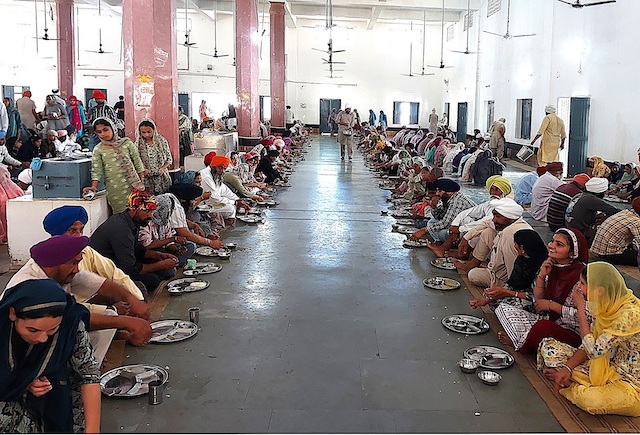
The langar hall, a key feature, exemplifies this inclusivity. Easily accessible, it serves free meals to all visitors, regardless of background, fostering community and shared humanity.
The campus’s aesthetic appeal transcends cultural boundaries. The white marble’s clean, timeless quality and rhythmic arches, domes, and symmetrical designs create universal harmony. Open spaces and natural elements like trees and plants make the environment serene and approachable, encouraging visitors to linger and reflect.
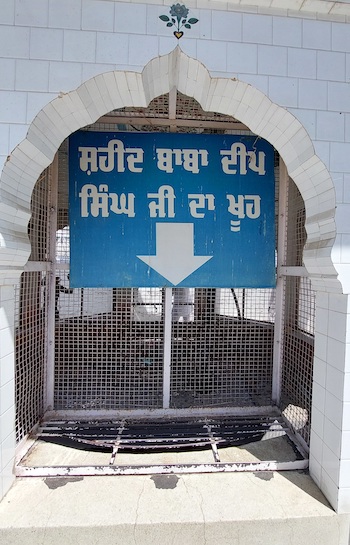
The campus includes other landmarks like the historical Kareer trees and Baba Deep Singh Ji Da Khooh.
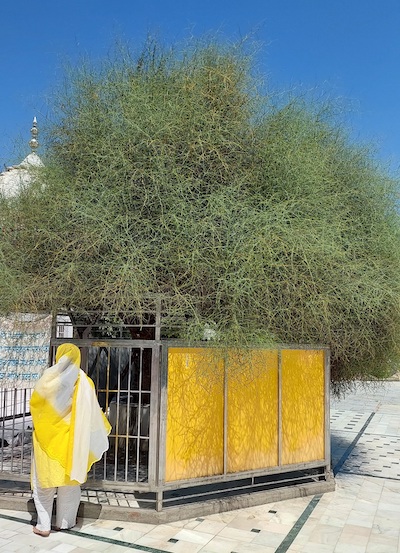
The Kareer trees (Capparis decidua), preserved on the campus, hold deep historical and spiritual significance. These hardy, drought-resistant trees, native to Punjab’s arid regions, are believed to have provided shade and shelter to Guru Gobind Singh Ji during his stay in 1706. It is said that the Guru Ji tied his horses under these trees, making them a living testament to his presence and resilience. Devotees visit these trees to pay homage, viewing them as sacred relics that enhance Takhat’s spiritual ambience. Their enduring presence amidst the marble architecture underscores a natural and built heritage blend.
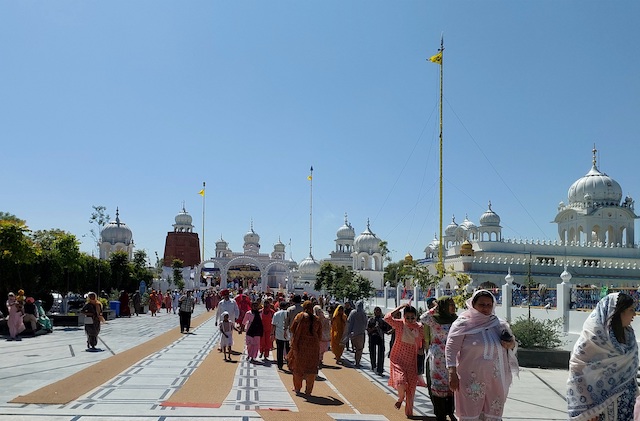
Baba Deep Singh Ji Da Khooh, a well-preserved historical structure, is linked to the revered Sikh martyr and scholar Baba Deep Singh Ji, who used this well during his time at the Takhat. The well reflects the era’s practical needs while serving as a symbolic reminder of the hardships endured by Sikh leaders. Its preservation highlights its historical significance, offering devotees a tangible connection to Baba Deep Singh Ji’s contributions to Sikhism, including his role in defending the faith.
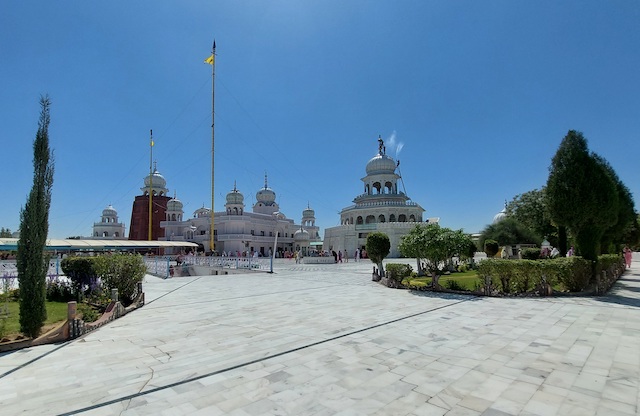
Takhat Sri Damdama Sahib remains a profound embodiment of Sikh values, blending spiritual sanctity with historical and cultural richness. Its serene architecture, inclusive design, and sacred landmarks like the Kareer trees and Baba Deep Singh Ji Da Khooh create a space where faith, history, and community converge. As a beacon of Guru Gobind Singh Ji’s legacy, it inspires devotees and visitors, fostering a sense of unity, resilience, and devotion that transcends time and borders.
- All photographs are © Sarbjit Singh Bahga
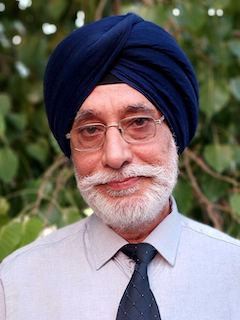
Sarbjit Bahga (b1957) is a Chandigarh-based architect, author, photo artist, and archivist. He is the Principal Architect of Bahga Design Studio LLP. Earlier, Bahga worked in the Department of Architecture, Punjab, Punjab Health Systems Corporation, and Punjab Mandi Board in various positions.
He has more than 42 years of practical experience designing various types of buildings, complexes, and large campuses. His completed works include an eclectic range of administrative, recreational, educational, medical, residential, commercial, and agricultural buildings. A monograph on his selected works titled “MODERN REGIONALISM: The Architecture of Sarbjit Bahga” has been published.
Bahga is also a keen researcher and a prolific architectural writer. He has 12 books to his credit, which include Modern Architecture in India, New Indian Homes, Le Corbusier, and Pierre Jeanneret: The Indian Architecture, Trees in Urban Habitat, Landscaping Human Habitat, New Indian Architecture -1947-2020, and Hand-Drawn Perspectives and Sketches. Bahga’s contribution to architecture has been largely recognized. He is a three-time recipient of the World Architecture Community Awards. His name has been featured in the Guinness Book of World Records for designing the “longest covered concrete corridor” in Vidya Sagar Institute of Mental Health, Amritsar.