
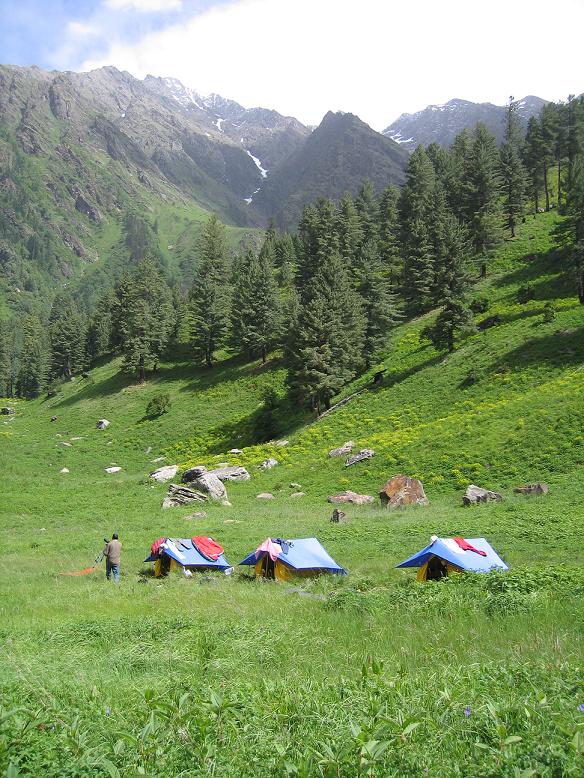
 The issues surrounding the protection of a large area (754 km2) like the unique ecosystem of the Great Himalayan National Park (GHNP) are varied and complex. One of the primary problems is convincing rural, poor village communities of the value in protecting areas which have traditionally been used as a livelihood resource. The topic has been an on-going issue for national parks and sanctuaries throughout India.
This article will share a personal perspective around working on these issues where I have been involved as an advisor to GHNP and living in a rural Kullu Valley for part of each year since 2003.
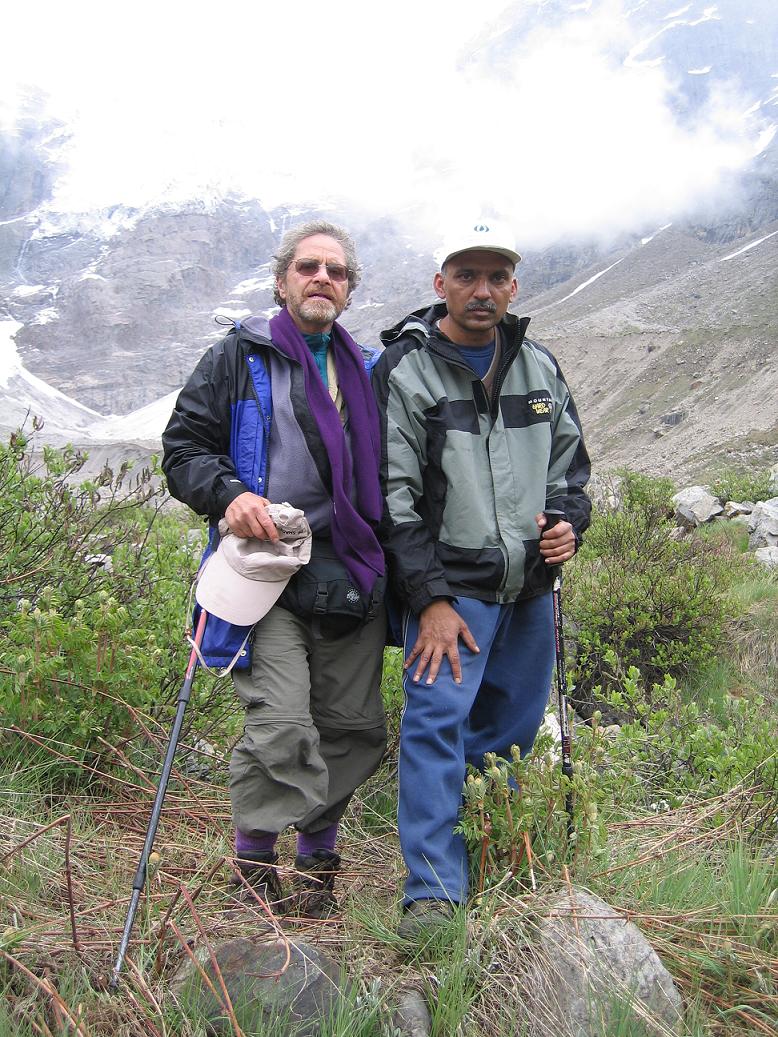 In 2000, Sanjeeva Pandey, the first director of GHNP, invited me to participate in developing strategies for sustainable livelihood activities with local communities. I spent a month trekking in the Park going through two main valleys, the Sainj and Tirthan, following their rivers. Compared to my hiking in America, there were virtually no tourists on the trails. An Ecozone adjacent to GHNP (250 km2) was also set aside as a transition area, as it was the region of traditional village communities with over 14,000 inhabitants.
The Forest Department (FD) wanted to encourage locals to become stakeholders in GHNP and programs were developed. These included helping in the establishment of a local NGO; micro-credit financing for women; training in alternative livelihoods such as working in forest nurseries (cultivating trees, shrubs, medicinal herbs), developing vermicomposting (purchased for FD nurseries); and developing local products for a wider market (rajama/red beans, apricot seed oil).
We began training young village men in trekking skills to develop jobs in ecotourism. Friends from the US and Germany came to GHNP and were very supportive giving constructive feedback so the men could learn their trade. This provided some men with more consistent work and helped develop GHNP-related livelihoods. Friends of GHNP was created to develop the Park’s extensive website as well as educational materials (posters, brochures, GHNP branding, videos). A Kullu tour company, Sunshine Himalayan Adventures, further trained the local men and marketed the Park using the internet.
These activities in the first years of the Park’s opening, helped some locals change their attitudes about GHNP and the value of nature conservation. In 2003 my wife, the writer Kamla K. Kapur, and I decided we wanted to live in India and with the help of Kullu friends we established a life for ourselves near the Park.
I continued working with GHNP and locals, trekking over 1,200 km with Sanjeeva in GHNP. But actually living in the region exposed me to the serious hardships of many poor villagers experienced. It was obvious how difficult it was for them to be concerned about protecting the Park, when getting enough to eat, having sufficient firewood to cook and stay warm, and dealing with a pervasive lack of health care were the immediate and crucial concerns. A big shift occurred when a young pregnant woman from a remote, higher village sadly died from a breach birth near our village. Talking to locals about health care, I discovered that it was not readily available with the exception of a more distant government hospital in Banjar and a small surgery clinic in Jibhi run two weekends a month by Lady Willington Hospital (LWH).
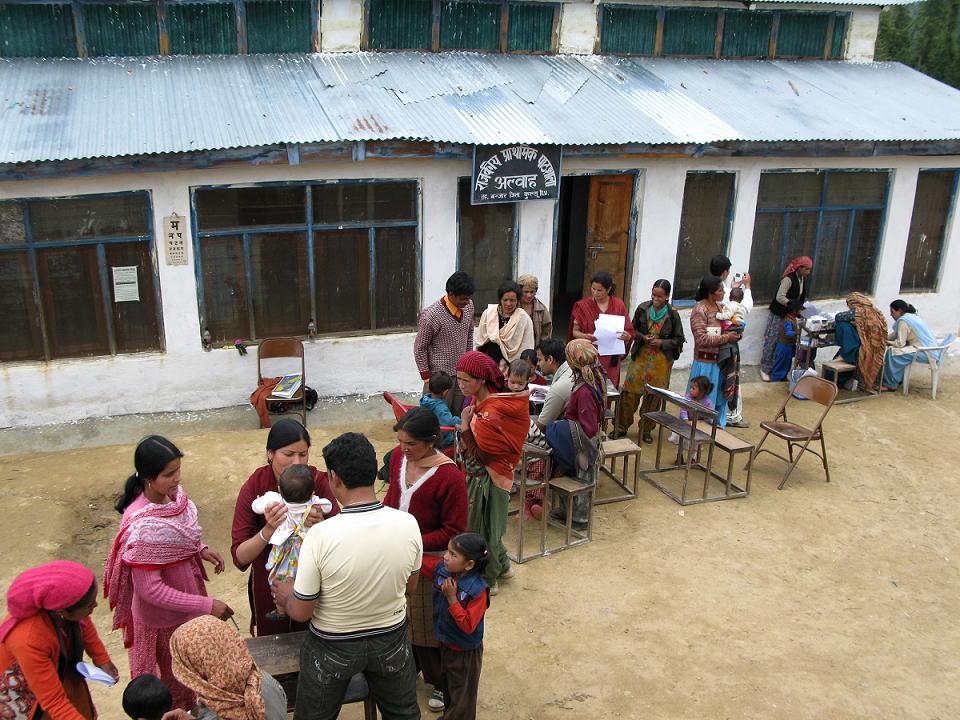 Kamla and I met Drs. Shelia and George Varghese from LWH and we started a health mela program to reach the local villages. In 2006 Avnish Katoch an NRI living in the US, contacted me about starting an NGO to help improve the quality of life and protect the environment of Himachal Pradesh. We set up My Himachal with a small group of NRIs, and it was registered as a non-profit organization in the US and later as an NGO in HP. The Kullu Health Mela project was expanded through the donations of friends in the US and has become an on-going part of MH’s activities. Working with Indian and foreign doctors, especially Drs. Jeph & Kaaren Mathias from New Zealand, data has been collected on child nutrition and malnutrition. Local women were also trained as nutritional workers for their villages. Our surveys have shown high percentages of persistent childhood malnutrition with all the troubling impacts on physical and cognitive development.
My Himachal has expanded its health programs in the past two years to include support for local nature conservation and education. MH has also brought in Indian and foreign student volunteers who have worked on ecotourism development and job creation, including MBA students at the SP Jain Institute of Management and Research (Mumbai). We are expanding our network of foreign advisors in national park and community development, and rural economics. We also interact with other environmental NGOs on watershed conservation and ecotourism issues. My Himchal has taken over the responsibility for maintaining the GHNP website and is currently updating it as a prime source of Park information. With the recent notification of GHNP’s placement on the UNESCO World Heritage Site Tentative List, there is even more MH focus on support for the Park.
 Aware of the enormous impacts of climate change and global warming, MH is gearing up for projects which will use our ground teams to survey and interact with rural communities to better understand their preparedness for all the enormous impacts that will occur in Himalayan regions over the next 5-10 years. These include glacial recession and water availability (for farming irrigation, watermills, hydel projects, etc.), variability in monsoon arrival and intensity, flooding and drought, shifts in the growing ranges of agricultural product (e.g. apples and other important HP fruit), increasing forest fires, and both insect pest and disease vectors moving into warming, higher elevations. Many of these problems have already begun in HP.
The ground teams My Himachal have developed lay the foundation for us to collaborate with villagers, friends, and associates in different areas of HP. This will further our goal to both uplift the people and protect the unique Himalayan environment of this beautiful state.
For more information:
My Himachal: www.myhimachal.com
GHNP: www.greathimalayannationalpark.com
©2009, Payson R. Stevens.
Payson R. Stevens is an American trained in the earth sciences and art. For over 25 years he was involved with working with NASA, NOAA, and the USGS on global change issues. He lives half the year, with his Indian wife, in a remote area of the Kullu Valley, where he paints, writes, and does seva work. More of his artwork can be seen at www.energylandscapes.com
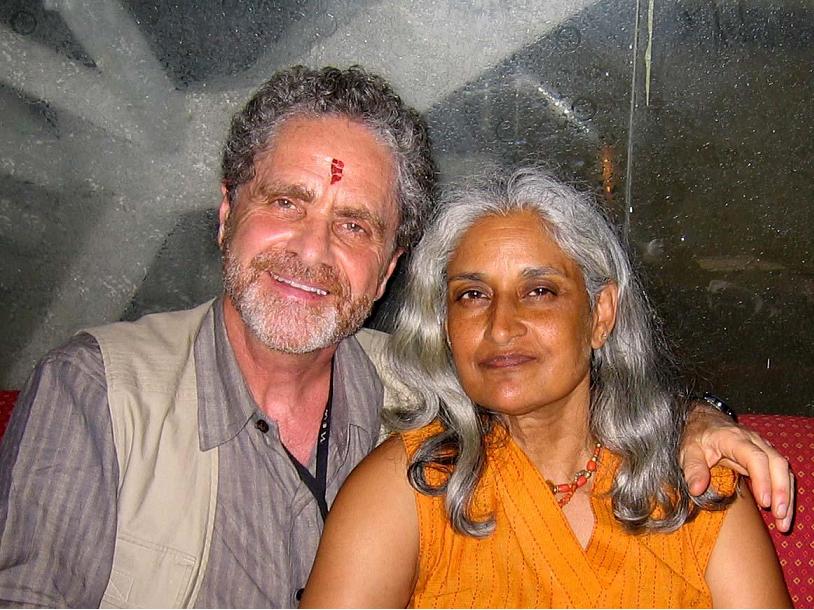 The author and his wife, Kamla K. Kapur (www.kamlakkapur.com)

Earth Scientist, Author, Hiker and Traveler, Payson is a trained earth scientist and founder of InterNetwork, Inc and InterNetwork Media, Inc. Stevens has been an advisor to Great Himalayan National Park since 2000.

I plan to and will luv to work for the issues concerned. Have been to the area and am concerned about its opening to tourists who bring in loads of consumables with them which is trashed there. Am also concerned about growing popularity which might ruin the area in future.
Regarding to Responsible Tourism Alliance (Track of the Tiger company), Could you please send me the email address or the contact that I can find out some more information about this