

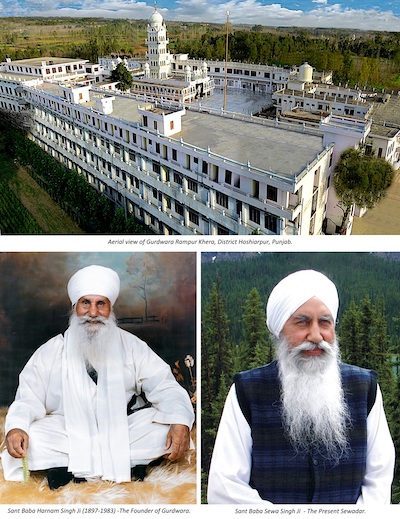
Nestled in the serene Doaba region of Punjab, Gurdwara Rampur Khera stands as a vibrant centre of Sikh spirituality and humanitarian service. Located in the Gondpur area near Garhdiwala, approximately 28 km from Hoshiarpur towards Dasuya on the main highway, it welcomes thousands of devotees annually. What was once a scary, empty mound is now a beautiful Gurdwara with shining white marble buildings, large domes, a tall Nishan Sahib flag, and many facilities for visitors.
Origin and History
The story of Gurdwara Rampur Khera Sahib is about God’s command, hard prayer, and a wonderful change. Before 1949, this place was a barren mound called Theh. It was covered with thick banyan and peepal trees, full of poisonous snakes, scorpions, and wild animals. Local people were afraid of it. They thought ghosts, evil spirits, and witches lived there. Sunlight could not reach inside the jungle. No one dared to live there, and anyone who went there ran away in fear.
The big change came through Sant Baba Harnam Singh Ji (born 1897 in Dhugga Kalan village, Hoshiarpur). He lost his parents when he was young. From childhood, he loved Gurbani. He served as a Udasi sadhu for many years but always followed the true path of the Gurus. After long hours of Naam Simran and divine visions, he received a clear hukam (order) from Guru Gobind Singh Ji in deep meditation. Guru Ji told him, “Do not go back to your village. Go to a poor, empty land 4–5 miles north.” It was exactly the scary mound he had seen in his vision, with large trees. Guru Ji said, “Sit there, and God will take care of everything.”
In 1949, Baba Ji followed the order and came to the place. He made a small mud cave (kuchee gufaa) for meditation. For 40 days, he lived without food or water, only chanting the Mool Mantar. It proved the power of Gurbani. He removed poisonous creatures with prayer and Ardaas. He started langar, gave Amrit, and began teaching Gurmat. In a short span of time, the feared land became a holy place.
After installing Sri Guru Granth Sahib Ji, it was named Gurdwara Rampur Khera Sahib (“Rampur” means the Lord who is everywhere). Baba Ji’s life is written in the book Se Kinehiya? (What Kind of Person Was He?). He left this world in 1983 and is remembered as a true Gursikh and shaheed of the Dharam Yudh Morcha. His spiritual successor, Sant Baba Sewa Singh Ji, continues the same work of selfless service today.
Significance in Sikhism
Gurdwara Rampur Khera Sahib is a living example of the Guru’s teachings. It proves the Gurbani line: “Jithai Naam Japiai Prabh Piaare, Se Asthal Soin Chaubaare” (Where the Lord’s Name is chanted with love, that place becomes like a golden palace.) It is a Tap Asthan (place of deep prayer) and a strong centre for Naam Simran and the spread of Gurmat.
The change from a cursed place to a holy shrine shows that true devotion can make any land pure. It strengthens our faith in Sri Guru Granth Sahib Ji as the eternal Guru. Every week, Naam Abhyas Smagams are held here, and seekers from India and abroad come for spiritual guidance.
Campus and Architecture
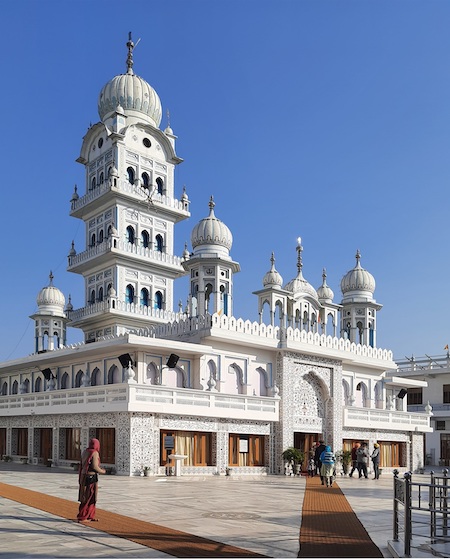
Gurdwara Rampur Khera Sahib stands as a magnificent testament to Sikh architectural vision. Its vast campus unfolds like a living embrace of faith and community. At the very heart of this serene complex lies a sprawling central courtyard paved in gleaming white marble. It stretches out under the open sky, drawing every building around it into a harmonious whole. This open space is far more than an empty expanse — it serves as the pulsing core of the entire Gurdwara. It effortlessly accommodates thousands of devotees who gather during Gurpurabs and special occasions, allowing them to sit together in equality.
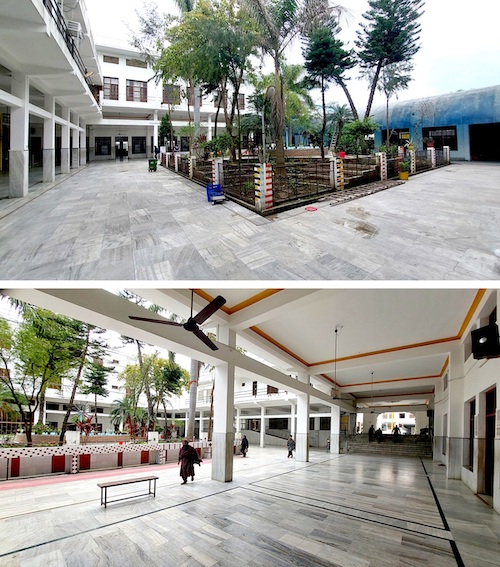
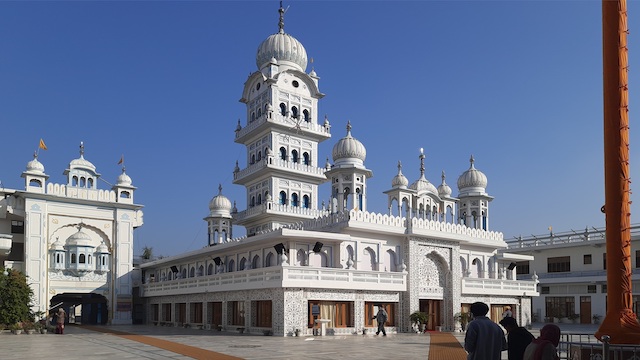
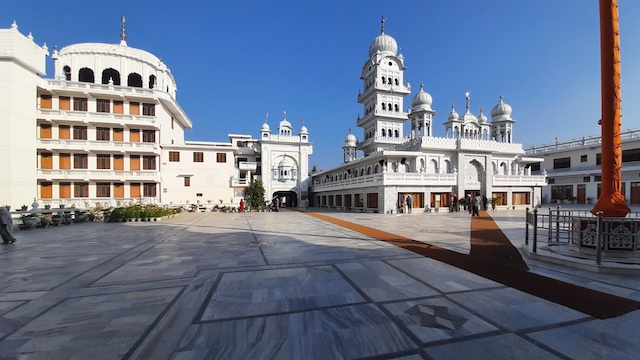
The courtyard’s generous proportions also flood the surrounding structures with natural light and gentle breezes. What could have been enclosed corridors become bright, airy spaces where sunlight dances across intricate walls, and fresh air flows freely through arched windows and balconies. From any corner of the campus, one can step directly into this shared heart, moving seamlessly from the grand prayer hall with its soaring central tower, to the separate Langar Hall, to the multi-storey sarai blocks that welcome pilgrims, or toward the tall Nishan Sahib that rises proudly at one edge. Its bright yellow flag flutters as a constant reminder of the Guru’s eternal presence.
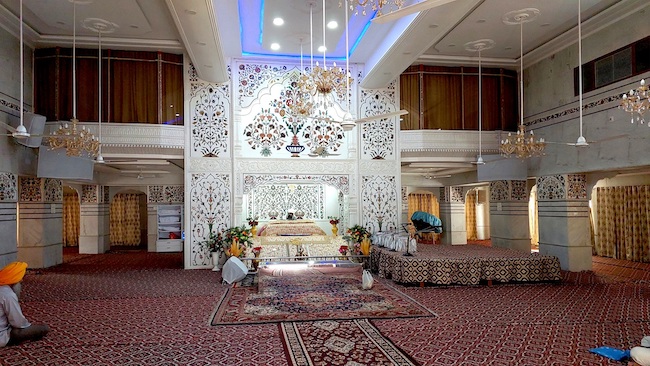
Architecturally, the entire complex speaks the pure language of Sikh tradition while embracing a graceful modern scale. Every surface gleams with white marble and fine plaster, symbolising the simplicity and spiritual purity at the heart of Sikhism. The main Darbar Sahib rises with a majestic multi-tiered tower crowned by a lotus-finial dome, flanked by smaller onion-shaped domes and delicate chhatris. These elements echo the historic gurdwaras of Amritsar and Anandpur Sahib yet feel fresh and inviting in their precise craftsmanship. Ornate marble jaali screens and floral carvings adorn the façades, filtering soft light into the halls while allowing air to circulate and creating a beautiful balance between inner peace and outward openness.
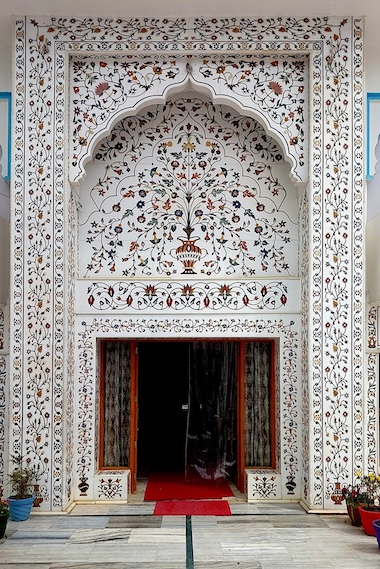
The layout flows freely along all axes. Wherever you stand — whether on the ground level among the sangat or on the upper balconies overlooking the courtyard — you remain visually and spiritually connected to everyone else. Around the edges, the buildings nestle comfortably amid the surrounding green fields and trees, as though the countryside itself has been gently invited inside.
In this way, the courtyard does not merely connect spaces; it unites light, air, movement, and people into one living, breathing expression of Sikh ideals — open, equal, and ever-welcoming.
Importance as a Pilgrimage Centre
For Sikhs, this Gurdwara is a special place to visit for peace, healing through Naam, and connection with the Guru. People come year-round for darshan, kirtan, and Guru ka Langar. The biggest gatherings are on Baba Ji’s Barsi (death anniversary) and special Smagams.
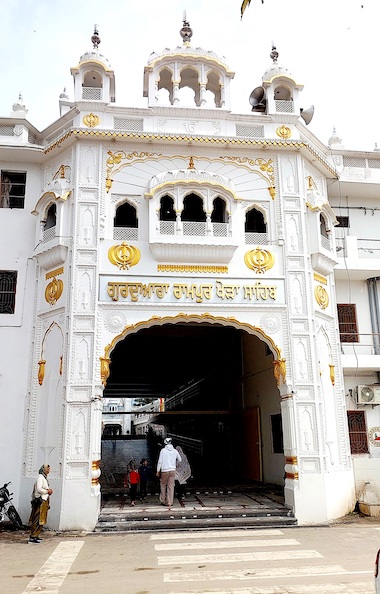
The tall Nishan Sahib can be seen from the highway and gives hope to travellers. Unlike historic Gurdwaras linked to the ten Gurus, its importance lies in the life of a modern saint who lived the Guru’s path in the 20th century. It makes it very close to the hearts of today’s Sikhs.
A Hub for Religious Tourism
Gurdwara Rampur Khera Sahib is also an important centre for religious tourism in Punjab. It offers many free services that help families, patients and students, including free medical care through a permanent eye hospital and annual eye camps for cataract operations and other treatments. The Gurdwara also supports education and social services by aiding poor students. In addition, it offers community support through a nursing home, free allopathic and homoeopathic clinics, and the construction of roads and bridges in the local area. All these initiatives are made possible through the generous contributions and selfless seva of the Sangat.
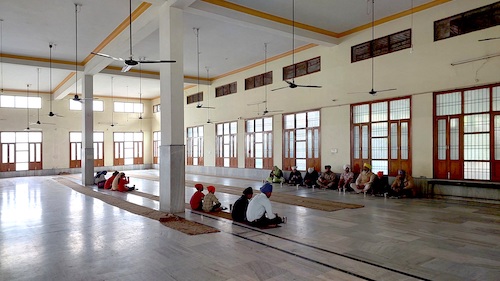
The calm atmosphere and free stay make it a perfect stop for people visiting other Gurdwaras in Punjab. Gurdwara Rampur Khera Sahib is not just a place of worship — it is a living miracle. It turned fear and darkness into light, faith and service. Whether you come for spiritual peace, free medical help or simply a simple meal of Guru ka Langar, this holy place in Hoshiarpur welcomes everyone with open arms. As religious tourism grows in Punjab, Rampur Khera Sahib shines as a perfect example of how devotion and selfless service keep the Guru’s message alive.
Photo Credits: Sarbjit Singh Bahga
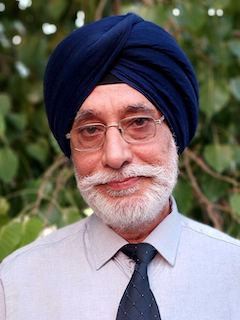
Sarbjit Bahga (b1957) is a Chandigarh-based architect, author, photo artist, and archivist. He is the Principal Architect of Bahga Design Studio LLP. Earlier, Bahga worked in the Department of Architecture, Punjab, Punjab Health Systems Corporation, and Punjab Mandi Board in various positions.
He has more than 42 years of practical experience designing various types of buildings, complexes, and large campuses. His completed works include an eclectic range of administrative, recreational, educational, medical, residential, commercial, and agricultural buildings. A monograph on his selected works titled “MODERN REGIONALISM: The Architecture of Sarbjit Bahga” has been published.
Bahga is also a keen researcher and a prolific architectural writer. He has 12 books to his credit, which include Modern Architecture in India, New Indian Homes, Le Corbusier, and Pierre Jeanneret: The Indian Architecture, Trees in Urban Habitat, Landscaping Human Habitat, New Indian Architecture -1947-2020, and Hand-Drawn Perspectives and Sketches. Bahga’s contribution to architecture has been largely recognized. He is a three-time recipient of the World Architecture Community Awards. His name has been featured in the Guinness Book of World Records for designing the “longest covered concrete corridor” in Vidya Sagar Institute of Mental Health, Amritsar.