
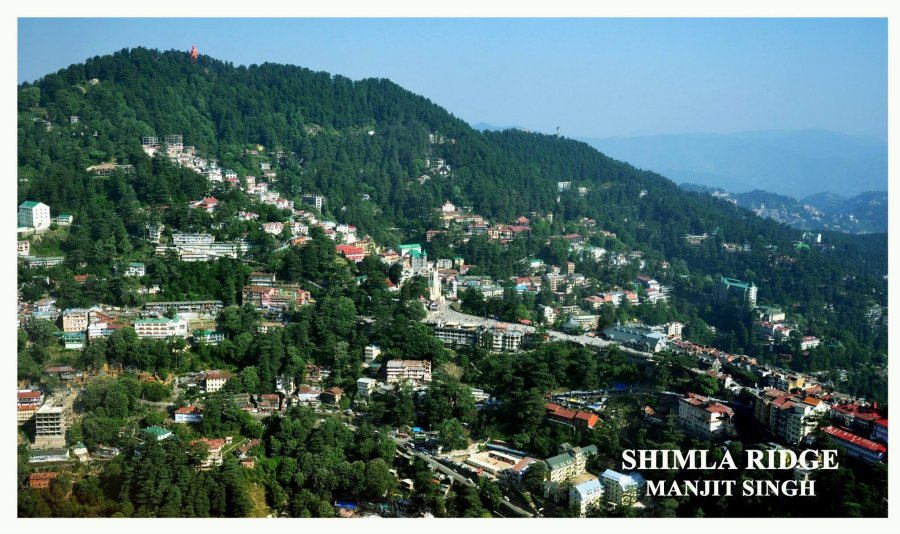
‘I stay in Kelston’ the guy said. I didn’t know where in Shimla was this locality. But I guessed it to have derived its name from some Raj era house which might or might not exist today. I was right as I found later that ‘Kelston’ used to be one of the finest houses built in late 19th century on the Elysium Hill, one of seven hills that constituted Shimla or Simla as it was spelled in colonial times. Simla was the summer capital of British India; in fact the government stayed here for much of the year and the Viceroy with help of his entire beuraucracy governed India from these sylvan heights. It was a totally British town with serene English cottages and their gardens, the mall, theatre, churches and shops providing the latest fashion clothing and accessories. The ‘Queen of Hill’ was maintained clean and orderly in an unscrupulous manner as was expected for the seat of most powerful. The stamp of Raj has still not left the place and many Raj era buildings give the town a unique heritage identity that attract tourists from all over the country and world. Many of the important localities of Shimla derive their names from British colonial personalities and houses.

As one approaches Shimla from the west, first place encountered is ‘Boileauganj’ that derives its name from Major Boileau of the Royal Engineers who was the architect of Christ Church on the Ridge. On the Mall Road, before Scandal point is still popular ‘Davico restaurant’ that belonged to Davico brothers before independence. Towards the end of the market is the ‘Combermere Bridge’ that was originally built by Lord Combermere then Commander-in-Chief. Combermere Hotel, a prime property abuts the bridge. Just beyond is ‘Kelvin Grove’ which is an assortment of Army Officers accommodation now but was a single house once. Further down the road is the ‘Khyber Pass’ – a gully with high stone walls on both sides – a reminder of the beating that British took in Afghanistan. It has Himachal Chief Ministers official residence ‘Oak Over’ on the valley side. Just across Oakover, is the locality called ‘Portmore’ which is presently a Government Girls School. As one continues walking towards ‘Chhotta Shimla’ (Called so because it held the Punjab Government secretariat in contrast to proper Shimla which had the Government of India secretariat) one comes across ‘Benmore’ It too is a locality now with a number of government offices, hotels and Haryana government circuit house. Just beyond Chhotta Shimla is the locality called ‘Strawberry Hill’ occupied by Lord Dalhousie in 1849.
Snowdon, the residence of Lord Kitchener – another Commander-in-Chief has metamorphosed into Indira Gandhi Medical College – the premier hospital of Himachal. Like Snowdon, locals still use original names of Lady Reading and Rippon hospitals. ‘Cemetry’ is another residential locality that derives its name from the British graveyard in that area. Further north of Shimla is the beautiful holiday destination of Raj – Mashobra. ‘Fairlawn’ and ‘Craignano’ were two of the best houses that are now names of HP Administration Academy and a picnic spot.
These names of localities used in day to day life of a Shimla resident keep the charm of the erstwhile ‘Queen of the Hills’ still alive. Many of the heritage houses have either been gutted in fire or demolished for ‘development’ or housing. But one thing is certain that Shimla will lose its essence once all of them are lost.

Dr Vikas Thakur is a Veterinary Pathologist who has worked extensively all over India, especially in the Himalayan region. A keen observer and thinker, he is much interested in local history, societal issues , nature and anything that arouses curiosity. After spending 4 years in Kashmir, he came out with his experiences and understandings of this most interesting region in the form of a critically acclaimed book -‘Pax Kashmir’ this year. A native of Shimla, he is currently based in Chandigarh. Besides reading and writing, he likes to spend his time Riding and Golfing.
He is currently – Executive Committee Member, Equine Welfare and Medication Control, Equestrian Federation of India.

Nice, nostalgic read.
Very Informative article! It brings out extensive reminiscent of the period of the colonization. Thank you for sharing, Sir!
Very interesting and informative account of Shimla, that can make a tourist’s visit more meaningful.
Loved this! Reading about Kelston, Boileauganj, Snowdon and all the old Simla names brought the colonial charm alive. Beautifully penned. Shimla’s heritage truly lives in these stories