
The World Before Breakfast
Most days begin innocently enough. You wake up, stretch, walk to the kitchen, and glance at your phone or the newspaper. Within seconds, the entire planet seems determined to update you.
A war somewhere. A bombing elsewhere. A political scandal. An accident. Someone switching political parties with the enthusiasm of a person changing bus routes — though bus routes are usually more predictable.
Turn on a television news channel and behold a modern miracle: everyone is talking, but nobody is listening. The anchor explains something urgently. Five panellists explain why the anchor is wrong. Someone “live from London” bravely attempts to speak while everyone else continues over them.
After ten minutes, you realise two things: first, the issue is extremely serious. Second, nobody seems entirely sure what the issue was when the discussion began.
Modern life has become wonderfully efficient. Before finishing breakfast, you may already have encountered three global crises and at least one expert predicting the collapse of civilisation next week.
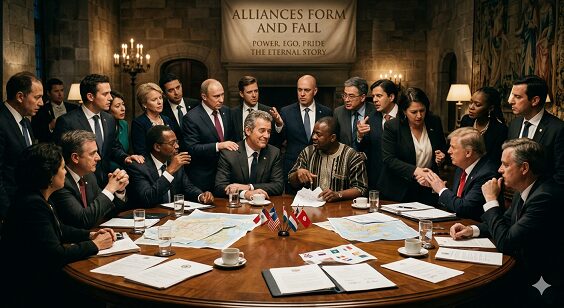
The Playground of Global Power
Understanding geopolitics today is like joining a television series in its fourth season. You recognise some characters, vaguely remember past arguments, but everyone else seems to know the complicated backstory.
Countries form alliances, break alliances, and occasionally rediscover alliances they had forgotten about. Behind the polished speeches lies an old human story — power, ego, pride, and, occasionally, a generous dose of stubbornness.
Sometimes international politics resembles a playground argument: several powerful adults guarding their favourite toys while insisting someone else started the fight. History lessons often work like gym memberships: everyone agrees they’re useful, but not everyone actually uses them.
From a distance, the global stage sometimes looks like a serious chess match. The only complication: the pieces are ordinary people, continuing their lives while powerful players debate their next move. And quietly sitting in the background: nuclear weapons. Like storing fireworks in the kitchen and carrying on dinner as usual.
Careers, Borders, and the Future That Keeps Changing
For young people planning their future, the world increasingly resembles a board game in which the rules keep changing — usually just after you’ve memorised the previous rulebook.
A generation ago, the path was straightforward: study hard, get a good job, maybe go abroad. Parents proudly told neighbours, “Our son is in America,” and respect followed.
Today, the journey is far less predictable. Education abroad is extraordinarily expensive. Families spend enormous sums sending children to universities in the US, Canada, the UK, or Europe, while the rupee quietly declines, making dreams even costlier.
And then reality hits: governments protect local jobs, economies slow down, and immigration becomes a political debate. You may finally get the degree and even the job — only to discover part of the world is still arguing whether you should have been invited at all.
Technology complicates things further. AI quietly learns parts of your job faster, cheaper, and without coffee breaks. Careers increasingly resemble Google Maps calmly announcing: “Route recalculating.”
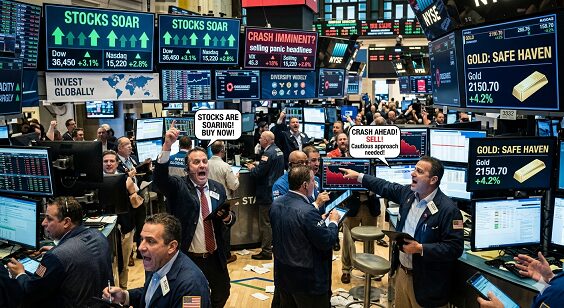
Money, Markets, and Mild Financial Panic
If geopolitics feels confusing, the financial world offers equal entertainment.
Turn on a financial channel and you’ll encounter an impressive collection of experts: stocks will soar, a crash is imminent, gold is safe, invest globally, diversify widely. Some urge caution; others see opportunity everywhere. After fifteen minutes, the average viewer learns one crucial thing: confidence is abundant, clarity less so. Three months later, depending on market movements, many will be confidently explaining the exact opposite.
Saving money used to be simple. My marriage plans seemed respectable when fixed deposits paid fourteen percent interest. Those were glorious days. Today, fixed deposits offer six percent — growth with the enthusiasm of a teenager reluctantly tidying their room.
Financial advisers now explain that to retire comfortably, you must accumulate ten crores, build multiple income streams, invest globally, start a side business, and invent the next big startup — preferably before fifty. If that doesn’t cause anxiety, it’s hard to imagine what will.
Meanwhile, inequality has become striking. Somewhere, a twenty-one-year-old becomes a billionaire thanks to a startup. In the same city, another person calculates whether next year’s rent increase will require selling a kidney. The modern economy offers enormous opportunities — and just as many reasons to feel slightly puzzled.
Technology, Convenience, and the Art of Buying Things We Didn’t Know We Needed
Humans have invented astonishing technology: satellites orbit Earth, robots assist surgeons, and AI writes essays, composes music, and answers complicated questions.
Unfortunately, we often use these powerful devices mainly for scrolling endlessly, arguing with strangers, and watching videos of animals doing unexpected things.
Modern advertising has developed a remarkable skill: convincing us that a product we had never heard of yesterday is absolutely essential today. Online shopping has made life wonderfully convenient. You order three small items in one purchase. A few days later, three packages arrive from three different vendors, each wrapped in generous layers of cardboard, plastic, and bubble wrap. By the time you finish opening everything, the packaging could probably protect a small satellite during re-entry.
Convenience is marvellous. But sometimes it arrives wearing an alarming amount of plastic.
Loneliness, Longer Lives, and the Human Mind
Humans today live longer than ever. Medicine is better, life expectancy is higher, and many diseases that frightened earlier generations are now manageable.
In theory, this should make life feel secure. In practice, modern life has produced a curious paradox: people are more connected than ever — and yet lonelier than ever. You can have five thousand followers online and still struggle to find someone to call when the internet stops working.
Families are smaller. Children move to different cities or countries. Parents grow older in quieter homes. Populations in many countries are ageing rapidly. Mental health challenges — depression, anxiety, Alzheimer’s — are becoming more visible. Humans have become excellent at extending life. We are still figuring out how to make those longer lives feel a little less lonely.
The Planet Clears Its Throat
Meanwhile, the planet occasionally clears its throat: floods here, earthquakes, heat waves there, wildfires somewhere else. Nature is patient. But even patience eventually sends reminders.
The planet has a way of showing urgency without a calendar. Storms surge, rivers rise, and fires rage, each event a note in a relentless symphony. Glaciers retreat silently, forests vanish quietly, and species disappear before we even notice. Sometimes it feels like a gentle cough; other times, a loud bang — and humanity, despite all its cleverness, must pause and listen.
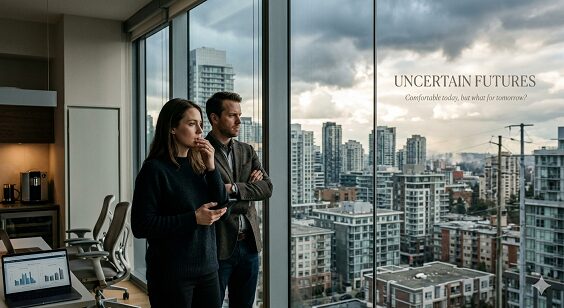
A Moment of Honest Reflection
With all this happening, it is no wonder many people feel anxious about the future.
And yet, life today is far more comfortable than for previous generations. We have better medicine, technology, transportation, and access to information. Still, people worry. Couples wonder whether to bring children into an uncertain world. Young professionals wonder whether their careers will survive. Retirees worry whether their savings will last long enough.
Despite extraordinary convenience, many of us ask the same uneasy question:
Is the world getting better — or simply more complicated?
A Slightly Calmer Ending
History offers a reminder: it has never looked calm while it was happening. Wars, crises, and dramatic change have always existed, and yet humanity somehow kept moving forward.
Perhaps the difference today is not that the world is more chaotic — but that we are more aware of it, more often, and before breakfast.
Watching hours of television debates about the end of the world has never actually prevented it. But small, steady actions in everyday life often make more difference than we realise.
What we can do is focus on what we can control:
- Simplify life
- Buy less unnecessary stuff
- Reduce plastic
- Plant trees
- Spend less time scrolling and arguing online
- Spend more time with real people
- Be positive, hopeful, and help those in need
- Meditate, reflect, and trust that someone up there is taking care
None of these will solve global crises overnight. But they might make our own corner of the world a little calmer, a little kinder, and a little more manageable. And sometimes, that is where real change quietly begins.
Occasionally, switch off the news and finish that cup of tea in peace. The world will still be there afterwards — and perhaps, if we are a little more thoughtful in how we live, it may not feel quite as overwhelming.

Iti Mattoo, retired after 30 years in the IT industry, now enjoying her creative pursuits.

Well captured Iti Mattoo the dilemmas of our times.