
Sunirmal Chatterjee (15.10.1929 – 23.10.1999) stands as a pivotal figure in the mid-20th-century Indian art landscape, embodying a rare fusion of creative versatility, pedagogical passion, and cultural introspection. Born in Patna, Chatterjee’s life unfolded against the backdrop of post-independence India’s cultural renaissance, a period marked by profound social transformations and artistic exploration. Primarily based in Chandigarh, he emerged not only as a prolific artist and graphic designer but also as an inspirational educator whose influence extended to generations of students at prestigious institutions. His oeuvre, spanning from the 1950s to the late 1990s, captured the serene essence of a bygone era—green landscapes, everyday lives, and historical motifs—while his teaching philosophy emphasised sincerity, experimentation, and mutual learning. Affectionately known as “dada” among his peers and pupils, Chatterjee’s legacy endures through posthumous retrospectives, tributes, and the ongoing vibrancy of Chandigarh’s art scene. His professional contributions paint a vivid portrait of a man whose art and mentorship were inextricably linked, leaving an indelible mark on contemporary Indian art.
Early Life and Education
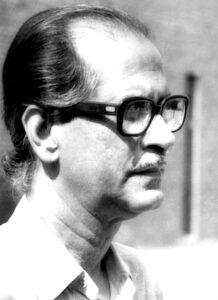
Sunirmal Chatterjee was born and raised in Patna, Bihar, where he completed his schooling. Driven by his lifelong passion for art, he moved to Calcutta (now Kolkata) in 1945 to pursue higher education. He enrolled at the Government College of Art and Craft in Calcutta and graduated with a Gold Medal.
Upon graduating, Chatterjee and two friends rented a modest house in the city and launched their professional careers in commercial art, focusing on poster and advertising design. With his meagre earnings, he quickly learned to support himself.
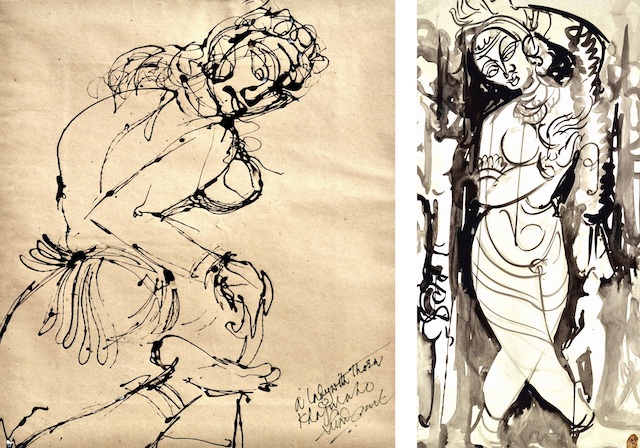
Chatterjee’s formative years coincided with India’s transition to independence, a time when the nation was redefining its cultural identity. Ever since his childhood, he had been immersed in an environment rich in artistic potential. Growing up amid the era’s cultural shifts, he developed a keen eye for observation, drawing inspiration from ancient Indian heritage and the everyday rhythms of life. His early influences included the intricate sculptures of Khajuraho, which he later reinterpreted in modern sketches and portraits. This blending of traditional motifs with contemporary techniques would become a defining characteristic of his work. Chatterjee’s career trajectory suggests a solid foundation in the fine arts, likely developed through self-directed study and immersion in India’s burgeoning post-colonial art movements. By the 1950s, he had begun producing works that reflected his travels and observations of society, marking the start of a prolific artistic journey.
Career as an Educator
In 1961, Chatterjee relocated to Mussoorie and accepted a position as an art teacher at a local school, where he taught for two years. In 1963, he transitioned to the Government College of Art in Shimla, beginning his tenure as a professor of art.
When the college later moved to its new premises in Sector 10, Chandigarh, Professor Chatterjee also relocated there. He served at the institution until 1967, after which he joined the faculty at the Chandigarh College of Architecture.
During this period, Chatterjee received a scholarship from the Government of India to study Graphic Arts in Yugoslavia, where he pursued advanced training from 1964 to 1965.
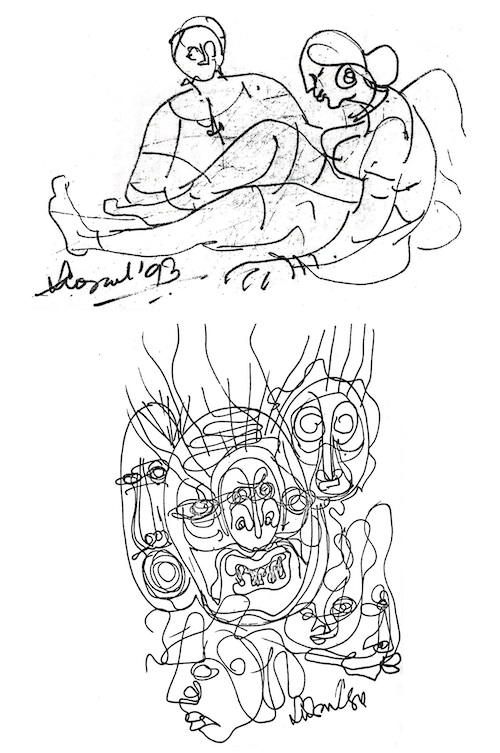
Chatterjee’s professional life was profoundly shaped by his role as an educator, serving as a professor at two cornerstone institutions in Chandigarh: the Government College of Art in Sector 10 and the Chandigarh College of Architecture in Sector 12. At the College of Architecture, he was renowned for his gestural sketches, which gained prominence around 1974 and were used to illustrate architectural publications, demonstrating his ability to bridge the gap between art and design.
His teaching style was characterised by patience, empathy, and innovation; he tailored his methods to each student’s pace, often leading by example through live demonstrations. A notable anecdote from the mid-1960s highlights his dedication: when students shied away from wood-carving classes, Chatterjee worked solitarily on a piece until his perseverance inspired them to participate.
Chatterjee viewed his students not merely as learners but as collaborators in a shared creative process, dedicating many of his works to them and fostering lifelong bonds. As a result, thousands of his former students, including the author, still remember him fondly whenever they pick up a pencil to draw on paper. Colleagues, such as Prof Rajnish Wattas of the Chandigarh College of Architecture, recalled him as always “ready to paint,” underscoring his infectious enthusiasm. Even principals like D.S. Kapoor praised his inspirational role, noting that Chatterjee’s emotional investment—his sharing in students’ struggles and triumphs—created a nurturing environment that extended beyond the classroom.
Dr S.S. Bhatti, the former Principal of the Chandigarh College of Architecture, holds him in high esteem. He says, “Prof Sunirmal Chatterjee was my colleague for several years. He was one of the best art teachers. As a polite and humble human being, and a very versatile professional, he could easily adapt himself to the individual student’s potentialities to develop them in line with their aspirations.”
Chatterjee was always positive. He could find something good in any bad situation. His daughter, Shakuntla Mukherjee, once shared a fun story from the late 1960s. One day at the Chandigarh College of Architecture, instead of going to the lecture hall, Chatterjee invited his students to his office for tea and samosas. The students asked, “Sir, what’s the occasion?” He explained that a thief had broken into his room the night before and stolen all his drawings, paintings, and sketches. The surprised students said, “Sir, why celebrate that?” Chatterjee smiled and replied, “I’m happy because it means someone really loves my work and wants it as their own treasure.” He was that kind of positive person.
Artistic Style and Works
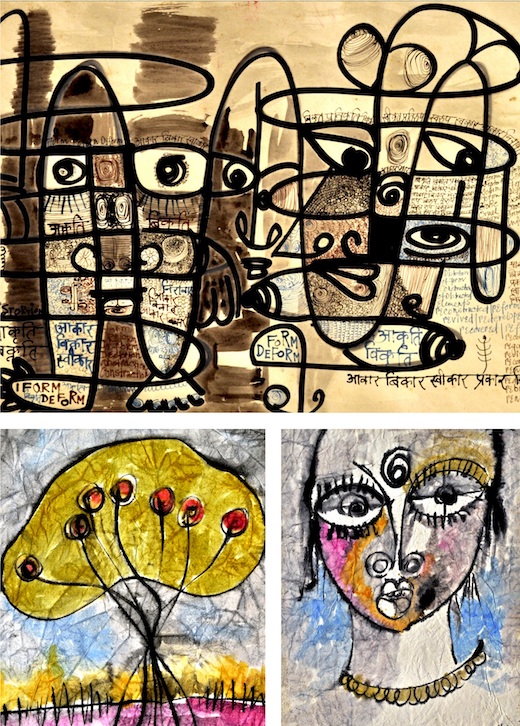
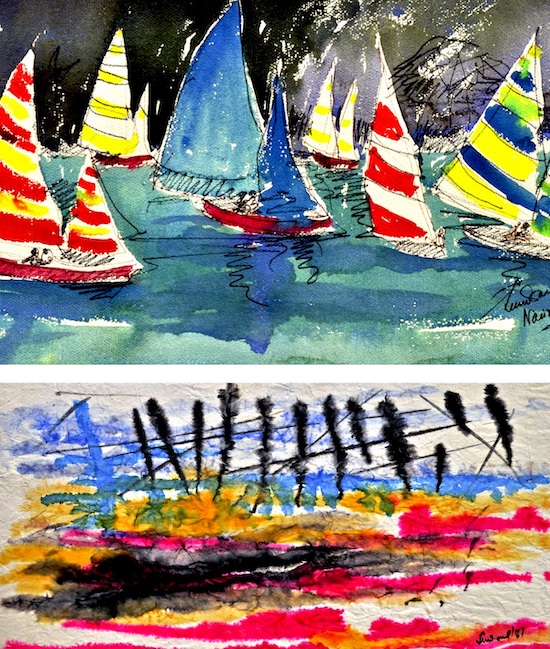
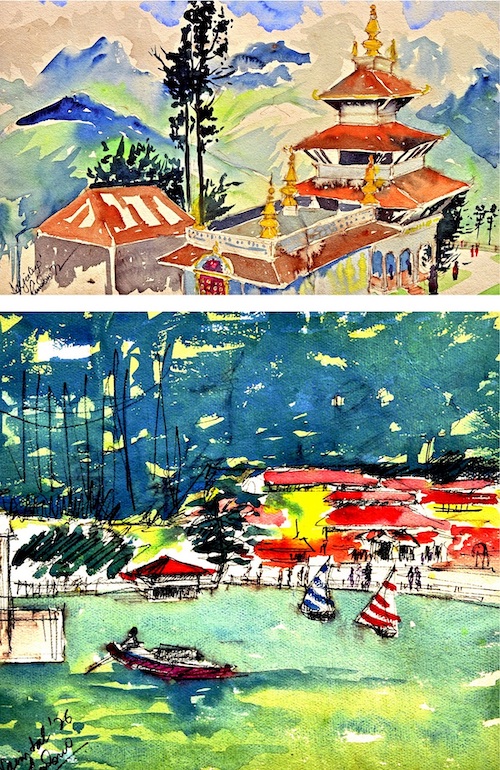
Chatterjee’s artistic practice was a testament to his experimental spirit, refusing to be confined to any single style or medium. His works, produced from 1952 to 1999, often depicted the lifestyles and landscapes of 1950s India, evoking a sense of nostalgia for a greener, more tranquil era, one devoid of modern intrusions like heavy traffic. Themes ranged from serene portrayals of places like Nainital, Himachal Pradesh, and Goa, captured during student tours, to intimate portraits of ordinary people in traditional attire, as well as gardens and homes. A significant series drew from the erotic and architectural sculptures of Khajuraho, blending historical reverence with personal interpretation to explore human forms and cultural narratives. Chatterjee’s philosophy posited art as an “eternal spring” of creativity, a guiding force that balanced restless energy with eternal peace. His pieces frequently delved into abstract concepts, such as positive and negative forces in life, symbolised through intricate paper cuts resembling fish forms or themes like Adam and Eve. This thematic depth was matched by his mastery of scale, excelling in both large murals and intimate small-format works.
Mediums and Techniques
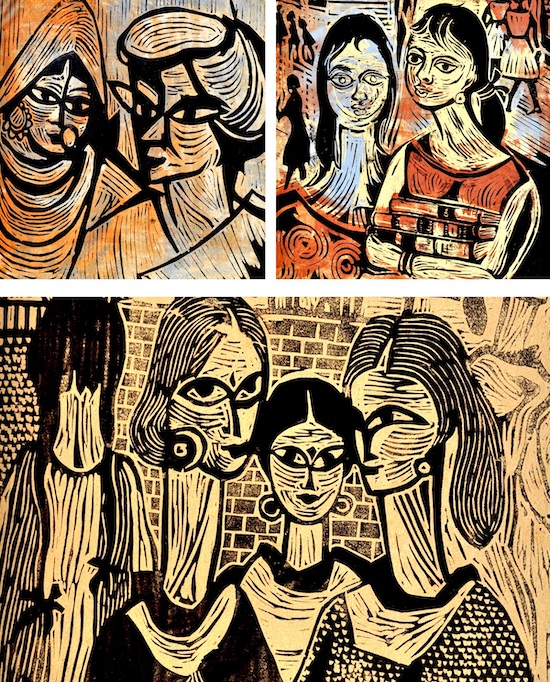
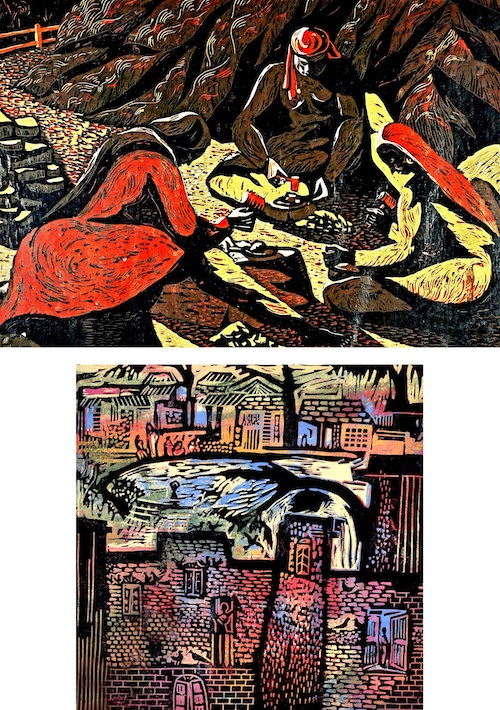
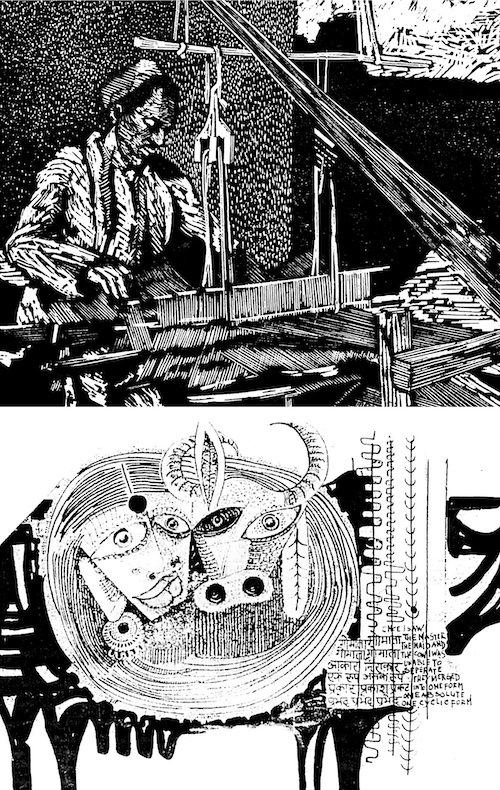
Versatility defined Chatterjee’s technical approach, as he explored an expansive array of mediums, including watercolours on handmade paper, acrylics, oils, sketches, digital prints, graphic prints (such as lino cuts of his Kolkata village and woodcuts like “Manali Village”), murals, collages, photographs, paper cuts, clay figurines, and even experimental coal tar forms. His printmaking techniques—encompassing etching, line-and-wash on crushed paper, and calligraphy in black ink—evoked raw emotions and daily life scenes with precision and innovation. This eclectic experimentation reflected his belief in creativity as a boundless flow, allowing him to translate observations from travels and societal interactions into multifaceted expressions. Whether through realistic depictions or abstract compositions, Chatterjee’s works maintained a harmonious balance, underscoring his commitment to authenticity and exploration.
Exhibitions and Recognition
Chatterjee’s contributions were honoured through several posthumous retrospectives that celebrated his dual legacy as both an artist and an educator. In 2011, a major exhibition titled “Retrospective of Sunirmal Chatterjee” at the Government Museum and Art Gallery in Chandigarh featured approximately 180 pieces, curated by D.S. Kapoor, then Principal of the Government College of Art. Inaugurated on Teacher’s Day, it drew a packed audience of former students and admirers, serving as a poignant tribute. In 2019, to mark his 90th birthday, another retrospective at the same venue displayed over 70 works from 1952 to 1999, organised by his daughter, Shakuntla Mukherjee. The event included the launch of a book, Mere Baba Mera Abhimaan, compiling his artworks alongside poetry-like expressions, and a workshop where 25 young artists created paintings and inverted art, extending his educational ethos. During his lifetime, Chatterjee received the Lifetime Achievement Award from the Lalit Kala Akademi in 1999, recognising his enduring impact on Indian art. His works are part of collections at institutions like the Government Museum and Art Gallery, where they stand alongside those of other luminaries.
Influence and Legacy
Chatterjee’s most profound legacy lies in his influence on younger generations, instilling the principle of sincerity as the cornerstone of creative endeavours. His emotional connections with students fostered resilience and versatility, shaping the modern landscape of Indian art education. In Chandigarh, his impact is palpable through initiatives like the Arta STUDIO, envisioned as a holistic grooming centre for artists. Tributes continue to be paid annually on his birth anniversary, with contemporary artists creating scribbled portraits and memorials that keep his memory alive. As documented in histories of the Government College of Art, his woodcut compositions and teachings remain cherished, with families preserving his works as invaluable heritage. Through his daughter Shakuntala’s efforts and ongoing workshops, Chatterjee’s vision acts as a “bridge” for future artists, ensuring his restless creative energy inspires beyond his lifetime.
In conclusion, Sunirmal Chatterjee’s life was a harmonious symphony of artistry and mentorship, documenting India’s evolving cultural tapestry while empowering others to contribute to it. His emphasis on sincerity, experimentation, and shared experiences continues to resonate, affirming that true art is an eternal spring that nourishes both creator and community. As retrospectives and tributes persist, Chatterjee’s spirit remains a guiding light in the world of Indian art.
- With inputs from Shakuntla Mukherjee, daughter of Sunirmal Chatterjee, and Dr D. S. Kapoor, former Principal of Government College of Art, Chandigarh.
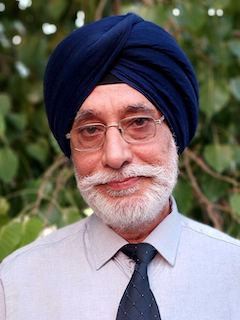
Sarbjit Bahga (b1957) is a Chandigarh-based architect, author, photo artist, and archivist. He is the Principal Architect of Bahga Design Studio LLP. Earlier, Bahga worked in the Department of Architecture, Punjab, Punjab Health Systems Corporation, and Punjab Mandi Board in various positions.
He has more than 42 years of practical experience designing various types of buildings, complexes, and large campuses. His completed works include an eclectic range of administrative, recreational, educational, medical, residential, commercial, and agricultural buildings. A monograph on his selected works titled “MODERN REGIONALISM: The Architecture of Sarbjit Bahga” has been published.
Bahga is also a keen researcher and a prolific architectural writer. He has 12 books to his credit, which include Modern Architecture in India, New Indian Homes, Le Corbusier, and Pierre Jeanneret: The Indian Architecture, Trees in Urban Habitat, Landscaping Human Habitat, New Indian Architecture -1947-2020, and Hand-Drawn Perspectives and Sketches. Bahga’s contribution to architecture has been largely recognized. He is a three-time recipient of the World Architecture Community Awards. His name has been featured in the Guinness Book of World Records for designing the “longest covered concrete corridor” in Vidya Sagar Institute of Mental Health, Amritsar.