
Somewhere in my forties—right between my boss’s emails, kids’ homework meltdowns, missing lunchboxes, and the ever-growing laundry mountain—I had an existential crisis. Not the dramatic, run-away-to-the-Himalayas kind. No tattoos, no spiritual retreats. Just a quieter rebellion: I decided to run.
It all started innocently enough. A 3K jog around the neighbourhood with a gang of equally stressed-out campus mums. We wore colour-coordinated outfits, ran at a pace that wouldn’t disturb digestion, and finished just in time for breakfast gossip. It was social. It was fun. It was… manageable.
But then came the slippery slope. 5K. 10K. And suddenly, I was having heated debates about pronation, arch support, and whether my shoes should cost more than my refrigerator. I discovered that “gait analysis” wasn’t a fancy dance move. Weekend races became full-blown excursions—bib pickups, carb-loading dinners, awkwardly early 5 a.m. wakeups, and a hundred selfies with hashtags like #RunnersHigh and #MedalMonday.
I became fluent in a new dialect: PB (Personal Best), DNS (Did Not Start), DNF (Did Not Finish), BQ (Boston Qualifier), and BS (my reaction to anyone who says running is “relaxing”).
The night before any race resembled a NASA launch. My outfit, bib, gel packets, wireless headphones, and “lucky socks” were laid out like sacred artefacts. I’d fall asleep repeating mantras like “hydration is key” and “don’t trust the street food.” Standing at the start line, I’d question all my life choices. But five minutes after finishing? I’d already be Googling my next race.
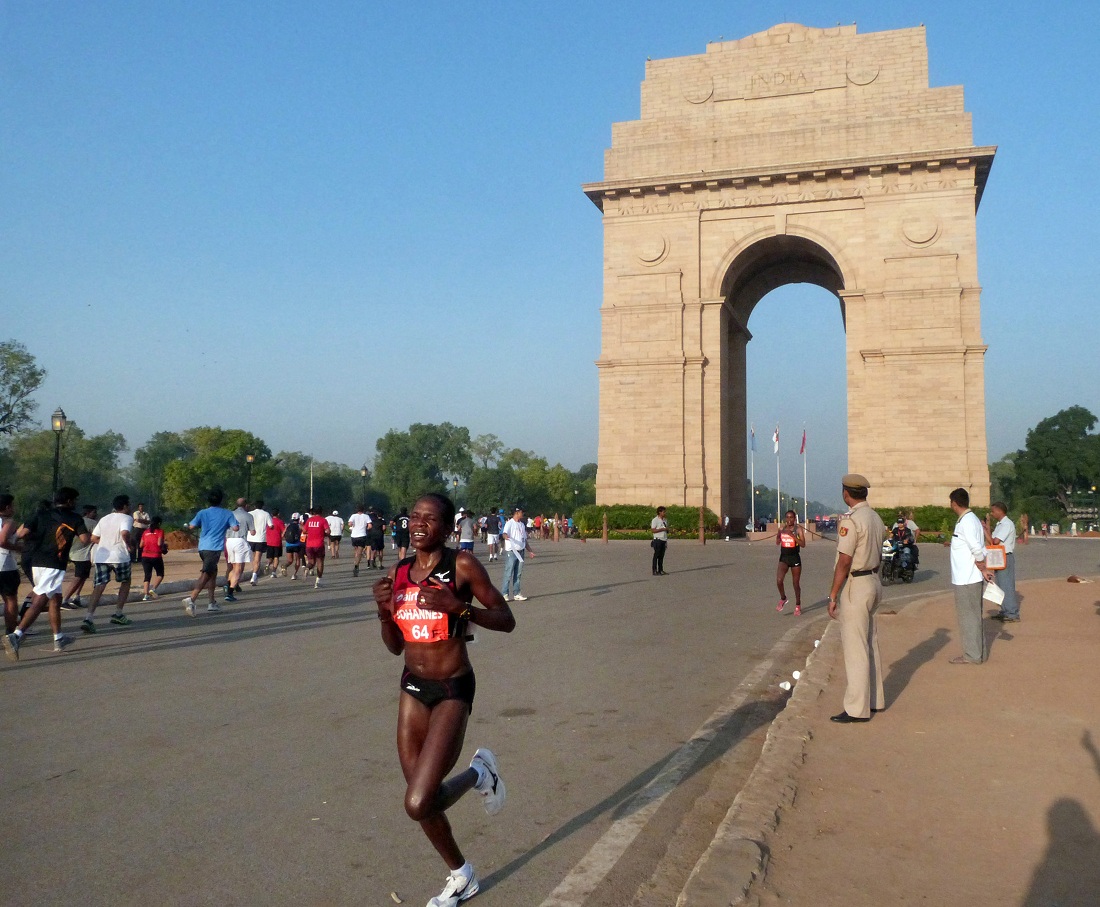
Running is strangely addictive. Maybe it’s the endorphins. Maybe it’s the pride. Or maybe it’s just the public shaming when a 68-year-old grandpa breezes past you like you’re a parked car. The race crowd is entertainment on legs. T-shirts read: “Run like there’s a hot guy in front of you and a creepy one behind you,” or my personal favourite: “If you can read this, I’m just warming up.”
And the attention? Oh, glorious attention. In a house full of snack-devouring, couch-loving relatives, I was now The One Who Runs. At every party, I’d find the one other runner and instantly lock into a passionate TED Talk on foam rolling techniques. Forget world politics—we were dissecting split timings and bowel movement strategies during a 21K.
Then, in a moment of sheer madness—or possibly a runner’s high—I signed up for a full marathon. Forty-two kilometres of pain, cramps, bathroom queues, and existential despair. Training meant three to four-hour weekend runs, endless squats, awkward chafing, and enough electrolyte drinks to power a small city. On race day, after battling fainting spells, cramping muscles, and a dramatic inner monologue at kilometre 36, I somehow stumbled across the finish line. Delirious and dehydrated, I looked up and swore to myself: Never again.
But apparently in the runners world, 42K is just the beginning. There are ultramarathons (100K, because pain builds character), desert races, mountain runs, and even the Arctic Marathon (sub-zero temperatures). I met people running barefoot, backwards, and possibly hallucinating. Meanwhile, I added new words to my injury vocabulary: shin splints, runner’s knee, IT band syndrome, plantar… something. Honestly, it sounded more like a medical drama than a fitness activity.
Eventually, reality (and my knees) caught up. One morning, while trying to massage my hamstring with a foam roller and sobbing softly, I realised: maybe it’s time to graduate.
Now, in my late fifties, my marathons look a bit different. A gentle 6 a.m. jog to Rameshwaram Café, one round of steaming filter coffee, light stretching (mostly laughter), and a slow jog back—followed by another round of coffee. We don’t talk about pace, splits, or PBs anymore. We talk about weddings, holidays, and who’s buying the next round.
I still run. Just slower, wiser, and always towards coffee.

Iti Mattoo, retired after 30 years in the IT industry, now enjoying her creative pursuits.