

Le Corbusier, born Charles-Édouard Jeanneret in 1887, stands as one of the 20th century’s most influential architects, whose radical visions reshaped urban landscapes and architectural theory. Renowned for his advocacy of modernism, functionalism, and the innovative use of reinforced concrete, Le Corbusier viewed the material not merely as a structural necessity but as a canvas for artistic expression. One of his most beautiful ideas was creating bas-reliefs in concrete. These are shallow sculptures moulded right into the concrete surfaces. They added touchable depth, meaningful stories, and feelings to the rough, factory-like raw concrete. These moulded designs turned plain concrete walls into walls that told stories. They connected the strict, simple style of modern architecture with the warmth of human tales. This article examines the origin of this idea, its global expansion in various projects, and its particularly touching manifestation in Chandigarh. There, the bas-reliefs acted like a quiet song for the old rural life that was lost.
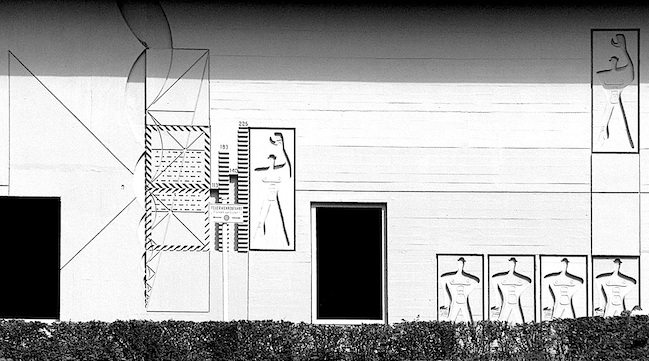
Origins: The Birth of Bas-Reliefs
The idea for Le Corbusier’s bas-reliefs in concrete grew from the exciting new art movements of the early 1900s. It came especially from Purism, a style he started with the painter Amédée Ozenfant in 1918. Purism aimed to break things down to their basic shapes—like cylinders, spheres, and cubes. It turned away from the fancy, curly details of Art Nouveau and focused on clean lines and clear beauty. They strongly opined that “primary forms” were the key pieces for both paintings and buildings. For Le Corbusier, concrete was ideal because it could be shaped easily. It could make smooth, plain surfaces or add gentle raised designs that suggested depth without too much decoration.
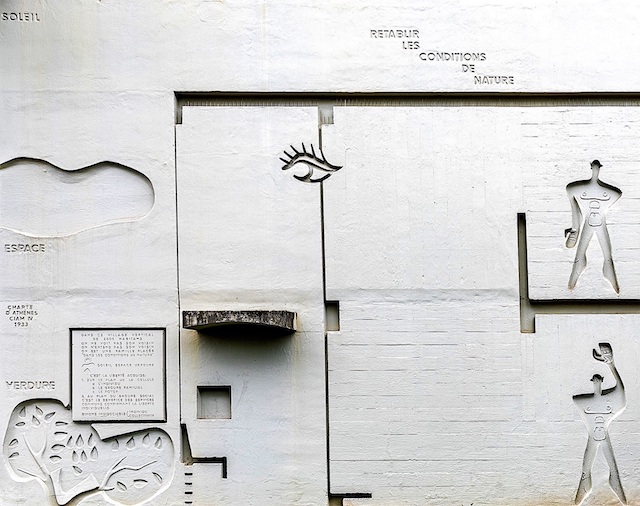
The real push to try this came from his training with Auguste Perret, the first person to use reinforced concrete widely in France. It was from 1907 to 1908. Perret’s Théâtre des Champs-Élysées, built in 1913, showed how concrete could be left visible and full of expression. It encouraged Le Corbusier to play with its authentic, honest feel. By 1915, while working with engineer Max Dubois, Le Corbusier developed the Maison Dom-ino. It was a frame made of concrete bones that didn’t require walls to support the weight. It freed the walls to be places for art. That’s when the idea really took shape: walls could be free not only in structure but also in sculpture. They could have bas-reliefs that mixed usefulness with beauty.
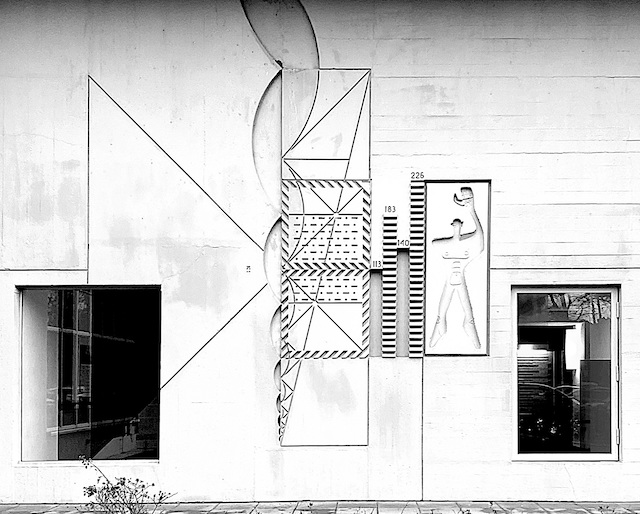
More ideas came from the “primitive arts,” which Le Corbusier encountered during trips to Italy in 1907. He loved the touchable, meaningful carvings from African and Oceanic objects. To him, they had a basic honesty that stood in stark contrast to Europe’s cold, industrial factories. This interest evolved into a desire to infuse human warmth into concrete, which people once referred to as “brutal.” Corbusier wrote in 1923, “The materials of the house are glass, iron, and reinforced concrete… but these are not enough; we must add the poetry of form.” The bas-reliefs were that poetry. They answered the idea that modern design felt too cold. They let concrete “breathe” with stories and depth.
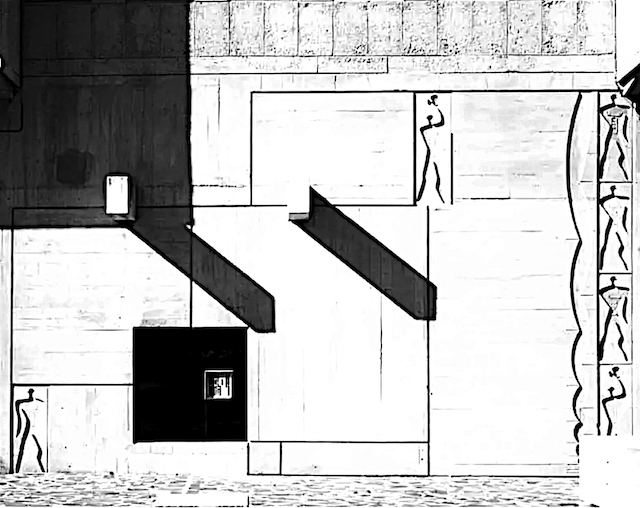
The first small tries happened in the 1920s, moving the idea from talk to real buildings. In the Maisons La Roche et Jeanneret in Paris (1923–1925), there were light geometric carvings that suggested relief work. They used Purist shapes to organise the spaces. These weren’t full bas-reliefs yet, but they were early tests of how concrete could hold hidden meanings.
Evolution: Global Projects
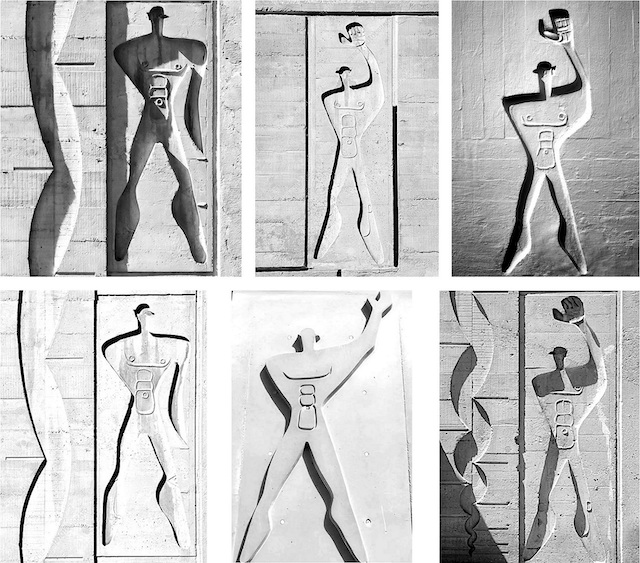
Le Corbusier’s bas-relief style emerged after World War II. It fit with his move to Brutalism— a raw, textured aesthetic that celebrated concrete’s imperfections. The war’s destruction made him realise that buildings could be a way to start anew. The bas-reliefs changed from clean geometry to more natural, emotional sculptures. They often used his Modulor system—a method for measuring based on human body sizes—to create shapes that fit people perfectly.
A pivotal milestone was the Unité d’Habitation in Marseille (1947–1952), his first major Brutalist work, followed by the Unité d’Habitation in Berlin (1956-1958). Here, the colossal concrete edifice featured moulded Modulor reliefs on structural elements, proportioning the building’s features with symbolic human-scale motifs. The rough, board-marked surfaces of the concrete, left exposed after formwork removal, provided a canvas for subtle undulations. It marked a maturation: bas-reliefs were no longer mere decoration but integral to the building’s “skin,” enhancing light play and tactile experience.

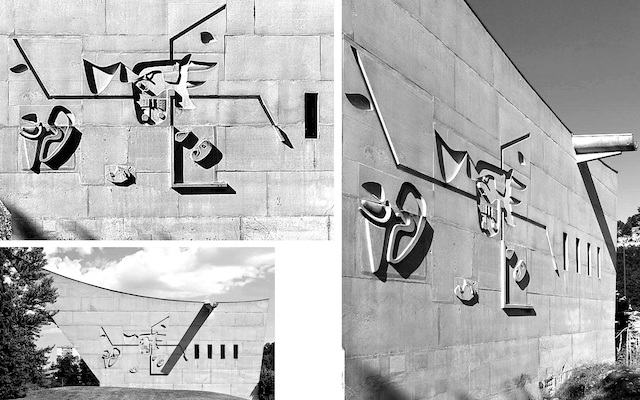
The bas-relief on Le Corbusier’s Maison de la Culture in Firminy, France (1961–1965) graces the south facade of this multifunctional cultural centre. It abstractly symbolises the building’s activities—such as auditorium performances, dance and visual arts halls, library reading, foyer gatherings, dressing rooms, and exhibitions—blending modernist architecture with symbolic art to evoke communal creativity.
Le Corbusier’s bas-reliefs, cast directly into the raw concrete walls of the Baghdad Gymnasium, infuse stark modernism with human warmth through proportional harmony, symbolic depth, and cultural nods. Crafted via bespoke formwork, these elements texture the monoliths with narrative and dialogue, elevating utilitarian concrete to poetic sculpture in Corbusier’s vision of architecture as a form of plastic art.
Chandigarh Farewell: Honouring Lost Villages
No place showed Le Corbusier’s bas-reliefs with greater depth of feeling than in Chandigarh, the “City Beautiful” he planned for India after it gained independence. Prime Minister Jawaharlal Nehru asked him to build it as a sign of new times after the pain of Partition. However, the project displaced approximately 9,000 people from the fertile lands at the foot of the Punjab hills, affecting about two dozen villages. It tore down homes made of mud bricks, mango trees, and traditional farming methods to build a grid of concrete and parks. It was wiping away—putting a modern plan over old local ways—that seemed to trouble the architect. He came in 1951, not ready for India’s stark differences: dry, flat lands, roaming animals, and tough farming families.
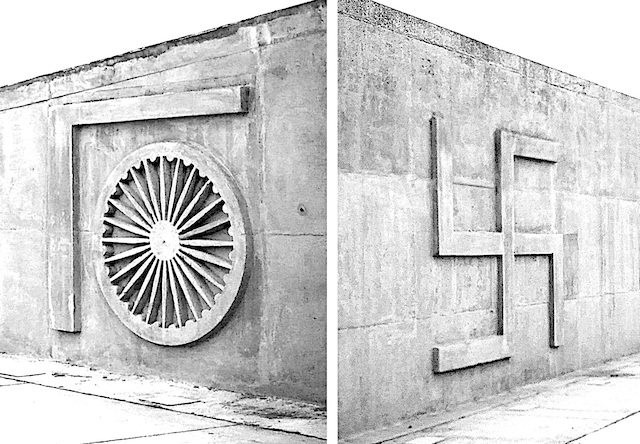
Le Corbusier’s significant realisation occurred when he arrived in Delhi. The sharp beauty of the Shivalik Hills clashed with his European ideas. With a sketchbook in hand, he walked through northern villages, temples, and old sites. He quickly drew the “harsh dryness” of empty lands, bent mango trees, and zebu bulls with “big horns” roaming free. These drawings—more than 100 in just weeks—turned country scenes into bas-relief designs: camels for strength in deserts, bulls for strong life and sun power (like old Harappan seals), snakes winding with inner energy, tortoises holding up the world, and flower “trees of life” like village yards. Other shapes were the Buddha’s open hand for kindness, swastikas for good cycles, and chakras for world balance—from Indian deep thoughts, and what he saw on the ground of “poor but well-proportioned” farmer homes with bright white walls.
This deep look wasn’t just studying; it was making up for the harm. Corbusier was aware of the demolition (carried out by his team, with the trash cleared to make way for new roads). Le Corbusier felt a sense of loss within, seeing the villages as an actual “primitive” reality—simple shapes, communal living, and an earth-tied spirit—put in danger by old colonial rule and the modern push. His bas-reliefs became a goodbye song. He incorporated these designs into the Capitol Complex (High Court, Secretariat, Assembly) to blend lost country stories into the city’s concrete core.

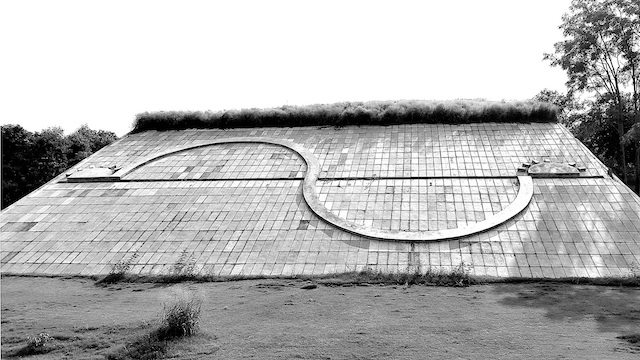
The Martyr’s Monument walls had swastikas and chakras, remembering Partition’s dead while hinting at farm cycles. The giant bas-relief on the Geometric Hill, known as the Path of the Sun, in Chandigarh’s Capitol Complex, is an abstract concrete sculpture by Le Corbusier. It symbolises the daily cycle and balance of light and darkness that “rules man’s activity,” as Le Corbusier described.
Some experts argue whether this was a takeover of another culture or a genuine blend: Did Le Corbusier make the countryside too dreamy to ease his guilt, or create a modern world style? Either way, in Chandigarh, bas-reliefs went beyond looks. They became memory hooks for a “new city” built on what was taken away, keeping the calm look of camels and the strong walk of bulls among shiny Brutalist towers forever.
Ultimately, Le Corbusier’s concrete bas-reliefs connect the hard, straight lines of modern buildings with warm human stories that touch the heart. These aren’t just decorations—they quietly remember lost villages and simple old shapes. They turn brutal concrete surfaces into vessels of memories and poems. As we follow their growth from early tests in Paris to sad tributes in Chandigarh, we see an architect who didn’t just build cities. He carved kindness right into the heart of change. This gift lasts forever, inviting us to feel the hidden stories in the rough touch of concrete.
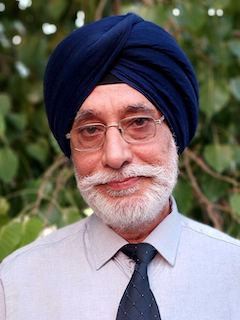
Sarbjit Bahga (b1957) is a Chandigarh-based architect, author, photo artist, and archivist. He is the Principal Architect of Bahga Design Studio LLP. Earlier, Bahga worked in the Department of Architecture, Punjab, Punjab Health Systems Corporation, and Punjab Mandi Board in various positions.
He has more than 42 years of practical experience designing various types of buildings, complexes, and large campuses. His completed works include an eclectic range of administrative, recreational, educational, medical, residential, commercial, and agricultural buildings. A monograph on his selected works titled “MODERN REGIONALISM: The Architecture of Sarbjit Bahga” has been published.
Bahga is also a keen researcher and a prolific architectural writer. He has 12 books to his credit, which include Modern Architecture in India, New Indian Homes, Le Corbusier, and Pierre Jeanneret: The Indian Architecture, Trees in Urban Habitat, Landscaping Human Habitat, New Indian Architecture -1947-2020, and Hand-Drawn Perspectives and Sketches. Bahga’s contribution to architecture has been largely recognized. He is a three-time recipient of the World Architecture Community Awards. His name has been featured in the Guinness Book of World Records for designing the “longest covered concrete corridor” in Vidya Sagar Institute of Mental Health, Amritsar.