
“Stay at home, our hotel offers home-like warmth and comfort.” “Your check-in and check-out experience will not let you feel away from home.” We read such lines everywhere — on billboards, travel portals, and glossy brochures, promising comfort wrapped in affection. Every other hotel or homestay today claims to be a home away from home.
It sounds inviting, but it also raises a quiet question: when did we start needing another home? When did we stop going to the ones that once waited for us or with whom we wanted to remain in touch— our relatives’, our friends’? The story is not just about tourism or travel; it is also the story of how our ways of connecting, visiting, and belonging have changed. Somewhere between the guestroom and the reception desk, our old style of socialising has packed its bags and moved out.
There was a time when people travelled for relationships, not recreation. Vacations were rare, and journeys were purposeful — to attend weddings, festivals, or simply to visit friends and family. The question “Where will we stay?” never arose. The answer was always obvious — with them. Guests were awaited, not accommodated. Their arrival meant rearranging beds, cooking special dishes, and sharing space and stories. Hospitality was not an industry, it was a value. Homes were open, and hearts even more so. In many households, it was not about lavishness but warmth — the ability to make another person feel seen and cherished. Contrast that with the present: we now book stays instead of visiting homes. We plan trips but not reunions. The old rhythms of social life have quietly dissolved into the neat efficiency of online bookings.
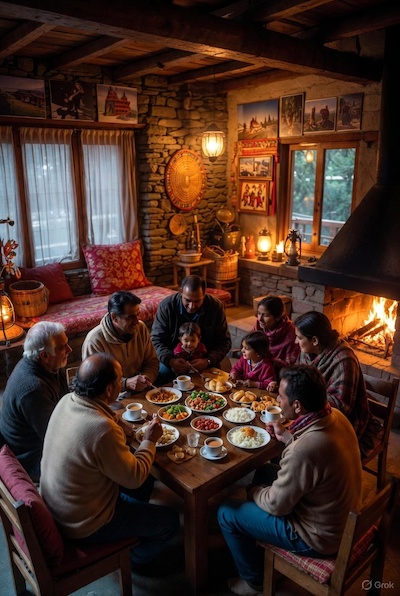
The transformation began gradually. As incomes rose and jobs scattered families across cities, travel shifted from necessity to desire. The new traveller sought leisure, discovery, and comfort. Tourism replaced visiting. With smaller nuclear homes and tighter schedules, accommodating guests became less feasible. Meanwhile, hotels, lodges, and homestays stepped in to fill the gap — offering privacy, cleanliness, and convenience. Something subtle was lost in the trade. The laughter, the chatter over cups of tea, the joy of familiar chaos — these were the small, unmeasured luxuries. What was once a personal gesture has become a commercial service. Hospitality moved out of homes and found a new address in the marketplace.
It would be unfair to romanticise the past too much. The modern hospitality industry has achieved what family homes sometimes couldn’t — professionalism, comfort, and respect for privacy. Hotels have turned care into an art. From warm towels to customised meals, every detail is curated to perfection. The guest is treated not as a burden but as a valued client. Yet, in this efficiency lies a quiet impersonality. The smiles are genuine but trained. The kindness is real but rehearsed. The old “Stay a little longer” has become “Hope you had a pleasant stay.” Ironically, hotels now market the very emotion they replaced — home-like warmth. They recreate nostalgia, sell comfort, and simulate belonging. Phrases like “family-run,” “cosy,” and “authentic” are not just adjectives; they are business models designed to awaken a lost memory. It’s a fascinating paradox: the more impersonal our lives become, the more we pay for emotional substitutes.
To understand this, let’s see how the concept of home itself has changed. Earlier, Homes were porous, fluid, and welcoming. The phrase “make yourself at home” now rings polite but hollow. Home is defined by boundaries — personal, digital, and emotional. Privacy is prized, and sharing space often feels intrusive. Guests rarely linger, hosts rarely insist. Homes have grown quieter and more individualistic, reflecting our urban lifestyles. In this emotional vacuum, hotels step in — offering not just rooms but reassurance. They sell the feeling of home precisely because many of us no longer find it easily within our social circles. The global tourism industry thrives on this longing. It doesn’t just sell destinations; it sells feelings. The hospitality business has mastered the art of emotional branding. Advertisements don’t talk about beds or bathrooms anymore; they talk about belonging, warmth, and care — all of which used to be free. A traveller now pays for what was once priceless: human attention. “Home-cooked food,” “local care,” “personalised service” — these are modern currencies of affection. Behind the glitter of tourism lies a deep irony. In an age of connectivity, people are lonelier than ever.
Technology has added another layer to this transformation. Travel today is planned, booked, and reviewed through screens. A person can land in an unfamiliar town, unlock a homestay with a code, and leave without ever meeting a human being. Social media paints travel as deeply personal. We share photos captioned “feels like home” even when the experience is entirely transactional. This contradiction defines modern travel: we seek authenticity without intimacy, comfort without commitment. The world is more accessible than ever, yet emotionally, we travel alone. The progress has its merits. The modern hospitality sector provides livelihoods to millions, empowers local communities, and opens the world to everyone, not just the privileged few. What we have lost is subtler — the human spontaneity of connection. It is smooth, predictable, and optimised. We have replaced shared experiences with rated experiences, and hospitality with customer satisfaction.
Yet, all is not lost. A quiet revival is underway. The growth of eco-tourism, village stays, and community-run homestays signals a rediscovery of genuine hospitality where travellers can still find homes where food is cooked on wood fire, stories are told over tea, and comfort is offered without a price tag. That’s when tourism regains its soul. But real hospitality begins where marketing ends — in the simple human act of making someone feel they belong. A hotel room can give us rest. But only a home — whether it’s ours or someone else’s — can give us warmth.
Perhaps hotels will always promise “a home away from home.” And perhaps we will continue to check in and check out, seeking comfort in new corners of the world. As we journey through this ever-mobile world, maybe the true destination is not a luxury resort or a scenic hill town, but the rediscovery of that rare feeling — being welcomed, not just served. And that, perhaps, is the check-in we all still long for.

Rachna Vinod is a multilingual poet, writer, blogger and broadcaster, proficient in Hindi, Urdu, English, and Dogri. Her works have been broadcast through multiple media platforms, including All India Radio. In addition to her books, her articles and creative pieces are regularly published in both print and online literary magazines. She has made significant contributions to literature with over 20 individual publications and participation in more than 25 collaborative anthologies.
A Few Published Works:
Urdu: Yasmeen-e-Sughandh, Mere Humsafar
English: Eternal Heritage, Shahada Aisha, I Am Here Only, Bridging The Gap, Lotus Lore, Kashmir Konnectivity: A Biosketch
Hindi: Ankahi Sargam, Pighalte Himkhand (poetry collection), Madhyaratrik Kshan, Parvaton Ke Dayare (short story collection)
Dogri: Adaya Madaya Geeten Bharya, Hirkhi Phuhar, Aakhi Lai Dile Di Gall