When I lived in an independent house in a small city like Shimla in the 70s, festivals often passed quietly. Navratri, for example, slipped by almost unnoticed. My little “celebration” was going to the local Ramlila theatre, laughing at the overdramatic acting and the over-the-top dresses of the actors, and still enjoying every minute of it.
Cut to today—life in a big city like Bangalore in 2025. Suddenly, Navratri feels like the busiest time of the year. In housing societies, where people from different regions live side by side, every festival is celebrated with full gusto. Women MEET for community prayers dressed in the colour of the day—nine days, nine different colours. Garba workshops and dances are in full swing (many couples meet there too!). The ears need special padding since the music continues till midnight. Bengali families build grand Durga Puja pandals, and “pandal hopping” is the norm—lights flashing like a disco, singers booming from loudspeakers, and the air thick with the smell of panipuris and incense. Friends pose for selfies, shoppers juggle bags of bangles and glittering outfits.
Feast or Fast
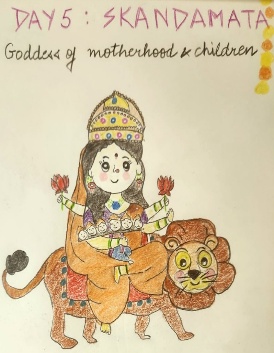
Navratri is full of contrasts. Some families feast lavishly, others fast strictly—no meat, no onions, sometimes not even food past sunrise. I overheard a teenager mutter, “I swear I’ll eat a burger the size of Durga’s lion once this is over!” I couldn’t help smiling. Back home, I have a similar challenge with my kids.
And yet, in all this glitter, I caught myself wondering: had we lost sight of what this festival was really meant to be? Is it all about dance, eating, and shopping?
A Lesson Over Tea
That thought stayed with me until I passed my neighbours, Mr. and Mrs. Dasgupta, sitting under their porch light with two steaming cups of tea. A small diya flickered at their doorstep. Their home looked modest compared to the neon pandals, but somehow it felt warmer.
“Too much crowd?” Mrs. Dasgupta asked, handing me a cup. The faint smell of cardamom calmed me instantly.
“You have no idea,” I sighed.
Mr. Dasgupta chuckled. “Festivals these days are like competitions—who has the grandest pandal, the flashiest outfit, the longest selfie line. But Navratri wasn’t meant to be a contest. Nine nights, nine forms of the goddess—it’s supposed to change you from the inside.”
Mrs. Dasgupta nodded. “Some fast, some feast—both are lessons if you pay attention. Fasting builds focus and self-control while feasting celebrates joy and generosity. Either way, devotion is the common thread.”
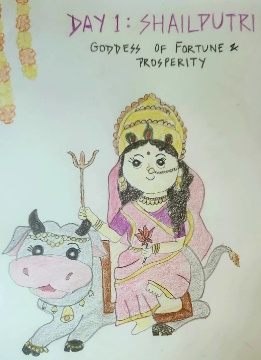
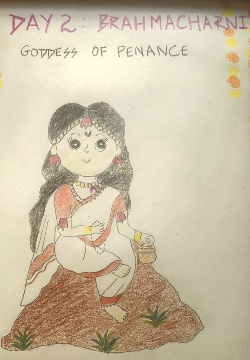
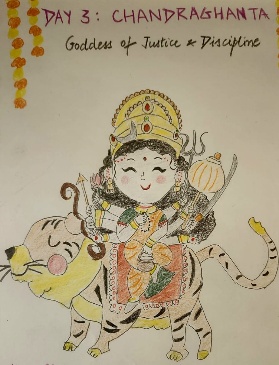
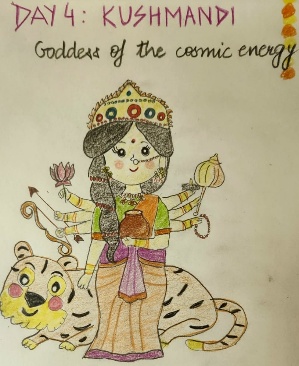
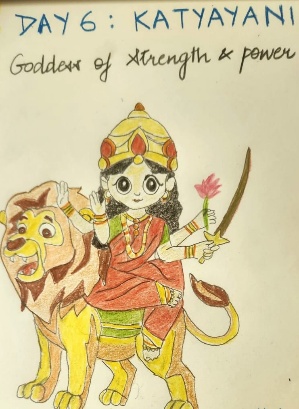
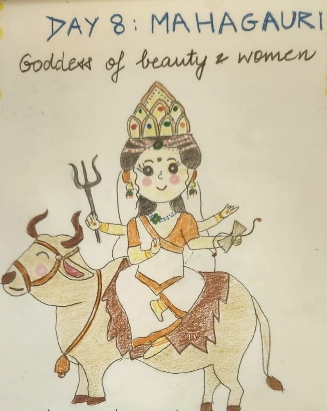
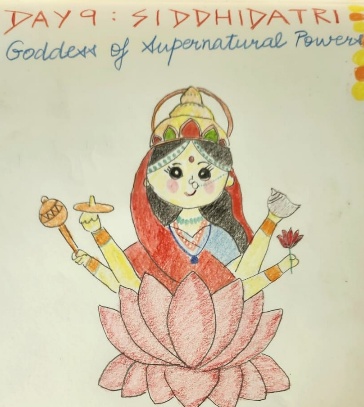
As we sipped tea, they explained how each goddess represents a quality we live with daily. Shailaputri’s steadiness shows up in a hardworking student. Chandraghanta’s courage is in a mother who hides her struggles but still smiles. Kushmanda’s energy lives in those who keep going even when exhausted. I could immediately think of my maid and my massage lady displaying the same tireless energy.
Even the colours of Navratri, Mrs. Dasgupta said, are not just for selfies but for reflection. Red for strength, yellow for joy, green for growth—gentle reminders of what to practice each day.
Burning the Inner Ravana
“Does the goddess really ask for neon lights and celebrity singers?” Mr. Dasgupta asked with a smile. “Or does she ask us to notice the Ravana within ourselves?”
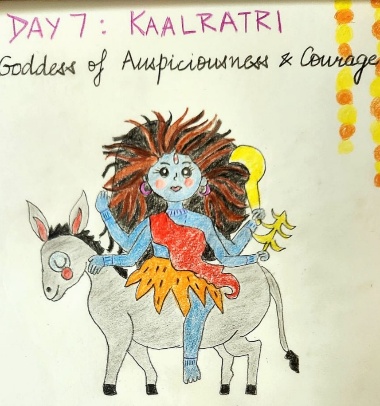
On Dussehra, Ravana effigies go up in flames as crowds cheer. But the real challenge is quieter—acknowledging the many little shadows we carry inside: pride, anger, envy, greed, fear. Navratri is a time to notice them gently, and let the qualities of the nine goddesses—strength, courage, joy, patience, and energy—guide us toward feeling lighter and more in balance.
A Daughter’s Visit
“In Bengal,” Mrs. Dasgupta said softly, “Durga is also seen as a daughter returning home for nine days. We welcome her with songs and sweets. And when Vijayadashami comes, we cry as she leaves. Joy and sorrow, hand in hand—that’s life itself.”
The sound of distant drums drifted from the pandal. But on their porch, time slowed. The clink of teacups, the flicker of the diya, the faint scent of marigolds—it all felt closer to the goddess than the neon-lit streets.
A Festival We Carry
Later that night, I lit a small lamp in my room. It felt quite modest but very clear on the intention. I promised myself to wear Navratri’s colours with awareness, let go of one bad habit, and do one act of kindness each day.
When Vijayadashami came, as effigies burned across the city and fireworks lit the sky, I whispered a prayer:
“May Navratri inspire us to carry its light within, long after the nine nights are over.”

Iti Mattoo, retired after 30 years in the IT industry, now enjoying her creative pursuits.