
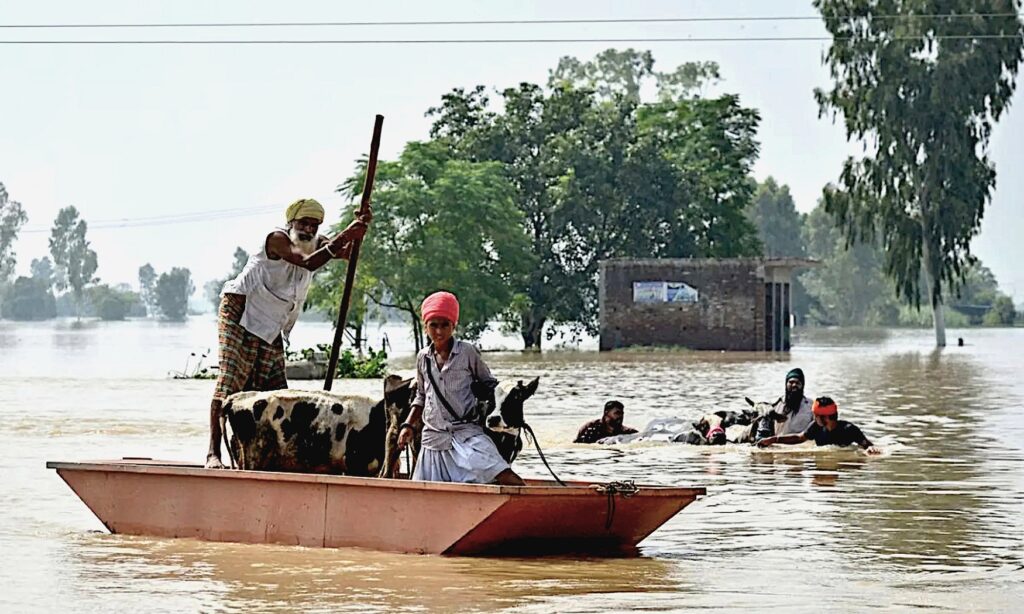
In the summer of 2025, Punjab, India’s agricultural heartland, endured one of its most catastrophic flood events in nearly four decades. Relentless monsoon rains, beginning in late August, escalated into a disaster that submerged vast regions of the state, displaced nearly 400,000 people, and inflicted damages worth billions. Often compared to the infamous 1988 deluge, the 2025 floods exposed the vulnerabilities of a region deeply reliant on agriculture, while underscoring the deadly interplay between natural forces and human shortcomings. As of mid-September 2025, relief efforts were in full swing, yet the path to recovery remains daunting for Punjab’s resilient communities.
Causes of the Floods: A Confluence of Nature and Neglect
An extraordinary combination of natural and human-induced factors drove the 2025 Punjab floods. Heavy monsoon rainfall, amplified by intense cloudbursts in the upper catchment areas of neighbouring states like Himachal Pradesh and Jammu & Kashmir, led to unprecedented water inflows into Punjab’s River systems—the Ravi, Beas, Sutlej, and Ghaggar. The India Meteorological Department (IMD) recorded rainfall levels 180% above normal between August 28 and September 3, 2025, triggering flash floods and widespread river overflows. Climate experts attribute this extreme weather to broader patterns of climate change, including warming oceans and shifting wind systems that intensify monsoon extremes, making such deluges more frequent and severe.
However, human factors significantly worsened the crisis. The release of surplus water from major dams—such as the Pong Dam on the Beas, Ranjit Sagar Dam on the Ravi, and Bhakra Dam on the Sutlej—was necessary to prevent structural failures but overwhelmed downstream communities unprepared for the sudden surge. Critics highlighted several systemic failures: inadequate early warning systems, poorly maintained drainage infrastructure, and widespread encroachments on river floodplains. Opposition leaders accused the state government of ignoring months of alerts about rising water levels. At the same time, residents pointed to clogged drains and dilapidated embankments as evidence of long-term neglect. This combination of natural deluge and human oversight transformed a manageable seasonal challenge into a full-scale disaster, amplifying the suffering across Punjab.
Affected Areas and Communities
The floods spared no corner of Punjab, with all 23 districts officially declared flood-hit by early September 2025. The northern and western regions, where rivers swelled beyond their banks, bore the brunt of the devastation. Key affected districts included Gurdaspur, Amritsar, Ferozepur, Pathankot, Kapurthala, Fazilka, Tarn Taran, Hoshiarpur, Rupnagar, Moga, Sangrur, Barnala, Patiala, and SAS Nagar (Mohali). Gurdaspur and Amritsar reported the highest impacts, affecting 145,000 and 117,534 people, respectively, as entire communities were submerged.
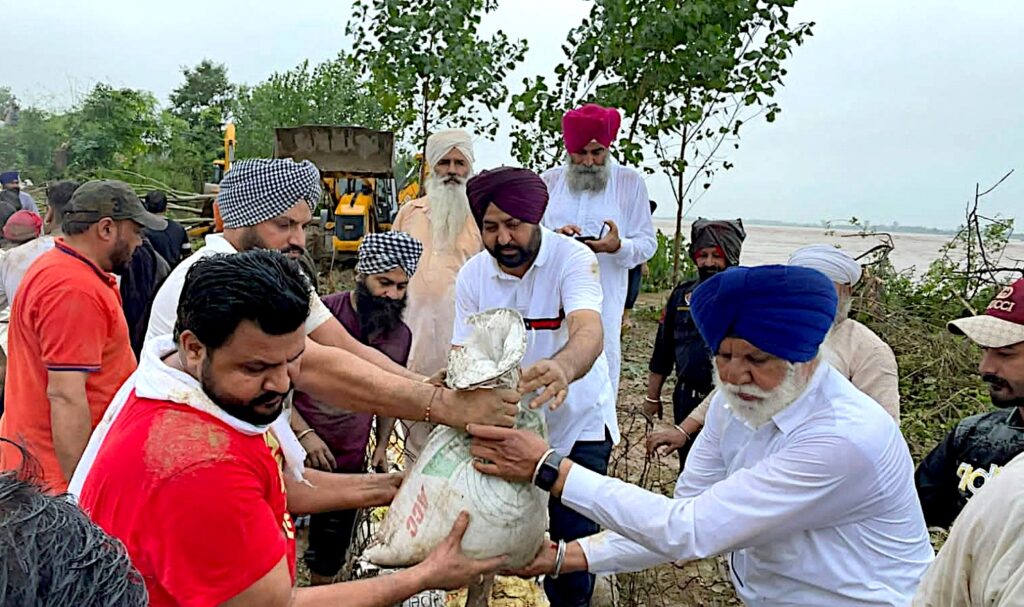
At the village level, the destruction was staggering, with an estimated 2,200 to 2,400 villages inundated across the state. In Amritsar’s Ajnala and Lopoke areas, villages like Talwandi Rai Dadu were utterly cut off, forcing mass evacuations by boat and helicopter. Similar scenes unfolded in Pathankot, Fazilka, and Ferozepur, where floodwaters breached embankments, isolating rural pockets and leaving families stranded. By September 8, 2025, nearly 388,000 people had been displaced, with over 5,400 finding temporary refuge in 219 relief camps across the state. These camps, while critical, struggled to accommodate the scale of the crisis, highlighting the urgent need for more robust disaster response infrastructure.
Agricultural and Economic Devastation
Punjab, often called India’s granary, faced a devastating blow to its agricultural sector. Over 1.76 lakh hectares (approximately 435,000 acres) of farmland, primarily paddy fields ready for harvest, were submerged. The inundation destroyed standing crops and caused significant soil erosion and waterlogging, threatening the long-term productivity of fertile regions like Doaba and Majha. The loss of basmati rice crops, a key export, raised concerns about potential shortages and price spikes, impacting local and national markets.
The state government responded by initiating a special girdawari (crop damage survey) to assess losses and announced compensation of ?20,000 per acre for affected farmers. However, the sheer scale of destruction—over 400,000 acres of crops lost—posed a significant challenge to recovery efforts. Beyond agriculture, infrastructure suffered extensively. Floodwaters damaged critical roads, schools, and healthcare facilities. Housing losses were equally severe, with thousands of homes fully or partially destroyed, leaving families homeless and vulnerable.
Human and Livestock Toll
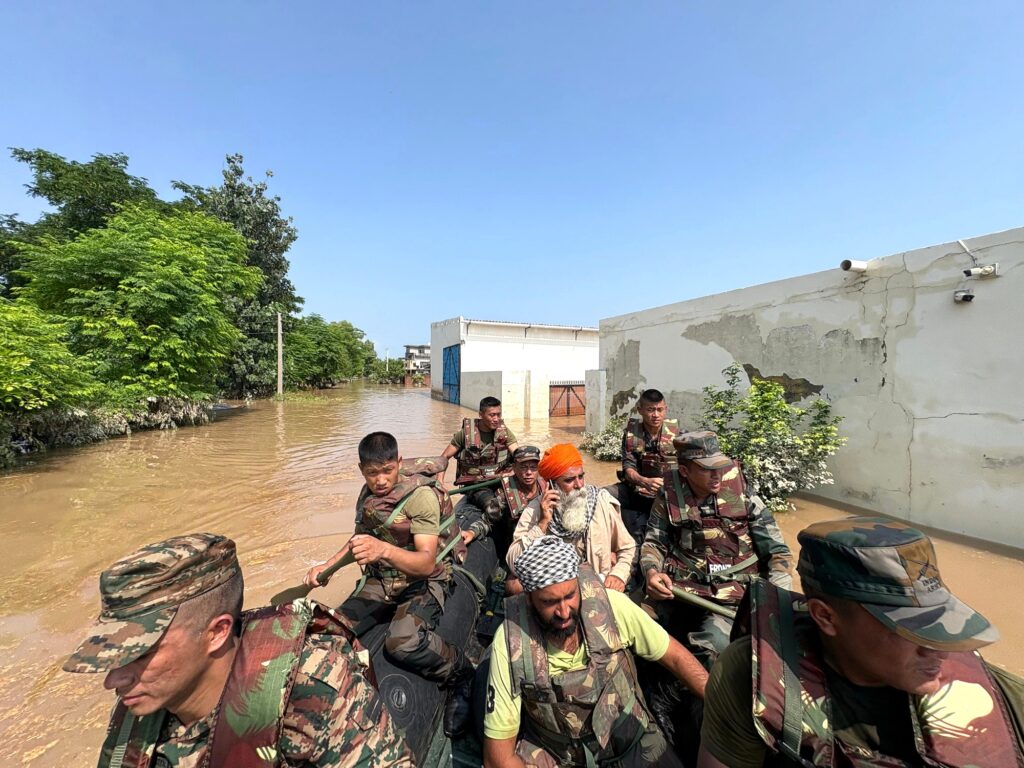
The human cost of the floods was heartbreaking. By September 12, 2025, the official death toll reached 55, with fatalities attributed to drownings and related incidents. Three individuals remained missing, adding to the anguish of affected families. Coordinated efforts by the National Disaster Response Force (NDRF), Army, Air Force, Navy, and local volunteers facilitated the evacuation of over 22,000 people, a testament to the scale of the response and a reminder of the severity of the crisis.
Livestock, a vital lifeline for rural households, suffered immensely. Over 252,000 animals and 588,000 poultry birds were affected by waterlogging, lack of fodder, and inadequate shelter. Relief efforts included distributing fodder to flood-hit villages. However, the scale of the loss raised concerns about post-flood disease outbreaks, such as dysentery, malaria, dengue and skin diseases, which could further strain public health systems already stretched thin.
Strategies for Flood Mitigation
The 2025 Punjab floods underscored the urgent need for comprehensive flood control measures to protect lives, livelihoods, and infrastructure. A multifaceted approach, combining structural, ecosystem-based, and non-structural strategies, is essential to build resilience in this flood-prone region.
Structural Interventions
Strengthening physical infrastructure is critical to containing floodwaters. Punjab’s rivers, prone to overflow due to upstream dam releases, require fortified embankments and modernised drainage systems. Innovations like self-cleaning grates and permeable pavements could reduce urban flooding in cities like Amritsar and Gurdaspur. Strategic dam management, such as lowering reservoir levels before monsoons, can create storage capacity for excess water, a practice proven effective in other regions. Constructing new multipurpose reservoirs and flood relief channels along riverbanks could divert overflows, protecting agricultural lands and villages.
Ecosystem-based solutions offer sustainable alternatives. Restoring wetlands and riparian forests can act as natural buffers, absorbing rainwater, reducing erosion, and filtering pollutants. Planting vetiver grass or bamboo along slopes in flood-prone villages can stabilise soil and prevent landslides, supporting biodiversity while mitigating flood risks.
Non-Structural Measures
Non-structural strategies focus on preparedness and policy reform. Early warning systems (EWS) integrating real-time IMD data with dam release alerts could deliver multilingual SMS and app notifications, enabling timely evacuations. In 2025, such systems could have saved lives by reaching the 22,000 evacuees faster. Using GIS mapping to restrict construction in high-risk areas, floodplain zoning would prevent future encroachments. Policy reforms, including independent audits of dam operations and basin-level coordination with neighbouring states, could address governance gaps that amplified the 2025 crisis.
Promoting flood-tolerant rice varieties and expanding crop insurance can mitigate agricultural losses. Community engagement is equally vital: training programs for villagers on emergency response and watershed management committees can empower locals to monitor and maintain water bodies, fostering grassroots resilience.
Lessons from India and Beyond
India offers several models for Punjab to emulate. Assam’s data-driven allocation of flood funds has improved resilience through better embankments and relief distribution. Kerala’s post-2018 flood initiatives, including mangrove and wetland restoration, have reduced urban inundation. Maharashtra’s Pani Panchayat model, where village committees manage watersheds, promotes equitable water use and prevents flash floods. Nationally, 14 states have implemented accessible EWS, halving response times and damages.
Internationally, the Netherlands’ “Room for the River” program widens floodplains to accommodate overflows, a strategy adaptable to Punjab’s River corridors. The UK’s “Making Space for Water” integrates reforestation and wetlands to slow runoff, reducing peak flows by up to 20%. Argentina’s reinforced defences and enhanced drainage protect communities, while the EU’s Floods Directive emphasises risk mapping and public awareness. AI-powered forecasting in the US and floating homes in Vietnam offer innovative solutions for Punjab’s repeatedly flooded villages.
A Tapestry of Unity
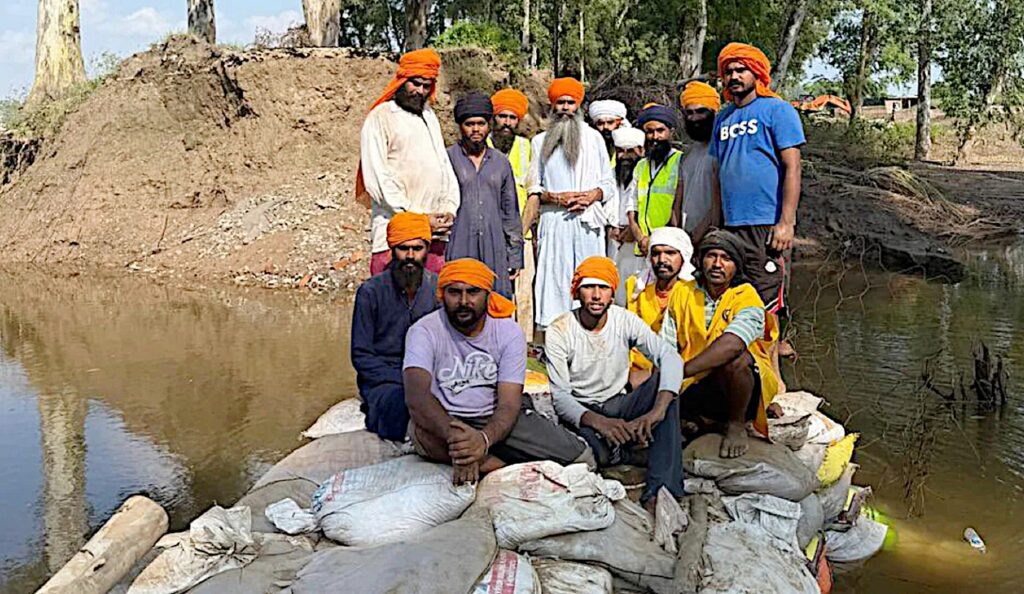
Beyond the devastation, the 2025 floods gave rise to an extraordinary human story of compassion and solidarity. People from Punjab and neighbouring states—Haryana, Uttar Pradesh, Himachal Pradesh, Jammu & Kashmir, and Rajasthan—united in unprecedented empathy. Volunteers from unaffected areas turned homes into shelters and kitchens, not just for people but for livestock too, reflecting a deep concern for all life. Despite their landslide challenges, communities in Himachal Pradesh and Jammu & Kashmir sent aid, driven by a sense of shared humanity.
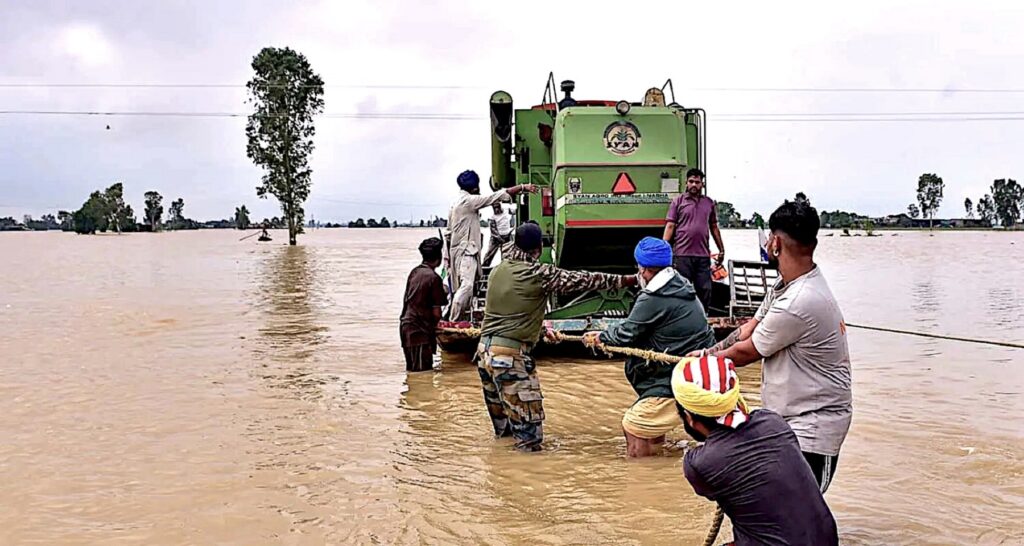
This response transcended religious, caste, and regional divides, replacing longstanding rivalries—such as water disputes between Punjab and Haryana—with acts of kindness. Celebrities adopted villages for long-term rebuilding, inspiring hope, while diaspora communities, including U.S.-based non-profits, launched global appeals with messages like “Punjab is in our blood.” These efforts evoked profound emotions—grief for losses, joy in giving, and renewed faith in humanity. One Haryana volunteer poignantly stated, “We are all Punjab today,” capturing the spirit of unity that turned tragedy into a mosaic of compassion.
Flood-Proof Schools as Lifesaving Shelters
The floods devastated Punjab’s education sector, damaging approximately 3,300 government and private schools and disrupting learning for thousands of children. Many schools in districts like Fazilka, Ferozepur, Amritsar, Gurdaspur, Pathankot, and Sangrur remain non-operational due to structural damage and waterlogging. This crisis presents an opportunity to rebuild these schools as elevated, flood-resistant structures that double as emergency shelters, addressing immediate safety needs and long-term educational goals.
The Proposal: Resilient Hubs for Every Village
The vision is to equip each of Punjab’s 12,729 villages—particularly the 2,400 flood-affected ones—with at least one two- or three-story school designed to withstand floods up to 6–8 feet deep. These structures would serve as vertical refuges during crises, accommodating 200–500 people per village, and as vibrant educational hubs regularly. By retrofitting or rebuilding the 3,300 damaged schools, Punjab can leverage existing infrastructure, community trust, and land availability, avoiding redundant costs.
Engineering Resilience
These flood-proof schools would incorporate key architectural and structural features:
- Elevated Plinth (6+ Feet): Built above the highest flood levels using concrete-filled gabions, the plinth prevents water ingress and erosion, with ramps ensuring accessibility for all.
- Reinforced Cement Concrete (RCC) Frame: A robust grid of columns, beams, and slabs resists flood and seismic forces, with lightweight autoclaved aerated concrete (AAC) blocks for quick, insulated construction.
- Rooftop Terraces and Staircases: Wide, enclosed staircases with non-slip treads lead to flat RCC rooftops with parapet walls, serving as evacuation zones and aid drop points. In non-flood times, terraces host outdoor classes or solar panels.
Additional features like sump pumps, permeable pavements, and bio-swales enhance resilience by managing runoff and integrating green elements. These schools would include sanitation blocks, solar-powered lighting, and stockpiled rations, ensuring functionality during crises.
Dual Benefits
During floods, these shelters provide immediate safety, reducing reliance on distant relief camps and mitigating disease risks from overcrowding. Regularly, they revitalise rural education, where dropout rates reach 10–15% due to poor facilities. Modern, flood-proof schools with ventilated classrooms and tech-enabled spaces can boost attendance and empower communities. Construction under schemes like MGNREGA creates local jobs, fostering economic and social resilience.
Proven Models
India offers successful precedents. Maharashtra’s Saraswati Vidyalaya in Kelthan, built post-2019 floods, uses a raised plinth and sustainable materials to serve 180 students while withstanding inundation. Himachal’s Government Primary School, Kuklah in Mandi district, rebuilt in 2025, features elevated platforms and upgraded drainage, minimising disruptions.
Likewise, in the village of Lagma, Saharsa district, Bihar, the Nav Kumar High School campus houses a unique school-cum-flood shelter, known as the Indian Express Block. Constructed in 2011 with contributions from readers of The Indian Express following the catastrophic Kosi floods of 2009, this innovative structure was inaugurated by Bihar Chief Minister Nitish Kumar on May 27, 2011. Designed by the Chandigarh-based Saakaar Foundation, led by architect Surinder Bahga, the double-storied building features 12 spacious rooms and incorporates flood-resilient design elements. These include a reinforced concrete (RCC) frame structure, a high plinth raised five feet above ground level, and a wide staircase leading to a flat terrace. These features ensure the building is a robust and safe shelter for residents during floods, while functioning as a school under normal conditions.
These models demonstrate scalability and community benefits, making the approach feasible for Punjab.
Path Forward
The 2025 Punjab floods demand urgent, transformative action. Punjab can turn vulnerability into resilience by integrating structural upgrades, ecosystem restoration, and non-structural reforms. Lessons from Assam, Kerala, the Netherlands, and beyond provide actionable blueprints. Flood-proof schools, as symbols of hope and practicality, can protect lives and nurture futures. Backed by a central and state relief package, political will, and the unity seen in relief efforts, Punjab can rebuild sustainably, ensuring its heartland withstands future deluges and thrives for generations.

Sarbjit Bahga (b1957) is a Chandigarh-based architect, author, photo artist, and archivist. He is the Principal Architect of Bahga Design Studio LLP. Earlier, Bahga worked in the Department of Architecture, Punjab, Punjab Health Systems Corporation, and Punjab Mandi Board in various positions.
He has more than 42 years of practical experience designing various types of buildings, complexes, and large campuses. His completed works include an eclectic range of administrative, recreational, educational, medical, residential, commercial, and agricultural buildings. A monograph on his selected works titled “MODERN REGIONALISM: The Architecture of Sarbjit Bahga” has been published.
Bahga is also a keen researcher and a prolific architectural writer. He has 12 books to his credit, which include Modern Architecture in India, New Indian Homes, Le Corbusier, and Pierre Jeanneret: The Indian Architecture, Trees in Urban Habitat, Landscaping Human Habitat, New Indian Architecture -1947-2020, and Hand-Drawn Perspectives and Sketches. Bahga’s contribution to architecture has been largely recognized. He is a three-time recipient of the World Architecture Community Awards. His name has been featured in the Guinness Book of World Records for designing the “longest covered concrete corridor” in Vidya Sagar Institute of Mental Health, Amritsar.