“Indian cuisine tells the story of its people and their rich history.” – Anonymous
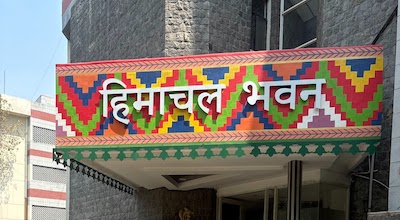
It was about a year back when I read an article in a reputed daily going gaga over the availability of Himachali dham and cuisine at Himachal Bhawan, Mandi House, New Delhi.
Was I daydreaming, or was it a dream come true?. Two things that a Himachali misses the most outside Himachal are the hills and the Himachali dham (celebratory feast), for sure.
Well! Talking about the hills, they share many similarities with the metropolises or cities of today, as hills are also razed to the level of the cities with ever-on-going construction works, so hills are almost nonexistent, obliterating their mark of distinction from other regions in the country. Coming to the Himachali dham, which was just limited to Himachal itself and that too, exclusively available on festivities and celebrations, was once a rarity, but not any longer.
Ironically, it took one long year to execute my plan into reality. Such is the city life, where everyone is in a hurry and everything is a hush-hush affair, but the wait is never-ending.
As I embarked on my long-awaited visit to the Himachal Bhawan located on one of the roads that converged at the Mandi House roundabout in the National Capital, anticipation and excitement to taste the native cuisine danced on my palate.
Though dham has its own set of variations according to various districts, the richness of spices sans the onion, garlic, or tomatoes remains the same. It acts as the binding factor for Himachalis all over.
One prominent dish which marks the major difference is the ‘ Meetha’ (sweet dish). Being a staunch Hamirpuriya my loyalty will always remain with the‘badhane( boondi) ka meetha’ sweet dish made from lentils and all-purpose flour. So instead of sweet rice offered in the Kangri, Bilaspuri, Chambaeyali orMandiyali dhams, I always crave for the Hamirpuri dham.
Himachalis are known as the God fearing, simple hill folks. We do not believe in any language war or barrier, as every few kilometres, the language and food preferences change.
And we respect that. We are so adjusting and so simple that our controversies are not beyond chai-samosas.
And so we are very well aware that our Dham also varies in every district, whether it is Kangri Dham or Hamirpuri Dham, Mandalyali or Chambayali Dham.
As mentioned earlier..
You can take a Himachali out of Himachal, but you cannot take the love for dham out of a Himachali. It’s embedded in our taste buds.
So when I got the opportunity to taste it outside Himachal, I could not give it a miss.
Alas! What greeted me was a symphony of disappointments.
The Entrance to the Bhawan catering to the guests is not at all impressive, an unkempt souvenir shop had long been done and dusted. Instead of displaying the culture of Himachal in the form of handicrafts and handloom, Himachali caps, all one could see were a few cloth pieces on display, that too not from the hill state. Further ahead, the cramped restaurant on the first floor was not inviting at all in terms of the interiors. Though simplicity may be the hallmark of a hill State like Himachal but promoting our culture and its representation helps the state artisans get noticed on the world platform.
The ambience appeared to be a mere projection of a fake environment; nothing was relatable to Himachal as such, rendering it as a mere shadow of its original state. Further on, the ill-conceived menu, lack of authentic ingredients, was a total savoury disappointment.
Dear gastronomers, I’m no connoisseur of food, but seeing my native spread lacking in both allure and gustatory appeal was a mere cacophony of culinary calamity.
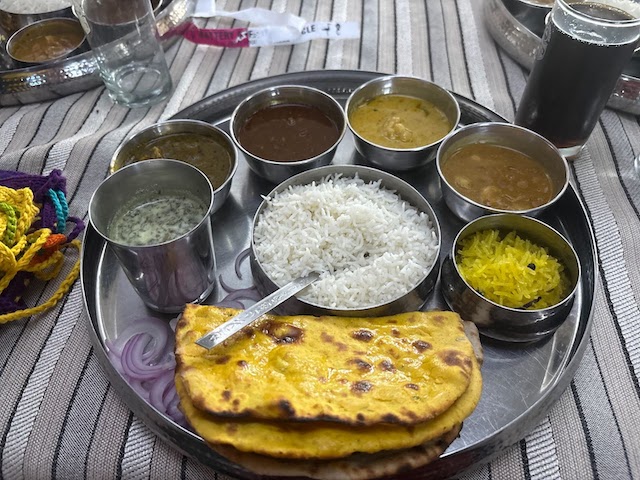
Missy roti replaced maki ki roti, Katha dish (sour-sweet) looked more like a dish languishing in a quagmire kind of situation, bereft of its companionable spices, they disagreed to blend, and the watery gravy in abundance was further drowning the poor black chickpeas. Redu/ khoru, a dish made with tampering of curd or buttermilk served in a glass, only highlighted the poor preparation and presentation.
‘Meetha Bhaat’ (sweet rice) came as the surprise element and became the beacon of hope and made me realise that there was some connect in the disconnect.
The highly anticipated Himachali Thali was a total let down as the flavours failed to harmonise. It lacked the authentic punch and made me feel like a foreigner at my feast. The self-declared legendary thali at Himachal Bhawan, which claimed to have its signature style/ dish, was a poor imitation and halfhearted attempt at serving Himachali food.
In a nutshell: The whole set-up needs an urgent facelift. The general ambience hardly reflects the culture of Himachal.
It’s essential to safeguard the authentic recipes to replicate them successfully.
Regional feasts have their own distinct culinary identities that reflect their own unique culture and heritage, where tampering with the original ingredients and food practices is taboo, unlike the food in the metro cities, which keeps on evolving and revolving according to the shifting social and economic dynamics.
Though there are some claimants of delivering it online as well but it is essential to remember that the requirement of freshly used spices without any preservatives has always been the first and foremost requisite for it, which ready-to-eat meals or packed boxes cannot do justice to.
A poor imitation of original recipes is not flattery, as it falls flat! Making our cuisine so unacceptably capricious only makes the concept of traditional food obsolete.
Let’s turn on a new leaf, but whilst holding onto our pattals.

Anjali, with a masters in English, is a teacher on a sabbatical. She loves travelling and spending time in natures lap, observing its bounties and being thankful to the hills.