
 The “Drum Gate,” at the East entrance of Kanazawa Station, Japan was built to look like the tsuzumi.
Drums are a crucial part of music and cultural expression across Asia, with a vast array of types and traditions. Himachal Pradesh and Japan both have rich drumming traditions.
Himachal features a variety of folk drums. Japan is renowned for its Taiko drumming, which involves large drums known for their deep, resonant sound.
The tsuzumi drum is a significant element in Japanese culture, particularly in formal theatrical productions such as Noh and kabuki and also in traditional folk music.
While in Japan way back in 2005, I felt privileged to be invited to various dramatics and music events. ‘Beating the drums’ and the ‘Sumo wrestling’ were added attractions.
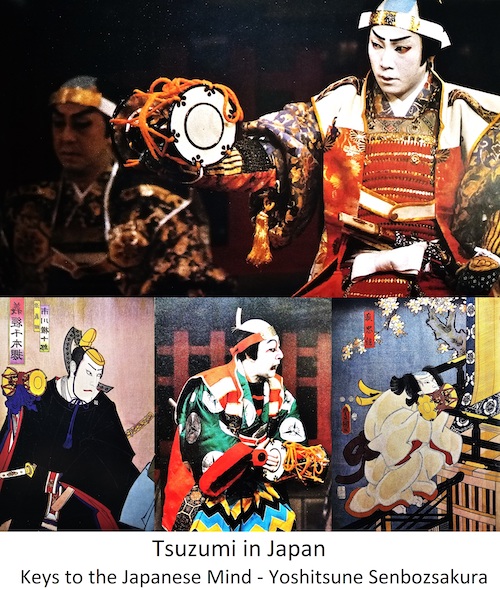
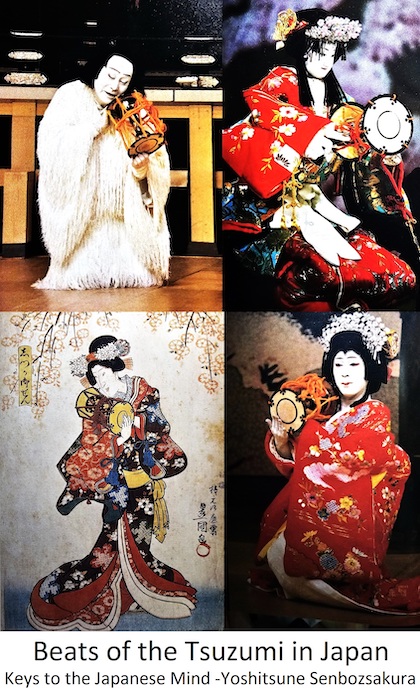
The most popular and the most played, I observed, was the tsuzumi. Though lookalike of the damroo back home in Chamba, it aroused my curiosity to know about and feel the drum; more so for its ornamental looks.
- Also known as ‘tsudzumi’; tsuzumi is a hand drum of Japanese origin. The wooden-bodied, two-sided hand drum is typically hourglass-shaped. The skin on the circular flat heads is lashed together with a natural fibre cord threaded through six holes along the head edges, and there is a central wrapping with the same cord that pulls the vertical cords, stretched tight.
The cords can be squeezed or released to increase or decrease the tension of the heads respectively. The mechanism thus allows the player to raise or lower the pitch of the drum while playing.
Wood; lacquer, gold leaf, animal skin, and a natural fibre rope; all go into the crafting of this musical instrument. The central hollow wooden structure is lacquered and gilded. Each drumhead is crafted with a piece of foal skin sewn onto an iron ring.
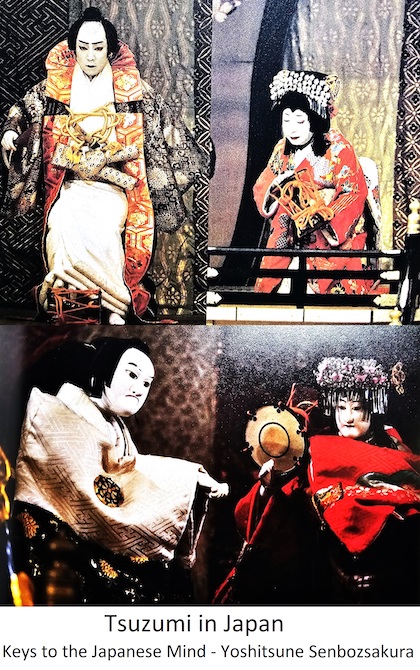
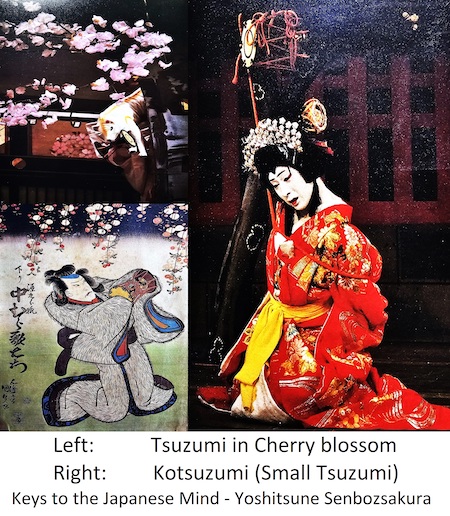
Small tsuzumi also known as kotsuzumi is set against one shoulder and held in place with one hand, while the other hand beats the heads.
- The larger counterpart to the Kotsuzumi is Otsuzumi- also known as Okawa. The instrument is held in the left hand, typically on the left thigh, and struck with the right hand. The instrument is famous for its strong, clear, high-pitched sound.
The wooden body is carved out from a single block of cherry wood. The drumheads used for the Otsuzumi are made of thick horsehide and are never decorated, as they are meant to be consumables. The sound and tone produced are quite distinct.
I wonder if it differs from my Pohal*of Chamba, but for the hide and body material of the hourglass. One such drum was crafted for me by the apt artisans in the seventies. It is copper instead.
The Damroo on the other hand is believed to have been made by Lord Shiva. A very small drum with a wooden body is shaped like an hourglass. Parchments on both sides are held together by thick cotton threads. On moving this instrument, the knots beat on the sides and produce a rattling sound.
- The tsuzumi is also said to be related to the Korean changgo, a large hourglass-shaped, two-headed drum.
 The predecessor to the tsuzumi, the Yoko (hip drum), was brought to Japan from southern China in the 7th century. The Yoko was suspended from the performer’s neck. The drumhead was hit with a mallet held in the right hand and the palm of the left hand.
- Puranic epics relate percussion instruments as the oldest ones. It is believed that Lord Brahma is the originator of these instruments.
In Himachal Pradesh, these are played in folk dances and during social and religious ceremonies; also to disseminate messages from one village to another. Dhol, Daragh, Dholak, Uddaka, Phadi, Dhavas, Mandlu, Tamak, Damamatu, Baam, Daffal, Dhad, Khanjari and Guju-all are known in local dialects.
Lying on the shelves of Kirti Cottage, Dalhousie; the skin of some drums had sacked. This may be due to the drum standing on one end, with the cords under tension, and changing relative humidity over time.
Thanks to the Tibetan Crafts Centre in Mecleodganj, Dharamsala where they managed the reconditioning, the hide they fixed is something different.
As for the care of the tsuzumi, the instrument is peculiar in that the drum heads must be exposed to a certain level of moisture to produce a desirable sound. Before playing the tsuzumi, the player will breathe directly onto both heads. Sometimes he will even take some saliva and apply it to the head of the drum. However, if the heads become excessively moist, they may become too slack to be played properly and may develop noticeable ripples on the surface, further compromising the sound quality.
Drums sound different due to a variety of factors, including the drummer’s technique and the drum’s construction.
*As named by Himanshu of Anand Metal Works, Chamba, Himachal Pradesh.

Prof. (Er.) Chander P Mahajan is an art critic & a free lance journalist. The Environmentalist stays in Shimla and Dalhousie, Himachal Pradesh, India.