Nestled in the serene town of Talwandi Sabo in Punjab’s Bathinda district, Gurdwara Shri Likhansar Sahib stands as a beacon of Sikh spirituality and intellectual heritage. Located within the revered campus of Takhat Damdama Sahib, one of the five temporal seats of authority in Sikhism, this Gurdwara holds a unique place in the hearts of devotees and scholars alike. Its tranquil setting at the southern corner of the Sarovar (holy tank) within the Takhat complex enhances its sanctity, making it an integral part of a larger pilgrimage destination that draws thousands seeking solace and wisdom.
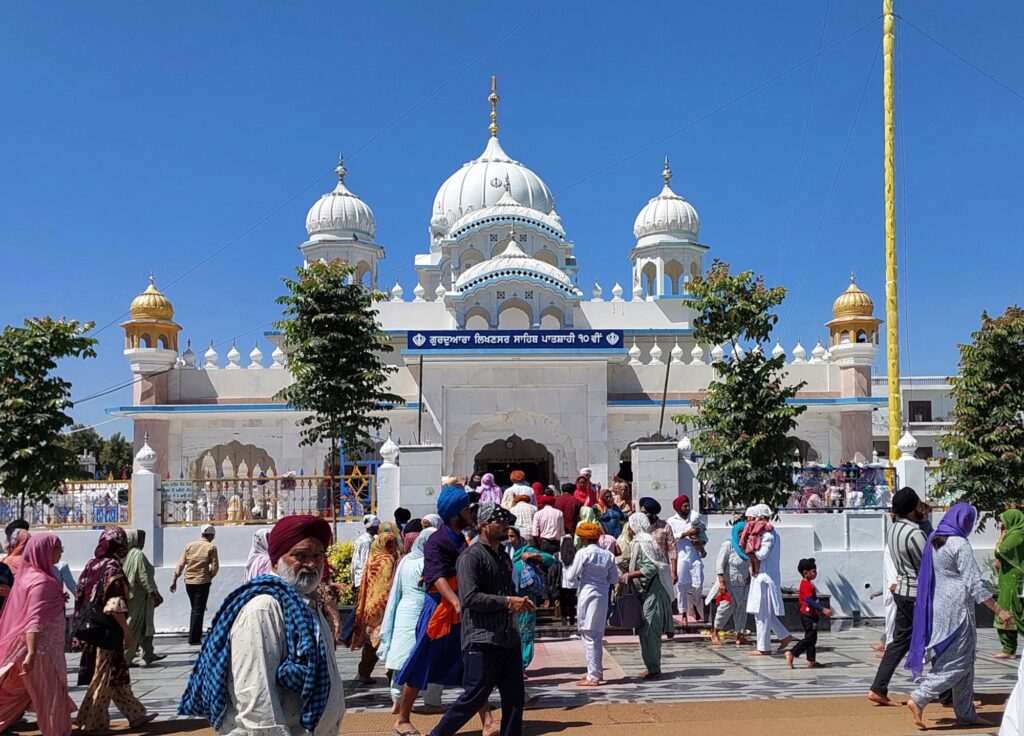
Often hailed as “Guru Ki Kashi,” a title evoking the ancient Indian city of Varanasi (Kashi) renowned for learning, Gurdwara Shri Likhansar Sahib is celebrated as a centre of Sikh intellectual and spiritual growth. This title was bestowed upon it due to its pivotal role during the time of Guru Gobind Singh, the tenth Sikh Guru, who transformed Talwandi Sabo into a flourishing hub of knowledge in the early 18th century. Under his guidance, the Gurdwara became a site where sacred Sikh scriptures, including the Dasam Granth, and four meticulously prepared copies of the Guru Granth Sahib, were compiled and transcribed. These copies were later dispatched to the four other takhts, cementing Likhansar Sahib’s legacy as a cradle of Sikh learning and a preserver of divine wisdom.
The name “Likhansar” beautifully encapsulates the Gurdwara’s essence, blending two Punjabi words: “Likhan,” meaning “writing,” and “Sar,” meaning “Sarovar” or “holy tank.” Together, they form “The Pond of Writing,” a poetic tribute to its historical association with the transcription of sacred texts and the act of learning. This name is not merely a label but a reflection of the site’s sanctity, blessed by Guru Gobind Singh himself, who linked the physical act of writing with spiritual and intellectual enlightenment. The Sarovar beside the Gurdwara further ties the name to its location, enhancing its symbolic resonance.
The roots of Gurdwara Shri Likhansar Sahib stretch back to 1706-1707, a transformative period in Sikh history when Guru Gobind Singh sought refuge in Talwandi Sabo after fierce battles with Mughal forces. Arriving in this quiet town, the Guru spent more than nine months revitalizing the Sikh community, turning the area into a bastion of resilience and scholarship. Here, he enlisted the expertise of Bhai Mani Singh and Baba Deep Singh, two revered Sikh scholars, to transcribe Sikh scriptures. The Guru himself participated in this sacred endeavour, crafting reed pens and discarding ink into the Sarovar, which imbued the site with divine significance. This period marked the Gurdwara’s emergence as a learning centre, a legacy that still endures.
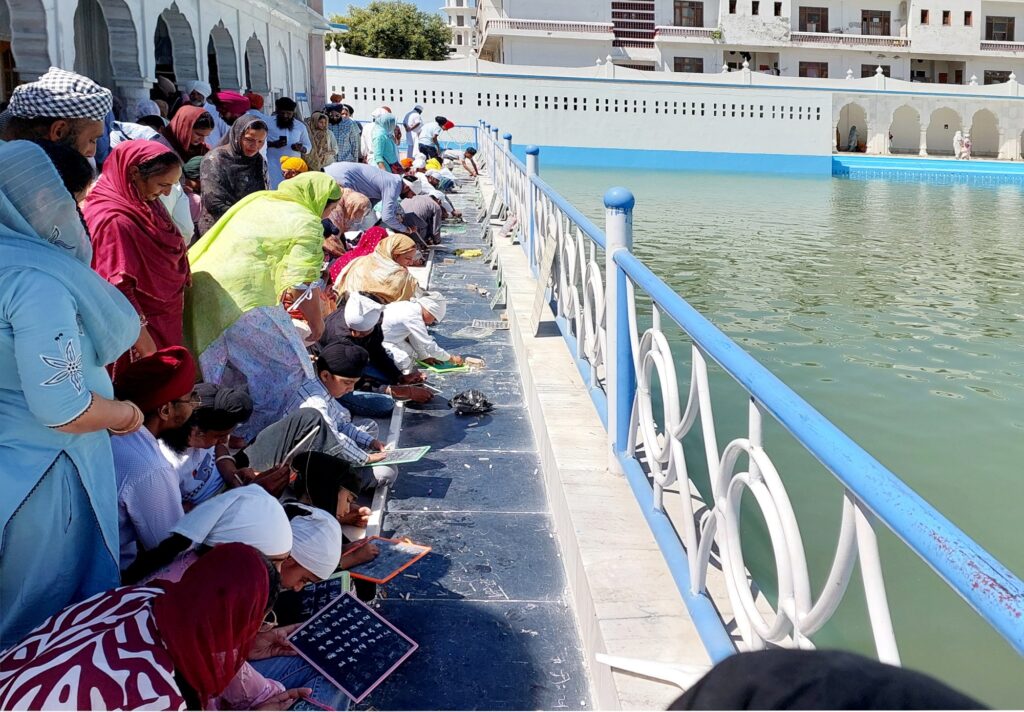
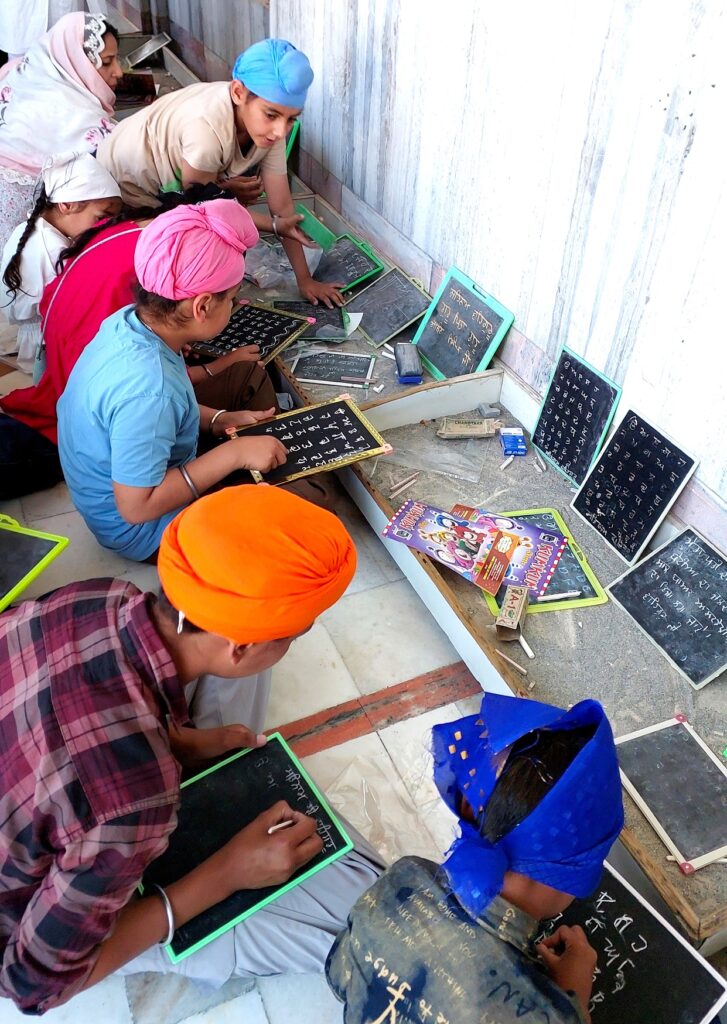
Historically, Likhansar Sahib was also a place where education took tangible form. Children would practice writing their first letters in a sand pit near the Gurdwara, a tradition symbolizing intellectual growth under the Guru’s blessings. Though the sand pit has since given way to marble surroundings, the spirit of this practice persists, connecting past and present in a timeless pursuit of knowledge.
Guru Gobind Singh’s presence is the heartbeat of Gurdwara Shri Likhansar Sahib’s story. During his stay in Talwandi Sabo, he not only oversaw the compilation of Sikh scriptures but also sanctified the site with a profound blessing. He declared it “Guru Ki Kashi,” envisioning it as a place where ignorance could be dispelled through learning and devotion. His symbolic acts—preparing reed pens, discarding ink into the Sarovar, and affirming that writing the thirty-five letters of the Gurmukhi script here would sharpen the mind—elevated Likhansar Sahib to a sacred space of intellectual and spiritual awakening. The Guru’s vision inspires devotees, who see the Gurdwara as a living testament to his commitment to education and faith.
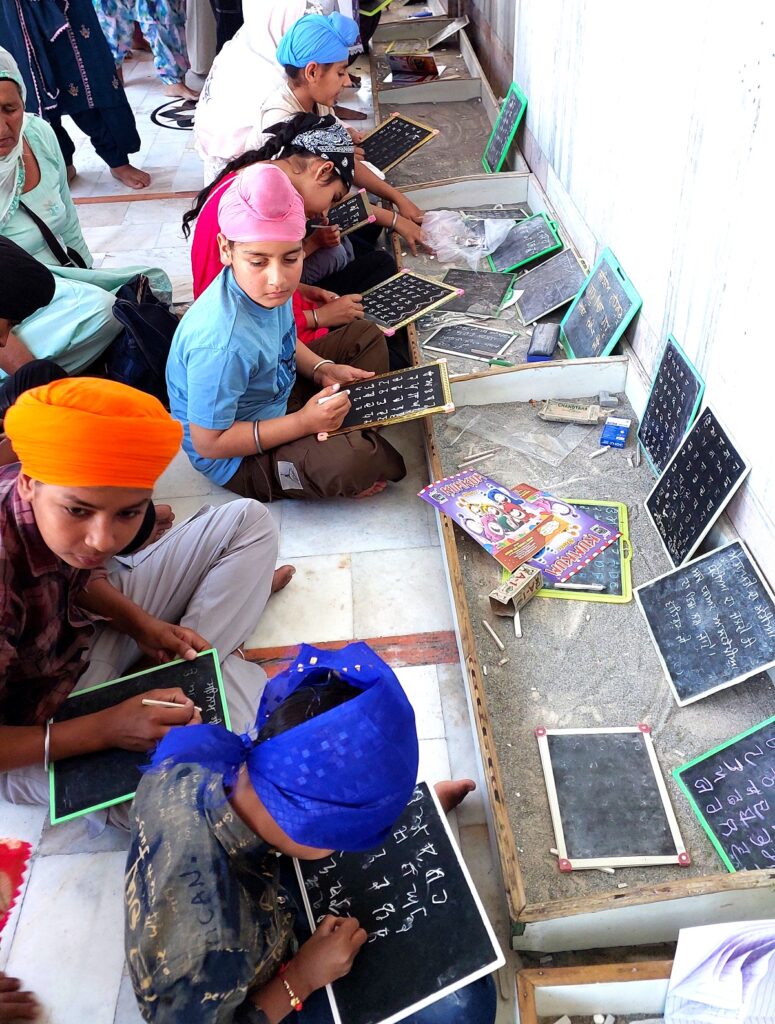
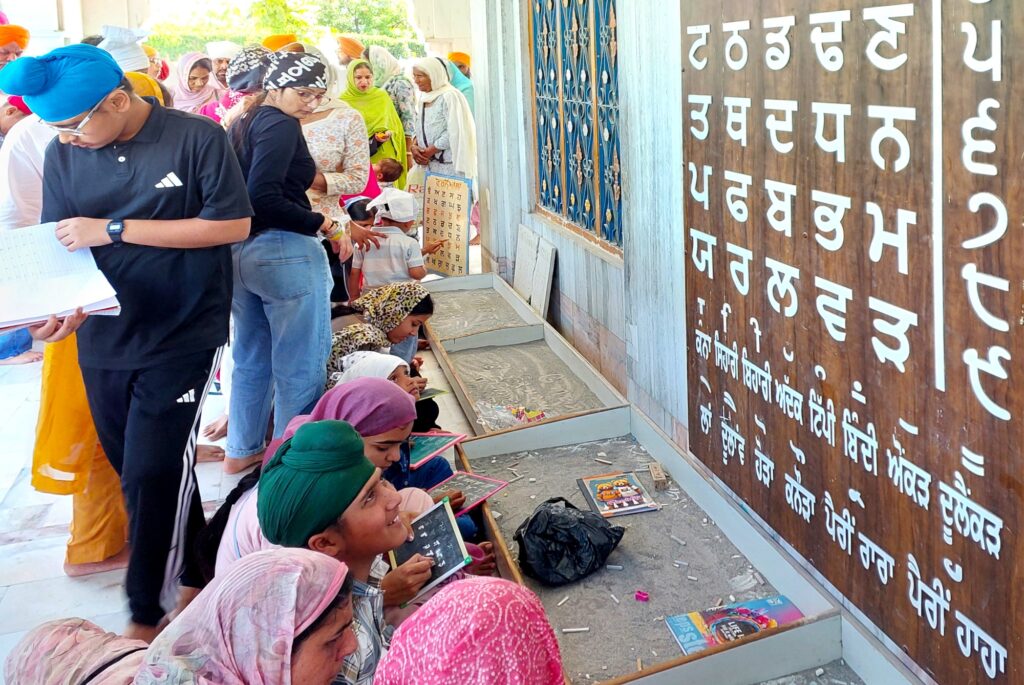
For those who visit Gurdwara Shri Likhansar Sahib, paying obeisance is a profoundly reverent act steeped in Sikh tradition. Devotees bow before the Guru Granth Sahib, the eternal Sikh scripture housed within the Gurdwara, offering prayers of gratitude and supplication. Given the Gurdwara’s unique connection to writing, many devotees engage in symbolic gestures—some write prayers or verses, while others encourage their children to inscribe letters, often the Painti Gurmukhi, the thirty-five letters of the Punjabi alphabet.
One of the most cherished traditions at Gurdwara Shri Likhansar Sahib is seeking blessings for children’s academic success. Parents flock to this sacred site, inspired by Guru Gobind Singh’s promise that writing the Gurmukhi script here would bestow a sharp and discerning mind. In earlier times, mothers would guide their young children to trace their first letters in the sand pit, a ritual believed to invoke the Guru’s favour for intellectual growth. Today, with the sand replaced by marble, this practice continues in a modern form—children write on slates, their parents beseeching blessings for focus, wisdom, and achievement in their studies. This enduring custom underscores the Gurdwara’s role as a spiritual anchor for education, a place where faith and learning intertwine.
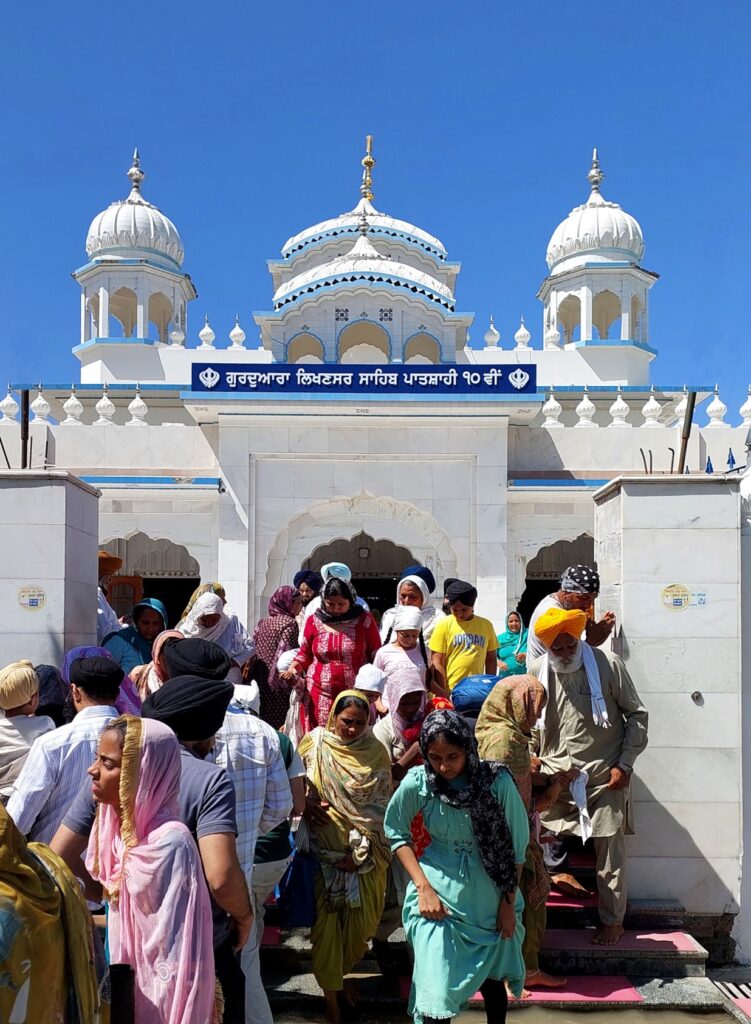
Gurdwara Shri Likhansar Sahib is more than a physical structure; it is a living testament to the vision of Guru Gobind Singh and the resilience of the Sikh spirit. Its location within Takhat Damdama Sahib, evocative name, and rich history weave a narrative of devotion, scholarship, and community. For devotees, it offers a space to connect with the divine, honour the past, and seek blessings for the future—particularly for the education of the next generation. As “Guru Ki Kashi,” it stands as a timeless symbol of enlightenment, inviting all who enter to embrace the transformative power of knowledge and faith.
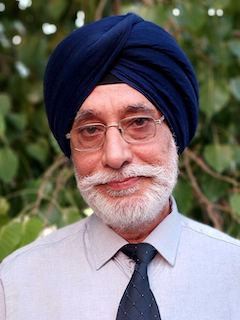
Sarbjit Bahga (b1957) is a Chandigarh-based architect, author, photo artist, and archivist. He is the Principal Architect of Bahga Design Studio LLP. Earlier, Bahga worked in the Department of Architecture, Punjab, Punjab Health Systems Corporation, and Punjab Mandi Board in various positions.
He has more than 42 years of practical experience designing various types of buildings, complexes, and large campuses. His completed works include an eclectic range of administrative, recreational, educational, medical, residential, commercial, and agricultural buildings. A monograph on his selected works titled “MODERN REGIONALISM: The Architecture of Sarbjit Bahga” has been published.
Bahga is also a keen researcher and a prolific architectural writer. He has 12 books to his credit, which include Modern Architecture in India, New Indian Homes, Le Corbusier, and Pierre Jeanneret: The Indian Architecture, Trees in Urban Habitat, Landscaping Human Habitat, New Indian Architecture -1947-2020, and Hand-Drawn Perspectives and Sketches. Bahga’s contribution to architecture has been largely recognized. He is a three-time recipient of the World Architecture Community Awards. His name has been featured in the Guinness Book of World Records for designing the “longest covered concrete corridor” in Vidya Sagar Institute of Mental Health, Amritsar.