
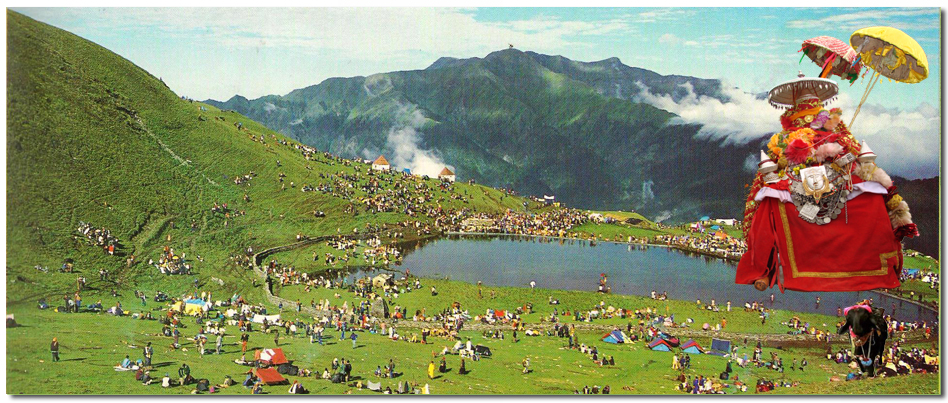
 Dehra Dun : The Nanda Devi Raj Jaat, organised once in 12 years and slated to begin from Aug 29, albeit on a low key this time, is widely believed could restore the confidence of the people of the world in general and the country in particular in undertaking pilgrimage to the major shrines of Uttarakhand, including the char dham yatra that was badly hit by floods on June 16.
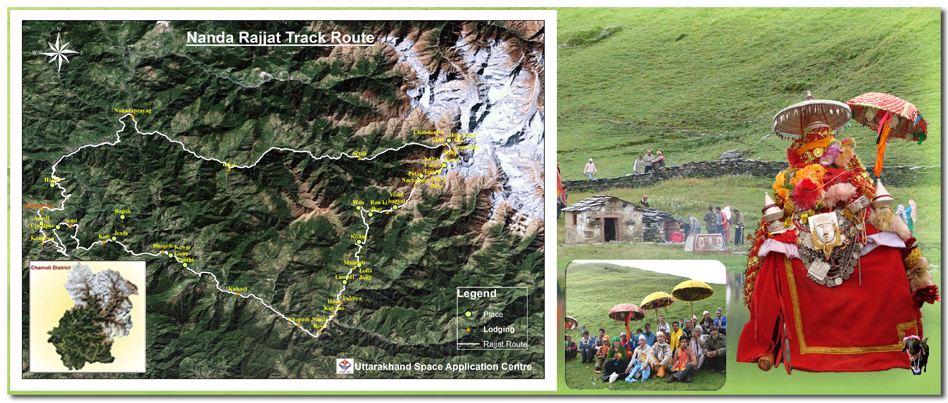
The Jaat, as it is popularly known starts from Nauti village, about 25 kms fromr Karnprayag in Chamoli district and goes up to the heights of Roopkund and Homekund with a four horned sheep. After the havan – yagna is over, the sheep is freed with decorated ornaments, food and clothing’s and the other offerings are discarded.
The Kunwar of village Kansua inaugurates the ceremony. Legend has it that Nanda Devi, consort of Lord Shiva left her village and went to the Nanda Devi parbat. Therefore when the yatra starts, heavy rains occur as if the ‘devi’ is crying. This yatra covers many villages and in between the Devi meets her sister in Bhagwati village.
This Journey is a difficult one because of the difficult terrain it goes through. During the journey one passes by the Roopkund lake, where hundreds of ancient skeletons can be seen. Mythology has it that once a King took some dancers to this sacred spot. Due to a heavy snowfall the people were trapped and the dancers were transformed into skeletons and stones that can be seen. Another myth is this that king Yasodhwal’s wife was pregnant and while she was giving birth to her child, her placenta flowed down to Roopkund and this in turn caused the death of the people there.
 Voicing the feelings that the Jaat could restore the confidence of the people that had taken a beating following the June 16 devastation, deputy speaker of the Uttarakhand vidhan sabha, Dr A P Maikhuri said that religious tourism could get a much needed fillip by the Nanda Devi Raj Jaat, as it will go a long way in restoring the faith of the people.
However, he hastened to add that the state government will have to take some steps so that this confidence is restored. “Though the Jaat will be at a comparatively low key this time, following the June 16 devastation and destruction, but it is more important as a confidence building measure and the government should ensure that registration and medical of the participants should be done at the first stop after Bana village”, he added.
Asserting that as the Jaat passes through difficult terrain, medical of the participants is a must but medical camps should be set up at various points along the route as a morale booster. “The Jaat is scheduled to begin on August 29, and though in a low key, a fairly large number of persons, including foreigners are likely to participate. As such if required the assistance of the Army can also be taken”, he opined.
Meanwhile, gen secretary of the local Raj Jaat Committee, Bhuvan Nautiyal said that though a sum of Rs 100 crores of the Rs 150 crores that had been sanctioned for up-gradation and other construction works along the Jaat route had been spent, but there was need for the state government to complete some of the works that remain incomplete.
Declaring that the four horn ram that will lead the Jaat had been born in Kaswa village, he said that there was also need that the state government pool in its efforts for providing medical services, fresh potable drinking water and facilities for parking. “Whereas the Jaat 2000 played a major role in the building of the state, the present Jaat will go a long way in reconstruction of the state’, he added.

A journalist with over 40 years of experience, Jagdish Bhatt was Editor, Hill Post (Uttarakhand).
Jagdish had worked with India’s leading English dailies, which include Times of India, Indian Express, Pioneer and several other reputed publications. A highly acclaimed journalist, he was a recipient of many awards
Jagdish Bhatt, aged 72, breathed his last on 28th August 2021 at his Dehradun residence.