
From handwritten letters to instant messages, from landlines to video calls, communication has evolved at lightning speed. Ironically, despite having more ways to connect than ever before, we often understand each other less. A teenager replies with a thumbs-up emoji. A parent waits for a proper sentence. A grandparent wonders why nobody calls anymore. Generations don’t speak different languages. They often just use different vocabularies. An interesting question quietly waits. Is it really a generation gap—or simply a communication gap wearing a fashionable disguise? Every generation thinks it invented common sense—and that the next generation misplaced it. Welcome to the modern family, where everyone is connected—yet occasionally disconnected.
Each generation brings unique experiences, values, and perspectives to the table, and their natural tension reflects society’s evolution. The key is to find ways for these differing viewpoints to coexist and inform one another rather than clash. The voices of all generations contribute to how we shape our lives and communities. For the older generation, there is a chance to preserve values and traditions they believe have served society well over time. They ensure the wisdom of the past isn’t lost in the rush toward change. The younger generation, meanwhile, often seeks innovation and reform, aiming to address contemporary issues, drive progress and align with the present and future needs of society.
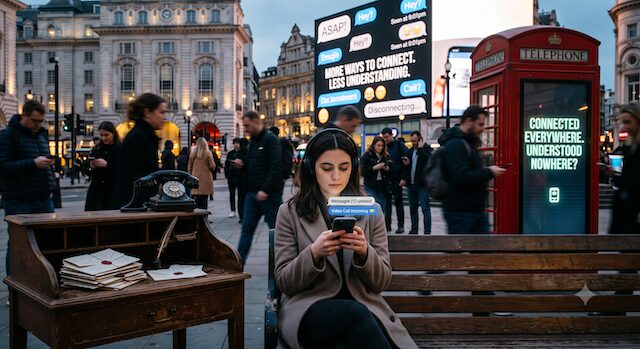
Communication is the bridge that connects individuals, irrespective of age, background, or experiences. However, when communication breaks down, misunderstandings easily arise—especially between generations. The language, technology, and cultural references used by older and younger people can differ drastically. While older generations may prefer face-to-face conversations or phone calls, younger individuals often rely on texting or social media. These divergent preferences often leads to miscommunication, with one side feeling neglected or ignored simply because their preferred mode of communication doesn’t align with the other’s. This disparity leads to misunderstandings and frustrations when generations interact.
Views on work-life balance, career expectations, and social norms vary greatly. One generation may prioritize long-term job security and traditional career paths, while the other values flexibility and purpose, favouring a healthier work-life balance. Attitudes towards marriage, gender roles, and social justice issues also differ, potentially leading to conflict or lack of understanding within families, workplaces, and broader society. Despite these differences, their intention to remain connected offers opportunities for mutual growth and learning as generations come together. By exchanging knowledge and experiences, each group benefits from the other’s perspective, combining wisdom with fresh ideas and innovation. The key to bridging the gap lies in empathy, open-mindedness and communication. Recognizing that each generation is shaped by its unique circumstances helps individuals understand each other. Rather than dismissing differences, finding common ground and appreciating the strengths of each generation can create more harmonious and productive relationships.
The challenge goes beyond just technology. It reflects deeper, more fundamental differences in how each generation sees the world. Older and younger people often prioritize different values, experiences, and interpretations of what’s important. Yet, despite these differences, when meaningful dialogue occurs, it often reveals shared values—such as the desire for a better future, the importance of family, and the pursuit of happiness. By being open to learning from one another, younger generations benefits from the wisdom and experience of their elders, while older generations gains fresh ideas and new perspectives.
Effective communication, combined with an understanding of each generation’s unique context, fosters greater harmony and respect across the divide. It’s not an either-or situation between lack of communication and the generation gap—it’s a combination of both. By improving communication and fostering mutual understanding, the challenges posed by the generation gap reduces, allowing for richer intergenerational relationships. While generational gaps may surface periodically, they also remind us of the diversity of thought within society. By embracing these differences, we learn from one another and create a more inclusive, dynamic world.
Each generation arrives with its own pace. Our experiences are shaped by the technologies we use, the fears we inherit, the jokes we tell, the clothes we wear, the world events that bruise or lift us. No wonder our perspectives rarely align. What one generation calls responsibility, another might call pressure. What one calls freedom, another calls chaos. The generational gap manifests in attitudes, behaviours, and worldviews, affecting work ethics, communication styles, social norms, and political beliefs. Older generations may struggle with rapid technological advances, while younger generations adopts them easily. The balance between responsibility and enjoyment is subjective. What one generation may see as indulgence, another may regard as well-deserved enjoyment. This traditional view of aging prioritizes caution and restraint, but also opens the conversation about how each generation tries to strike a balance between responsibilities and desires.
And yet…The only age that truly matters is the one we choose to feel. The one we whisper to ourselves when we wake up on a good morning. After all, age is less about arithmetic and more about atmosphere. It is a collection of our thoughts. And thoughts, fortunately, stay smooth as long as we allow them to breathe, stretch, and wander. It is not a competition or a boundary. It is an invitation—to understand, to empathise, to laugh at ourselves, and to keep reinventing the meaning of youth and wisdom. Age is not a boundary but a story of one’s life in progress, one that continues to unfold no matter how many candles flicker on the cake.
Technology may have changed our tools, but not our need to be heard. The shortest distance between two generations isn’t Wi-Fi—it’s willingness to listen. The best network is still the human one. Strong signals of empathy, respect, and genuine conversation can bridge any generation—no software update required. Perhaps the real issue isn’t a generation gap at all—it is a communication gap waiting for a stronger signal. After all, every generation was once the “new generation.”

Rachna Vinod is a multilingual poet, writer, blogger and broadcaster, proficient in Hindi, Urdu, English, and Dogri. Her works have been broadcast through multiple media platforms, including All India Radio. In addition to her books, her articles and creative pieces are regularly published in both print and online literary magazines. She has made significant contributions to literature with over 20 individual publications and participation in more than 25 collaborative anthologies.
A Few Published Works:
Urdu: Yasmeen-e-Sughandh, Mere Humsafar
English: Eternal Heritage, Shahada Aisha, I Am Here Only, Bridging The Gap, Lotus Lore, Kashmir Konnectivity: A Biosketch
Hindi: Ankahi Sargam, Pighalte Himkhand (poetry collection), Madhyaratrik Kshan, Parvaton Ke Dayare (short story collection)
Dogri: Adaya Madaya Geeten Bharya, Hirkhi Phuhar, Aakhi Lai Dile Di Gall