
There are certain trees people do not merely see—they remember. They stand quietly at the edge of fields, beside old temples, near forgotten wells, along village pathways, or in the courtyards of ancestral homes. Generations pass beneath their shade. Somewhere along the passage of years, these trees stop feeling like part of the landscape. They begin to feel like family. Perhaps this emotional connection explains why the cutting of an old tree makes you feel as if something deeply familiar disappears. The road remains, the houses remain, life continues as usual, yet the place somehow loses part of it. Modern cities frequently measure trees in terms of utility i.e. oxygen levels, carbon absorption, shade value, or urban planning requirements. All these are important. But human relationships with old trees have always extended beyond science. Trees are not merely environmental structures; they are emotional witnesses to human life. They watch silently while generations arrive and depart.
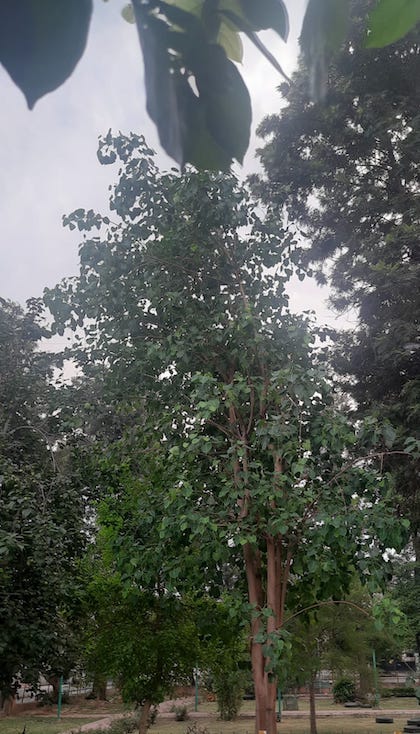
Ancient Indian traditions considered certain trees sacred not only for religious reasons but also because they represented continuity, shelter and interconnectedness. Villages gathered around them. The banyan tree near the chowk, the peepal beside the temple, the neem outside a school, or the chinar become woven into community memory. Almost everyone carries memories attached to a particular tree. A mango tree climbed recklessly during childhood summers. A jamun tree that stained hands and mouth purple. A mulberry tree in the park. A walnut tree in the hills. A gulmohar whose flowers covered roads like scattered fire during summer evenings. These memories remain astonishingly vivid because trees silently accompany the emotional seasons of human life. Long before modern community halls and cafés appeared, trees created public spaces for human connection. Even today, in many rural regions, directions are still given through trees. Trees become part of geography itself. “Turn left from the old banyan tree,” someone says, as naturally as mentioning a landmark building.
Human beings age quickly compared to trees. The tree ages alongside the family. Its trunk thickens while generations grow older around it. In this quiet companionship lies something profoundly comforting. Literature too repeatedly returns to trees because they symbolize permanence within human impermanence. Writers, poets, and philosophers across cultures have long recognized the emotional presence of trees. Civilizations may modernize, but somewhere deep within human consciousness remains an ancient memory of living close to trees. Perhaps this is why cities without old trees often feel emotionally incomplete.
Concrete structures may create efficiency, but trees create atmosphere. They soften spaces psychologically. A road lined with old trees feels fundamentally different from a road surrounded only by glass and cement. In crowded cities, old trees perform another invisible role: they preserve time. Urban landscapes change rapidly. An old tree standing quietly connects the present with forgotten versions of a place. Elderly residents often remember neighbourhoods through trees rather than architecture. “That tree was there even before the market,” someone says. Within that sentence lives an entire history.
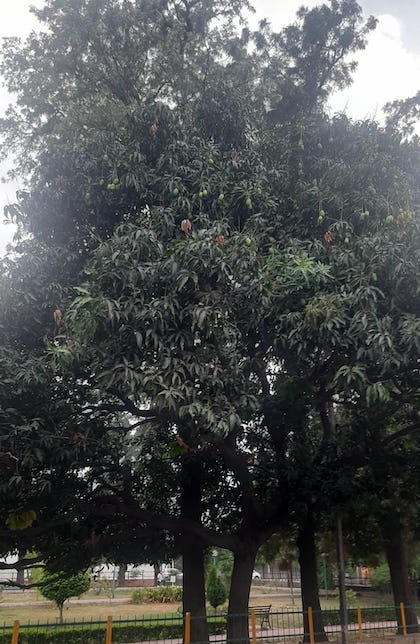
Children instinctively bond with trees because childhood itself is naturally imaginative. A tree becomes a fort, a hiding place, a climbing challenge, a storyteller. Earlier generations often spent entire afternoons beneath trees reading books, sharing secrets, or simply watching clouds drift through branches. Today many children grow up indoors, surrounded by screens rather than seasons. As this distance from nature increases, emotional relationships with trees weaken too. Yet the human longing remains. This is perhaps why people increasingly seek parks, forests, and green spaces despite modern entertainment options.
There is also wisdom in observing how trees live. These simply exists with dignity. They survive storms without abandoning rootedness. They shed leaves without panic. They grow slowly, patiently, season after season. No old tree became magnificent overnight. Its beauty emerged gradually through years of sunlight, rain, drought, and resilience. Perhaps this is another reason people emotionally connect old trees with grandparents or elders. Both embody continuity. Both carry visible signs of time. Both offer shelter in ways younger generations often recognize only later in life.
Across cities, countless ancient trees disappear each year for highways, malls, parking spaces, and expanding construction. Development is necessary but what kind of environments they are creating. A city without old trees may become technologically advanced yet emotionally exhausting. Research increasingly confirms what traditional communities intuitively understood: trees improve mental well-being. They reduce stress, soften urban noise, cool surroundings, and create emotional calm. Trees make places feel alive.
Morning walkers greet familiar branches changing with seasons. Birds build recurring nests. Squirrels race across trunks. Sunlight filters differently through leaves each month. Human life becomes subtly synchronized with natural rhythms. There is also something profoundly democratic about trees. They offer shade equally to rich and poor, strangers and residents, humans and birds. No tree asks for identity before providing comfort. In deeply unequal societies, this silent generosity feels almost moral.
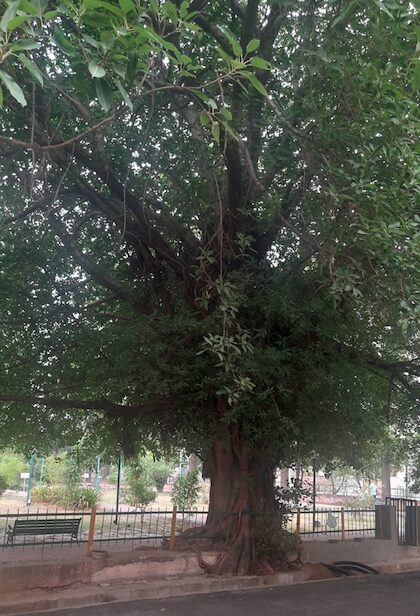
In recent years, environmental movements around the world have increasingly focused on protecting old trees specifically. Young saplings are important, but ancient trees carry ecosystems within them. Birds, insects, moss, and countless invisible forms of life depend upon their existence. An old tree is not solitary; it is a living community. Traditional Indian culture once understood this interconnectedness instinctively. Sacred groves, village trees, and forest traditions reflected respect not only for utility but also for coexistence. Modern societies now attempt scientifically to rediscover what older civilizations practiced culturally. There is something deeply moving about seeing an old tree continue standing through changing eras. It survives political transitions, technological revolutions, changing fashions, and human conflicts. Empires rise and disappear while the tree quietly produces leaves each spring. Such endurance feels reassuring in unstable times. Trees become repositories of memory. Not because they speak. But because they remain.
Old trees feel like family for the same reason families matter—they give continuity to human existence. They stand beside life without demanding recognition. They witness beginnings and endings. They provide shelter during difficult seasons. And through their silent companionship, they remind people that belonging is one of life’s deepest needs. Long after hurried conversations fade and modern buildings lose relevance, an old tree often continues holding stories within its bark. Perhaps that is why losing such a tree feels like losing a living chapter of memory. For some relationships are formed not through words, but through years of quiet presence beneath the same familiar tree.
Photos by Rachna Vinod

Rachna Vinod is a multilingual poet, writer, blogger and broadcaster, proficient in Hindi, Urdu, English, and Dogri. Her works have been broadcast through multiple media platforms, including All India Radio. In addition to her books, her articles and creative pieces are regularly published in both print and online literary magazines. She has made significant contributions to literature with over 20 individual publications and participation in more than 25 collaborative anthologies.
A Few Published Works:
Urdu: Yasmeen-e-Sughandh, Mere Humsafar
English: Eternal Heritage, Shahada Aisha, I Am Here Only, Bridging The Gap, Lotus Lore, Kashmir Konnectivity: A Biosketch
Hindi: Ankahi Sargam, Pighalte Himkhand (poetry collection), Madhyaratrik Kshan, Parvaton Ke Dayare (short story collection)
Dogri: Adaya Madaya Geeten Bharya, Hirkhi Phuhar, Aakhi Lai Dile Di Gall